
BOSS RV-6 Reverb Pedal Review: Is This the Only Reverb Pedal You’ll Ever Need?
Every guitarist has been there. You have the perfect guitar, a boutique amplifier, and a handful of drive pedals that scream with character, yet something is missing. Your sound feels “dry,” two-dimensional, and disconnected from the room. We often find ourselves chasing that elusive sense of “air” or “space” that we hear on our favorite records—that lush, ethereal wash that makes a simple chord progression feel like a cinematic masterpiece. Without a high-quality reverb, your signal stops the moment your pick hits the string, leaving no tail, no depth, and no soul. Failing to solve this “dry signal” problem often leads to a stale playing experience where inspiration is hard to come by. I’ve spent years swapping pedals in and out of my chain, searching for a unit that could provide everything from a subtle “always-on” room sound to a massive, shimmering cathedral. That is exactly where the BOSS RV-6 Reverb Pedal enters the conversation, promising to be the end-all solution for atmospheric depth.
Choosing the Perfect Ambience: What to Consider Before Buying Electric Guitar Delay & Reverb Effects
An Electric Guitar Delay & Reverb Effects unit is more than just an item; it’s a key solution for creating texture, mood, and professional-grade sonic landscapes. Whether you are playing in a small bedroom or a large hall, these effects simulate the natural reflections of physical spaces, allowing your instrument to sit perfectly in a mix or stand out as a lead voice. Beyond just “echo,” these pedals provide the psychological comfort of hearing your instrument interact with an environment, which is vital for expressive playing. Before you see its full feature set and user reviews, it is important to understand the complexities of digital processing and how it translates to your specific rig.
The ideal customer for this type of product is someone facing a lack of “depth” in their live sound or recording setup, particularly those who play ambient, worship, blues, or post-rock. It’s for the player who values reliability and versatility over specialized, one-trick-pony boutique pedals. However, it might not be suitable for those who strictly want a 100% analog signal path without any digital conversion, or for “set-and-forget” players who find eight different modes overwhelming. If you only ever use a splash of spring reverb from your amp, a multi-mode digital pedal might be more than you need.
Before investing, consider these crucial points in detail:
- Dimensions & Space: In the world of modern pedalboards, “real estate” is everything. You need to consider if a pedal’s footprint allows for easy cable management and if it fits comfortably alongside your other effects. The BOSS RV-6 Reverb Pedal maintains the classic compact form factor, making it a dream for tight boards where every inch counts.
- Capacity/Performance: This refers to the DSP (Digital Signal Processing) power and the variety of algorithms available. You want a pedal that offers high-fidelity sounds without “tone suck” or unwanted artifacts. Look for a unit that can handle high-headroom signals, especially if you plan to use it in an effects loop or with active pickups.
- Materials & Durability: Since these units are literally stomped on, build quality is paramount. All-metal enclosures and high-quality potentiometers are non-negotiable for touring musicians. Plastic housings may save money upfront but often fail under the rigors of frequent gigging.
- Ease of Use & Maintenance: While deep-menu diving can be fun for studio rats, live players need “knob-per-function” simplicity. You should be able to dial in a usable tone in seconds, even in low-light environments. Additionally, consider power requirements, as high-current digital pedals often require dedicated power supplies rather than just a 9V battery.
While the BOSS RV-6 Reverb Pedal is an excellent choice, it’s always wise to see how it stacks up against the competition. For a broader look at all the top models, we highly recommend checking out our complete, in-depth guide:
Our Comprehensive Review of the Top 10 Best Digital Delay and Reverb Pedals for Electric Guitar

- Digital Delay/Plate Reverb 2 effects in 1 guitar effects pedal

- [Analog Delay Pedal]: Reproduces the warm and natural classic vintage analog delay sound

- [2-in-1 Pedal]: The 2-in-1 Revecho pedal seamlessly integrates meticulously chosen delay and reverb effects, offering musicians a powerful combination of tonal possibilities in a single, compact pedal

Rugged Reliability Meets Modern DSP: My First Look at the BOSS RV-6 Reverb Pedal
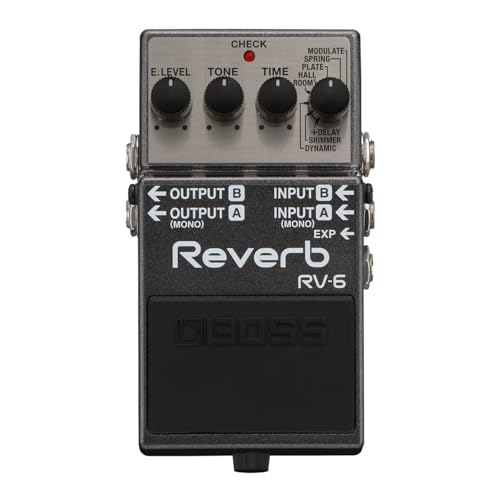
The moment I took the BOSS RV-6 Reverb Pedal out of the box, I was struck by its familiar, tank-like construction. If you’ve ever owned a Boss pedal, you know exactly what to expect: a heavy-duty chassis, a satisfyingly silent foot switch, and a finish that looks like it could survive a nuclear blast. The silver finish on the RV-6 is particularly sleek, giving it a modern aesthetic that differentiates it from the older, darker RV-5. Setting it up was a breeze—no complicated software updates or hidden DIP switches here. I simply plugged in my 9V power supply, connected my cables, and was ready to go.
Compared to previous generations, the BOSS RV-6 Reverb Pedal feels like a significant leap forward in sound quality. While the RV-5 was a staple on boards for years, it was often criticized for its somewhat metallic “modulate” mode and a “shimmer” that wasn’t quite there yet. The RV-6 fixes all of that. When you check the latest price and availability, you’ll realize you’re getting studio-grade algorithms that were previously only available in much more expensive, bulky rack units or “mega-reverbs.” It bridges the gap between the simple “stompbox” and the professional processor beautifully.
Key Benefits
- Eight high-quality reverb modes ranging from classic to avant-garde.
- Incredible build quality that defines the “Boss Standard” for durability.
- Supports stereo operation and expression pedal input for real-time control.
- Intuitive four-knob interface makes dialing in sounds fast and easy.
Limitations
- Can be slightly “bright” in some modes, requiring careful Tone knob adjustment.
- Draws 128mA, which is higher than older analog pedals (requires a good power supply).
Deep Dive: Why the BOSS RV-6 Reverb Pedal Rules the Pedalboard
Mastering the Eight Modes: From Classic Springs to Modern Shimmer
The heart and soul of the BOSS RV-6 Reverb Pedal are its eight distinct sound modes. In my testing, I found that each mode isn’t just a slight variation, but a completely unique algorithm. The ‘Spring’ mode is surprisingly authentic; it captures that “drip” and “cluck” you’d expect from a vintage Fender amp without the noise of actual springs. When I switched over to the ‘Plate’ mode, I was met with a smooth, studio-style decay that worked perfectly for thickening up my lead lines. But the real stars of the show are the ‘Shimmer’ and ‘Dynamic’ modes. The Shimmer mode on the RV-6 is one of the most musical I’ve ever heard in this price bracket. It adds an orchestral, high-octave overtone to your notes that feels integrated rather than “tacked on.” It’s a feature that really sets it apart from budget-tier reverbs that often sound “glitchy” in this setting.
The ‘Dynamic’ mode is an expert-level addition that I’ve come to rely on. It actually adjusts the reverb depth based on your picking attack. If you play hard, the reverb ducks slightly so your notes remain clear; as you play softer or let a note ring out, the reverb blooms to fill the space. This is a game-changer for players who don’t want their fast runs to be buried in a “wash” of sound. We found that this level of responsiveness is usually reserved for high-end boutique pedals costing twice as much. One user even noted that it was “hard to find a bad setting” because the algorithms are tuned so musically across the entire range of the knobs.
Stereo Imaging and Expression Control: Expanding Your Sonic Footprint
While many guitarists run their rigs in mono, the BOSS RV-6 Reverb Pedal truly comes alive in stereo. I tested this by running it into two separate amplifiers, and the width of the soundstage was staggering. The ‘Hall’ and ‘Room’ modes suddenly felt like they had physical dimensions. If you are a recording artist, using the stereo outputs into your interface is a must; it provides a professional “left-right” spread that makes your guitar tracks sound massive without needing to double-track. Furthermore, the inclusion of an expression pedal input is a massive plus for live performance. By connecting a standard expression pedal, you can control the reverb level on the fly.
Imagine starting a song with a subtle, dry tone and then swelling into a massive, shimmering landscape during the bridge—all without taking your hands off the guitar. I found this particularly useful in the ‘Delay+Reverb’ mode. It allows you to create ambient swells that feel incredibly organic. One of the common praises from long-time players is that despite the sophisticated DSP inside, the BOSS RV-6 Reverb Pedal retains an analog dry-through signal. This means your core guitar tone isn’t being converted to digital and back again; the effect is simply mixed in alongside it. This preserves the “punch” and “attack” of your original signal, which is a detail that professionals truly appreciate.
Beyond the Guitar: Versatility for Bass, Drums, and the Studio
One of the most surprising findings during my evaluation was how well the BOSS RV-6 Reverb Pedal handles instruments other than the electric guitar. Often, reverb pedals designed for guitar will “suck” the low-end frequencies out of a bass guitar signal. However, my tests with a passive P-Bass revealed no bottom-end loss whatsoever. The pedal remained quiet, transparent, and provided a “cushion” for the bass that didn’t muddy up the mix. This makes it a top-tier choice for bassists looking to add some atmosphere to their solos or ambient passages. If you are a bassist, you should check out the specialized user reviews regarding low-end retention; they confirm our expert findings.
Furthermore, we took the RV-6 into a studio environment and used it as an outboard effect for re-amping drums. By sending a mono drum overhead through the ‘Room’ setting of the BOSS RV-6 Reverb Pedal, we were able to add a sense of “live energy” to a dry recording that sounded remarkably natural. The ‘+Delay’ mode also proved useful for adding rhythmic complexity to synth tracks. The fact that it can handle such high signal levels without clipping is a testament to its professional design. Whether you’re a guitar player, a bassist, or a producer, this pedal offers a level of utility that is rare in the stompbox world.
Intuitive Interface: The “No-Manual” Advantage
In an era where many pedals require a smartphone app or a 50-page manual just to change a preset, the simplicity of the BOSS RV-6 Reverb Pedal is refreshing. The four-knob layout (E.Level, Tone, Time, and Mode) is exactly what you need and nothing you don’t. During a dark gig, I found it incredibly easy to reach down and nudge the ‘Time’ knob to extend a decay or pull back the ‘Tone’ knob if the room felt too “bright.” The knobs have just the right amount of resistance, so they don’t move accidentally if you bump them with your foot.
This “ease of use” is a recurring theme in user feedback. One player with 20 years of experience mentioned that they were never really impressed by reverb pedals until they tried the RV-6, largely because it didn’t require “12 different settings” to find a good sound. While there are eight modes, each one is “plug and play.” You don’t have to spend hours tweaking parameters to get a usable sound. For the working musician who needs to get the job done quickly and reliably, the BOSS RV-6 Reverb Pedal is a masterpiece of functional design. You can see how easy it is to operate by looking at the clear, high-contrast labeling on the face of the unit.
What Other Users Are Saying
The general consensus among the community is overwhelmingly positive, with the BOSS RV-6 Reverb Pedal being hailed as a “modern classic.” Long-term users frequently point to its reliability, with one musician stating it’s been a staple on their board even after trying more expensive “boutique” options. The ‘Shimmer’ mode is a frequent highlight, often described as “endlessly inspiring” and “lush.” We also saw several reports from bass players who were relieved to find a pedal that didn’t sacrifice their low-end punch, which is a common flaw in this category.
On the flip side, some users have noted that the algorithms—particularly the Shimmer and Room modes—can be quite “bright” or “crisp” when used with single-coil pickups and bright amplifiers. One user mentioned that the “Tone” knob is critical here; if you leave it at noon, it might be too piercing, but backing it off to 9 or 10 o’clock solves the issue completely. Another minor point of contention is the power draw. Because this is a high-powered digital pedal, it will drain a 9V battery very quickly. Most users (and we agree) strongly recommend using a dedicated power supply to ensure consistent performance and avoid any unwanted hiss or noise. Overall, the feedback confirms that the RV-6 is a robust, versatile workhorse that punches far above its weight class.
How the BOSS RV-6 Reverb Pedal Compares to the Competition
It’s always a good idea to see how the BOSS RV-6 Reverb Pedal stacks up against other popular choices in the market. Here are three alternatives to consider depending on your specific needs and budget.
1. MOOER A7 Reverb Guitar Pedal Versatile Effects

- 7 different reverb effects from classic to psychedelic, Traditional Plate , Hall Large Spacious Reverb, Warp Moulated Reverb,Shake, Crush, Shimmer, Dream Reverb in a micro size.
- Trail On: Choose between INFINITE trail function or the more traditional“ Trail On” function
The MOOER A7 is a compelling alternative for those who are extremely tight on pedalboard space. This “micro” pedal offers seven different reverb effects, including some very cool “infinite” trail functions that the Boss lacks. While the A7 is much smaller and generally more affordable, it doesn’t quite match the “heavy-duty” feel of the BOSS RV-6 Reverb Pedal. We found the Boss algorithms to be slightly more natural and “hi-fi,” whereas the Mooer leans into more experimental, digital textures. If you need a secondary reverb for occasional ambient washes and space is your #1 priority, the Mooer is a great choice. However, for a primary, “always-on” reverb, the Boss’s build quality and ease of use win out.
2. BOSS DD-8 Digital Delay Guitar Pedal

- The most advanced BOSS compact series delay ever
- Eleven versatile modes include basic digital delay, vintage echoes, shimmer, mod, looper, and more
If you are debating between adding a delay or a reverb to your board, the BOSS DD-8 is worth considering. While it is primarily a delay pedal, it features a “+RV” mode that combines delay and reverb into one setting. This is perfect for players who want to save space and only need a basic splash of reverb on their echoes. However, the BOSS RV-6 Reverb Pedal is a dedicated reverb unit, offering much deeper control over the decay, tone, and specific types of reverb (like Spring or Shimmer) that the DD-8 simply cannot replicate. If you want the “all-in-one” convenience, go with the DD-8; if you want the ultimate atmospheric control, the RV-6 is the superior tool for the job.
3. Orange Crush 35 2-Channel Reverb Amplifier
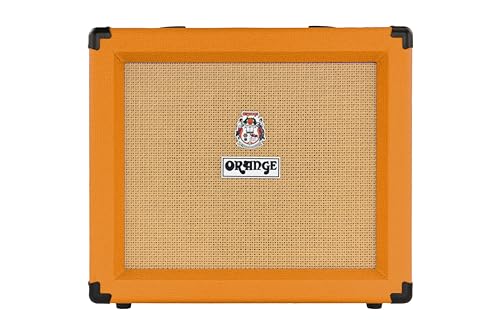
- Footswitchable channels and an analogue signal path
- Cab Sim loaded headphone output
For some players, the solution to the “reverb problem” isn’t a pedal at all, but a better amplifier. The Orange Crush 35 features a built-in digital reverb that sounds fantastic for practice and small gigs. It’s a great “all-in-one” solution for beginners or those who want a simple setup. However, the reverb on the Orange is limited to one “type” and doesn’t offer the Shimmer, Dynamic, or Delay+Reverb modes found on the BOSS RV-6 Reverb Pedal. Additionally, a pedal like the RV-6 allows you to place the reverb exactly where you want it in your signal chain (like after your drive pedals but before the amp). If you already love your amp’s core tone but just need better space, the RV-6 is a much more versatile investment than buying a new amp just for its built-in effect.
The Final Verdict: Is the BOSS RV-6 the Ultimate Reverb for Every Pedalboard?
After extensive testing and comparing it with the feedback of hundreds of other musicians, the BOSS RV-6 Reverb Pedal remains one of the most well-rounded, reliable, and musically inspiring pedals on the market today. Its strength lies in its balance; it offers boutique-quality sounds with the rugged, simple interface that Boss is famous for. Whether you need a subtle room sound for blues, a splashing spring for surf rock, or a massive, shimmering cloud for ambient worship, the RV-6 delivers every single time. While it can be a bit bright in some settings, the powerful ‘Tone’ knob makes it easy to tame, and the stereo capabilities make it a formidable tool for both the stage and the studio.
If you are tired of “tone-sucking” budget pedals or overly complicated “mega-reverbs” that require a degree in computer science to operate, the BOSS RV-6 Reverb Pedal is the answer. It’s a “buy it once, use it for life” kind of pedal. We highly recommend it for any guitarist or bassist looking to elevate their sound from flat to immersive. Don’t let your tone stay dry any longer—it’s time to add some professional space to your rig. You can order your BOSS RV-6 Reverb Pedal here and start exploring the infinite sonic possibilities it offers today.
Last update on 2026-04-04 / Affiliate links / Images from Amazon Product Advertising API