
BOSS RE-2 Space Echo Delay and Reverb Pedal Review: The Legend Reborn in a Compact Masterpiece
For decades, guitarists and producers have chased a very specific, almost haunting sonic signature: the sound of a vintage tape machine struggling to keep up. We have all been there—spending hours scrolling through digital menus, trying to find a delay that doesn’t sound “clinical” or “sterile.” The original Roland RE-201 Space Echo, released in the 1970s, became the gold standard for this. It provided a warm, saturated, and rhythmic echo that defined genres from dub and reggae to psychedelic rock and modern ambient soundscapes. However, the original units are massive, temperamental, and incredibly expensive to maintain. For the modern gigging musician, carrying a bulky tape machine isn’t just impractical; it’s a liability. We needed that legendary multi-head character in a format that actually fits on a pedalboard without sacrificing the soul of the effect. This is exactly where the BOSS RE-2 Space Echo Delay and Reverb Pedal enters the conversation, promising to condense decades of analog history into a standard Boss compact chassis.
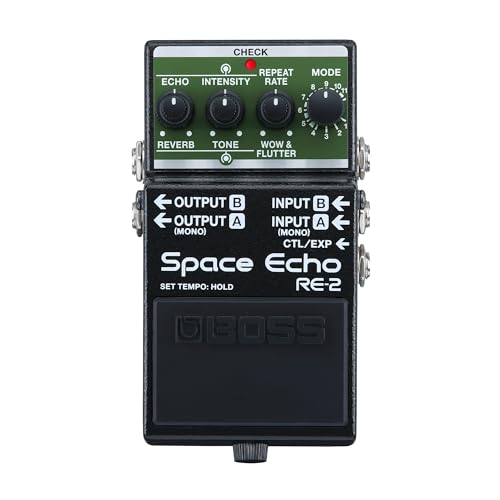
- Tape Delay Spring Reverb Effects Pedal with Stereo Signal Patch
- Footswitch/Expression Pedal Input
Choosing Your Atmosphere: What to Consider Before Buying an Electric Guitar Delay & Reverb Effects Pedal
An Electric Guitar Delay & Reverb Effects pedal is more than just an item; it’s a key solution for players looking to add depth, dimension, and emotion to their performance. When you are building a signal chain, the “time-based” effects at the end of your board are what transform a dry, flat guitar tone into an immersive experience. The problem many players face is the “digital sheen”—a harshness in the repeats that can distract from the musicality of a piece. A high-quality delay and reverb combo solves this by smoothing out the transitions between notes and creating a “space” for your sound to live in, whether that is a tight slapback or a cavernous wash of sound.
The ideal customer for this type of product is someone facing the limitations of basic digital delays, specifically those who play ambient, shoegaze, experimental, or classic rock. If you find yourself wanting “vibe” rather than just a simple repetition of notes, a tape-emulation pedal is your best bet. However, it might not be suitable for those who require ultra-pristine, high-fidelity digital repeats that stay perfectly clear even with high gain, such as certain styles of modern metal or percussive math rock. In those cases, a dedicated digital delay might be the better path.
Before investing, consider these crucial points in detail:
- Dimensions & Space: Since most of us have crowded pedalboards, every inch counts. You should look for a pedal that offers professional-grade features without requiring its own zip code. The beauty of the compact format is that it allows you to maintain a diverse board while still having access to premium sounds.
- Capacity & Performance: In the world of delay, “capacity” refers to the available delay time and the number of rhythmic patterns (or “heads”) the pedal can simulate. You want a unit that offers enough flexibility to cover everything from 50ms slapback to long, cascading 2-second echoes.
- Materials & Durability: Guitar pedals live a hard life on the floor. Look for metal enclosures, high-quality potentiometers, and switches that can withstand thousands of stomps. A pedal made of flimsy plastic or with loose knobs will eventually fail you at the worst possible moment—mid-gig.
- Ease of Use & Maintenance: While deep-diving into menus can be fun for studio rats, on stage, you need tactile control. Ideally, your pedal should have clearly labeled knobs that allow for quick adjustments between songs. Maintenance should be non-existent—no tapes to replace or motors to oil.
Understanding these factors will help you decide if a specific unit fits your workflow. While the BOSS RE-2 Space Echo Delay and Reverb Pedal is an excellent choice, it’s always wise to see how it stacks up against the competition. For a broader look at all the top models, we highly recommend checking out our complete, in-depth guide:
Our Comprehensive Guide to the Best Electric Guitar Effects Pedals for Ambient Soundscapes

- Digital Delay/Plate Reverb 2 effects in 1 guitar effects pedal

- [Analog Delay Pedal]: Reproduces the warm and natural classic vintage analog delay sound


- [2-in-1 Pedal]: The 2-in-1 Revecho pedal seamlessly integrates meticulously chosen delay and reverb effects, offering musicians a powerful combination of tonal possibilities in a single, compact pedal
Unboxing the Legend: First Impressions of the BOSS RE-2 Space Echo Delay and Reverb Pedal
When we first pulled the BOSS RE-2 Space Echo Delay and Reverb Pedal out of its box, the immediate feeling was one of nostalgia mixed with modern engineering. It carries that classic Boss aesthetic—the heavy-duty metal casing, the iconic rubber stomp pad, and the distinct color scheme that pays homage to the original RE-201. Unlike its larger sibling, the RE-202, this pedal fits into the palm of your hand. It feels incredibly dense and well-constructed, reassuring us that it can handle the rigors of the road. Setting it up was a breeze; with stereo inputs and outputs, it’s ready for complex signal chains right out of the gate.
What struck us most during the initial power-up was how the concentric (stacked) knobs allow for a surprising amount of control in such a small space. You aren’t just getting a “delay pedal”; you’re getting a multi-head tape simulator and a dedicated spring reverb. Before we even plugged in a guitar, we could tell this was designed for players who want to see its full feature set and user reviews before committing to a larger, more expensive station. It feels like a premium tool disguised as a standard stompbox.
Key Benefits
- Authentic 11-mode multi-head tape echo emulation that captures the “magic” of the original RE-201.
- Integrated spring reverb that can be used independently or blended with the delay.
- Stereo signal path allows for massive, immersive soundscapes in a compact footprint.
- Expanded control via external footswitches or expression pedals for real-time manipulation.
Drawbacks
- The concentric knobs can be a bit fiddly to adjust quickly during a dark live performance.
- Lacks the dedicated “Intensity” footswitch found on the larger RE-202 for instant oscillation.
Deep Dive: Putting the BOSS RE-2 Space Echo Delay and Reverb Pedal to the Test
The Magic of the 11-Mode Multi-Head Selector
The heart and soul of any Space Echo is the multi-head configuration. In the original tape units, there were three physical playback heads positioned at different distances from the record head. By combining these heads, you created complex, rhythmic patterns that a single-head delay simply cannot replicate. In our testing of the BOSS RE-2 Space Echo Delay and Reverb Pedal, we found that the 11-mode selector is an absolute triumph of digital modeling. Modes 1 through 7 focus on different combinations of the three virtual tape heads, while modes 8 through 11 incorporate the spring reverb.
When we dialed in Mode 7 (all three heads active), the result was a lush, rhythmic wash that felt alive. It wasn’t just “echo, echo, echo”; it was a syncopated dance of sound that filled the room. This is a feature that really sets it apart from standard digital delays. We spent hours just playing simple arpeggios and letting the pedal do the heavy lifting of creating “rhythm” out of thin air. One user we consulted noted that it “gives some nice layers” and isn’t just an “always-on” pedal, but a legendary sound you won’t get elsewhere. We agree—it’s an instrument in itself. To experience this for yourself, you should check the latest price and availability and see why this mode selector is so highly praised.
Tape Saturation, Wow, and Flutter: The “Vibe” Factor
A common complaint with digital emulations of tape delay is that they sound too “perfect.” Real tape has imperfections: the motor speed fluctuates slightly (Wow and Flutter), and the tape itself adds a subtle harmonic distortion (Saturation). We were particularly impressed with how the BOSS RE-2 Space Echo Delay and Reverb Pedal handles the “Wow & Flutter” control. By turning this knob, you introduce a beautiful, pitch-modulating warble that makes your guitar sound like an old vinyl record or a dusty film soundtrack.
We found that at lower settings, it adds a chorus-like thickness that makes melodies pop. At higher settings, it goes into full-on “haunted house” territory, which is perfect for experimental soundscapes. The way the repeats degrade—losing high-end and becoming slightly grittier with each pass—is remarkably faithful to the original hardware. It captures that “legend sound” that users mentioned, providing an ambient space sound that is aptly named. This level of detail ensures that your tone never feels sterile, even when you are running a purely digital rig. It’s a testament to the BOSS “Multi-Dimensional Processing” that the saturation feels organic and responsive to your playing dynamics.
The Spring Reverb: More Than Just an Afterthought
Often, the reverb on a combo delay/reverb pedal is treated as a secondary feature. However, the spring reverb in the BOSS RE-2 Space Echo Delay and Reverb Pedal is a standout performer in its own right. It isn’t a generic room or hall reverb; it is a specific emulation of the “boingy,” metallic spring tank found in the original RE-201. When we pushed the reverb knob, we were greeted with that classic “drip” that surf rockers and blues players crave.
In our studio sessions, we found that stacking the reverb with the tape echo created a sense of “physical space” that was incredibly inspiring. It places your guitar in a room that feels three-dimensional. Because the pedal supports a full stereo signal path, the reverb blooms beautifully across the stereo field. If you are a player who uses a two-amp setup, this pedal will change your life. The stereo imaging is wide and deep, making your small combo amps sound like a massive stadium stack. We highly recommend that you see its full feature set and user reviews specifically regarding its stereo capabilities, as it is a game-changer for home recording and live performance alike.
Control and Connectivity: Expanding the Compact Format
One of the biggest challenges with compact pedals is the lack of physical controls. Boss cleverly solved this by using concentric knobs—where one knob sits on top of another. While this can be a bit of a learning curve (we occasionally bumped the “Repeat Rate” while trying to adjust the “Intensity”), the sheer amount of control it gives you is worth the trade-off. You have dedicated knobs for Echo, Reverb, Repeat Rate, Intensity, Wow & Flutter, and Tone.
Furthermore, the BOSS RE-2 Space Echo Delay and Reverb Pedal features an input for an external footswitch or expression pedal. We tested this with a standard expression pedal and mapped it to the “Repeat Rate.” This allowed us to create those iconic “pitch-shifting” tape speed effects with our foot while playing—a staple of psychedelic rock. You can also use an external switch for tap tempo, which is essential for keeping your echoes in sync with a drummer. Despite its small size, this pedal offers “fine adjustments” that, as one user noted, allow you to get “a lot from this pedal” if you have the time to experiment. It plays well with others, too; we loved stacking it with a classic distortion for a gritty, lead tone that felt massive and soaring.
What Other Users Are Saying
The general sentiment among the guitar community regarding the BOSS RE-2 Space Echo Delay and Reverb Pedal is overwhelmingly positive, with most users praising its ability to capture the “legendary” essence of the RE-201 in such a small box. One user highlighted its versatility, stating it’s a “great echo pedal” that they use for “lite repeats” and that it “has many tape effects and sounds that are quite interesting to play with.” This echoes our finding that the pedal can be as subtle or as extreme as you need it to be.
Another user mentioned that while it might not be an “always on” pedal for every genre, it provides a “legend sound that you won’t get anywhere else.” Spanish-speaking users have also weighed in, with one reviewer claiming it is “of the best delay pedals available today” because it “emulates the Space Echo sound very well.” The few criticisms we found usually centered around the physical layout, with one user giving it four stars instead of five due to the fiddly nature of the stacked knobs. However, the consensus remains that for sound quality and “vibe,” this pedal is currently at the top of its class. It’s a tool that rewards those who take the time to learn its nuances.
Choosing Your Delay: Comparing the BOSS RE-2 to Top Alternatives
While we are clearly fans of the BOSS RE-2 Space Echo Delay and Reverb Pedal, it is important to see how it compares to other heavy hitters in the delay world. Depending on your specific needs—whether you want simplicity, pure digital clarity, or analog warmth—one of these alternatives might catch your eye.
1. BOSS DD-8 Digital Delay Guitar Pedal

- The most advanced BOSS compact series delay ever
- Eleven versatile modes include basic digital delay, vintage echoes, shimmer, mod, looper, and more
The BOSS DD-8 is the “Swiss Army Knife” of delay pedals. Unlike the BOSS RE-2 Space Echo Delay and Reverb Pedal, which is laser-focused on tape emulation, the DD-8 offers a wide variety of delay types, including Digital, Analog, Reverse, and even a Looper. If you are a session player who needs a crystal-clear digital delay one minute and a shimmer delay the next, the DD-8 is the more practical choice. However, it lacks the specific “soul” and rhythmic complexity of the multi-head Space Echo. It is a “workhorse” pedal, whereas the RE-2 is a “character” pedal. If you prioritize versatility over vintage vibe, the DD-8 is for you. You can compare its features here to see which fits your board better.
2. JHS Pedals 3 Series Reverb Pedal
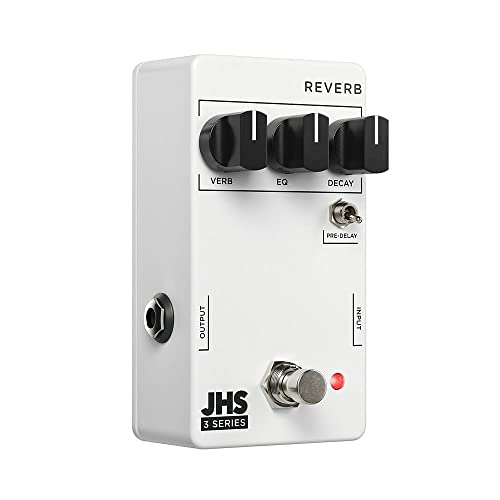
- Made in Kansas City USA
- An extremely versatile unit that allows you to achieve any reverberation effect, all the way from small room sounds to nearly endless washes of ambiance
If the multi-knob layout of the Boss feels overwhelming, the JHS 3 Series Reverb offers a refreshing dose of simplicity. This is a dedicated reverb pedal with only three knobs: Verb, EQ, and Decay. It’s perfect for the player who wants a high-quality “always-on” reverb without the complexity of tape heads or modulation. It lacks any delay capabilities, so you would need a separate pedal for echoes. It’s an excellent choice for budget-conscious players or minimalists, but it won’t give you the immersive, rhythmic “space” that the BOSS RE-2 Space Echo Delay and Reverb Pedal provides. It’s a great “utility” reverb, but it’s not a sound design powerhouse.
3. MXR Carbon Copy Analog Delay
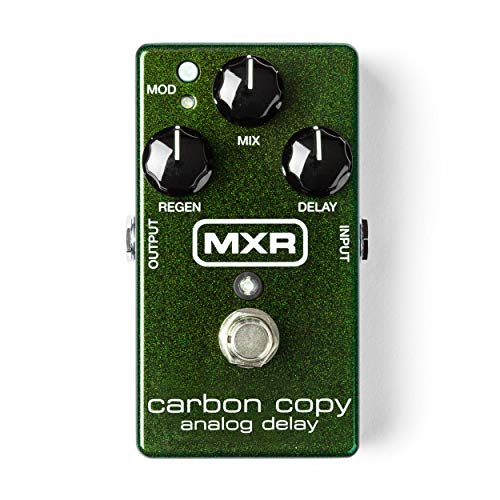
- Rich, all-analog delay
- Up to 600 milliseconds of delay time
The MXR Carbon Copy is a modern classic, utilizing Bucket Brigade Device (BBD) technology for true analog delay. The repeats on the Carbon Copy are dark, warm, and naturally “smudged,” which many players prefer for keeping the delay “behind” their original signal. It’s much simpler than the RE-2, with only three knobs and a modulation switch. However, it doesn’t offer the multi-head rhythms, the integrated spring reverb, or the stereo functionality of the Boss. If you want a simple, dark, analog slapback, the MXR is hard to beat. But if you want to create vast, ambient soundscapes with rhythmic complexity, the BOSS RE-2 Space Echo Delay and Reverb Pedal is the clear winner. To see a detailed breakdown of the value difference, check the current pricing for both.
The Final Verdict: Is the BOSS RE-2 Space Echo Delay and Reverb Pedal Worth It?
After putting the BOSS RE-2 Space Echo Delay and Reverb Pedal through its paces in both studio and live environments, our conclusion is clear: this is a modern masterpiece of effects design. It successfully captures the elusive, “breathing” character of a vintage tape machine and packs it into a footprint that any guitarist can accommodate. The combination of the multi-head patterns, the pitch-warping “Wow & Flutter,” and the splashy spring reverb creates a sonic playground that is endlessly inspiring. While the concentric knobs require a steady hand, they are a small price to pay for having this much power on your pedalboard.
We recommend this pedal to anyone who feels their current delay is too sterile, or for ambient musicians who need to create deep, textural layers. It isn’t just a pedal; it’s a piece of history modernized for the 21st century. If you are looking to elevate your tone and find that “legend sound” that has graced thousands of classic records, this is your solution. Don’t let your tone remain flat and uninspired—take the leap into the third dimension. You can order your BOSS RE-2 Space Echo Delay and Reverb Pedal today and start exploring the cosmos of sound right from your pedalboard.
Last update on 2026-04-03 / Affiliate links / Images from Amazon Product Advertising API