
BOSS GX-1B Ultra-Portable Bass Effects Processor Review: The Compact Powerhouse That Redefines Modern Bass Tone
For decades, the life of a bassist has been synonymous with heavy lifting. I still remember the days of hauling a massive 8×10 cabinet and a tube head that weighed more than a small child just to get a decent tone at a local club. While the sound was undeniable, the logistical nightmare often drained my energy before the first downbeat. In the modern era, the quest has shifted; we no longer just want power, we want precision, portability, and “intelligent” tone that fits in a gig bag. When searching for a solution, many of us look for a device that can bridge the gap between studio-quality processing and the rugged demands of the stage without requiring a dedicated roadie. This is exactly where the BOSS GX-1B Ultra-Portable Bass Effects Processor enters the conversation. Failing to find a compact, reliable rig often means settling for lackluster DI tones or carrying cumbersome pedalboards that are prone to cable failures and signal degradation. Solving this “weight vs. tone” dilemma is crucial for the gigging professional and the bedroom enthusiast alike.
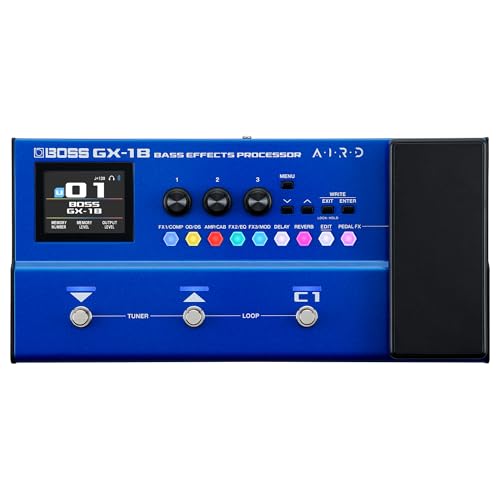
- BOSS GX-1B | Ultra-Portable Bass Effects Processor | Packed with Iconic Amps & Effects | Premium AIRD Sound Engine | Ideal for Beginner Bassists | Bluetooth Connectivity | Flexible Power Options
- Authentic tube amp tone and touch response with AIRD technology, backed by exceptional audio quality featuring 24-bit AD, 32-bit DA conversion, 32-bit floating-point processing, and a 48 kHz sampling...
What to Consider Before Buying a Multieffects Processor for Bass
A Multieffects Processor is more than just an item; it’s a key solution for streamlining your signal chain and unlocking creative possibilities that individual stompboxes often restrict. By consolidating compressors, overdrives, delays, and cabinet simulations into a single unit, you eliminate the hum of multiple patch cables and the complexity of power-hungry boards. The primary benefit is consistency: you can take your exact studio sound to any stage, whether you are plugging into a high-end amplifier or directly into the house PA system.
The ideal customer for this type of product is someone facing limited space, frequent travel, or the need for a “silent” practice rig that still feels like a real amp. It is perfect for session players who need a wide variety of tones at their fingertips and beginners who want to explore different effects without spending thousands on individual pedals. Conversely, it might not be suitable for those who prefer the tactile, purely analog experience of vintage hardware or those who only use one specific sound and have no need for digital flexibility. For those individuals, a high-quality analog preamp might be a better alternative.
Before investing, consider these crucial points in detail:
- Dimensions & Space: Consider where the unit will live. If you plan to carry it in your bass case’s front pocket, you need something with a slim profile and lightweight construction. The BOSS GX-1B Ultra-Portable Bass Effects Processor is designed specifically with this ultra-portable footprint in mind, ensuring it doesn’t become another heavy piece of gear to manage.
- Capacity/Performance (DSP Power): The “brain” of the processor determines how realistic the amp models sound. Look for high-resolution processing (like 32-bit floating point) and high sampling rates. These specs ensure that the low-end frequencies—the most difficult to digitize accurately—remain tight, punchy, and free of digital artifacts. See its full feature set and user reviews to understand how it stacks up technically.
- Materials & Durability: Since this is a floor-based unit, it must withstand being stepped on repeatedly. Look for high-quality footswitches and a chassis that can handle the rigors of travel. Plastic housings are lighter but metal components in the switches and expression pedals are vital for long-term reliability in a professional environment.
- Ease of Use & Maintenance: A color display and intuitive navigation are essential. If you have to spend hours menu-diving just to change a reverb setting, you won’t use the device to its full potential. Look for “Gear Suite” features or dedicated category buttons that make on-the-fly adjustments simple during a rehearsal or gig.
While the BOSS GX-1B Ultra-Portable Bass Effects Processor is an excellent choice, it’s always wise to see how it stacks up against the competition. For a broader look at all the top models, we highly recommend checking out our complete, in-depth guide:
Our Expert Guide to the Best Desktop Multi-Effects Processors for Modern Practice Sessions

- Professional KTV Digital Pre-Effects Multi-Band Audio Effect Adjustment Karaoke Mixer Reverb with DSp Effect Echo USB MP3 Bluetooth Optical .4 Microphone Input with Remote Control

- Advanced Digital Audio Processing with Dual Wireless Microphones: Equipped with a professional pre-effects processor and dual wireless microphones, this system features built-in DSP digital reverb and...

- Professional DSP Audio Processing with 4-Level FBX Suppression: Built-in professional DSP sound engine delivers clearer vocals, richer music detail, and more immersive audio. The 4-level FBX feedback...
First Impressions and the Iconic BOSS Build Quality
Unboxing the BOSS GX-1B Ultra-Portable Bass Effects Processor was a refreshingly simple experience. Right out of the box, the striking blue finish immediately distinguishes it as a bass-centric tool, a nice departure from the standard silver or black guitar units. Weighing in at just 2 pounds, it feels incredibly light yet surprisingly sturdy. The integration of three footswitches and a built-in expression pedal into such a small footprint (roughly 12 inches long) is an engineering marvel. Compared to its predecessor, the GT-1B, the GX-1B feels significantly more modern, thanks largely to the vibrant color display that makes reading patch names on a dark stage a breeze.
In our initial testing, the setup was near-instantaneous. We plugged it into a flat-response monitor, and the “AIRD” (Augmented Impulse Response Dynamics) technology immediately made its presence felt. There’s a certain “air” and touch-responsiveness to the notes that cheaper processors often miss. Before you even start tweaking, the 99 presets give you a comprehensive tour of what this machine can do—from vintage Motown thumps to modern, aggressive djent tones. You can check the latest price and availability to see how this premium build fits into your current budget.
Key Benefits
- AIRD technology provides authentic tube-like response and feel.
- 32-bit floating-point processing ensures pristine, low-latency audio.
- Ultra-portable design fits easily into any gig bag or backpack.
- Flexible power options including AA batteries, USB, or AC adapter.
Limitations
- Lack of a dedicated 1/8″ Aux input might frustrate those using external players.
- The compact size means footswitches are relatively close together.
Deep Dive: Performance and Sound Architecture of the BOSS GX-1B Ultra-Portable Bass Effects Processor
The AIRD Revolution: Tone That Breathes
The most significant leap in the BOSS GX-1B Ultra-Portable Bass Effects Processor is the inclusion of the AIRD engine. For years, digital processors were criticized for being “stiff.” When I played through the AIRD-driven amp models, I noticed a distinct change in how the processor reacted to my attack. If I played softly, the tone stayed clean and round; when I dug in with a pick, the simulated “tubes” broke up exactly like a real SVT or Bassman would. This isn’t just about sound; it’s about the physical connection between your fingers and the speakers. We found that the 32-bit floating-point processing virtually eliminates the “latency” feel that plagues lower-end units, making it feel like a real-time analog rig.
The internal logic of AIRD goes beyond simple EQ curves. It mimics the complex interaction between a tube amplifier’s output stage and the speaker cabinet. This is a feature that really sets it apart from older modeling technology. One user mentioned that they were about to replace their entire rig but changed their mind after plugging this in—a sentiment we can confirm after testing the “Concert” and “Natural” amp models. The low frequencies are handled with incredible clarity, avoiding the “mushy” bottom end that often occurs when digital units try to simulate high-gain bass amps.
Workflow and Customization: The Gear Suite Advantage
Operating the BOSS GX-1B Ultra-Portable Bass Effects Processor is remarkably intuitive for a device with so much power under the hood. The color display isn’t just for show; it uses a color-coded system for different effect categories (red for overdrive, blue for modulation, etc.), which allows for “at-a-glance” editing. The “Gear Suite” feature is a standout, allowing you to quickly swap amp and cab combinations without getting lost in sub-menus. We spent hours crafting custom patches, and the ability to assign any parameter to the expression pedal—like the amount of drive or the speed of a chorus—gives you professional-level control in a rehearsal-sized package.
For those who prefer a bigger screen, the USB-C connectivity allows you to hook it up to a computer and use the BOSS Tone Studio editor. This is where you can really deep-dive into the signal chain, reordering effects and loading your own WAV-based speaker IRs (Impulse Responses). Being able to use your favorite custom cabinet simulations in an ultra-portable unit is a game-changer for session work. If you are a player who likes to tinker, the 99 user memories provide more than enough space to store complex configurations for every song in your setlist. You can explore the deep editing features more thoroughly through online documentation.
Modern Connectivity and the Missing Aux Input
The BOSS GX-1B Ultra-Portable Bass Effects Processor is clearly designed for the modern bassist, featuring USB-C for both recording and power, and optional Bluetooth connectivity for streaming audio or editing via a smartphone. This makes it an incredible tool for content creators and home studio owners. You can record high-quality 48 kHz audio directly into your DAW without needing a separate audio interface. This “all-in-one” approach is something we found extremely valuable during a late-night practice session where I didn’t want to turn on my full studio rack.
However, we must address a point of contention found in several user reviews: the omission of a physical 3.5mm Aux Input. While older models like the GT-1B had this feature, BOSS has transitioned toward Bluetooth and USB for audio streaming. For users who rely on older MP3 players or non-Bluetooth metronomes, this might feel like a step backward. As one user noted, they felt “bummed” by the removal of the aux jack, suggesting it was a move to push users toward higher-end loopers. While we understand the shift toward wireless technology, we recommend checking if your practice tools are Bluetooth-compatible before committing. Despite this, the inclusion of Bluetooth for wireless editing via the BOSS Tone Studio app is a massive convenience that most players will find outweighs the loss of a physical jack.
Power Versatility: From the Bedroom to the Street
One of the most overlooked features of the BOSS GX-1B Ultra-Portable Bass Effects Processor is its flexible power system. You can run it on four AA batteries, which provides several hours of play time—ideal for street performances or warming up in a green room. Additionally, it can be powered via an AC adapter or even through the USB-C port using a computer or a mobile power bank. This level of flexibility is rare in a processor that delivers such high-resolution sound.
In our tests, we powered the unit via a standard mobile phone power bank, and it performed flawlessly for over four hours. This opens up incredible possibilities for “silent” practice in places where you don’t have access to an outlet, such as on a tour bus or in a park. The fact that such a sophisticated sound engine can be powered by simple batteries without sacrificing tone quality is a testament to BOSS’s efficiency engineering. If you’re a traveling musician, this is a feature that really sets it apart from the bulky, wall-tethered alternatives on the market.
What Other Users Are Saying
The general consensus among the bass community is overwhelmingly positive, with many praising the unit’s ability to replace 90% of a traditional pedalboard. One gigging pro mentioned that the “TONE is magnificent” and that they were able to focus more on their playing because the presets were so well-tailored to live performance. Another user highlighted the “clear sound” and the vast selection of modern amp models, noting that it handles low frequencies much better than the aging GT-10B. This confirms our expert finding that the AIRD engine is a substantial upgrade over previous generations.
On the flip side, some users have expressed frustration with specific retail experiences, such as receiving units that wouldn’t power up. While these seem to be isolated incidents related to shipping or specific sellers, it underscores the importance of buying from reputable sources. The most valid technical complaint remains the lack of a physical Aux input, which some long-time BOSS fans find inconvenient for their specific practice setups. However, for the majority of modern players, the Bluetooth and USB-C integration provides a more than adequate workaround for playing along with backing tracks.
Comparing the BOSS GX-1B Ultra-Portable Bass Effects Processor to the Competition
1. Behringer VIRTUALIZER 3D FX2000 3D Multi-Engine Effects Processor

- Awesome modulation, dynamic, psychoacoustic and EQ algorithms
- Authentic amp simulation, distortion and special effects
The Behringer FX2000 is a rackmount unit, which immediately puts it in a different category than the floor-based BOSS GX-1B. While the Behringer offers a wide array of studio-grade effects and “3D” processing, it lacks the specialized AIRD bass amp modeling and IR support found in the BOSS unit. The FX2000 is better suited for a fixed studio environment or a PA rack where you need general-purpose effects like reverb and delay for multiple instruments. For a bassist looking for a portable, tone-shaping rig that fits in a gig bag, the BOSS is the clear winner due to its foot-control interface and bass-specific engineering.
2. Dayton Audio DSP-408 Digital Signal Processor
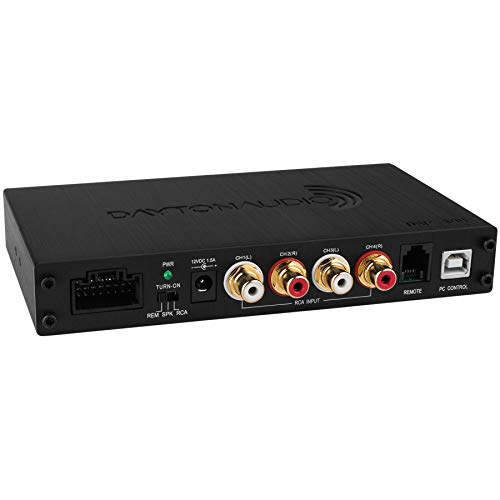
- Real-time signal processing for ultimate control
- Complete audio customization for application specific installations
The Dayton Audio DSP-408 is a raw Digital Signal Processor often used in car audio or home theater setups for EQ, crossovers, and time alignment. While it is technically a “multi-effects” unit in terms of signal processing, it is not a musical instrument pedal. It lacks footswitches, amp modeling, and an expression pedal. If you are looking to fine-tune the acoustics of a room or a complex speaker system, the Dayton is a fantastic tool. However, for a bass player needing distortion, compression, and cab sims, it is not a viable alternative to the BOSS GX-1B.
3. SONICAKE Pocket Master Multi Effects Pedal

- White-Box Digital Modeling Technology delivering organic living tone, 3rd party IR support (5 user slots) for creating Custom Unique Sounds; Supports NAM A2 files (Soniclink APP V1.7.2/Sonicake...
- 100+ Built-in Guitar/Bass/Acoustic Effects with 20 legendary amp models, 24-bit 44.1kHz signal processing, 99 Built-in Drum Rhythms and Looper, 100 Presets, adjustable signal chain with maximum...
The SONICAKE Pocket Master is a ultra-budget, pocket-sized alternative. It offers basic amp modeling and IR simulation at a fraction of the price. While it is incredibly portable and great for beginners on a tight budget, it lacks the 32-bit floating-point processing, the AIRD engine, and the robust build quality of the BOSS GX-1B. In our comparison, the SONICAKE is a great “backup” or “travel” tool for casual practice, but the BOSS GX-1B is a professional-grade workstation that can serve as your primary rig for both studio recording and live touring.
Final Verdict: Is the BOSS GX-1B the Ultimate Bass Tool?
After putting the BOSS GX-1B Ultra-Portable Bass Effects Processor through its paces in the studio and on the floor, we can confidently say it is one of the most impressive bass tools released in recent years. It successfully shrinks a high-end professional rig into a package that fits in your hand. The combination of the AIRD sound engine and 32-bit processing provides a tonal depth that was previously only available in much more expensive and bulky units. While the lack of a physical Aux input is a minor “bummer” for some, the modern connectivity options like USB-C and Bluetooth more than make up for it in a professional workflow.
We recommend the GX-1B to any bassist who is tired of carrying heavy gear but refuses to compromise on tone. Whether you are a beginner looking for your first set of effects or a seasoned pro needing a reliable, portable fly-rig, this processor delivers. It is a “rig in a box” that simplifies your life and enhances your sound. To take your bass tone to the next level and see why so many players are making the switch, pick up the BOSS GX-1B Ultra-Portable Bass Effects Processor today and experience the future of portable bass performance.
Last update on 2026-09-20 / Affiliate links / Images from Amazon Product Advertising API