
BOSS GX-10 Guitar Effects Processor Review: High-End Tones in a Gig-Ready Compact Chassis
For years, guitarists have been caught in a frustrating tug-of-war. On one side, we have the legendary “dream rig”—heavy tube heads, oversized 4×12 cabinets, and a pedalboard the size of a coffee table. It sounds glorious, but it’s a nightmare to transport and even harder to maintain. On the other side, we have the ultra-portable solutions that often leave us wanting more in terms of “feel” and dynamic response. We’ve all been there: standing on a cramped stage or in a small home studio, wishing we could have the processing power of a flagship unit without the massive footprint. This is exactly where the BOSS GX-10 Guitar Effects Processor enters the conversation. It promises to solve the complication of “tone vs. travel” by shrinking the powerhouse engine of its bigger brother, the GX-100, into a frame that fits comfortably in a backpack. In this review, we dive deep to see if this compact unit truly delivers on its promise of professional-grade performance.

- Compact amp/effects processor for guitar and bass
- The same sound engine and color touch display as the GX-100 in a portable, travel-ready design

What to Consider Before Buying an Electric Guitar Multieffects Processor
An Electric Guitar Multieffects processor is more than just a collection of digital sounds; it’s a key solution for modern musicians who need versatility across different genres, recording environments, and live performance settings. Instead of managing a dozen individual cables and power supplies, these units provide a centralized hub for your entire signal chain. They solve the problem of inconsistency, allowing you to take the exact same tone from your bedroom to the studio and onto the stage with a single piece of gear.
The ideal customer for this type of product is the working musician who needs a reliable, portable “fly-rig,” or the home producer who wants hundreds of high-quality amp sounds and effects at their fingertips without cluttering their workspace. It is also an exceptional tool for students who want to explore different effects without spending thousands on individual pedals. However, it might not be suitable for the absolute purist who refuses to move away from analog vacuum tubes, or those who find digital menus overwhelming and prefer the tactile simplicity of a traditional pedalboard. If you fall into the latter category, you might consider a high-end analog drive pedal and a simple delay instead.
Before investing, consider these crucial points in detail:
- Dimensions & Space: A compact unit like the BOSS GX-10 Guitar Effects Processor is designed to save space. Before buying, measure your current workspace or gig bag. You want something that offers enough physical control (switches and pedals) without being so small that it becomes difficult to operate with your feet during a performance.
- Capacity/Performance: Look closely at the “engine” under the hood. In the world of digital modeling, bit-rate and sampling frequency are king. Higher specs, like 32-bit floating-point processing, ensure that the nuances of your playing—your pick attack and volume knob adjustments—are preserved rather than flattened by digital compression.
- Materials & Durability: Since this is a floor-based unit, it will be stepped on repeatedly. A rugged metal chassis is a non-negotiable requirement for anyone planning to play live. Plastic housings might save weight, but they rarely survive the rigors of the road or accidental drops.
- Ease of Use & Maintenance: The interface is your gateway to your sound. A color touch display can drastically reduce the time spent “menu diving.” Additionally, consider the software ecosystem. Having a robust desktop editor (like BOSS Tone Studio) makes deep-dive editing and patch management significantly more efficient than tweaking knobs on the floor.
While the BOSS GX-10 Guitar Effects Processor is an excellent choice, it’s always wise to see how it stacks up against the competition. For a broader look at all the top models, we highly recommend checking out our complete, in-depth guide:
Check out our comprehensive guide to the best multi-effects pedals for beginners and pros alike
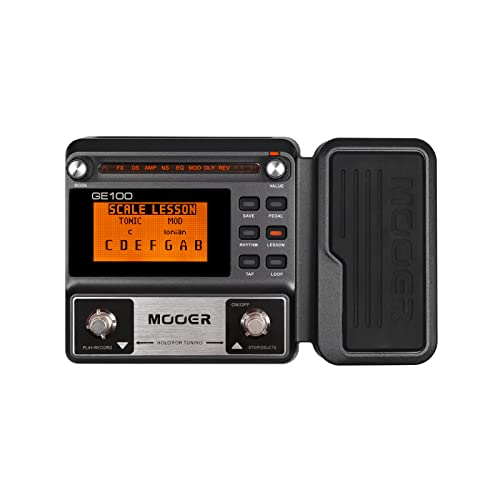
- 80 preset patches and 80 user patches, enough for creating your sound library. You can save any preferred tones by simply pressing down the SAVE button.

- GE150 Pro Series, is designed based on MOOER’s updated GE series design language and MNRS modelling technology. Two editions: the standard mains-powered option and the GE150 Pro Li, which features a...
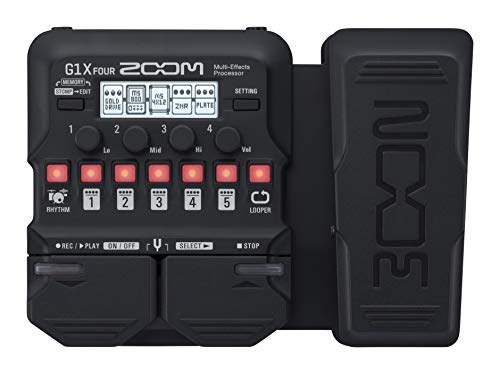
- 71 built-in guitar effects and 13 amp models
First Impressions: Unboxing the BOSS GX-10 Guitar Effects Processor
When we first pulled the BOSS GX-10 Guitar Effects Processor out of the box, the immediate sensation was one of rugged reliability. Despite its compact dimensions—roughly 7.3 by 12 inches—it feels substantial. The metal chassis has that classic BOSS “tank-like” build quality that gives you immediate confidence. It doesn’t feel like a toy; it feels like a professional tool. Setting it up was remarkably straightforward. Within minutes, we had it powered via the included 9V supply and connected to our studio monitors via the analog outputs. Before you even strike a chord, you should check the latest price and availability to see how this fits into your gear budget, as it offers a lot of value for its mid-tier pricing.
The standout feature during the initial boot-up is the color touch display. In a market where many compact processors still use archaic monochrome screens or “calculator-style” readouts, this is a breath of fresh air. The interface is vibrant and responsive, mimicking the intuitive feel of the larger GX-100. The transition from previous BOSS generations, like the GT-100 or even the smaller GT-1, is massive. This unit feels like a modern piece of technology designed for a world where we are all accustomed to smartphone interfaces. It’s sleek, streamlined, and clearly built for the modern guitarist who values both aesthetics and functionality.
What We Like
- Flagship GX-100 sound engine in a much more portable, travel-friendly design.
- Incredible 32-bit floating-point processing that maintains “tube-like” feel and response.
- Intuitive color touch display makes on-the-fly editing incredibly fast and painless.
- Flexible routing with 15 assignable blocks allows for complex, studio-quality signal chains.
What We Didn’t Like
- Only three onboard footswitches may require external control for complex live sets.
- Power source is a standard 9V/1A, but can feel sensitive to lower-quality power supplies.
A Deep Dive into the Performance of the BOSS GX-10 Guitar Effects Processor
To truly understand what makes the BOSS GX-10 Guitar Effects Processor special, we spent several weeks putting it through its paces in various environments—from silent practice with headphones to full-volume testing through a power amp. We also integrated it into our DAW setup to test its capabilities as a recording interface. Here is our detailed breakdown of how it performed.
The AIRD Technology: Capturing the Soul of a Tube Amp
The “heart” of any modern modeler is its ability to mimic not just the sound, but the *feel* of a real amplifier. We found that the AIRD (Augmented Impulse Response Dynamics) technology in the BOSS GX-10 Guitar Effects Processor is a genuine game-changer in this price bracket. Unlike traditional modeling that can feel “static,” AIRD simulates the complex interactions between all the components of a tube amp and the speaker cabinet. When we dialed in the “X-Crunch” or the “Brit Stack” models, the way the sound broke up in response to how hard we picked was remarkably organic. If you back off your guitar’s volume knob, the high-gain models clean up just like a real boutique head would.
This responsiveness is backed by professional-grade specs: 24-bit AD and 32-bit DA conversion, combined with 32-bit floating-point processing at a 48 kHz sampling rate. In practical terms, this means you don’t get that “digital fizz” or the latency issues that plagued older multi-effects units. Whether you are playing through the 32 available amplifier types or loading your own third-party Speaker IRs (Impulse Responses), the audio quality is consistently high-fidelity. You can see its full feature set and user reviews to understand how many guitarists are replacing their traditional amps with this single unit.
Effect Library and Routing: The Ultimate Sonic Playground
One of the strongest selling points of the BOSS GX-10 Guitar Effects Processor is its massive library of 170 BOSS effects. This isn’t just a “greatest hits” collection; it includes everything from classic overdrives like the BD-2 Blues Driver and OD-1 to experimental modulations, delays, and reverbs. We particularly enjoyed the ability to run up to 15 assignable blocks in a single patch. This allows for dual-amp setups or complex parallel routing that would usually require a massive, expensive switching system. You can place your delays after the cabinet, run two different overdrives in series, or even create a massive “ambient cloud” by stacking multiple reverbs.
What makes this flexibility usable is the streamlined modern design. You can drag and drop these blocks using the touch display. It’s a feature that really sets it apart from other units that force you to click through endless menus just to change the order of a chorus and a delay. During our testing, we found the effects to be studio-quality—the delays are pristine, and the BOSS-standard modulations are as lush as their individual pedal counterparts. For those looking for a comprehensive rig, the integrated expression pedal feels solid underfoot and is easily assignable to wah, volume, or any effect parameter for real-time control.
Workflow and Live Control: Small Footprint, Big Control
When you’re on stage, you don’t want to be thinking about your gear; you want to be thinking about the music. The BOSS GX-10 Guitar Effects Processor uses a multi-mode footswitch system that maximizes its three available switches. In “Up/Down” mode, you navigate patches. In “Manual” mode, the switches act like individual stompboxes on a board. We found this especially useful for smaller gigs where we only needed to toggle a boost and a delay on and off. The footswitches themselves are high-quality and provide enough tactile feedback that you know when you’ve engaged them, even through thick-soled shoes.
For even more control, the unit features an external control jack, allowing you to add more footswitches or an additional expression pedal. This modular approach is brilliant—it keeps the unit small for the commute but expandable for the big show. Additionally, the USB-C connectivity turns this unit into a powerful audio interface. We recorded several tracks directly into a DAW, and the signal was clean, low-latency, and captured every bit of the AIRD processing. This dual-use as a live rig and a studio tool makes it one of the most versatile pieces of gear we’ve evaluated lately. If you’re ready to upgrade your workflow, you should check the latest pricing to see if it fits your needs.
BOSS Tone Studio: The Desktop Powerhouse
While the touch display is excellent for quick tweaks, the real power of the BOSS GX-10 Guitar Effects Processor is unlocked when you connect it to a computer or mobile device. The BOSS Tone Studio software is a masterclass in interface design. It provides a large, clear view of your signal chain and all parameters. We found ourselves spending hours crafting the “perfect” tones on the desktop and then syncing them to the hardware in seconds. The software also gives you access to the BOSS Tone Exchange, where you can download patches created by professional guitarists from around the world.
We found that the combination of on-unit touch control and deep software editing provides the best of both worlds. You can refine your sound at home on a big screen and then make micro-adjustments at the venue using the touch screen without ever needing to bring a laptop to the gig. This level of convenience is a major benefit for the gigging musician who needs to adapt to different room acoustics on the fly. You can explore the connectivity options further to see how it can integrate into your specific setup.
What Other Users Are Saying
The general sentiment among users for the BOSS GX-10 Guitar Effects Processor is overwhelmingly positive, with many praising its incredible sound-to-size ratio. One user simply described it as “Excelente,” reflecting a common view that the audio quality punches way above its weight class. Another reviewer noted, “I like the pedal,” highlighting its intuitive nature and robust build. However, it is important to be aware of logistics; one user mentioned they “received an open box not new,” which serves as a reminder to always purchase from reputable authorized retailers to ensure you get a factory-fresh unit with a full warranty.
Generally, the feedback confirms our expert findings: the unit is prized for its “pro-level” sound engine and its ease of use. Users are finding it particularly effective as a “grab-and-go” rig for rehearsals where they don’t want to bring their full setup. The negative feedback we’ve encountered rarely touches on the product’s performance but rather focuses on shipping issues or the desire for even more footswitches—though the latter is usually solved by the unit’s expandability. Overall, the consensus is that this is a top-tier choice for any guitarist looking for a compact, high-performance modeler.
Comparing the BOSS GX-10 Guitar Effects Processor to Top Alternatives
While the GX-10 is a formidable unit, it’s essential to see how it compares to other popular options in the market. Here are three alternatives that might suit different needs.
1. MOOER P2 Multi-Effects Guitar Pedal with Touchscreen

- 【MOOER AI】Al-Powered Preset Generation built for multi-effects-creating tones based on what you need.Simply provide keywords and the context, and MOOER Al will generate up to 9 crafted tones in...
- 【UPDATE】 10 New Effect models for OD module; additional 10 new BASS amp models, and 10 new BASS cabinet simulations; incorporates 30 authorized Choptones guitar cabinet models (CT) within...
The MOOER P2 is an even more compact, pocket-sized alternative. It features an AI-preset touchscreen and a surprising 134 built-in effects. While it lacks the rugged metal “tank” feel and the sophisticated AIRD amp modeling of the BOSS GX-10 Guitar Effects Processor, it is an excellent choice for the ultra-minimalist. It’s perfect for practicing on the go with headphones or as an emergency backup that literally fits in your guitar case’s accessory pocket. However, for professional stage use where durability and foot control are paramount, the BOSS remains the superior choice.
2. Valeton GP-200 Multi-Effects Guitar Pedal with Expression
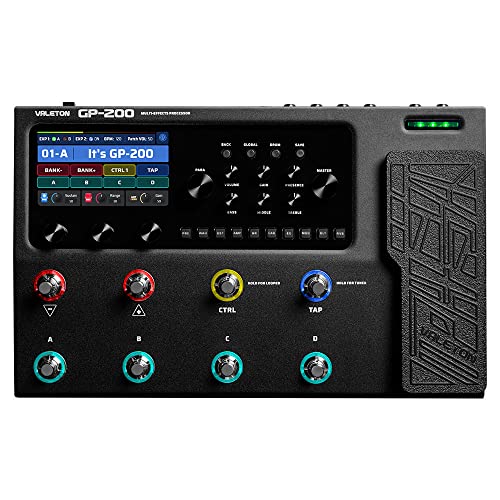
- The Multi Effects Processor Has 240+ Built-in Guitar/Bass/Acoustic Effects with 140 Legendary Amplifiers&Cabinets Simulations and 100 Renowned Stompbox Effect Pedals; Supporting 20 3rd Party IRs...
- 100 Built-in Drum Rhythms and 180 Seconds Looper, 256 Presets, Equipped with the New-Gen HD Modeling Technology On this Multi Effects Pedal, Adjustable Signal Chain with Maximum 11 Simultaneous Effect...
The Valeton GP-200 is a direct competitor that offers a different workflow. It features significantly more footswitches (eight in total), which may appeal to guitarists who perform complex sets and hate switching “modes.” It also includes a built-in expression pedal and a very capable amp modeling engine. However, we found that the BOSS GX-10 Guitar Effects Processor has a slight edge in terms of “feel” and dynamic response due to the 32-bit floating-point processing. If you need more physical buttons on the floor without using external controllers, the Valeton is a strong contender, but if pure tone quality and a more modern touchscreen interface are your priorities, the BOSS wins out.
3. Valeton GP-100 Guitar Multi-Effects with IR Cabinets

- 140 Built-in Guitar/Bass/Acoustic Effects with 45 Legendary Amp Models and 40 carefully selected IR Cabinet Simulations, 24-bit 44.1kHz Signal Processing
- 100 Built-in Drum Rhythms and 90 Seconds Looper, 198 Presets, Adjustable Signal Chain with Maximum 9 Simultaneous Effect Blocks
The Valeton GP-100 is the budget-friendly sibling in this comparison. It is smaller and lacks the touchscreen and the processing power of the BOSS GX-10 Guitar Effects Processor. However, for a beginner or someone on a strict budget, it offers incredible value with IR support and a decent range of effects. While it won’t rival the professional-grade fidelity of the BOSS unit, it serves as a great entry point into the world of modeling. For anyone looking to record professionally or gig regularly, we recommend investing the extra money into the GX-10 for its vastly superior audio engine and build quality.
The Final Verdict: Is the BOSS GX-10 the New King of Compact Processors?
After weeks of testing, we can confidently say that the BOSS GX-10 Guitar Effects Processor is one of the most impressive releases in the compact multi-effects category. It successfully bridges the gap between high-end flagship performance and portable convenience. Its greatest strength lies in the AIRD technology, which provides a level of touch sensitivity and dynamic range that was previously exclusive to much more expensive and larger units. The color touch display is not just a gimmick; it’s a significant workflow improvement that makes patch editing a joy rather than a chore.
While we would have loved to see one or two more footswitches on the unit itself, the expandability options make this a minor gripe. Whether you are a professional looking for a reliable fly-rig, a home studio enthusiast needing a versatile interface, or a serious student of the instrument, this processor delivers. It is a rugged, professional, and sonically superior tool that justifies its place on any pedalboard. If you are looking to elevate your guitar tone while simplifying your setup, we highly recommend that you pick up the BOSS GX-10 Guitar Effects Processor today and experience the future of compact guitar processing for yourself.
Last update on 2026-04-03 / Affiliate links / Images from Amazon Product Advertising API