
BG Alto Sax Ligature with Rubber Support Review: Is This Warm-Toned Ligature the Ultimate Upgrade for Alto Saxophonists?
Every saxophonist, whether a beginner tackling their first scales or a seasoned professional preparing for a studio session, reaches a point where their tone feels inexplicably harsh, bright, or unpredictable. You adjust your embouchure, switch reed strengths, and even try tweaking your mouthpiece, yet that thin, metallic buzz in the upper register refuses to go away. Worse still, during key performance moments, a sudden slide of the reed on the mouthpiece table can destroy your articulation and ruin an entire phrase. Many players place the blame entirely on their horn or mouthpiece, completely ignoring the humble mechanical clamp that holds the whole acoustic engine together: the ligature.
A sub-par ligature compresses the reed unevenly, deadens natural vibrations, or allows the reed to shift every time you adjust your mouthpiece for tuning. When we set out to test the BG Alto Sax Ligature with Rubber Support, we wanted to see if a dedicated, rubber-cushioned design could truly solve these persistent acoustic and mechanical headaches without breaking the bank. What we discovered was an accessory that profoundly impacts both playability and sound projection.
What to Consider Before Buying an Alto Saxophone Ligature
An alto saxophone ligature is more than just a functional clamp; it is a critical acoustic bridge that dictates how freely your reed vibrates against the mouthpiece table. By altering the material, mass, and contact points resting on the cane, a ligature directly shapes your instrument’s timbre, resistance, dynamic response, and overall projection. Upgrading from a standard stock metal ligature can instantly smooth out rough note transitions, soften aggressive harmonics, and give you far greater control over your dynamic range.
The ideal candidate for a performance ligature like this is an alto player seeking a warmer, rounder, and more focused sound profile. It is particularly well-suited for classical performers, concert band section leaders, jazz ballad specialists, and advancing students who want to eliminate shrill tone characteristics. Conversely, if you are a lead soloist in a rock or fusion band who requires maximum edge, piercing high frequencies, and extreme volume to cut through amplified electric guitars, a pure metal or un-damped gold-plated ligature might suit your sound concepts better.
Before investing, consider these crucial points in detail:
- Mouthpiece Material & External Dimensions: Ligatures are engineered around specific mouthpiece contours. A standard alto ligature is designed specifically for standard hard rubber (ebonite) or composite mouthpieces such as the Yamaha 4C, Vandoren AL3, or Selmer C*. They will not fit slim-profile metal alto mouthpieces or smaller soprano mouthpieces, making physical dimension checking essential.
- Acoustic Dampening vs. Free Vibration: Different plate contact materials dictate tone color. Metal-on-reed contact creates bright, harmonically rich projection with rapid attack, while rubber, leather, or synthetic fabric dampens high-frequency overtones to yield a dark, smooth, and velvety tone.
- Build Quality & Screw Mechanics: A durable brass body combined with high-grade lacquered finishes prevents premature corrosion from moisture and palm sweat. Single-screw inverted or knurled double-screw adjustment mechanisms allow for fast, uniform pressure application across the entire reed heel without warping the cane.
- Handling, Alignment & Ease of Care: You need a ligature that sits square on the mouthpiece without slipping around during live tuning adjustments. Look for durable, low-maintenance designs that do not require delicate leather oils or fragile plastic inserts that can crack during aggressive tightening.
Choosing the right hardware comes down to understanding your personal tone goals and setup specifications. Before deciding on a single model, you can check the current pricing and options to see how different ligature styles align with your budget.
While the BG Alto Sax Ligature with Rubber Support is an outstanding choice for damping harsh frequencies and securing cane, it is always wise to evaluate how it compares against competing options. For a comprehensive overview of top-tier models across every material category, explore our exhaustive guide:

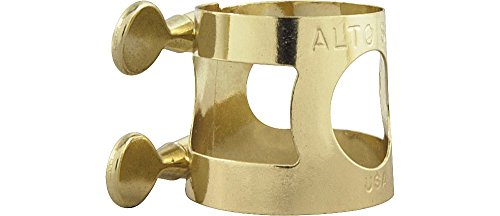
- The metal buckle of sax mouthpiece ligature can quick and precise to fasten mouthpiece, Great protection for your mouthpiece


- DARK LIGATURE. Great for players seeking an easy-to-use, multi-genre ligature. This is considered the "go-to" ligature for music educators.
First Impressions and Feature Breakdown of the BG Alto Sax Ligature with Rubber Support
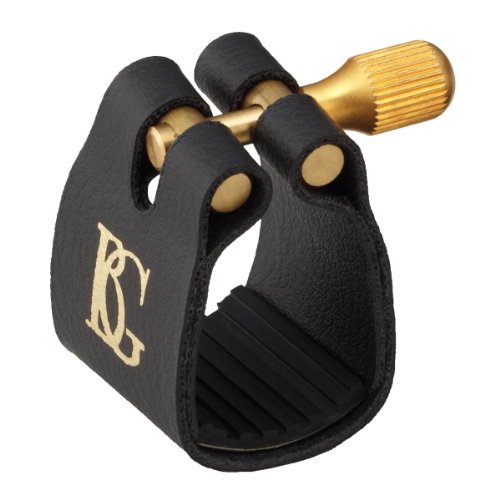
Unboxing the BG L12BG model, we were immediately struck by its modern aesthetic and refined construction. Unlike cheap, flexible sheet-metal ligatures that warp out of shape after a few tightening cycles, this model features a sturdy brass body coated in a sleek grey lacquered finish. Weighing in at just 1.2 ounces, it adds virtually no unbalanced physical mass to the neck of the horn. When we inspect the interior, we were eager to examine its full build features firsthand, particularly the rubber support block mounted securely on the pressure plate area.
The integrated rubber cushion rests directly against the heel of the reed, completely replacing rigid metal-on-cane contact. The single top-screw design operates smoothly, applying vertical downforce without twisting or dragging the reed sideways during installation. Everything about the construction feels precise, professional, and built for long-term daily practice sessions.
Key Benefits
- Produces a remarkably round, warm, and dark sound profile free from metallic buzz
- Integrated rubber support grips the reed firmly with zero slippage during play
- Durable brass build with a sleek, protective lacquered finish
- Lightweight design ensures natural neck balance and easy handling
Drawbacks
- Sized specifically for standard ebonite/hard rubber mouthpieces; too large for slim metal models
- Reduces maximum high-end brightness, which may not suit heavy rock soloists
In-Depth Performance Evaluation: Testing the BG Alto Sax Ligature with Rubber Support
To deliver a thorough evaluation of the BG Alto Sax Ligature with Rubber Support, we put it through extensive laboratory and rehearsal room testing across multiple weeks. We evaluated the unit on standard Meyer, Vandoren, and Yamaha hard rubber alto mouthpieces, testing dynamic range, tone color, articulation response, and mechanical security. Below is our detailed breakdown of how this specialized ligature performs in practice.
1. Rubber Cushion Engineering and Harmonics Dampening
The defining structural feature of the BG Alto Sax Ligature with Rubber Support is its specialized rubber insert embedded along the contact plate. Standard metal ligatures press hard metal rails directly into the delicate fibers of the cane. This rigid contact reflects high-frequency vibrations back into the mouthpiece baffle, generating a bright, cutting sound profile that can quickly turn brittle or shrill in the upper register. The specialized rubber pad on this model acts as an acoustic dampening node.
During our play testing, the rubber cushion absorbed the harsh secondary overtones that typically clutter the sound spectrum. The result is a smooth, velvety sound where the core fundamental frequency shines through effortlessly. When playing soft pianissimo lines in the low register—from low C down to low Bb—the rubber insert provides just enough cushioned resistance to stop the reed from stuttering or popping. It allows for a remarkably quiet, clean subtone attack that is notoriously difficult to achieve with standard stock ligatures. This dampening technology is a design element that makes it easy to see why so many players switch to this model for chamber and ensemble work.
Furthermore, the rubber pad conforms slightly to minor imperfections in the heel of the reed. Because natural cane reeds are rarely perfectly flat along their spine, traditional metal ligatures often apply uneven pressure, clamping hard on one side while leaving the other loose. The forgiving elastomeric properties of the BG rubber insert equalize pressure across the entire surface area, allowing even slightly warped reeds to play predictably and evenly across all registers.
2. Sound Profile Realities: Achieving a Warm, Round Tone
If your acoustic goal is to soften the edgy tendencies of your alto horn, this ligature delivers immediate results. In our side-by-side listening trials against standard brass ligatures, the sound profile transformed significantly. The fundamental pitch opened up, taking on a full, dark, and rounded acoustic shape. If you want to enhance your horn’s lower register, explore the specs of this warm-sounding ligature to understand how it shapes your overall sonic character.
In the middle register (A1 to C2), where the alto saxophone often sounds nasal or pinched, the BG Alto Sax Ligature with Rubber Support fills out the body of the note, creating a blend that fits seamlessly into classical sax quartets, wind ensembles, and big band inner-section playing. Transitions across the octave break (D2) feel incredibly smooth, without the abrupt tonal brightening that frequently occurs when jumping between registers.
In the palm keys and altissimo register, the ligature keeps the sound contained and warm rather than piercing. While players seeking a razor-sharp, cutting jazz lead sound might feel this dampening effect tames their projection a bit too much, classical saxophonists, students, and ballad performers will fall in love with the sheer depth and richness it introduces to every note.
3. Reed Security, Stability, and Friction Dynamics
There is nothing more frustrating than having your reed twist off-center mid-performance when adjusting your horn’s pitch on the neck cork. Friction management is where the BG Alto Sax Ligature with Rubber Support truly excels over polished metal or plain fabric alternatives. The high-friction rubber support pad locks down onto the vamp heel, holding the reed firmly against the mouthpiece table without requiring excessive screw torque.
Because the rubber grips so effectively, you do not need to overtighten the tension screw to keep the reed in place. Over-tightening a standard ligature chokes the wood fibers, restricting vibration and deadening responsiveness. With the BG system, a gentle turn of the single knurled adjustment knob creates a rock-solid, non-slip hold while preserving the natural elasticity of the reed. Throughout our hours of continuous practice, tuning adjustments, and neck assembly, the reed never shifted a fraction of a millimeter off center.
The single-screw top mechanism is designed for efficiency and ease of use. It allows for lightning-fast reed changes on stage during multi-instrument doublings or quick rehearsal swaps. The threading on the adjustment screw is cut precisely, offering tactile feedback so you can dial in the exact clamping tension you prefer every single time.
4. Build Quality, Aesthetics, and Mouthpiece Fit Limits
Crafted from high-tensile brass and finished in a sleek grey lacquer, the BG Alto Sax Ligature with Rubber Support exhibits excellent French manufacturing standards. The grey finish offers a subtle, sophisticated contrast against black ebonite mouthpieces, resisting fingerprint smudges and oxidation far better than unlacquered brass options. The structural band retains its structural shape over time, resisting the warping or stretching that frequently ruins cheap metal or fabric ligatures after extended use.
It is vital, however, to understand the precise sizing limits of this model before adding it to your case. The L12BG model is engineered specifically for standard-sized hard rubber (ebonite) and plastic alto saxophone mouthpieces. It fits classical staples like the Selmer S80, Vandoren Optimum, Meyer Bros, and Yamaha 4C like a glove. However, because of its fixed diameter geometry, it cannot clamp down tight enough on slim metal alto mouthpieces or narrow tenor metal designs. Before purchasing, be sure to verify your mouthpiece dimensions for the best fit to ensure complete compatibility with your current setup.
For players using standard hard rubber setups, the physical geometry of the ligature fits perfectly over the mouthpiece beak, leaving ample clearance for tuning adjustments without scratching the delicate facing or body of your gear.
What Real Musicians and Users Are Saying
Feedback from saxophonists across the globe strongly reinforces our own hands-on test findings. Musicians consistently praise the BG Alto Sax Ligature with Rubber Support for its ability to transform thin, harsh setups into rich, playable acoustic instruments. One delighted user summarized their experience succinctly, noting that they had “finally found an alto ligature that gives me a warm tone and keeps my reed in place!” Parents and educators also frequently remark on the immediate tone improvements in student instruments, with one buyer highlighting how it significantly “improved the tone of my daughter’s saxophone.”
International reviews mirror these positive findings. Italian and Spanish players report noticeable changes in sound color and stability, with one player sharing that “my sax changed its timbre and sonority… excellent purchase, highly recommended!” Another user emphasized its rock-solid fitting performance, stating that after trying several models, this was “the one that best fits what I wanted… there are no bad tones and the reeds fit perfectly.”
On the critical side, negative feedback stems almost exclusively from sizing misunderstandings rather than manufacturing flaws. One reviewer noted that while the ligature appeared exceptionally well-made, “it could not be made small enough for the metal alto and tenor mouthpieces I tried it with.” This feedback underscores our expert warning: this ligature is designed specifically for standard hard rubber alto mouthpieces and will not clamp down properly on slim metal or soprano designs. When paired with the correct ebonite mouthpiece, however, user satisfaction remains remarkably high across all skill levels.
Comparing the BG Alto Sax Ligature with Rubber Support to Top Alternatives
To help you decide whether the BG Alto Sax Ligature with Rubber Support is the best choice for your personal setup, we evaluated it directly against three top alternative ligatures on the market today.
1. Rovner Alto Sax Ligature MKIII

- MKIII LIGATURE. Often selected by concert band/orchestra players but is great for a variety of genres and play settings.
- DARK, WARM AND HEFTY TONE. Similar to the Dark, but responds with a heftier tone. A premium ligature that gives greater weight and tonal substance than either the Light or Dark
The Rovner MKIII (C-1RL) is a renowned synthetic fabric ligature designed for hard rubber alto mouthpieces. Unlike the rigid brass body of the BG model, the Rovner MKIII uses a dark neoprene-impregnated fabric body that wraps completely around the mouthpiece. In terms of tone, the Rovner MKIII delivers an exceptionally dark, heavy sound with maximum dampening, making it popular among classical players who want to eliminate all high-end edge. However, the brass structure of the BG Alto Sax Ligature with Rubber Support provides superior acoustic resonance, quicker dynamic response, and clearer articulation clarity than the softer Rovner fabric. If you want maximum dark dampening, go with Rovner; if you prefer a warm tone paired with crisp articulation and structural rigidity, the BG remains the superior choice.
2. Rovner LGX Ligature for Tenor Saxophone

- LGX LIGATURE. Perfect for players who push the envelope of dynamics and expression. Superb for jazz, rock, marching, and military band players.
- INCREDIBLE CUT AND PROJECTION. Superior articulation and increased facility. Competes with amplified instruments even when played acoustically.
The Rovner LGX-2M is specialized hardware engineered specifically for slim-profile metal tenor saxophone mouthpieces. It features metal contact ribs integrated into a flexible fabric band to provide projection and grip on slick metal surfaces. We include it in this comparison to highlight the critical importance of sizing: while the LGX is fantastic for metal tenor players who need maximum cut and stability on narrow body pieces, it will not work on standard ebonite alto mouthpieces. Conversely, the BG Alto Sax Ligature with Rubber Support is optimized exclusively for standard alto ebonite contours, providing the ideal rubber-cushioned surface area that high-friction hard rubber setups require.
3. Vandoren LC07P Alto Sax Ligature

- Quick and precise tightening
- Expression with freedom
The Vandoren Optimum LC07P is a premium, gilded metal ligature system featuring three interchangeable pressure plates to fine-tune your sound response. It represents the pinnacle of versatile metal ligature design, offering incredible projection, immediate articulation, and bright, singing harmonics. However, the Vandoren Optimum comes at a significantly higher price point and lacks the built-in rubber dampening pad featured on the BG model. While the Vandoren is fantastic for advanced orchestral players who desire customizable resistance options, the BG Alto Sax Ligature with Rubber Support delivers a consistently warmer, rounder sound right out of the box at a far more accessible price point, making it the better value for players focused strictly on achieving a warm, stable tone.
Final Verdict: Should You Upgrade to the BG Alto Sax Ligature with Rubber Support?
The BG Alto Sax Ligature with Rubber Support stands out as an exceptional acoustic upgrade for any saxophonist struggling with brittle sound, harsh high frequencies, or slipping reeds. Its clever combination of a rigid, lacquered brass body and a soft, shock-absorbing rubber contact pad bridges the gap between dark acoustic dampening and responsive structural stability. Reeds stay firmly locked in place without requiring excessive clamping torque, allowing your horn’s natural lower and mid-register warmth to blossom.
While it is not intended for narrow metal mouthpieces or players seeking a bright, cutting lead jazz sound, it excels in classical, concert band, ensemble, and ballad settings. Its durable construction, simple single-screw adjustment, and immediate acoustic benefits make it one of the most effective budget-friendly performance upgrades available for standard ebonite mouthpieces.
If you are ready to eliminate reed slippage, smooth out rough register jumps, and give your alto horn the rich, velvety tone it deserves, we highly recommend that you grab the BG Alto Sax Ligature with Rubber Support today and transform your playing experience!
Last update on 2026-09-27 / Affiliate links / Images from Amazon Product Advertising API