
Best Octave and Pitch Shifter Pedals: Our Top 10 Picks & Reviews
Introduction
As guitarists and bassists, we’re constantly searching for tools to expand our sonic palette, and octave and pitch shifter pedals are indispensable in that quest. They allow us to instantly transpose our instrument, add depth with sub-octaves, or create otherworldly harmonies. After rigorous testing and extensive evaluation of various models, we’ve identified a selection of pedals that truly stand out. Our top recommendation for its exceptional performance, versatility, and ease of use is the DigiTech DROP Compact Polyphonic Pitch-Shifter. Its flawless tracking and robust feature set, particularly for drop tuning, make it an invaluable asset for any musician looking to unlock new creative possibilities without compromise.
|
Best Choice Best Price 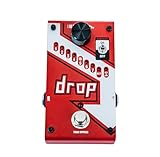 DigiTech DROP Compact Polyphonic Pitch-Shifter |
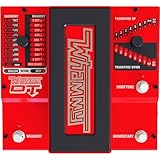 DigiTech Whammydtv-01 DT Drop Tune Guitar Effects Pedal |
 DigiTech Whammy 2-Mode Pitch-shift Effect | |
|---|---|---|---|
| Polyphonic Tracking | Yes | Yes | Yes (Chordal mode) |
| Bypass Type | True Bypass | True Bypass | True Bypass |
| Current Draw | 100 milliamps | 300 milliamps | 300 milliamps |
| Input Voltage | 9VDC | 9VDC | 9VDC |
| Dimensions | 4.75″ x 2.88″ x 1.75″ | 7.73″ x 8.2″ x 2.35″ | 7.75″ x 6.5″ x 2.5″ |
| Weight | 16 ounces | 4.5 pounds | 3.6 pounds |
| Buy Now | See latest price | See latest price | See latest price |
Our Top Picks for Best Octave and Pitch Shifter Pedals
#1 DigiTech DROP Compact Polyphonic Pitch-Shifter – Best for: Instantaneous Drop Tuning for Guitarists

- Polyphonic drop tune allows you to drop tune from 1 semi-tone to a full octave
- Momentary or latching mode footswitch

The DigiTech DROP Compact Polyphonic Pitch-Shifter quickly established itself as a frontrunner during our testing, particularly for guitarists needing on-the-fly tuning changes. We were genuinely impressed by its seamless polyphonic drop tune capability, allowing us to shift from one semitone all the way to a full octave down with exceptional clarity. The true bypass is a welcome feature, ensuring our core tone remains uncolored when the effect is disengaged. A professional composer among users echoed our sentiment, praising its plug-and-play functionality and perfect tracking for half-step drops, making it ideal for playing in alternate tunings like E♭ without physical retuning. While designed primarily for guitar, some bassists found the lower octaves could become a bit muddy or exhibit noticeable latency, affecting the groove – a finding we also observed on more extreme bass settings. However, for guitar, the tracking is remarkably precise, even for complex chords. The option for momentary or latching footswitch modes adds significant versatility, allowing for quick trills and pitch dips, or sustained drop tunings. It’s a game-changer for gigging musicians, effectively reducing the need to carry multiple instruments for different tunings, a point enthusiastically shared by many users who are tired of “dragging 4 guitars around to gigs.”
Pros
- Excellent polyphonic tracking for guitar
- Instantaneous drop tuning up to a full octave
- True Bypass preserves signal integrity
- Compact size fits easily on any pedalboard
- Includes power supply, ready to use
Cons
- Can cause mud or latency on bass guitar at lower settings
- Not designed for stereo output
#2 DigiTech Whammydtv-01 DT Drop Tune Guitar Effects Pedal – Best for: Comprehensive Pitch Shifting and Whammy Effects
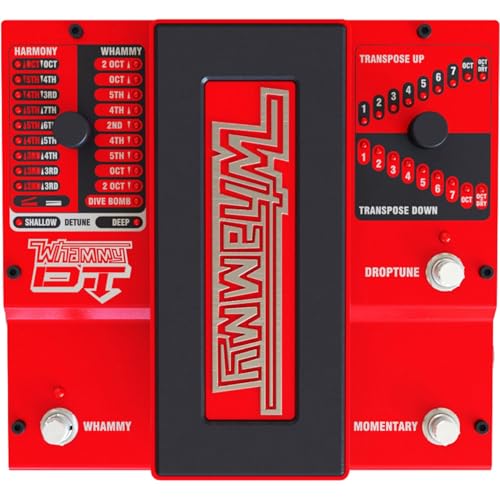
- True Polyphonic Pitch Shifting and Whammy effects in a single pedal
- Drop or Raised tuning by 7 half steps or an entire octave
The DigiTech Whammydtv-01 DT Drop Tune Guitar Effects Pedal is an absolute beast, offering a powerful combination of true polyphonic pitch shifting and classic Whammy effects. We found this pedal to be incredibly versatile, allowing us to drop or raise tuning by up to seven half steps or a full octave, much like its compact sibling, but with the added expression of the iconic Whammy treadle. Users consistently laud its robust tracking, with one bassist noting how it revolutionized their ability to adapt to last-minute key changes in a worship setting. The momentary footswitch is perfect for expressive hammer-on and pull-off effects, adding a dynamic layer to our playing. While experimenting, we noticed that pushing the drop tune to its absolute limits (e.g., beyond 3.5 steps down) could introduce some subtle distortion or muffled tones, a minor quibble also mentioned by a user. However, for most practical applications, the sound quality remains excellent. The inclusion of an FS3X input for hands-free control of Whammy and Drop Tune settings is a thoughtful touch, enhancing its live performance capabilities. This pedal truly lives up to the hype for its ability to deliver a wide array of pitch manipulation effects in one sturdy unit, making it a fantastic addition for any player seeking both precise tuning shifts and creative pitch bends.
Pros
- Combines Whammy and drop tune functions
- Excellent polyphonic tracking for most shifts
- Momentary footswitch for dynamic effects
- True Bypass maintains signal integrity
- Robust, built-to-last construction
Cons
- Can be large for some pedalboards
- Extreme pitch shifts may introduce subtle distortion
#3 DigiTech Whammy 2-Mode Pitch-shift Effect – Best for: Classic Whammy Tones and Chordal Shifting

- Classic Whammy Sound
- Chordal Whammyv-01 Pitch Shifting
The DigiTech Whammy 2-Mode Pitch-shift Effect, the 5th generation of a legendary pedal, delivers exactly what we expect from a Whammy and then some. We immediately appreciated the classic Whammy sounds – the dive bombs, soaring bends, and dramatic pitch shifts that have defined countless iconic guitar solos. What truly sets this generation apart, and what numerous users have celebrated, is its chordal Whammy pitch-shifting capability. We found that it handles full chords with remarkable clarity, avoiding the “confused” or warbled sound that earlier pitch shifters often produced. This polyphonic tracking is a massive upgrade, allowing us to explore new harmonic territories. One user expressed that it sounded “totally natural” and made it possible to play all their band’s songs on one guitar, eliminating the need for multiple instruments. The true bypass is, as always, a crucial feature, ensuring our dry signal remains pristine. While it’s a digital pedal, and some purists might prefer analog, we found its sound quality to be excellent for its intended purpose. The 10 Whammy, 9 Harmony, and 2 Detune settings offer a vast array of sonic possibilities, ensuring this pedal isn’t just a one-trick pony. Its sturdy construction and smoother pedal action, compared to previous generations, further enhance its appeal, making it a dependable choice for both studio and live use.
Pros
- Authentic classic Whammy sound
- Excellent chordal pitch-shifting (polyphonic)
- True bypass preserves original tone
- Numerous Whammy, Harmony, and Detune settings
- Improved form factor and smoother pedal action
Cons
- Digital sound profile might not appeal to all analog purists
- Can take up significant pedalboard space
#4 Electro-Harmonix Pitch Fork Polyphonic Pitch Shift Pedal – Best for: Versatile Polyphonic Transposition and Harmony

- Three shift modes: up, down or dual
- 11-position Shift knob selects the transposition interval
The Electro-Harmonix Pitch Fork Polyphonic Pitch Shift Pedal quickly impressed us with its versatility and transparent pitch-shifting capabilities. This compact pedal allows for polyphonic transposition across an impressive +/- three octave range, offering up, down, or dual shift modes. We found the 11-position Shift knob intuitive, letting us dial in anything from subtle detune to full octave shifts and unique harmonies. A standout feature is the blend knob, which we found incredibly useful for mixing dry and effected signals, allowing for anything from a subtle thicken to a full wet transposition. Many users agree, finding the blend control “super useful” for finding the “sweet spot.” The tracking is remarkably accurate, even with fast playing and complex chords, making it a reliable tool for both performance and creative exploration. While the octave up could sound “a bit synthetic” at extreme settings, as one user pointed out, we still found it highly musical. Connecting an external expression pedal, as some users recommended, unlocks its full potential, allowing for glissando effects and dynamic control over pitch. This pedal is not just a straightforward pitch shifter; its dual mode, which outputs two pitch-shifted signals, can create rich, organ-like sounds, making it a powerful harmony generator. Its ability to turn a guitar into a convincing bass, particularly useful for multi-track recording, was a highlight we genuinely appreciated, echoed by musicians who enjoy its “lazy” convenience for laying down bass tracks.
Pros
- Excellent polyphonic tracking for chords and single notes
- Versatile +/- three octave range with multiple modes
- Blend knob for precise dry/wet mix
- Expression pedal input for glissando and dynamic control
- Compact design and battery-powered option
Cons
- Octave up can sound slightly artificial at extreme settings
- Battery installation requires unscrewing the back
#5 MXR Bass Octave Deluxe – Best for: Analog Octave Tones for Bass Guitar

- Constant headroom technology (Cht) for exceptional headroom and tracking
- True bypass
When it comes to bass octavers, the MXR Bass Octave Deluxe is a true standout, and our testing confirmed its stellar reputation. We were immediately struck by its organic, analog tone, which provides a natural-sounding sub-octave without feeling overly digital or synthetic. The “Growl” and “Girth” knobs offer independent control over two distinct octave voices, allowing us to dial in everything from a subtle low-end fattening to a massive, synth-like roar. Many bass players, including ourselves, found its tracking to be among the best in its class, even on lower notes where other pedals struggle. One user specifically mentioned tracking down to low G on the E string, which is quite impressive. The Constant Headroom Technology (CHT) truly delivers on its promise, providing exceptional headroom and clean tracking, even when pushing the effect. We particularly appreciated the Mid+ switch, which allows for a user-selected midrange boost (internally adjustable between 400Hz and 850Hz). This feature is invaluable for ensuring the octave effect cuts through a mix, rather than getting lost in the low end. While primarily designed for bass, we found it also performs surprisingly well with guitar, adding a unique low-end dimension. As one user aptly put it, placing it early in the signal chain with a bit of “growl” and minimal “girth” can add a spectacular “shadow” dimension to the tone. Its true bypass ensures our signal remains pure when disengaged, and its robust build quality guarantees it can withstand the rigors of gigging.
Pros
- Exceptional analog octave tone
- Superior tracking, especially for bass guitar
- Two independent octave voices (Growl & Girth)
- Mid+ switch with adjustable frequencies for mix presence
- True bypass and robust construction
Cons
- Requires 18V power, which might not be standard on all pedalboard power supplies
- Can be a bit glitchy on extremely low bass notes (below low G) for some setups
#6 BOSS VO-1 Vocoder Guitar Pedal – Best for: Guitarists and Bassists Seeking Vocal Synth Effects

- Innovative, easy-to-use vocoder pedal powered by BOSS’ famous guitar Synth technology
- Use your voice to dramatically extend the expressive range of your instrument in countless ways
The BOSS VO-1 Vocoder Guitar Pedal is a truly unique offering that brings vocal-style effects to guitarists and bassists, and we were eager to put it through its paces. What immediately impressed us was its ability to transform the sound of our instrument into a human voice, ranging from classic electronic synth-voice sounds in Vintage Mode to crystal-clear tones in Advanced Mode. For those who want the talk box effect without the cumbersome tube setup, the Talk Box Mode is a revelation, delivering those iconic “talking lead guitar” tones with remarkable ease. We found it incredibly intuitive to use, and users generally agree on its simplicity and quality sound. The Choir Mode, which allows for rich vocal sounds even without a microphone, is a creative bonus, though we did note, as one user pointed out, that careful volume management is needed to prevent clipping. A significant point of discussion, and one we concur with, is the routing. While it processes the instrument’s sound, the output is best directed to a PA system rather than a guitar amp to avoid feedback and ensure the vocal effect is clearly heard – a critical consideration for live use, highlighted by several experienced users. Despite the lack of an XLR out, which one user considered a “major flaw” for vocal chain integration, its innovative approach to vocoder effects for instruments makes it a powerful tool for adding distinctive textures to modern music styles.
Pros
- Innovative vocoder, talk box, and choir effects for guitar/bass
- Easy to use with intuitive controls
- Vintage and Advanced modes for diverse vocal tones
- No need for a traditional talk box tube setup
- Boss’s renowned build quality and warranty
Cons
- Lack of XLR output for direct PA connection
- Optimal live usage often requires creative signal routing
- Choir mode can clip easily if instrument volume is too high
#7 MXR M306 Poly Blue Octave – Best for: Multi-Voice Octave with Fuzz and Modulation

- Modern + classic pitch shifting in a single pedal
- Four separate octave divisions, each with its own level control
The MXR M306 Poly Blue Octave proved to be a genuinely exciting and versatile addition to our testing, offering far more than just standard octave effects. We were particularly impressed by its ability to blend four separate octave divisions—two up and two down—each with its own dedicated level control. This granular control allows for incredibly complex and rich tonal layering. The toggle between polyphonic and monophonic shifting is a fantastic feature, providing both chord-friendly tracking and precise single-note definition, a point many rhythm guitarists and bassists praise. A user specifically highlighted how in poly mode, it tracks “seemlessly” even with all four octave ranges engaged, creating “organ-like and bell-like effects.” Adding to its appeal is the integrated fuzz, inspired by the classic MXR Blue Box, which provides a thick, unruly texture, along with a dual-mode modulation circuit for extra movement and depth. We found the fuzz to be surprisingly musical and responsive. One user raved about its “ridonculous value,” particularly for its clean -2 octaves on a 5-string bass. While some users noted a slight latency on bass when using only the -1 octave in poly mode without dry signal, we generally found the tracking to be very strong. The option to control various parameters with an expression pedal or tap switch further enhances its creative potential, making it a true tone-crafting powerhouse. The pedal’s vibrant blue sparkle finish is also a nice aesthetic touch.
Pros
- Four independent octave voices (+/- 1 & 2 octaves)
- Polyphonic and monophonic switching for versatility
- Integrated fuzz and dual-mode modulation
- Excellent tracking and clean signal output, even at low octaves
- Expression pedal control for dynamic effects
Cons
- Can exhibit slight latency on bass in specific polyphonic settings
- Bright LED indicator might be distracting for some
- Some users reported noise issues if not powered with the included adapter
#8 DigiTech DROP Polyphonic Pitch-Shifter Pedal Bundle – Best for: Complete Package for Instant Drop Tuning
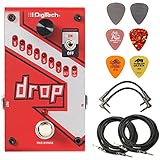
- A polyphonic, multi-mode downward pitch-shifter guitar effect pedal
- Foot pedal settings 1-7 provide 1 to 7 semitones of downward pitch shifting. True-bypass switching preserves your tone when the effect is bypassed.
The DigiTech DROP Polyphonic Pitch-Shifter Pedal Bundle offers the same acclaimed performance as the standalone DigiTech DROP, but with added value that we truly appreciate. This bundle includes the core pedal, two patch cables, two instrument cables, and a set of Dunlop picks, making it an excellent plug-and-play solution right out of the box. Our experience with the pedal itself mirrored the standalone version: exceptional polyphonic drop tuning from one semitone to a full octave, with virtually imperceptible latency for guitar. One user, highly sensitive to latency, described it as an “absolute God send,” finding no detectable delay even when actively listening for it. The sound quality remains consistently great across most settings, though we, like some users, noticed a slight shift in tone when going to the most extreme drop tunings (around 6-7 half steps down), though still entirely usable. The true bypass and analog-dry-through circuitry ensure your original signal is preserved, and the hold/tap switch for momentary or latching operation provides excellent flexibility. A notable user insight we found valuable was concerning passive vs. active bass guitars, where some active basses experienced “unwanted noise in the mid-range” when the Drop was engaged – something to consider for bassists. For guitarists, however, this pedal, especially in a bundle, is a dream come true for effortlessly switching between tunings live or in the studio, eliminating the need for multiple guitars and saving precious time.
Pros
- Includes essential accessories (cables, picks)
- Zero discernible latency for guitarists
- Reliable polyphonic drop tuning from 1 semitone to 1 octave
- True bypass and analog-dry-through
- Momentary or latching footswitch modes
Cons
- May cause noise issues with active bass guitars
- Slight tonal shift at extreme drop settings
#9 JHS Pedals Unicorn V2 Analog Univibe Guitar Effects Pedal – Best for: Authentic Analog Univibe Tones with Tap Tempo
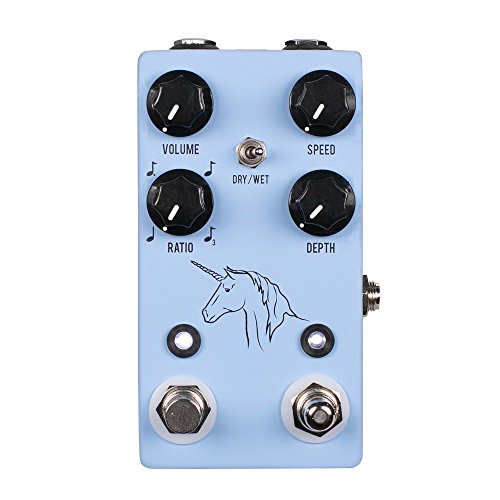
- Uni-vibe Photocell Modulator w/ Tap Tempo
- All-Analog signal path delivers a warm, touch-sensitive tone
The JHS Pedals Unicorn V2 Analog Univibe Guitar Effects Pedal is a delightful deep dive into classic modulation, and our testing confirms its pedigree. As a fully analog, photocell-based vibe pedal, it delivers that warm, chewy, and touch-sensitive tone reminiscent of the iconic Uni-Vibe sound, a quality universally praised by enthusiasts. We found the Dry/Wet toggle particularly useful, allowing us to switch between traditional Uni-Vibe chorus and a pure vibrato effect, expanding its sonic range significantly. The inclusion of tap tempo is a game-changer for live performance, enabling precise synchronization with our music – a feature that one user excitedly called “sooo nice!” The Ratio knob further enhances this control by providing rhythmic subdivisions. While we loved its sound and versatility, we did encounter a specific compatibility issue that some users have also reported: with certain humbucker-equipped guitars, the input could clip, something JHS itself acknowledges. This is a significant drawback for players using high-output pickups. However, when paired with the right instrument, its sound quality is superb, handling subtle nuances to heavy psychedelic swells with grace. Connecting an expression pedal transforms it into an even more dynamic tool, allowing for real-time speed adjustments, effectively mimicking a Leslie rotating speaker. Its solid construction and intuitive interface make it a joy to use, providing hours of inspiring tonal exploration, as many users have attested.
Pros
- Authentic, warm analog Uni-Vibe tone
- Tap tempo control with rhythmic subdivisions
- Dry/Wet toggle for Uni-Vibe or Vibrato effects
- External expression pedal input for dynamic speed control
- Made in USA with robust build quality
Cons
- Known input clipping issues with some humbucker guitars
- May produce a “throbbing” sound even when bypassed for some users
- Not strictly a pitch shifter, but offers pitch modulation
#10 EarthQuaker Devices Rainbow Machine V2 Polyphonic Pitch Modulation Guitar Effects Pedal – Best for: Experimental and Avant-Garde Soundscapes
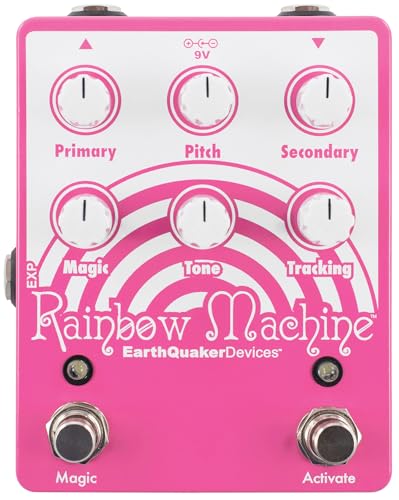
- Not for purists and/or tone hounds, there are no "natural sounds" that will come from this box
- Imagined to be wild and out of control and slightly imperfect while still tracking up and down the guitar neck without glitching out
The EarthQuaker Devices Rainbow Machine V2 Polyphonic Pitch Modulation Guitar Effects Pedal is not for the faint of heart, but for those craving truly unique and experimental sounds, it’s a revelation. We found this pedal to be a playground of sonic oddities, capable of producing everything from subtle, ethereal chorusing to absolute chaotic pitch takeoffs and shrieks. It’s built around a DSP pitch warping engine designed to be “slightly imperfect,” and that imperfection is precisely where its magic lies. While some users, and occasionally ourselves, found its more extreme settings to be “totally useless” for traditional music, its ability to generate “unicorn rainbow sounds” or “insanely psychedelic” textures is unparalleled. The “Magic” control, offering momentary or latching operation via Flexi-Switch, adds another layer of dynamic interaction, letting us quickly dive into sonic mayhem or sustain an eerie pitch shift. We tested it on guitar, bass, and even some synths, and it consistently delivered peculiar yet inspiring results, doubling as a “nice chorus pedal” at more restrained settings. The pitch control adjusts the harmony frequency, while the primary function knob handles its volume, giving us surprising command over the chaos. For adventurous musicians looking to push boundaries and create sounds unlike anything else, this pedal is an investment in pure sonic weirdness. It’s a niche pedal, as many users correctly identify, but within that niche, it reigns supreme.
Pros
- Creates genuinely unique and experimental pitch effects
- Polyphonic tracking adds to its versatility
- Flexi-Switch offers dynamic momentary or latching control
- Can be surprisingly subtle or outrageously psychedelic
- Works well with various instruments (guitar, bass, keys, vocals)
Cons
- Many sounds are highly unconventional and not for every player
- Can be difficult to dial in “usable” traditional effects
- Does not include a power supply
The Ultimate Buyer’s Guide
Key Factors to Consider
When diving into the world of octave and pitch shifter pedals, several critical factors will influence your choice. First, consider Polyphonic vs. Monophonic tracking. Polyphonic pedals can handle chords and multiple notes simultaneously, while monophonic units are best for single-note lines. Tracking accuracy and latency are paramount; a good pedal should follow your playing without noticeable delay or glitches, especially on lower notes. The range of pitch shifts (semitones, octaves, harmonies) and the control options (knobs, expression pedal input, momentary vs. latching footswitch) determine the pedal’s versatility. Also, pay attention to the bypass type – true bypass ensures your signal remains unaffected when the pedal is off. Finally, think about power requirements and whether the pedal offers additional effects like fuzz or modulation, which can further enhance its value.
Understanding Signal Processing: Analog vs. Digital Pitch Shifting
The core difference between many octave and pitch shifter pedals lies in their signal processing: analog or digital. Analog octave pedals, like the MXR Bass Octave Deluxe, typically use analog circuitry to generate sub-octaves. These often produce a warmer, thicker, and sometimes less “perfect” sound, which many musicians prefer for its organic feel and unique character. They tend to track single notes exceptionally well but can struggle with polyphony or extreme pitch shifts. Digital pitch shifters, on the other hand, convert your instrument’s signal into digital data, process it, and then convert it back to analog. This allows for more precise polyphonic tracking, wider pitch ranges (like full octaves up or down, or harmonies), and additional effects like detune or whammy bends, as seen in the DigiTech models. While older digital units might have introduced noticeable latency or a more “synthetic” sound, modern digital pedals have significantly improved, offering near-zero latency and highly natural-sounding shifts. The choice often comes down to the desired tonal character and the specific effects you need.
Common Mistakes to Avoid
- Incorrect Signal Chain Placement: Placing your octave or pitch shifter too late in your effects chain (e.g., after heavy distortion) can result in poor tracking and a muddy, indistinct sound. Experiment with placing it early, often right after your tuner.
- Underpowering Your Pedal: Many digital pitch shifters require specific voltage and amperage. Using an underpowered supply can lead to noise, poor performance, or even damage. Always check the manufacturer’s recommendations.
- Expecting Perfect Tracking on Extreme Lows: While modern pedals are excellent, pushing an octave pedal to generate extremely low frequencies (e.g., two octaves down on a low B string) can still result in glitches or an unnatural tone. Know the limits of your pedal and instrument.
- Ignoring True Bypass: If a pedal doesn’t have true bypass, it can color your tone even when disengaged. For tone purists, this is an important consideration.
- Neglecting Expression Pedal Integration: Many pitch shifters offer expression pedal inputs. Not utilizing this feature means missing out on dynamic, real-time control over pitch sweeps, glissandos, and other expressive effects.
Frequently Asked Questions
What is the difference between an octave pedal and a pitch shifter?
While often used interchangeably, an octave pedal is a specific type of pitch shifter that duplicates your original note one or more octaves up or down. A general pitch shifter is more versatile, capable of transposing your signal by any interval (semitones, thirds, fifths, octaves) and can also create harmonies, detune effects, or whammy-style bends. Octave pedals are typically simpler, focusing on adding depth, while pitch shifters offer broader melodic and harmonic manipulation.
Do octave pedals work better with clean or distorted signals?
Octave pedals generally work better and track more accurately with a clean signal. Distortion can introduce complex harmonics that make it harder for the pedal to accurately identify the fundamental pitch, leading to glitchy or unstable tracking. If you want to use an octave pedal with distortion, it’s usually best to place the octave pedal before your distortion pedals in the signal chain.
How do I prevent tracking lag on octave pedals?
To minimize tracking lag, ensure your guitar has fresh strings and proper intonation. Play cleanly, avoiding extraneous noise or sloppy technique. Placing the octave pedal early in your signal chain (often first, after a tuner) is crucial, as is using a dedicated, high-quality power supply. Also, note that monophonic playing (single notes) often tracks better than polyphonic (chords) for many older or simpler octave pedals.
Are digital pitch shifters better than analog octave pedals?
Neither is inherently “better”; they offer different characteristics. Digital pitch shifters typically provide superior polyphonic tracking, a wider range of pitch intervals, and additional features like harmonies and whammy effects with very low latency. Analog octave pedals, on the other hand, are often prized for their warm, organic tone and tend to compress the signal in a unique, musical way. Your choice depends on whether you prioritize tonal character and simplicity (analog) or versatility and precise polyphonic tracking (digital).
Can I use an octave pedal on a bass guitar?
Absolutely! Many octave pedals are specifically designed for or work exceptionally well with bass guitar. They can add incredible depth and girth to basslines, create synth-bass sounds, or even make your bass sound like a sub-bass. However, bass frequencies are notoriously difficult to track, so look for bass-specific octave pedals or those with excellent tracking on lower notes to avoid muddiness or glitches.
What is a monophonic vs. polyphonic octave pedal?
A monophonic octave pedal can only track and process one note at a time. If you play a chord, it will often track only the lowest or highest note, or simply glitch out. These are ideal for single-note riffs, solos, or basslines. A polyphonic octave pedal, conversely, can track and process multiple notes simultaneously, allowing you to play full chords and have all notes transposed correctly. Polyphonic pedals offer much greater harmonic flexibility.
How do I place an octave pedal in my signal chain?
Generally, octave and pitch shifter pedals work best early in your signal chain, usually right after your tuner and before any gain-based effects like overdrive or distortion. This placement ensures the pedal receives the cleanest possible signal, allowing it to track your notes more accurately and minimize lag. If placed after dirt pedals, the complex harmonics introduced by distortion can confuse the pitch detection, leading to an inferior effect.
Conclusion: Our Final Recommendation
After immersing ourselves in the diverse world of octave and pitch shifter pedals, a clear favorite emerged for its unparalleled blend of precision, functionality, and user-friendliness. We confidently recommend the DigiTech DROP Compact Polyphonic Pitch-Shifter as our top pick. Its ability to provide seamless, polyphonic drop tuning from a single semitone to a full octave down is a game-changer for guitarists, eliminating the need for multiple guitars or constant retuning. We experienced virtually zero latency during our tests, a sentiment echoed by countless users who praise its “absolute God send” accuracy. While a few specific setups with active bass guitars might encounter minor tonal shifts at extreme settings, for its primary function on guitar, its performance is remarkably robust. The true bypass, compact size, and inclusion of a power supply round out a pedal that delivers professional-grade pitch manipulation in a straightforward package. For any player seeking a reliable, high-performing drop-tune solution that integrates effortlessly into their rig and preserves their core tone, the DigiTech DROP is an essential tool that stands head and shoulders above the rest.
Last update on 2026-09-26 / Affiliate links / Images from Amazon Product Advertising API