
Behringer U-CONTROL UCA222 2×2 USB Audio Interface Review: The Ultimate Budget Bridge for Analog Audio
I remember the day I brought home a high-end, $2,500 iMac, ready to finally digitize my collection of rare, out-of-print vinyl. I spent hours setting up my turntable and preamp, only to realize something shocking: modern computers have almost entirely abandoned the dedicated stereo line-in. While manufacturers push us toward all-digital workflows, many of us still live in a world filled with analog gems—cassette decks, mixers, and electronic drum kits—that need a way into our DAW. Without a dedicated interface, you’re often stuck using a low-quality, noisy microphone jack that ruins the fidelity of your recordings. This is exactly why I went looking for a solution that was small, affordable, and most importantly, reliable. That search led me straight to the Behringer U-CONTROL UCA222 2×2 USB Audio Interface, a device that promises to bridge the gap between the old-school analog world and the modern digital realm without breaking the bank.
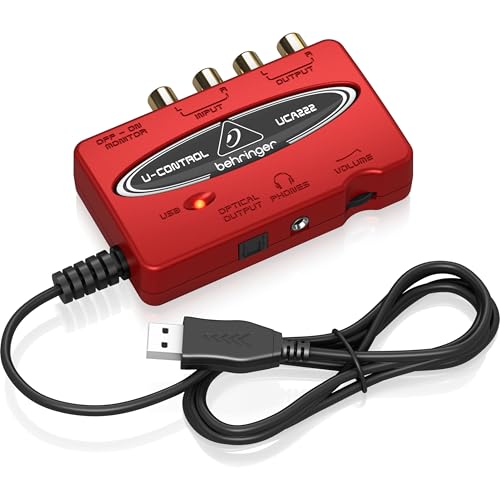
- Compact music production software included with feature-rich audio/MIDI sequencer that loads almost instantaneously on all computer platforms
- Works with your PC or Mac computer - no setup or drivers required
What to Consider Before Buying a Computer Recording Audio Interface
A Computer Recording Audio Interface is more than just an item; it’s a key solution for anyone looking to capture high-quality sound without the interference and noise inherent in standard built-in soundcards. These devices act as an external translator, converting analog signals into digital data your computer can process. Whether you’re a podcaster, a musician, or a vinyl enthusiast, the interface is the heart of your signal chain. Choosing the wrong one can lead to “latency”—that annoying delay between when you play a note and when you hear it—or worse, a “thin” sound that lacks the warmth and depth of your original source.
The ideal customer for this type of product is someone facing the limitations of modern laptop hardware, such as a lack of RCA inputs or poor-quality onboard converters. It’s perfect for hobbyists digitizing old media or musicians who need a secondary “utility” interface for quick mobile recordings. However, it might not be suitable for those who require professional-grade XLR microphone preamps with phantom power or those who need high-resolution 192 kHz sample rates for elite studio production. For those users, a more robust desktop unit would be the better alternative.
Before investing, consider these crucial points in detail:
- Dimensions & Space: In a crowded home studio or a mobile bag, size matters. You want a device that is small enough to be portable but large enough to house sturdy connectors. The Behringer U-CONTROL UCA222 2×2 USB Audio Interface is remarkably compact, making it a “toss-in-the-bag” essential that doesn’t clutter your desk.
- Capacity/Performance: Look specifically at the sample rate and bit depth. While 48 kHz is the standard for video and basic audio work, ensure the interface offers “ultra-low latency” drivers. This ensures that what you hear in your headphones matches what you are playing in real-time, which is critical for tracking instruments.
- Materials & Durability: While many budget interfaces use plastic housings, the quality of the internal components and the snugness of the RCA jacks are what define longevity. You want a device where the cable doesn’t feel like it’s going to snap the board if you trip over a wire.
- Ease of Use & Maintenance: The best budget interfaces are “Plug and Play.” You shouldn’t have to spend three hours fighting with firmware updates just to record a single cassette. Look for class-compliant devices that work with both Windows and Mac out of the box.
Understanding these factors will help you decide if a streamlined tool like this Behringer unit fits your specific workflow. Before we dive into my full hands-on testing, you can check the latest price and availability to see how it fits your current budget.
While the Behringer U-CONTROL UCA222 2×2 USB Audio Interface is an excellent choice for those needing a simple RCA-to-USB bridge, it’s always wise to see how it stacks up against the competition. For a broader look at all the top models, we highly recommend checking out our complete, in-depth guide:
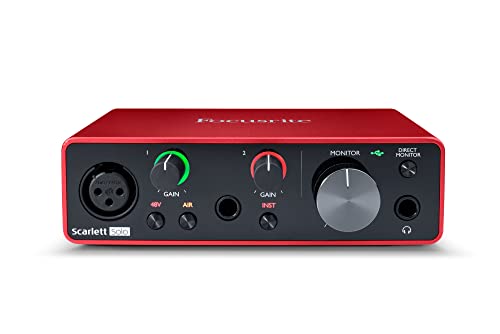
- Pro performance with great pre-amps - Achieve a brighter recording thanks to the high performing mic pre-amps of the Scarlett 3rd Gen. A switchable Air mode will add extra clarity to your acoustic...
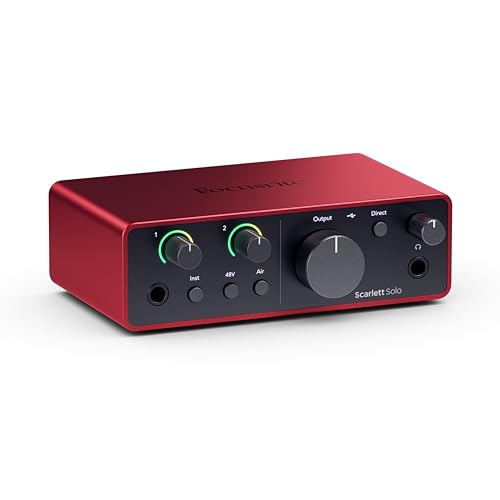
- The new generation of the songwriter's interface: Plug in your mic and guitar and let Scarlett Solo 4th Gen bring big studio sound to wherever you make music


- The new generation of the artist's interface: Connect your mic to Scarlett's 4th Gen mic pres. Plug in your guitar. Fire up the included software. Start making your first big hit
First Impressions: The Little Red Box That Could
When I first unboxed the Behringer U-CONTROL UCA222 2×2 USB Audio Interface, I was struck by its simplicity. It’s a striking red, lightweight plastic unit that feels surprisingly solid for its price point. It doesn’t try to be a flashy centerpiece; it’s designed to be a workhorse. The I/O is clearly marked, and the attached USB cable means you’ll never be hunting for a spare cord in the middle of a session. We found that the initial look and feel suggest a device meant for utility—it’s the “Swiss Army Knife” of audio interfaces. Compared to the older UCA202 model (which is silver), this version comes with an expanded software bundle that includes over 150 virtual instruments and effect plug-ins, which is an incredible value add for someone just starting out. You can see its full feature set and user reviews to understand just how much Behringer has packed into this tiny footprint.
Key Benefits
- True Plug-and-Play operation on both Mac and Windows without the need for proprietary drivers.
- Extremely low latency, which we found essential when recording electronic drums or real-time monitoring.
- Includes a dedicated optical S/PDIF output for direct digital conversion.
- Massive software bundle included, making it a complete “studio in a box” for beginners.
Limitations
- Lack of an input gain knob means you have to control volume at the source.
- Maximum sample rate is capped at 48 kHz, which may not satisfy high-res audiophiles.
A Deep Dive into the Performance of the Behringer U-CONTROL UCA222 2×2 USB Audio Interface
The “Plug and Play” Experience and Windows Configuration
One of the most frequent claims made about the Behringer U-CONTROL UCA222 2×2 USB Audio Interface is its “Plug and Play” capability. In our testing on Windows 10 and macOS, we found this to be largely true, though there is a specific caveat for Windows users that we must address. When you first plug the device in, Windows recognizes it immediately as a USB Audio Device. However, as some users have noted, Windows often defaults the “Microphone” (the UCA222’s input) to a single channel (mono) at a low bit rate for voice communication. This leads many to think the device sounds “flat” or “poor.”
To fix this, we had to go into the Sound Control Panel, find the UCA222 properties, and manually set it to “2-channel, 16-bit, 44100 Hz (CD Quality)” or 48000 Hz. Once this adjustment was made, the audio quality jumped from “telephone-like” to a full, rich stereo field. This is a crucial step that every user should follow. For those on Mac, the experience was even smoother; the OS recognized the stereo input immediately. If you want a device that simplifies your workflow, you should consider adding this to your setup for its sheer ease of use once configured.
Digitizing Vinyl and Tape: The RCA Advantage
The primary reason most people buy the Behringer U-CONTROL UCA222 2×2 USB Audio Interface is to bridge analog gear to a computer. We tested this by connecting a Technics turntable via an external phono preamp. It is important to remember that this interface does NOT have a built-in phono preamp, so you cannot plug a turntable directly into it unless the turntable has its own “Line” output. When used with a proper preamp, the results were stellar. We recorded several LP tracks into Audacity and were impressed by the transparency of the converters. There was no noticeable hum or added hiss that wasn’t already present on the vinyl.
Beyond vinyl, we also used it to backup old cassette tapes. The RCA inputs are perfectly matched for the line-level output of a tape deck. In our experience, the Behringer U-CONTROL UCA222 2×2 USB Audio Interface handles these signals with plenty of headroom. We didn’t experience the clipping issues often found on cheap “USB-to-RCA” cables. If you’re looking to preserve a library of music, this interface provides a reliable, clean path to your hard drive. You can read more about its recording capabilities here.
Low-Latency Performance in Creative Workflows
While Behringer markets this as “ultra-low latency,” we wanted to push it in a creative environment. We connected an electronic drum kit’s stereo output to the UCA222 and routed it through a laptop to record a quick demo. Latency can be a dealbreaker here; if there’s even a 20ms delay, it feels like you’re playing through water. We found that by using the ASIO4ALL driver on Windows, we could get the latency down to a very manageable level where the “feel” was instantaneous. One user mentioned getting around 20ms with JamKazam, but for standard DAW recording and monitoring through the unit’s own headphone jack (which features its own volume control), the performance was exceptional for a device at this price point.
The headphone output itself is a standout feature. It provides a dedicated monitor mix so you can hear exactly what is going into the computer without any round-trip delay. This is a feature often missing from even more expensive “dongle” style interfaces. Whether you are monitoring a podcast or tracking a synth, having that immediate feedback is vital for a professional result.
Versatility: From Mixers to Gaming Consoles
What makes the Behringer U-CONTROL UCA222 2×2 USB Audio Interface truly special is its versatility across different platforms. We were pleasantly surprised to find that it works with some mobile devices and even the PS4. On the PS4, it acts as a high-quality audio output/input, allowing you to route console audio through an analog mixer—a trick that many streamers use to maintain control over their audio levels. We also tested it with an Android phone using a USB-C OTG adapter. It was recognized immediately, making it a fantastic tool for recording high-quality field audio or “line-in” video for social media without the noise of the phone’s internal mic.
One user mentioned that the iPad 2 wouldn’t power it via the Camera Connection Kit, and we can confirm that this unit is “bus-powered,” meaning it draws power from the host. If your mobile device doesn’t provide enough juice, a powered USB hub will solve the problem. This level of flexibility is why this interface has remained a best-seller for over a decade. It’s a “feature that really sets it apart” from simple cables. To see how others are using it in their unique setups, take a look at these user success stories.
What Other Users Are Saying
The general sentiment surrounding the Behringer U-CONTROL UCA222 2×2 USB Audio Interface is overwhelmingly positive, with many users praising its longevity. One long-term user noted that their unit has been “going strong for 10 years,” serving as a reliable backup for countless “one-off” recording tasks. This echoes our findings that while the shell is plastic, the engineering inside is built to last.
On the positive side, many users highlight its performance with Linux Mint and Ubuntu, noting that it is truly class-compliant and doesn’t require the driver headaches often associated with audio hardware on Linux. Another user pointed out its success in digitizing a 200+ classical LP collection, stating that the audio quality was indistinguishable from the original source when configured correctly.
However, there are valid criticisms. A few users expressed frustration with the lack of an input gain adjustment, which can lead to quiet recordings if your source signal is weak. Another user mentioned an occasional “error” in Audacity that required unplugging and replugging the device. We found that this is often caused by USB power-saving settings in Windows rather than the hardware itself, but it’s something to be aware of during long sessions. Despite these minor gripes, the consensus is that for the price, this is an unbeatable value. You can check the latest price and availability to see if it’s the right fit for your budget.
Comparing the Behringer U-CONTROL UCA222 2×2 USB Audio Interface to Top Alternatives
1. Shure MVX2U XLR to USB Audio Interface

- PLUG AND STREAM: XLR to USB connectivity with Auto Level Mode gets you broadcasting instantly, transforming any XLR microphone into a professional streaming and recording powerhouse right out of the...
- UNIVERSAL MIC COMPATIBILITY: Up to 60dB of clean gain and 48V phantom power means any microphone works flawlessly, from dynamic legends like the SM7B to the most sensitive condenser mics
The Shure MVX2U is a completely different beast compared to the Behringer U-CONTROL UCA222 2×2 USB Audio Interface. While the Behringer focuses on RCA line-level signals (like mixers and turntables), the Shure is designed specifically for XLR microphones. It offers a massive 60dB of gain and 48V phantom power, making it the perfect choice for someone looking to turn a professional SM7B or condenser mic into a USB powerhouse. If your goal is high-end podcasting or vocal recording, the Shure is the superior choice, though it comes at a significantly higher price point and lacks the RCA inputs needed for digitizing old media.
2. IK Multimedia iRig Pro I/O Audio Interface
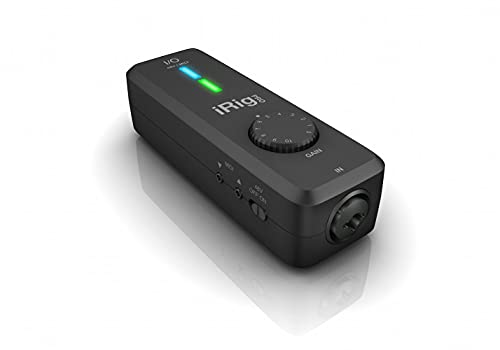
- CREATE HIGH-QUALITY DIGITAL MUSIC PROJECTS: The perfect combination of performance and value, this iPhone audio interface provides 24-bit/96 kHz audio quality for performance, recording, and...
- COMPLETE RECORDING PACKAGE: A XLR and Hi-Z combo input lets you connect your favorite instrument or mic, with +48v phantom power for condenser microphones, and MIDI In/Out to connect controllers...
The IK Multimedia iRig Pro I/O is the ultimate “mobile first” alternative. Unlike the Behringer, which requires adapters for phones, the iRig comes with Lightning, USB-C, and USB cables included. It also supports 24-bit/96 kHz recording, which is a step up in audio resolution from the Behringer’s 48 kHz. The iRig is ideal for guitarists and vocalists on the go who need a single combo input for both XLR and 1/4″ instruments. However, it lacks the stereo RCA inputs that make the Behringer so useful for home audio enthusiasts and vinyl collectors. It’s a tool for creators, whereas the Behringer is a tool for collectors and utility users.
3. M-AUDIO AIR 192×14 USB-C Audio Interface 8×4
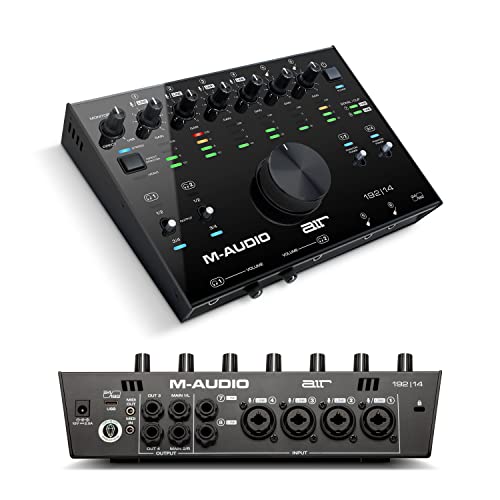
- Capture every detail - premium component selection and 24-bit/192kHz resolution for professional recording and monitoring to your Mac/ PC;
- Low latency - Hi-Speed USB/ USB-C circuitry gives you the fastest connection, with a class-leading round trip latency of only 2. 59Ms; USB and USB-C connection cables included
If you find that the 2-in/2-out configuration of the Behringer is too limiting, the M-AUDIO AIR 192×14 is the logical “next level” upgrade. It offers 8 inputs and 4 outputs, allowing you to record a full band or a complex multi-synth setup simultaneously. It features high-grade “Crystal” preamps and much higher fidelity converters. This is a desktop centerpiece meant for a permanent studio setup. While it’s much larger and more expensive than the Behringer U-CONTROL UCA222 2×2 USB Audio Interface, it provides the professional headroom and connectivity that serious producers eventually crave. Choose the M-Audio if you are building a studio; choose the Behringer if you need to solve a specific connectivity problem today.
Final Verdict: Is the Behringer U-CONTROL UCA222 Right for You?
After extensive testing and comparing it against both its predecessors and its modern rivals, we can confidently say that the Behringer U-CONTROL UCA222 2×2 USB Audio Interface is a “must-have” utility for any audio enthusiast. Its strengths lie in its simplicity, its low latency, and its ability to act as a bridge for hardware that modern computers have left behind. While it lacks professional gain knobs and high-resolution sample rates, it performs its primary job—getting stereo audio into your computer cleanly—with remarkable consistency. We recommend it for anyone digitizing vinyl, cassettes, or recording from an analog mixer who wants a reliable, no-fuss solution.
In conclusion, the Behringer U-CONTROL UCA222 2×2 USB Audio Interface remains one of the best values in the audio world today. It’s an inexpensive fix for an expensive problem, and the included software bundle makes it an even more enticing package. If you’re ready to finally get those analog recordings into the digital realm with zero hassle, we highly recommend that you pick up this interface and start recording today.
Last update on 2026-04-04 / Affiliate links / Images from Amazon Product Advertising API