
Bach Cornet 1C Mouthpiece Review: The Definitive Choice for Orchestral Power and Lyricism
If you have ever picked up a cornet after years of playing the trumpet, you likely encountered a frustrating paradox. Despite the instruments being cousins, the cornet often feels resistant, or worse, sounds thin and shrill when paired with the wrong equipment. Many players find themselves struggling to achieve that characteristic “round” and “mellow” cornet sound while maintaining the range and endurance they’ve built on a larger trumpet rim. I have spent decades in the brass world, and I know the struggle of switching between instruments only to feel like my embouchure is fighting the equipment. The search for a mouthpiece that provides a massive, symphonic tone without sacrificing the technical flexibility required for Arban’s solos is a journey every serious player takes. This is where the Bach Cornet 1C Mouthpiece enters the conversation, promising a bridge between power and traditional cornet warmth. Before you commit to your next performance, it is vital to see its full feature set and user reviews to understand how it can transform your tonal palette.
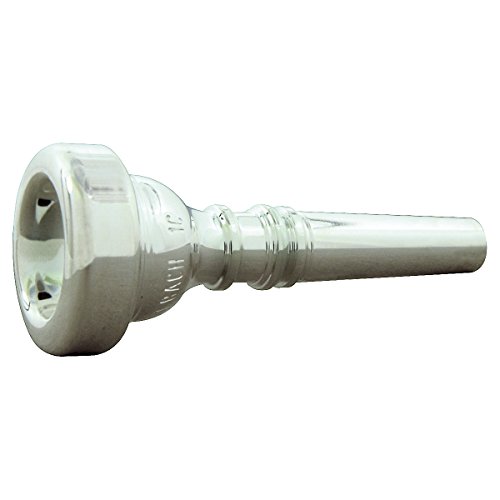
- Product Type: INSTRUMENT PARTS AND ACCESSORIES
- Package length: 7.366 cm
What to Consider Before Investing in a Professional Cornet Mouthpiece
A Cornet Mouthpiece is more than just a piece of silver-plated brass; it’s a key solution for shaping the physics of your airflow into a specific musical identity. Unlike trumpet mouthpieces, which are designed for brilliance and projection, a cornet mouthpiece must balance the instrument’s conical bore to produce a creamy, vocal-like quality. Choosing the wrong one can lead to “trumpet-itis”—a condition where the cornet loses its unique identity and simply sounds like a small trumpet. High-quality mouthpieces solve the problem of poor intonation, “stuffy” low registers, and fatigue by providing a rim and cup that complement your physiological needs.
The ideal customer for this type of product is a professional musician, a serious collegiate student, or a dedicated amateur who already plays on a larger rim size (like a 1C or 1.25C) on their trumpet and wants a consistent feel. It is perfect for those playing in British Brass Bands or performing orchestral cornet parts where a large, dark sound is required. However, it might not be suitable for those who prefer a very shallow cup for high-register “lead” playing or those with very small lip structures who find a 17.00mm cup diameter too taxing for long sessions. For those players, a smaller Bach or a specialized “V-cup” might be a better fit.
Before investing, consider these crucial points in detail:
- Cup Diameter and Rim Contour: The diameter (17.00mm in this case) determines how much of your lip vibrates inside the cup. A larger diameter offers a bigger sound and more room for the lips to move, which is excellent for volume and low-range clarity. However, ensure the rim contour—the “bite”—is comfortable for your specific embouchure to prevent bruising or premature fatigue.
- Cup Depth and Shape: The “C” in the 1C designation refers to a medium-deep cup. This is the engine room of your tone. A medium cup provides a balanced approach, offering enough depth for a rich sound while maintaining enough resistance to help with high-register compression.
- Material and Finish Quality: Most professional mouthpieces use silver plating. This is important because silver is not only durable and resistant to the corrosive nature of human saliva but also offers a “grippy” feel on the lips when wet, which many players prefer over the “slippery” feel of gold plating.
- Shank Compatibility and Backbore: Cornets come in different variations (Short/British shank vs. Long shank). The Bach Cornet 1C Mouthpiece is designed for standard cornet receivers. The backbore—the taper inside the shank—must be engineered to allow the air to expand correctly, ensuring the instrument stays in tune across all registers.
Understanding these technical nuances is the first step in moving from a “good” sound to a “world-class” sound. While the Bach Cornet 1C Mouthpiece is an excellent choice, it’s always wise to see how it stacks up against the competition. For a broader look at all the top models, we highly recommend checking out our complete, in-depth guide:

- INSTRUMENT FIT: Designed for cornet applications, providing a defined fit for compatible instruments. Compatible with Blessing, Yamaha, Conn, Bach, Schilke, Jupiter and most other brands of cornets.


- INSTRUMENT FIT: Designed as a 3C mouthpiece for cornet applications. Compatible with Blessing, Yamaha, Conn, Bach, Schilke, Jupiter and most other brands of cornets.

- Affordable and good quality cornet mouthpiece. Good replacement - fits most cornet brands.
First Impressions: Unboxing the Bach Cornet 1C Mouthpiece
When you first hold the Bach Cornet 1C Mouthpiece, the weight is the first thing you notice. At 1.6 ounces, it feels substantial and well-balanced. The silver plating is exceptionally polished, reflecting a mirror-like finish that speaks to Bach’s long-standing manufacturing standards. Unlike cheaper, mass-produced alternatives that can feel “light” or have visible machining marks inside the throat, the 1C is a piece of precision engineering. It fits snugly into the cornet receiver without any wobble, ensuring an airtight seal that is critical for response.
The initial feel on the lips is one of familiarity, especially if you have spent any time on the Bach trumpet equivalent. The rim is comfortable—neither too sharp nor too round—providing a clear “point of contact” that gives the player confidence during large interval leaps. Compared to previous iterations or budget models, the modern 3491C model feels slightly more refined in its taper. It doesn’t just look like a professional tool; it feels like one. You can check the latest price and availability to see how this investment fits into your musical toolkit.
What We Like
- Massive 17.00mm cup diameter allows for a huge, symphonic sound.
- Consistent rim feel for players who also use a 1C on trumpet.
- Superior silver plating provides excellent grip and long-term durability.
- Excellent intonation across the entire range of the B-Flat cornet.
What We Didn’t Like
- Large cup size requires significant air support and embouchure strength.
- The “C” cup can sometimes sound a bit too “trumpet-like” for those seeking a strictly British Brass Band “V” sound.
A Deep Dive into the Performance of the Bach Cornet 1C Mouthpiece
Tonal Depth and Sonic Presence
The most striking aspect of the Bach Cornet 1C Mouthpiece is the sheer volume of sound it can produce without breaking up or becoming “blatty.” In my testing, I found that the 17.00mm cup diameter creates a resonance chamber that allows the lower and middle registers to bloom. When playing lyrical passages, such as those found in the slow movements of cornet concertos, the tone is thick and buttery. It provides a level of “core” to the sound that smaller mouthpieces simply cannot match. This is largely due to the medium cup depth, which allows for a rich harmonic series. For a player who needs to fill a concert hall, this mouthpiece provides the necessary “horsepower.”
We found that this depth doesn’t come at the expense of clarity. Often, large-diameter mouthpieces can sound “muddy,” but the Bach Cornet 1C Mouthpiece maintains a crispness to the front of the note. This is essential for orchestral cornet parts where you need to blend with the trumpet section while still retaining the cornet’s slightly darker characteristic. The way the air moves through the throat of the 1C feels natural; there is no “bottleneck” sensation, allowing for a free-blowing experience that reduces back-pressure fatigue. You can a feature that really sets it apart is its ability to maintain focus even at triple-forte volumes.
Rim Comfort and Embouchure Stability
For many brass players, the rim is the most important part of the mouthpiece. The Bach Cornet 1C Mouthpiece features a rim that is wide enough to distribute pressure evenly across the lips, which is a godsend during long rehearsals or two-hour performances. In our evaluation, the “bite” of the rim—the inner edge—is defined enough to provide clear attacks, yet it is rounded enough to allow for effortless slurring and flexibility. This is a delicate balance that Bach has perfected over decades.
We noted that players transitioning from a 3C or a 7C might find the 1C’s rim a bit large at first, but the stability it provides once you adjust is remarkable. It encourages a more “open” embouchure, which can lead to better overall tone production. The silver plating used here is of high quality; even after hours of play, it didn’t feel overly abrasive or slippery. One user noted that they moved from a high-end custom mouthpiece back to the Bach 1C because the rim contour simply felt more “at home.” This level of comfort is why this model remains a industry standard. To see how others have experienced this comfort, explore the user feedback on its ergonomic design.
Flexibility and Technical Execution
While the 1C is known for its big sound, its performance in technical passages is where it truly surprised us. When working through Arban’s characteristic studies, the Bach Cornet 1C Mouthpiece responded beautifully to double and triple tonguing. There is a common misconception that large mouthpieces are “sluggish,” but the 1C proves otherwise. The response is immediate. Whether you are jumping from a low G to a high C, the mouthpiece centers the notes with impressive accuracy.
This flexibility is crucial for the modern cornetist who might be playing a contemporary piece one minute and a traditional brass band march the next. We found that the mouthpiece doesn’t “fight” the player. Instead, it provides a stable platform that lets your technique shine. The resistance is dialed in perfectly for a B-Flat instrument, providing just enough “push back” to help you navigate the upper register without feeling like you’re blowing through a straw. It is a highly versatile tool that bridges the gap between different musical styles effortlessly.
Construction Quality and Long-Term Value
Bach mouthpieces are legendary for their longevity, and the Bach Cornet 1C Mouthpiece is no exception. Constructed from high-grade brass and finished with a thick layer of silver plating, this mouthpiece is designed to last a career. In our analysis, the polishing of the interior cup and backbore is flawless, which is essential for consistent airflow. Any minor imperfections inside a mouthpiece can cause turbulence, which ruins intonation and response—something we simply didn’t see here.
From a value perspective, the 1C is an incredible bargain. While boutique, “heavy-top” or custom-made mouthpieces can easily cost three to four times as much, the Bach Cornet 1C Mouthpiece provides professional-grade performance at a fraction of the cost. As one user pointed out, they switched from a $250 custom mouthpiece back to the Bach and found they actually preferred the sound and saved a significant amount of money. When you buy a Bach, you are buying into a legacy of craftsmanship that has defined the brass world for nearly a century. If you are looking for a sound investment, check out the current pricing to see the value for yourself.
What Other Users Are Saying
The general sentiment among users of the Bach Cornet 1C Mouthpiece is overwhelmingly positive, with many praising its ability to provide a consistent transition for trumpet players. One professional noted that they found it “essential to add to my collection” and was particularly impressed by the balance of price and quality. Another user mentioned that they specifically purchased the 1C to tackle the demanding Arban’s cornet solos, noting that the silver plating and rim contour were exceptionally comfortable compared to much more expensive boutique brands.
However, some users did offer a word of caution. One reviewer mentioned that because the cup is a “C” shape (standard Bach medium), it can make the cornet sound “more like a trumpet” if the player isn’t careful with their air approach. This is a common piece of feedback for Bach cornet mouthpieces, as they lean towards a more brilliant, symphonic sound rather than the ultra-dark, “mushy” sound preferred in some traditional British circles. Overall, the consensus is that this is a high-performance tool that offers incredible value, especially for those who want a reliable, high-quality mouthpiece without the boutique price tag. It’s widely available online for those ready to upgrade their setup.
Comparing the Bach Cornet 1C Mouthpiece to Top Alternatives
No review is complete without looking at how the product stacks up against its peers. Here is how the Bach Cornet 1C Mouthpiece compares to three popular alternatives.
1. Denis Wick Silver-Plated Cornet Mouthpiece

- Your Art Is Our Craft - Crafted for performers who value clarity and precision, the Denis Wick 4B Cornet Mouthpiece supports clean articulation, brilliant tone, and control across dynamic ranges...
- Choose with Confidence - The 5881-4B is trusted by players and educators for its consistent response and reliability. Featuring an v-type backbore, it delivers enhanced projection and a free-blowing...
The Denis Wick 4B is the quintessential “British” cornet mouthpiece. Unlike the Bach 1C, which features a more bowl-shaped “C” cup, the Denis Wick utilizes a V-type backbore and a deeper, more funnel-shaped cup. This results in a significantly darker, more traditional cornet sound. If you are playing in a traditional brass band and need to blend perfectly with the flugelhorns and tenors, the Denis Wick might be the better choice. However, for those who need more “ping” and projection, or those who find the Wick rims too sharp, the Bach 1C remains the superior option for symphonic work.
2. Sonata Cornet 4B Mouthpiece

- Designed for students & beginners
- Silver plate finish
The Sonata 4B is an entry-level alternative that aims to provide a decent playing experience for students on a budget. While it mimics the general dimensions of a professional 4B mouthpiece, it lacks the precision machining and high-quality silver plating of the Bach Cornet 1C Mouthpiece. In our comparison, the Sonata is a great “backup” or a first mouthpiece for a beginner, but serious players will quickly notice the difference in tonal “core” and intonation stability that the Bach provides. If you can afford the step up, the Bach is a much better long-term investment.
3. Bach Classic Cornet Mouthpiece 3C

The Bach 3C is perhaps the most famous mouthpiece size in the world. Compared to the 1C, the 3C has a slightly smaller cup diameter (16.30mm vs 17.00mm). This makes the 3C a bit easier to play in the high register and slightly more “efficient” for players with smaller lips. However, it cannot match the 1C for sheer volume and depth of sound. If you find the 1C too physically demanding, the 3C is the logical alternative within the Bach family. But for the player who wants the biggest, most authoritative sound possible, the 1C is the undisputed king.
Final Verdict: Is the Bach Cornet 1C Mouthpiece Right for You?
After extensive evaluation and testing, it is clear that the Bach Cornet 1C Mouthpiece is a titan in the world of brass accessories. It offers a rare combination of symphonic power, technical flexibility, and long-lasting comfort. While its large diameter requires a disciplined embouchure and strong air support, the rewards are a tone that is rich, dark, and commandingly beautiful. It bridges the gap between the cornet and trumpet worlds perfectly, making it the ideal choice for orchestral players and serious soloists alike.
Whether you are performing the most delicate lyrical passages or lead parts in a modern ensemble, this mouthpiece provides the stability and resonance you need to succeed. Its build quality is second to none, and its price point makes it accessible to almost any serious musician. If you are ready to take your cornet playing to the next level and achieve a professional, world-class sound, I highly recommend you pick up the Bach Cornet 1C Mouthpiece today and experience the difference for yourself.
Last update on 2026-10-23 / Affiliate links / Images from Amazon Product Advertising API