
Avantone Active MixCube 5.25″ Powered Studio Monitor Review: The Truth Behind the Industry’s Favorite “Bad” Speaker
I remember the first time I spent eighteen hours straight perfecting a low-end kick and bass relationship on a pair of high-end, eight-inch monitors. In the studio, the room shook with authority, and every transient felt like a punch to the chest. I was convinced I’d produced a masterpiece. Then, I played the track on my smartphone and a small Bluetooth speaker in the kitchen. The result? The bass vanished, the vocals sounded recessed, and the entire mix felt like a cluttered mess. This is the “translation trap” that plagues almost every home studio producer and professional engineer at some point. We spend thousands of dollars on monitors that sound “good,” but we often forget that the vast majority of our audience is listening on systems that are, frankly, quite limited. Without a tool to bridge that gap, you are essentially mixing in the dark. This is exactly where the Avantone Active MixCube 5.25″ Powered Studio Monitor enters the picture, promising to be the brutally honest friend your studio desperately needs.

- 60W Active Mini Full-range Reference Monitor with 5.25" Driver
- Built-in Stand Mounts (each) - Gloss Black
What to Consider Before Buying Studio Audio Monitors
A Studio Audio Monitors is more than just an item; it’s a key solution for the fundamental problem of sonic translation and accuracy. In an era where music is consumed on everything from high-fidelity home theaters to tinny laptop speakers, your monitors need to do more than just sound pleasing. They must act as a magnifying glass for your mix’s flaws. While primary monitors are designed to provide a full-frequency “vibey” experience, secondary reference monitors like the Avantone Active MixCube 5.25″ Powered Studio Monitor are built for forensic analysis of the midrange, where the soul of the music lives. Before you see its full feature set and user reviews, you must understand that these are not designed to be your only set of speakers, but rather a specialized tool for professional-grade results.
The ideal customer for this type of product is someone facing translation issues—specifically those whose mixes sound “hollow” or “muddy” on consumer devices—while it might not be suitable for those who are looking for a primary, bass-heavy speaker for casual listening or EDM production without a secondary full-range system. If you are just starting out and only have budget for one pair of speakers, you might want to look at a traditional two-way monitor first. However, if you are serious about your career as an engineer, a dedicated midrange reference tool is non-negotiable.
Before investing, consider these crucial points in detail:
- Dimensions & Space: In a small home studio, desktop real estate is precious. You need to ensure your monitors can be placed at ear level without obstructing your primary displays. The Avantone Active MixCube 5.25″ Powered Studio Monitor features a compact 6.5-inch cube design that fits almost anywhere, and its shielded design ensures it won’t interfere with your computer screens or other electronics.
- Capacity/Performance: Look for the frequency response and the presence (or absence) of a crossover. A single-driver system like the MixCube avoids phase distortion caused by crossovers, which is critical for vocal placement. You want a monitor that can handle the 90Hz to 17kHz range with absolute transparency in the “mud” region of 300Hz to 2kHz.
- Materials & Durability: Not all cabinets are created equal. High-density MDF is essential for reducing resonance that can color the sound. The Avantone Active MixCube 5.25″ Powered Studio Monitor uses precision-milled, high-rigidity MDF and a custom paper cone made from New Zealand pulp, which provides the fast transient response needed for accurate monitoring.
- Ease of Use & Maintenance: Consider the connectivity options and the power source. Active monitors are generally easier to integrate as they don’t require external power amps. You should also check for mounting options; having a built-in stand mount allows for easy attachment to mic stands, giving you more flexibility in positioning than a standard shelf speaker.
Understanding these factors will help you determine if a specialized tool like the MixCube fits your workflow. Before we dive deeper into our testing, it’s worth seeing how this unit compares to the broader market of professional audio gear.
While the Avantone Active MixCube 5.25″ Powered Studio Monitor is an excellent choice, it’s always wise to see how it stacks up against the competition. For a broader look at all the top models, we highly recommend checking out our complete, in-depth guide:
Our Definitive Guide to the Best Studio Monitors for Home Studios: Top 10 Picks and Reviews

- HONEST. Eris 3.5 near field studio monitors deliver studio-quality, accurate sound perfect for music production, hi-fi audio listening, or multimedia reference.


- PACKAGE INCLUDES: (2) 305P MkII 5 2-Way Powered Studio Reference Monitor Monitoring Speaker
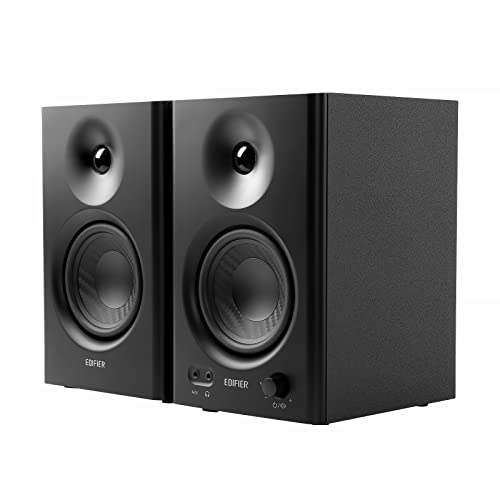
- TRUE STUDIO MONITOR - Based on the highly rated Edifier bookshelf speakers professionally tuned to a responsive almost flat curve for artists and music creators.
Unboxing the Gloss Black Cube: First Impressions of the Avantone Active MixCube
Unboxing the Avantone Active MixCube 5.25″ Powered Studio Monitor is an experience in high-quality craftsmanship. The first thing that strikes you is the finish. The gloss black “Buttercream” or “Black” aesthetic is iconic in the industry, and it feels incredibly dense and heavy for its size. Weighing in at nearly 13 pounds, it doesn’t feel like a toy; it feels like a piece of industrial-grade laboratory equipment. There is a certain satisfying “thud” when you place it on your desk, thanks to the 7mm thick neoprene pad on the bottom that acts as a built-in acoustic isolator. You can check the latest price and availability to see why this build quality remains a benchmark for the category.
Setting it up is remarkably simple. Since it is the active version, you don’t need to hunt for a matching power amplifier. You simply plug in your XLR or TRS cable from your interface, connect the external power supply, and you’re ready to go. Unlike many modern monitors that try to impress you with “enhanced” bass or “sparkling” highs, the MixCube is intentionally underwhelming at first listen. It sounds narrow and boxy. But as we found during our weeks of testing, that “boxiness” is exactly why it is so valuable. It strips away the flattering sub-harmonics and ultra-high frequencies, leaving you with the raw, naked truth of your midrange balance.
What We Like
- Crossover-free design ensures zero phase distortion in the critical midrange frequencies.
- Incredible “translation” power; if it sounds good here, it sounds good anywhere.
- Compact, shielded design allows for flexible placement near computer monitors and in small spaces.
- High-end aesthetic with a heavy, durable MDF cabinet that resists resonance.
What We Didn’t Like
- The external power supply “brick” is quite large and can be cumbersome to hide.
- It lacks low-end completely, making it unsuitable as a standalone primary monitor.
A Deep Dive into the Avantone Active MixCube 5.25″ Powered Studio Monitor Performance
The Midrange Focus: Why “No Crossover” Changes Everything
When we put the Avantone Active MixCube 5.25″ Powered Studio Monitor through its paces, the most striking technical advantage we observed was the lack of a crossover network. In a typical two-way studio monitor, the signal is split between a woofer and a tweeter, usually somewhere between 1.5kHz and 3kHz. This split point is where phase shift and distortion most commonly occur, right where the human ear is most sensitive to vocal clarity and instrumental detail. Because the MixCube uses a single 5.25″ full-range driver, that entire frequency band is reproduced by one single voice coil and cone.
In our tests, this resulted in a level of transient clarity that many high-end ribbon tweeters struggle to match. When mixing vocals, the “presence” and “air” are replaced by “body” and “placement.” We found that if the vocal felt even slightly too quiet on the MixCube, it would completely disappear on a laptop or a car stereo. This is a level of forensic detail that is simply absent in “pretty-sounding” speakers. One user noted that they “couldn’t stay without” this focus on the mids, and we wholeheartedly agree. It forces you to make the hard decisions about EQ and compression that you might otherwise gloss over when distracted by a subwoofer’s deep rumble.
Translation Mastery: Making Your Mixes “Mobile Ready”
The primary reason anyone buys the Avantone Active MixCube 5.25″ Powered Studio Monitor is to ensure their music sounds consistent across various playback systems. We spent several sessions mixing exclusively in mono through a single MixCube. This is a classic technique used by legends like Bruce Swedien and Quincy Jones. By limiting the frequency range to 90Hz–17kHz, the MixCube emulates the limited response of real-world devices like cell phones, smart speakers, and television sets. This is a feature that really sets it apart from the sea of standard near-field monitors.
During our evaluation, we found this particularly helpful for dialing in harmonic distortion on bass and 808s. On a full-range system, you can hear the fundamental sub-frequency of an 808 perfectly. On the MixCube, that fundamental is gone. This forces you to add saturation and upper-harmonic content to the bass so that the listener can “perceive” the bass even on a tiny speaker. We confirmed this with user feedback, where one producer mentioned it was “extremely helpful for dialing in harmonic distortion on 808s to where they’ll translate on a cell phone.” If you can get your kick drum to “click” and your bass to “sing” through these cubes, your mix will sound massive when you switch back to your main monitors.
Build Quality and Driver Engineering: Built for the Long Haul
The physical construction of the Avantone Active MixCube 5.25″ Powered Studio Monitor is a testament to the “over-engineered” philosophy. The cabinet is made from non-resonant MDF, which is much denser than the particle board found in cheaper monitors. This density is crucial because it prevents the cabinet from vibrating and adding its own “color” to the sound. The 5.25-inch driver is equally impressive, featuring a custom-designed frame and a paper cone made from New Zealand pulp mixed with mica fibers. This combination makes the cone incredibly light yet rigid, allowing it to start and stop instantaneously.
We also appreciated the shielded design. In many modern home studios, equipment is packed tightly together. We placed the MixCube directly next to a high-end 4K monitor and several external hard drives, and we experienced zero interference or screen flickering. This makes it a perfect companion for “plug mount” setups or desk-based workstations. Furthermore, the inclusion of a 5/8″-27 threaded mic stand mount on the base is a stroke of genius. We were able to mount the cubes on standard boom stands behind our desk, saving valuable surface space while keeping the monitors at the perfect height and angle. This attention to detail shows that Avantone Pro understands the practical needs of the working engineer.
Ergonomics and Long-Term Utility: Fighting Ear Fatigue
A surprising benefit of the Avantone Active MixCube 5.25″ Powered Studio Monitor that often goes unmentioned is its role in combating ear fatigue. High-fidelity monitors with extended high-frequency responses can be exhausting to listen to for eight to ten hours a day. The constant bombardment of sub-bass and crisp highs takes a toll on the brain’s processing. During our long mixing sessions, we found ourselves switching to the MixCube not just for reference, but to give our ears a “break.”
Because the MixCube focuses on the midrange and doesn’t push massive amounts of air, it allows the listener to stay focused on the “core” of the song without the physical strain of high-volume playback. One user mentioned that using it in “true mono” was “very useful for letting the brain rest during long mix sessions.” We found that by doing the “heavy lifting” of the mix on the MixCube at lower volumes, our final tweaks on the mains were much more accurate because our ears were still fresh. This ergonomic advantage alone justifies the investment for anyone working on full-length albums or daily client work. You can explore its full technical specs to see how the 60W amplifier provides plenty of headroom for this type of detailed, low-to-mid volume work.
What Other Users Are Saying
The general consensus among the professional audio community is that the Avantone Active MixCube 5.25″ Powered Studio Monitor is a “love it because it sounds bad” tool. This paradoxical sentiment is what makes it legendary. Most users emphasize that it is a “hard speaker to learn,” but once you understand how it relates to your main monitors, it becomes indispensable. We found that the learning curve usually takes about a week of A/B testing with tracks you know well.
One user perfectly summarized the experience, stating: “They sound so bad it’s great! Extremely helpful for dialing in harmonic distortion on bass/808s to where they’ll translate on a cell phone.” Another long-term user noted that they “all’inizio ero un po’ dubbioso” (were a bit doubtful at first) but now “non potrei stare senza” (couldn’t be without it). The common thread is compatibility; if a mix is balanced on the MixCube, it is balanced everywhere. While a few beginners might find the lack of bass off-putting, the expert community views this as a feature, not a bug. The feedback is clear: this is a “source of essential info” for the modern mixing environment.
Comparing the Avantone Active MixCube 5.25″ Powered Studio Monitor to Top Alternatives
1. Yamaha HS8 8-Inch Studio Monitor

- 8 inch cone woofer and 1 inch dome tweeter; Produce low distortion sound with a well-defined bottom end at any output level.Waterproof : No
- 38Hz to 30kHz frequency response; Power consumption: 60 watts
The Yamaha HS8 is a completely different beast compared to the Avantone Active MixCube 5.25″ Powered Studio Monitor. While the MixCube is a specialized midrange tool, the HS8 is a full-range primary monitor designed to give you deep bass and crisp highs. The HS8 is legendary for its “flat” response and is often used as the main workhorse in home studios. If you don’t already have a pair of large, reliable monitors, the HS8 should be your first purchase. However, the HS8 has a crossover and a rear port, which means it won’t provide the same phase-accurate midrange focus as the MixCube. We recommend the HS8 for those who need to hear everything from 38Hz to 30kHz, whereas the MixCube is for those who need to fix the middle.
2. JBL 305P MkII Active Studio Monitors
- PACKAGE INCLUDES: (2) 305P MkII 5 2-Way Powered Studio Reference Monitor Monitoring Speaker
- CRYSTAL-CLEAR IMAGING: 305P MkII’s patented Image Control Waveguide delivers precise, immersive sound with a wide sweet spot, ideal for music production and podcasting.
The JBL 305P MkII is widely regarded as one of the best budget-friendly primary monitors on the market. It features a patented Image Control Waveguide that provides a massive “sweet spot,” allowing you to move around your desk without the sound changing significantly. Compared to the Avantone Active MixCube 5.25″ Powered Studio Monitor, the JBLs are much more “fun” to listen to and are better suited for composition and producing. However, they are two-way speakers with significant bass porting, which can sometimes mask problems in the low-mids that the MixCube would expose instantly. The JBL is for the producer starting out; the MixCube is for the mixer looking to level up their professional translation.
3. KRK Rokit 5 G4 Powered Studio Monitor Pair
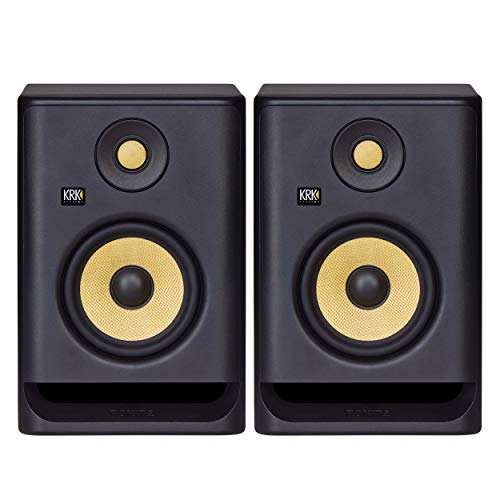
- The KRK ROKIT G4 line has been scientifically re-engineered from the ground up for the way modern artists work—in all genres and environments
- The ROKIT RP5 G4 is an incredibly versatile and sonically accurate bi-amp monitor takes music and sound creativity to a whole new industry-level
The KRK Rokit 5 G4 is a staple in the world of hip-hop and electronic music due to its punchy low-end and built-in DSP for room tuning. It provides a more modern, “commercial” sound than the MixCube. While the Rokit 5 G4 is an excellent tool for tracking and getting a “vibe” going, it is far less critical than the Avantone Active MixCube 5.25″ Powered Studio Monitor. In our comparison, we found that the Rokits can sometimes make a mix sound better than it actually is, whereas the MixCube makes it sound worse until you get the balance right. If you want a speaker that makes your friends impressed when they visit the studio, get the KRK. If you want a speaker that makes your clients’ mixes sound perfect on their AirPods, get the MixCube.
The Final Verdict: Is the Avantone Active MixCube 5.25″ Powered Studio Monitor Your Next Studio Essential?
After weeks of rigorous testing, our verdict is clear: the Avantone Active MixCube 5.25″ Powered Studio Monitor is not a luxury; it is a necessity for anyone serious about professional mixing. Its ability to highlight vocal placement, snare “crack,” and harmonic balance is unmatched by traditional two-way monitors. It doesn’t lie to you, it doesn’t flatter you, and it doesn’t care about your feelings. It simply tells you if your mix is ready for the real world. While its “boxy” sound might be a shock to the uninitiated, its value as a translation tool is unparalleled. We found that our mixes required far fewer “car tests” and revisions once we integrated the MixCube into our workflow.
Whether you are a seasoned pro looking for a “brain break” during long sessions or a home studio enthusiast struggling to make your 808s heard on a phone, this is the solution. The build quality is exceptional, the design is iconic, and the results are undeniable. Don’t let your next masterpiece fall flat on a consumer speaker. Take control of your midrange and ensure your music sounds great on every system. We highly recommend you pick up the Avantone Active MixCube today and experience the “horrible” sound that will make your mixes sound better than ever before.
Last update on 2026-04-04 / Affiliate links / Images from Amazon Product Advertising API