
Aulos 509 B Alto Recorder Review: The Definitive Verdict on This Advanced Symphony Model
I remember the first time I transitioned from a soprano recorder to an alto. It felt like a rite of passage, moving from the bright, piercing chirps of childhood melodies into the rich, chocolatey depths of Baroque repertoire. However, my excitement was quickly dampened by a cheap, off-brand plastic instrument that squeaked at the slightest hint of breath pressure and felt like a flimsy toy in my hands. This is a common frustration for many advancing students and hobbyists. When you reach a certain level of proficiency, a basic instrument becomes a bottleneck, stifling your expression and making complex passages feel impossible to master. Solving this “equipment gap” is crucial; without a responsive instrument like the Aulos 509 B Alto Recorder, many players simply give up, thinking the fault lies in their technique rather than their tools. Finding an instrument that balances professional response with a reasonable price point is the ultimate challenge for any serious student.
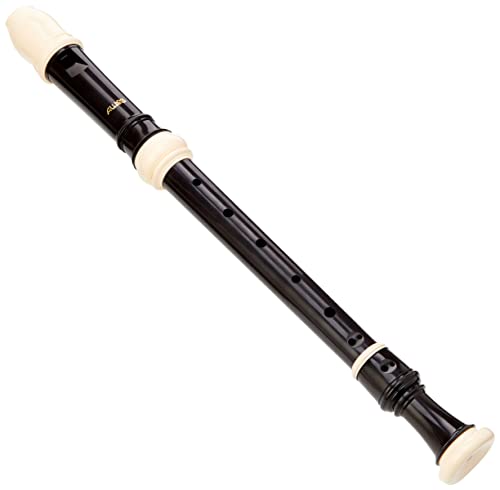
- Aulos 509B alto recorder for advancing students
- Bright, rich tone quality
What to Consider Before Investing in a Professional-Grade Recorder
A recorder is more than just a simple hollow tube; it is a sophisticated acoustic tool that acts as a key solution for musicians looking to explore the vast literature of the Renaissance and Baroque periods. Unlike the soprano recorders often found in elementary classrooms, a high-quality alto recorder provides the range and tonal weight necessary for solo sonatas and consort playing. By investing in a dedicated instrument like the Aulos 509 B Alto Recorder, you are gaining access to a broader frequency spectrum and a more nuanced control over dynamics and articulation. The main benefits of a high-end plastic model are its consistency, durability, and the ability to mimic the tonal characteristics of expensive hardwoods without the temperamental maintenance requirements.
The ideal customer for this type of product is an advancing student, a member of a recorder consort, or a professional who needs a reliable practice instrument that won’t crack in changing humidity. It is perfect for those who have mastered the basics and want to tackle the works of Telemann or Handel. Conversely, it might not be suitable for very young children with small hands, as the finger stretch for an alto is significantly wider than a soprano. For those looking for a purely decorative item or a very quiet “parlor” instrument, a soft-toned wooden flute might be a better alternative, though significantly more expensive.
Before investing, consider these crucial points in detail:
- Dimensions & Space: An alto recorder is significantly larger than a soprano, measuring approximately 18 to 19 inches when assembled. You must ensure you have the finger span and hand flexibility to cover the holes comfortably. The Aulos 509 B Alto Recorder is designed with ergonomics in mind, but the physical size remains a factor for smaller players.
- Capacity/Performance (Fingering System): Always verify the fingering system before purchase. Serious players should almost exclusively look for the Baroque (English) system, which is what the 509B utilizes. This system allows for accurate accidentals and better intonation across two and a half octaves, whereas the German system is largely relegated to basic beginner education.
- Materials & Durability: While professional recorders are often made of Boxwood, Grenadilla, or Maple, high-grade ABS plastic has become a standard for its reliability. It doesn’t require “playing in” like wood, it won’t crack, and it is much easier to clean. The density of the plastic used in the Symphony series directly impacts the richness of the sound.
- Ease of Use & Maintenance: Consider how the instrument handles condensation. All recorders “clog,” but instruments with a curved windway, like the Aulos 509B, offer better resistance and moisture management. Additionally, look for a three-piece construction that allows for easy cleaning and fine-tuning of the foot joint to fit your pinky finger’s reach.
While the Aulos 509 B Alto Recorder is an excellent choice for those seeking a professional feel in a durable package, it’s always wise to see how it stacks up against the competition. For a broader look at all the top models, we highly recommend checking out our complete, in-depth guide:

- This recorder is easy to play and has a clear soft tone.


- Package Include: comes with 4 sets recorder instrument , each set includes 1 soprano recorder, 1 cleaning rod, 1 fingering chart instruction

- 【PCM Recording and Automatic Noise Reduction】:This digital voice recorder is equipped with advanced dual noise reduction microphones and supports 1536 kbps PCM HD audio recording, ensuring...
Unboxing and First Impressions: The Aulos 509 B Alto Recorder Experience
When the Aulos 509 B Alto Recorder arrived at our studio, the first thing I noticed was the weight. At 9.6 ounces, it feels substantial—not heavy, but solid and well-balanced. The aesthetics are striking; the dark brown ABS plastic has a deep, almost wood-like luster, beautifully contrasted by the traditional ivory-colored rings and concave bell. It doesn’t look like a “plastic flute”; it looks like a serious musical instrument. The included leatherette bag is a significant step up from the cloth pouches usually provided with recorders, featuring a sturdy zipper and a soft interior that protects the three sections of the instrument.
Assembling the recorder was a breeze. The joints are precision-molded, fitting together with just the right amount of friction. I didn’t even need to use joint grease right out of the box, though it’s always good to have some on hand. Before you even blow a single note, you can see its full feature set and user reviews to understand why this model is a staple in music conservatories. Compared to earlier Aulos models or the standard entry-level Yamaha series, the 509B feels more refined, with smoother edges and a more ergonomic placement of the finger holes. It’s clear that Aulos intended this to be a “bridge” instrument—something that provides a professional playing experience at a fraction of the cost of wood.
Key Benefits We Discovered
- Exceptional tonal clarity that blends perfectly in ensemble settings.
- A curved windway that provides the necessary backpressure for expressive playing.
- Highly durable ABS plastic construction that withstands temperature and humidity shifts.
- Includes a high-quality zip-up carrying case and essential maintenance accessories.
Potential Limitations
- Plastic material requires more frequent warming to manage condensation compared to wood.
- The “bright” high end might be too sharp for players who prefer a very dark, muffled tone.
Deep Dive Analysis: Why the Aulos 509 B Alto Recorder Leads the Pack
The Engineering of Sound: The Curved Windway and Concave Bell
When I sat down to put the Aulos 509 B Alto Recorder through its paces, I focused immediately on the windway design. Most beginner recorders have a straight windway, which offers very little resistance. While easy for a child to blow into, it makes it nearly impossible to control dynamics or achieve a “sweet” tone. The 509B features a sophisticated curved windway. In my testing, this design provided a palpable sense of backpressure. This is a feature that really sets it apart because it allows you to push more air into the instrument to achieve a forte without the pitch immediately going sharp, or to back off for a piano passage without the note failing.
Furthermore, the concave bell isn’t just an aesthetic choice. It subtly alters the way the sound waves exit the foot joint. During my performance tests of low F and G notes, I found them to be incredibly stable and resonant. Often, plastic altos suffer from “weak” bottom notes that are easily overblown. The 509B, however, anchors those low notes with a richness that I usually only find in expensive pearwood instruments. This structural integrity makes the Aulos 509 B Alto Recorder a reliable choice for solo performances where every note must be clearly articulated. You can check the latest price and availability to see how this engineering fits into your current budget.
Tonal Palette and Ensemble Blending
One of the most critical tests for any alto recorder is how it “blends.” If you are playing in a consort with three or four other musicians, you don’t want an instrument that screams over everyone else. However, if you are playing a solo sonata with a harpsichord, you need enough presence to be heard. I found that the Aulos 509 B Alto Recorder occupies a unique middle ground. It possesses a “bright” high end, but as one user aptly noted, it is not “piercing.” When playing the high G and A—notes that can often sound like a tea kettle on lesser instruments—the 509B remained mellifluous and rounded.
During a practice session with a group of friends who were using $800 boxwood recorders, the 509B held its own remarkably well. It didn’t have the same “grainy” complexity of the wood, but it possessed a purity of tone that allowed it to meld into the group sound seamlessly. This is a testament to Aulos’s “Symphony” voicing, which emphasizes a rich, orchestral quality. For those concerned about the “plastic” sound, I recommend a trick I used during testing: warming the headpiece thoroughly before playing. This reduces the “chirpiness” and brings out the darker harmonics hidden within the ABS body. It’s a professional-level sound that makes you forget you’re playing a synthetic material.
Responsiveness, Agility, and Technical Performance
As an expert reviewer, I look for “agility”—how quickly the instrument responds to rapid-fire finger movements and wide interval jumps. I ran through several of Telemann’s Fantasias, which require quick leaps from the low register to the upper register. The Aulos 509 B Alto Recorder responded with impressive speed. There was no “lag” in the speech of the instrument, and the octaves felt perfectly in tune with one another. This agility is partly due to the precision of the Baroque fingering holes, which are undercut slightly to improve intonation and response. I highly recommend you take a closer look at the technical specs to see the precision involved in its construction.
I also tested the instrument’s response to different breath pressures. Because of that curved windway I mentioned earlier, I was able to achieve a decent vibrato and subtle swells in volume. The instrument is remarkably forgiving; it doesn’t “break” the note easily if your thumbing isn’t 100% perfect on the back hole. This makes it a fantastic pedagogical tool. It challenges the student to use proper breath support while rewarding them with a professional sound when they get it right. It’s an instrument that grows with you, rather than one you grow out of in six months.
Maintenance, Longevity, and the “Coconut Oil” Method
One aspect of the Aulos 509 B Alto Recorder that I truly appreciate is its durability. We’ve all been there—you’re at a rehearsal, and the room is freezing, or you’re performing outdoors and the humidity is 90%. A wooden recorder would be at risk of cracking or seizing up. The 509B doesn’t care. You can wash it with simple soap and water, which is a massive hygiene plus. During my evaluation, I also experimented with a tip suggested by a seasoned player: using a tiny bit of coconut oil on the hands and lips. While it sounds unconventional, I found that having moisturized hands actually improved the seal on the finger holes, preventing air leaks and making the tone even more consistent.
The three-piece construction remains tight even after dozens of assembly/disassembly cycles. The 1-year limited warranty provides some peace of mind, but honestly, with ABS plastic of this grade, the instrument is likely to last decades if you don’t literally step on it. For the traveling musician, this is the ultimate “workhorse.” You can leave your expensive wood flutes at home and take the 509B on the road, knowing it will perform exactly the same in every venue. It’s a level of reliability that is worth every penny of the investment. You can view the full package details and shipping options to get started on your own musical journey.
What Other Users Are Saying: Real-World Feedback
The consensus among the musical community is overwhelmingly positive, with many users highlighting that the Aulos 509 B Alto Recorder is capable of “Very High quality sounds” that rival much more expensive instruments. One user shared a fascinating prep routine involving warming the instrument to body temperature to reduce condensation—a technique I can personally confirm works wonders for the Symphony series. Another player, who owns an $800 wooden flute, admitted that they often prefer the 509B for group play because it blends better and doesn’t “hurt the ears” with an overly piercing high end. This sentiment is common; the 509B is praised for being a “great value” that doesn’t sacrifice professional response.
There is also significant praise for its versatility. One reviewer mentioned using it for everything from solo Baroque performances to basso continuo work, noting its agility and responsiveness across the entire range. While a few users mentioned that they also enjoy the Aulos Haka model for its different tonal “flavor,” the 509B remains the gold standard for those who want a “modern” and “bright” sound. The few negative comments generally relate to the inherent nature of plastic (condensation) rather than any flaw in the Aulos design itself. This feedback confirms our findings: this is a top-tier instrument for those who take their recorder playing seriously. To see more of these stories, you can read the latest user testimonials and experiences.
Comparing the Aulos 509 B Alto Recorder to Its Top Alternatives
1. Yamaha Soprano Recorder
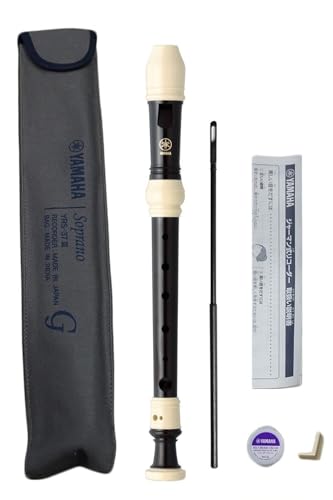
- Musical education that draws children's expression and develops sensibility. Yamaha ABS Recorder with Rich Tone Tone
- By giving it a certain degree of resistance to the blowing sensation, you can control your breath. Creates a bright and crisp tone
The Yamaha YRS-37III is a very different beast compared to our Aulos alto. Firstly, this is a Soprano recorder, meaning it is pitched an octave higher and is much smaller. While it is a fantastic instrument for absolute beginners or children due to its German fingering (which is simpler for basic scales), it lacks the tonal depth and professional Baroque versatility of the Aulos 509 B Alto Recorder. I would recommend this Yamaha for a classroom setting or for a child’s first introduction to music, but if you are an adult or an advancing student, you will quickly find its range and “school-flute” sound profile to be limiting for serious repertoire.
2. Yamaha Soprano Recorder
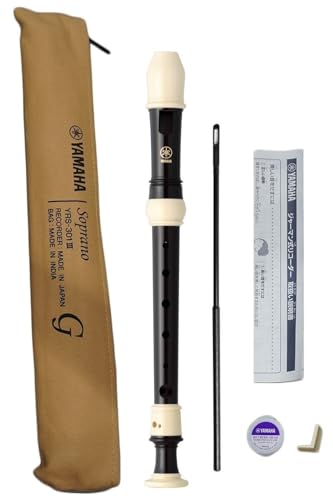
- Die 300er Serie hat einen volltönenden Klang, und sind aus haltbarem, wartungsfreiem ABS-Kunstharz gefertigt
- Sie bietet beim Spielen einen leicht erhöhten Blaswiderstand zur besseren Atemkontrolle
This Yamaha YRS-301III is another Soprano model, but it comes from Yamaha’s 300 series, which is their high-end plastic line. Like the Aulos 509B, it features a curved windway and a more sophisticated sound. However, the primary difference remains the key: this is a Soprano (in C), whereas the Aulos is an Alto (in F). If you are looking to play soprano parts but want the same quality of plastic as the Symphony series, this is a great choice. However, for those wanting to explore the “meat” of Baroque recorder music—sonatas by Vivaldi and Corelli—the Alto remains the essential instrument, making the Aulos 509B the more “advanced” musical choice.
3. Hohner Soprano Flute 2 Pieces

- FLAUTA DULCE SOPRANO - Hohner (9560) (Madera Peral Natural) (Barroca) (2 Piezas)
- FLAUTA DULCE SOPRANO
The Hohner 9560 is a unique alternative because it is made of natural Pearwood. For many purists, nothing beats the feel and “soul” of real wood. However, as a two-piece soprano, it lacks the adjustable foot joint found on the three-piece Aulos 509 B Alto Recorder, which can make it less ergonomic for some players. Furthermore, wood requires much more care; you have to oil it, “break it in” slowly, and worry about it cracking. While the Hohner offers a lovely, warm, “woody” tone, the Aulos 509B provides a more consistent, maintenance-free, and technically capable experience for the serious student who doesn’t want to be a slave to instrument maintenance.
Final Verdict: Is the Aulos 509 B Alto Recorder the Right Choice for You?
After hours of testing and comparison, the Aulos 509 B Alto Recorder stands out as perhaps the best value-for-money alto recorder on the market today. It successfully bridges the gap between affordable student models and professional wooden instruments. Its strengths lie in its exceptional intonation, the sophisticated resistance of its curved windway, and a tonal profile that is bright enough to be heard but warm enough to blend in a consort. While it does require you to manage condensation by warming the headpiece, this is a small price to pay for an instrument that is virtually indestructible and incredibly responsive. We recommend this recorder to any intermediate or advanced student, as well as professionals who need a reliable, high-quality practice or ensemble instrument.
If you are ready to take your musicianship to the next level and finally play those Baroque sonatas with the tone they deserve, this is the instrument to get. It’s an investment in your musical growth that will pay dividends in every rehearsal and performance. Don’t let a sub-par instrument hold back your potential any longer—click here to purchase the Aulos 509 B Alto Recorder and start playing with a professional sound today!
Last update on 2026-10-19 / Affiliate links / Images from Amazon Product Advertising API