
HOTONE Mojo Floor Guitar Amp Review: The 75-Watt Gigging Powerhouse That Fits in Your Gig Bag
For decades, the image of a “real” guitar player was inseparable from a massive 100-watt head sitting atop a 4×12 cabinet. But as any gigging musician knows, the reality of hauling that gear up three flights of stairs for a 45-minute set is far from glamorous. We’ve all been there: the back aches, the cramped trunk space, and the constant fear that a vintage tube might blow during the first song. This “heavy gear fatigue” has led to a revolution in the industry, where players are searching for compact, reliable, and powerful alternatives that don’t sacrifice tone. Failing to find a portable solution often means turning down gigs or struggling with inconsistent house backlines that sound like a bee in a tin can. That is exactly where the HOTONE Mojo Floor Guitar Amp enters the conversation, promising 75 watts of power in a footprint no larger than a standard dual-footswitch pedal.

- Portable 75-watt, dual-channel floor guitar amplifier
- CH A: Hotone Mojo Diamond, inspired by legendary Tweed
What to Consider Before Buying a Compact Amplifier Head
Choosing a compact amplifier, whether for guitar or a Bass Guitar Amplifier Head, is a significant decision that impacts your entire signal chain. These devices are more than just utility items; they are the heart of a modern “fly-rig” or a high-performance pedalboard. The primary problem they solve is the weight-to-power ratio. A high-quality floor amp allows you to maintain a consistent sound whether you are practicing at home, recording in a studio, or playing a large outdoor festival. By integrating the power amp and preamp into a floor-based unit, you eliminate the need for heavy transformers and fragile glass tubes, replacing them with reliable solid-state technology that can see its full feature set and user reviews to confirm its professional capabilities.
The ideal customer for the HOTONE Mojo Floor Guitar Amp is the working musician who values portability and versatility. If you are a session player who needs to jump between a clean “Tweed” sparkle and a high-gain “Rectifier” chug, this is designed for you. It’s also an incredible “insurance policy” for tube amp purists—having one of these in your gig bag means you’re never one blown fuse away from a cancelled show. However, it might not be the right choice for players who demand the specific physical interaction of glowing vacuum tubes or those who need 300+ watts for massive bass headroom. For those users, looking into larger dedicated rack units might be more appropriate.
Before investing, consider these crucial points in detail:
- Dimensions & Space: In a world of crowded pedalboards, every square inch matters. You need to evaluate if the unit can fit comfortably alongside your must-have effects or if it requires a dedicated “mini-board.” The HOTONE Mojo Floor Guitar Amp is impressively small at roughly 7.5 inches wide, making it a dream for tight setups.
- Capacity and Performance: Wattage is often misunderstood. You need to look at the “Ohmage” ratings. A 75-watt amp might only put out 20-25 watts into a 16-ohm cabinet. Always check if the output matches your existing speaker cabinets to ensure you have enough volume for a loud drummer.
- Materials & Durability: Since this lives on the floor, it will be stepped on. Look for high-quality resin or metal enclosures and robust footswitches. While resin can be incredibly tough and lightweight, you want to ensure the knobs are protected from accidental kicks during a passionate performance.
- Ease of Use & Maintenance: The beauty of solid-state floor amps is the lack of maintenance. There are no tubes to bias or replace. However, look for an intuitive layout; you don’t want to be menu-diving on a dark stage. Simple knobs for Gain, Volume, and EQ are always preferable for quick on-the-fly adjustments.
Once you understand these factors, it becomes clear why the market is shifting toward these ingenious little “beasts.” While the HOTONE Mojo Floor Guitar Amp is an excellent choice, it’s always wise to see how it stacks up against the competition. For a broader look at all the top models, we highly recommend checking out our complete, in-depth guide:
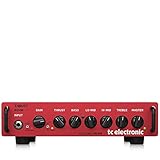
- 500 Watt portable micro bass head amplifier for stage and studio

First Impressions: Unboxing the HOTONE Mojo Floor Guitar Amp
When we first pulled the HOTONE Mojo Floor Guitar Amp out of its packaging, the first thing that struck us was the weight. At just under two pounds, it feels substantial enough to be professional but light enough that you’d forget it’s in your backpack. The “Mojo Attack” red finish is striking, and the layout is remarkably clean for a device that packs two distinct amplifier emulations. We found the inclusion of a dedicated 18-20V power supply in the box a nice touch, as these high-wattage floor units often require more juice than a standard 9V pedal power brick can provide.
Comparing it to previous iterations of the Nano Legacy series, this “Floor” version feels like a major evolution. It takes the successful circuit of their tiny heads and expands the I/O and control set significantly. It feels like a piece of gear designed by people who actually play live. Before you even plug it in, you can check the latest price and availability here to see how it fits your budget compared to traditional amp heads.
Key Benefits
- Massive 75-watt output that can easily drive a 4×12 cabinet.
- Dual-channel design featuring legendary “Tweed” and “Rectifier” tones.
- Comprehensive I/O including an FX Loop and XLR DI out with cab simulation.
- Built-in +12dB clean boost and high-quality reverb for soloing.
Limitations
- The power toggle switch feels a bit delicate compared to the rest of the build.
- The EQ can be very bass-heavy, requiring careful adjustment (often keeping Bass near zero).
A Deep Dive into the Performance of the HOTONE Mojo Floor Guitar Amp
To truly understand what the HOTONE Mojo Floor Guitar Amp is capable of, we put it through a series of rigorous tests, ranging from bedroom practice sessions to full-volume rehearsals with a heavy-hitting drummer. What we discovered was a device that punches far above its weight class, though it requires a bit of “dialing in” to reach its full potential.
Dual-Voice Versatility: From Vintage Sparkle to High-Gain Roar
The core of this unit is its two-channel design. Channel A is inspired by the legendary American Tweed sound. In our testing, we found this channel to be the highlight for “pedal platform” players. It has that characteristic mid-range warmth and a touch of “sag” that makes it feel much more like a tube amp than a standard solid-state device. When we pushed the gain on this channel, it broke up into a creamy, bluesy overdrive that responded beautifully to the guitar’s volume knob. It provides a level of touch sensitivity that is often missing in digital modelers at this price point.
Channel B is a different animal entirely, modeled after the high-gain “Rectifier” sound. Out of the box, this channel is aggressive and thick. However, we confirmed what many users have noted: the bass response is incredibly prominent. To get a tight, modern metal tone, we had to back the Bass knob almost all the way down to 8 or 9 o’clock and boost the Treble. Once we did that, and placed a standard overdrive pedal in front to tighten the low end, the HOTONE Mojo Floor Guitar Amp absolutely screamed. It’s a “wall of sound” experience that makes it a feature that really sets it apart from other “mini” amps that often sound thin or fizzy when distorted.
Real-World Power: Pushing Air with 75 Watts
The most common question we get about floor amps is: “Is it actually loud enough?” For the HOTONE Mojo Floor Guitar Amp, the answer is a resounding yes, with a caveat regarding speaker impedance. We ran this unit into a 4-ohm 2×12 cabinet, and the volume was staggering. At 75 watts, it had enough headroom to stay clean even at stage volumes. When we switched to a 16-ohm cabinet, the wattage dropped to roughly 20-25 watts. Even then, it was plenty for a club gig or a loud band practice, provided you aren’t trying to maintain pristine cleans against a heavy-handed drummer. We highly recommend looking at the detailed specifications and color options to ensure your cab matches well.
What impressed us most during the power test was the “thump.” Solid-state amps often lack the physical push of a tube power section, but the Mojo Attack manages to move enough air to feel satisfying. It doesn’t just sound like an amp; it feels like one. We used it as a backup during a live set, and when our main head went down, we swapped the speaker cable into the Hotone, and the transition was seamless. The audience couldn’t tell the difference, and neither could our back. It’s truly a gig-saving tool.
The Connectivity Hub: FX Loops and XLR Direct Outs
The HOTONE Mojo Floor Guitar Amp shines as a central hub for your entire rig. The inclusion of a high-quality FX Loop is a game-changer. We ran our delays and reverbs through the loop, and they remained crisp and clear even when we were using the high-gain channel B. This is a massive advantage over smaller “mini-heads” that often lack a loop, forcing you to run everything into the front of the amp where it can get muddy. The internal reverb on the unit is also surprisingly lush; we found keeping it around 9 o’clock added a perfect sense of space without washing out the notes.
Furthermore, the XLR output with built-in cabinet simulation is a massive win for modern players. We tested this by going direct into a PA system and into a recording interface. While the cab sim is fixed (you can’t load your own IRs), it sounds professional and “mix-ready.” It’s particularly useful for musicians using in-ear monitors (IEMs) who want to keep stage volume low. One user we spoke with mentioned using it specifically to keep stage noise down for a singing bandmate, and we found it performed that role perfectly. You can get yours today and experience the 75-watt punch firsthand.
Gigging Ergonomics: Portability vs. Build Quality
Living on a pedalboard means the HOTONE Mojo Floor Guitar Amp needs to be tough. The resin enclosure feels extremely durable, almost like a high-density industrial plastic. It’s heavy for its size, which helps it stay put when you’re stomping on the switches. The knobs have a nice resistance to them and don’t feel “wiggly.” The addition of the Boost footswitch (providing up to 12dB of clean volume) meant we could actually remove our dedicated boost pedal from the board, saving even more space and power cables.
If we have one critique, it’s the power toggle switch. It’s a small plastic flick-switch on the back that feels slightly less “tour-proof” than the rest of the unit. We recommend being careful when packing it into a tight gig bag to ensure nothing snags on that switch. However, considering the price and the overall utility, this is a minor grievance. For anyone looking to shrink their footprint without shrinking their sound, investing in this ultra-portable floor amplifier solution is one of the smartest moves you can make.
What Other Users Are Saying
The consensus among the guitar community is that the HOTONE Mojo Floor Guitar Amp is a “beast” of a portable amp. Many users have expressed shock at the sheer volume it produces, with one owner noting that they successfully ran it into a Marshall 2×12 cab and it “comes to life” with a Tube Screamer in front. Another user highlighted its value as a backup, stating it’s a “great alternative to dragging a 100lb amp head” if you want a lighter regular setup. The portability is a recurring theme, with many players now making it a permanent fixture on their pedalboards.
On the critical side, the “bass-heavy” nature of the EQ is a common point of discussion. As one user noted, you often have to “back off on the bass” significantly to find the sweet spot, especially on the distortion channel which some found “muddy” if not EQ’d properly. There were also mentions of the power switch feeling “flimsy.” However, these negatives are almost always balanced by praise for the XLR output and the convenience of the FX loop. Overall, the sentiment is overwhelmingly positive, especially for those looking for a versatile “all-in-one” solution on a budget. You can read more about the dual-channel switching capabilities and see if it fits your specific playing style.
How the HOTONE Mojo Floor Guitar Amp Compares to the Competition
While the Mojo Attack is a fantastic tool, it exists in a diverse market of compact amplification. Depending on your specific needs—whether you need more power for bass or a smaller footprint for silent practice—one of these alternatives might be a better fit.
1. HOTONE Thunder Mini Bass Amp

- Inspired by the ampeg SVT, high quality tone with volume and gain controls
- 3 Band eq controls for shaping your tone
If you are primarily a bedroom player or need a dedicated bass solution for low-volume practice, the HOTONE Thunder Mini Bass Amp is a great sibling to the Mojo Floor. At only 5 watts, it obviously lacks the gigging power of the 75-watt Mojo, but it captures the “Thunderverb” bass character beautifully. It’s much smaller and fits in the palm of your hand. We recommend this for players who don’t need to drive a large cabinet but want that classic Hotone “Nano” form factor for home recording or desk-top jamming.
2. Behringer ULTRABASS BXD3000H 2 Channel Bass Amplifier Head

- Clean channel with dedicated gain control
- Revolutionary class-d amplifier technology: enormous power, incredible sonic performance and ultra-lightweight
For those who need serious power for bass guitar, the Behringer BXD3000H is a formidable opponent. Offering 300 watts of power, it provides the clean headroom that bassists need to stay articulate at high volumes. Unlike the floor-based Mojo, this is a traditional lightweight head. It features a 7-band EQ and a dedicated compressor, which are essential for bass but might be overkill for guitar. This is the better choice for the dedicated bassist who needs to fill a room without a PA system.
3. VOX VGH Series Bass Guitar Amplifier

- Plug and Play: Simply plug your VOX VGH Amplifier Headphones into your Guitar and practice straight away with great amp sounds and effects. If you want to just listen to music simply switch the...
- ROCK: The VGH BASS headphone model has an amplifier that provides a wide dynamic range for all Bass Guitar styles at enough volume to suit all bass players
The Vox VGH Series takes portability to the ultimate extreme by building the amplifier directly into a pair of high-quality headphones. This is not a “floor amp” and cannot drive a speaker cabinet, but for the musician who needs to practice silently in apartments or on the road, it’s unbeatable. It offers built-in effects and a surprisingly punchy bass tone. If your goal isn’t gigging but rather 100% silent, high-quality practice, this is a more focused tool than the HOTONE Mojo.
Final Verdict: Is the HOTONE Mojo Floor Guitar Amp Right for You?
After extensive testing and comparing it with both user feedback and market alternatives, we believe the HOTONE Mojo Floor Guitar Amp is one of the most versatile and high-value pieces of gear a modern guitarist can own. Its ability to bridge the gap between a traditional amp head and a pedalboard-friendly fly rig is unmatched at this price point. While the EQ requires a little bit of patience to dial in—specifically regarding the heavy bass response—the reward is a rich, responsive tone that can handle everything from sparkling cleans to high-gain metal. The built-in boost, reverb, and FX loop make it a true “rig in a box.”
Whether you are looking for a reliable backup for your tube amp, a lightweight solution for fly-dates, or a powerful platform for your pedalboard, this amp delivers. It’s loud, it’s durable, and it sounds professional. Don’t let your back suffer through another load-in with heavy gear. Take control of your tone and your portability—click here to grab the HOTONE Mojo Floor Guitar Amp today and revolutionize your live rig!
Last update on 2026-10-25 / Affiliate links / Images from Amazon Product Advertising API