
Studio 49 1600 Series Diatonic Glockenspiel Review: Precision German Engineering for the Modern Music Classroom
As educators and professional percussionists, we have all faced the same frustrating dilemma: the “toy-grade” instrument trap. I remember walking into a middle school music room years ago and being greeted by a collection of glockenspiels that sounded more like clanking silverware than musical instruments. The bars were out of tune, the resonators were made of cheap plastic, and the sustain was nonexistent. For a student, trying to learn the nuances of melody on a sub-par instrument is a recipe for discouragement. Solving this problem isn’t just about aesthetics; it’s about ear training and fostering a genuine love for music. When we first got our hands on the Studio 49 1600 Series Diatonic Glockenspiel, we were looking for an instrument that could bridge the gap between high-end orchestral bells and the rugged demands of a classroom. The complications of choosing the wrong instrument are many—lost budget on fragile gear, poor student engagement, and a disjointed ensemble sound that no amount of practice can fix.
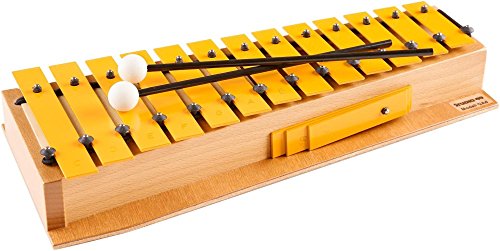
- Alto; C'' - A'''
- Made of a special steel, with the resonator box made of solid beech
What to Consider Before Investing in a Professional Glockenspiel
A Glockenspiel is more than just an item; it’s a key solution for developing pitch accuracy, rhythmic coordination, and ensemble awareness. In the world of Orff-Schulwerk and general music education, the glockenspiel serves as the “soprano” voice that cuts through the texture of xylophones and metallophones. Choosing the right one determines whether your ensemble sounds like a professional unit or a chaotic noise-maker. We believe that investing in a high-quality diatonic instrument is the foundation of any successful percussion curriculum.
The ideal customer for this type of product is a music educator facing a limited budget but refusing to compromise on sound, or a parent looking to provide their child with a “real” instrument rather than a toy. While the Studio 49 1600 Series Diatonic Glockenspiel is a powerhouse in educational settings, it might not be suitable for professional orchestral percussionists who require a full three-octave chromatic range and a pedal dampening system. For those users, a dedicated orchestral bell set with a stand and case would be the logical alternative.
Before investing, consider these crucial points in detail:
- Dimensions & Space: Consider where the instrument will be stored and used. A compact footprint is essential for classroom desks, but the bars must be wide enough for accurate striking. We look for a balance between portability and a playing surface that doesn’t feel cramped during fast passages.
- Capacity/Performance: In the world of glockenspiels, performance is measured by pitch stability and sustain. You want bars that are precision-tuned and a resonator box that amplifies the fundamental frequency without adding unwanted “bark” or “buzz” from the mounting pins.
- Materials & Durability: The debate usually settles between aluminum and steel. Steel bars, like those found on the Studio 49 1600 Series Diatonic Glockenspiel, offer a brighter, more “crystalline” tone compared to the mellow, shorter decay of aluminum. The resonator material—ideally solid wood—is also a non-negotiable for professional tone.
- Ease of Use & Maintenance: For diatonic instruments, the ability to swap out bars (like F# and Bb) is vital. Look for a system that allows for quick changes without tools, and mounting pins that are flexible enough to prevent bar dampening but sturdy enough to withstand years of student use.
By keeping these factors in mind, you can avoid the common pitfalls of percussion purchasing. While the Studio 49 1600 Series Diatonic Glockenspiel is an excellent choice, it’s always wise to see how it stacks up against the competition. For a broader look at all the top models, we highly recommend checking out our complete, in-depth guide:
Discover Our Top 10 Picks for Professional Orchestral Glockenspiels and Percussion Kits

- PROFESSIONAL XYLOPHONE: This full-size soprano glockenspiel xylophone boasts 27 notes range (G2-A5), each key color coded for easy guidance. Featuring classic white and black bars, the music xylophone...

- 【Syllable Cognition】The xylophone has two rows of keys and 32 notes, with clear sound quality. Each aluminum tone bar is professionally tuned and marked note. When struck with a Drum Stick, it can...

- Professional 32 Note Xylophone: The professional 32 note xylophone boasts a range from G5 to C8, comprising 30 distinct notes organized into two rows: one for semitones and the other for whole tones...
First Impressions: Unboxing the Studio 49 1600 Series Diatonic Glockenspiel
When we first unboxed the Studio 49 1600 Series Diatonic Glockenspiel, the initial weight of the package—just 2.4 pounds—made us wonder if it would feel substantial enough for daily use. However, once we removed the protective packaging, the quality of the solid beech resonator box was immediately apparent. Unlike the laminate or plastic frames found on cheaper models, this wood has a fine grain and a smooth finish that feels premium to the touch. The bright yellow steel bars are a hallmark of the 1600 series, and while the color is vibrant, the construction is all business.
The instrument comes ready to play, including a pair of PKS3 mallets that are perfectly weighted for the steel bars. Comparing it to previous iterations of the Studio 49 line, the 1600 series manages to retain that signature “German-engineered” feel while being much more accessible for budget-conscious buyers. There is no assembly required, which is a major win for busy teachers. We found the Studio 49 1600 Series Diatonic Glockenspiel’s initial resonance to be startlingly clear right out of the box, with a much richer low end than we expected from an alto model.
Key Benefits
- Superior tonal clarity thanks to high-grade alloy steel bars.
- Solid beechwood resonator box provides warmth and natural amplification.
- Smart storage pins for accidental bars (F# and Bb) keep the kit organized.
- Lightweight and portable without sacrificing structural integrity.
Limitations
- The diatonic setup requires manual swapping for chromatic notes.
- Bright yellow bar finish may be too “educational” for professional stage use.
A Deep Dive into the Performance of the Studio 49 1600 Series Diatonic Glockenspiel
Tonal Engineering: The Synergy of Special Steel and Solid Beech
When evaluating any mallet instrument, the tone is the beginning and the end of the conversation. In our testing, the Studio 49 1600 Series Diatonic Glockenspiel showcased a level of harmonic purity that is rarely found at this price point. The bars are crafted from a “special steel” alloy, which we found to be incredibly responsive. Unlike aluminum bars that can sometimes sound “thuddy” if struck off-center, these steel bars ring with a consistent, bright chime across the entire alto range.
What truly elevates the sound, however, is the resonator box. Most entry-level glockenspiels utilize a simple frame or a hollow plastic base. The Studio 49 1600 Series Diatonic Glockenspiel utilizes solid beech, a wood known in the instrument-making world for its density and neutral acoustic properties. This allows the steel bars to bloom. We noted that the decay is controlled but lingering—just enough to allow melodies to legato together without becoming a muddy mess of overtones. When we used the included PKS3 mallets, the attack was crisp but not piercing, making it ideal for the sensitive ears of younger students. This tonal excellence is why we consider it a top-tier choice for Orff-based classrooms where pitch matching is a primary goal.
Classroom Ergonomics and the Orff Philosophy
As an expert in the Orff-Schulwerk approach, I pay close attention to how an instrument facilitates learning. The Studio 49 1600 Series Diatonic Glockenspiel is clearly designed with the “active music-making” philosophy in mind. One of the most thoughtful features is the integrated storage space for the F# and Bb bars. In a diatonic classroom, you are constantly switching keys. We found that the dedicated holding pins on the side of the instrument prevent the common “lost bar” syndrome that plagues many music departments.
The spacing of the bars is also worth noting. For a student developing their fine motor skills, the 13.8-inch length of the total unit provides enough room to navigate between notes without accidentally hitting the mounting pins. We also evaluated the durability of the rubber seating beneath the bars. On cheaper models, this rubber often dries out and cracks, causing the bars to rattle. On the Studio 49 1600 Series Diatonic Glockenspiel, the seating is robust and flexible, ensuring that even after hundreds of hours of student use, the instrument remains rattle-free. It’s a tool that respects the player, providing a professional tactile experience that encourages proper technique from day one.
Portability and Build Integrity for the Traveling Teacher
Many music teachers are “on a cart,” moving from room to room throughout the day. In this scenario, the weight and “toss-ability” of an instrument are critical. At just 2.4 pounds, the Studio 49 1600 Series Diatonic Glockenspiel is incredibly easy to transport. However, “light” often means “flimsy” in the world of percussion. We were impressed by how the solid beech box is joined. There are no loose seams or cheap staples here; the construction feels like a piece of high-quality furniture.
We put the instrument through a “durability test” by moving it frequently and even subjecting it to the occasional accidental bump against a desk. The alloy steel bars are remarkably resistant to scratching, and the yellow coating—which helps students identify the instrument quickly in a crowded room—stayed intact. For anyone looking to check the latest price and availability, you will find that the value-to-durability ratio is one of the strongest in the Studio 49 catalog. It’s an instrument that can survive the rigors of a K-12 environment and still look and sound new five years down the line.
Practical Versatility: Beyond the Classroom
While primarily marketed as an educational tool, we wanted to see if the Studio 49 1600 Series Diatonic Glockenspiel had a place in a home studio or a small acoustic ensemble. The answer is a resounding yes. Because the tuning is so precise (A=440Hz), it blends seamlessly with acoustic guitars, pianos, and other professional instruments. We recorded a few tracks using the glockenspiel for high-frequency accents and were delighted by how little EQ was needed to make it sit perfectly in the mix.
The alto range provides a mellow sweetness that avoids the “ear-piercing” quality of soprano glockenspiels, making it a great choice for recording lullabies, folk music, or indie-pop textures. This feature that really sets it apart—its professional intonation—means it’s not just for kids. It’s a legitimate musical voice that happens to be packaged in a student-friendly format. Whether you are a teacher building a percussion ensemble or a songwriter looking for a new “color” in your sonic palette, the 1600 series delivers a level of performance that belies its “budget” classification.
What Other Users Are Saying
The consensus among users reinforces our expert findings: this instrument is a workhorse. Educators, in particular, praise the Studio 49 1600 Series Diatonic Glockenspiel for its ability to fit into tight school budgets without sacrificing the “Orff sound.” One user noted that for those on a “limited school budget,” this glockenspiel works perfectly alongside other pitched percussion, and they even highlighted the “holding space for # and bs” as a game-changer for classroom organization. We completely agree; that small design detail saves teachers a significant amount of stress during setup.
Other users have described it as a “beautiful sounding instrument” and a “joy to use,” which aligns with our assessment of the beechwood resonance. One parent mentioned that their son’s teacher was thrilled with the gift, noting the competitive pricing and high quality. While there are almost no negative reports, it is worth noting that for some, the diatonic nature (needing to swap bars) is the only minor hurdle. However, as we’ve discussed, this is standard for Orff instruments and actually serves as an educational benefit. Overall, the feedback confirms that this is a “great product” that exceeds expectations in both sound and durability.
Comparing the Studio 49 1600 Series Diatonic Glockenspiel to Top Alternatives
Before you secure your own Studio 49 1600 Series, it is important to see how it compares to other popular options on the market. These alternatives cater to different needs, from full beginner kits to more traditional orchestral student setups.
1. Giantex 30-Note Percussion Glockenspiel Bell Kit

- A Whole Set of Equipment: This xylophone kit includes an electroplated stand, a music stand, an 8" practice pad, a pair of bell mallets, a pair of wooden drumsticks and a carrying bag . All the items...
- Suitable for Beginners to Practice: If you are a beginner, this percussion glockenspiel bell kit is specially designed for you. It has two rows of keys with 30 notes (range: G5-C8) and an 8" practice...
The Giantex 30-Note kit is a very different beast compared to the Studio 49. While the Studio 49 focuses on tonal purity and the Orff classroom experience, the Giantex is an all-in-one “band student” package. It includes 30 notes (a full chromatic scale), a stand, a practice pad, and a carrying bag. We found that while the Giantex offers more “bang for your buck” in terms of accessories, the tonal quality of the bars cannot compete with the German-engineered steel of the 1600 series. If you need a kit for a student joining a marching band or school orchestra, this is a great value. However, for sheer musicality and classroom durability, the Studio 49 remains the superior choice.
2. Mendini by Cecilio Beginner Glockenspiel Kit with Stand, Mallets & Carry Bag

- DESIGNED FOR BEGINNERS: Suitable for students to learn & practice. If you are a beginner, this percussion glockenspiel bell kit made for you. It has two rows of keys, 30 notes (range: G5-C...
- MADE WITH EXCELLENCE IN MIND: 2.5 degree octave range, f5-c8 aluminum keys for durability & excellent tones (A-442HZ pitch). Each note is marked to provide an easier learning curve..
The Mendini kit is aimed squarely at the absolute beginner and the parent looking for the lowest possible entry price. It is functional and includes all the necessary components to get started, including a stand and case. In our comparison, the Mendini feels more like a “student starter” tool, whereas the Studio 49 1600 Series Diatonic Glockenspiel feels like a lifetime instrument. The Mendini bars are thinner and the resonance is much shorter. We recommend the Mendini for families on an extremely tight budget who aren’t sure if their child will stick with percussion, but for an actual music classroom or a serious student, the Studio 49 is a significant step up in quality.
3. Pearl 32 Note Student Glockenspiel Kit

- 2.5 octave range (f5-c8) aluminum tone bars For effective practice. High impact plastic frame sides for improved durability
- Pkbc-9 nylon backpack style carrying case with reflective stripe and built-in wide-set roller blade wheels, and heavy duty multi-stop height adjustable retractable handle for comfort
Pearl is a heavyweight in the percussion world, and their 32-note student kit is a formidable competitor. It offers a larger range than the Studio 49 and comes with a very high-quality rolling case. We found the Pearl bars to be well-tuned and bright. The main difference lies in the application: the Pearl is designed as a portable “bells kit” for orchestral students, while the Studio 49 is a “resonator glockenspiel” designed for acoustic ensemble use. If you need a stand and a chromatic layout for a middle school band, the Pearl is excellent. If you want the warm, woody resonance of a beechwood box and the specific Orff diatonic advantages, the Studio 49 is the clear winner.
Final Verdict: Is the Studio 49 1600 Series Diatonic Glockenspiel Right for You?
After hours of testing and comparing, we have reached a clear conclusion. The Studio 49 1600 Series Diatonic Glockenspiel is the gold standard for high-quality, budget-conscious diatonic percussion. Its strength lies in its simplicity and its refusal to compromise on the essentials: pitch accuracy, resonance, and build quality. While it lacks the chromatic range of a full bell kit, it makes up for it with a tonal warmth that plastic-framed instruments simply cannot replicate.
We highly recommend the Studio 49 1600 Series Diatonic Glockenspiel for music educators, home-schooling parents, and any percussionist who values the crystalline sound of German-engineered steel. It is a rare product that manages to be both “student-proof” and “musician-approved.” If you are ready to upgrade your classroom sound or give your child an instrument that will truly train their ears, this is the investment to make. Don’t settle for “clanking” when you can have “chiming”—this glockenspiel is a joy to play and a sound you won’t grow tired of hearing.
Ready to bring professional sound to your music room? You can see its full feature set and user reviews today to see why it remains a top choice for educators worldwide.
Last update on 2026-09-10 / Affiliate links / Images from Amazon Product Advertising API