
Ernie Ball Flatwound Short Scale Bass Strings 50-110 Review: The Vintage Thump Your Short Scale Has Been Missing
If you have ever picked up a short-scale bass, you know the immediate joy of the compact frame and the effortless reach. However, you likely also know the frustration of “floppy string syndrome.” Many short-scale sets feel like rubber bands, lacking the tension needed for a percussive, authoritative attack. I recently found myself staring at my Squier Bronco and a vintage Mustang, both sounding a bit too “clackety” with standard roundwounds. I needed something that would provide that classic, Motown-adjacent thump without sacrificing the playability of the 30-inch scale. This search led me directly to the Ernie Ball Flatwound Short Scale Bass Strings 50-110. Solving the tension issue is crucial because a bass that doesn’t feel stable under your fingers won’t inspire confidence during a session. If you don’t find the right gauge, you’re left with fret buzz, tuning instability, and a tone that lacks the fundamental “meat” required for a solid mix. We decided to put this Group 1 set to the ultimate test to see if it truly is the “smooth funk machine” users claim it to be.
Before diving into the nitty-gritty, it’s worth noting that choosing the right strings can feel like a gamble. You can see its full feature set and user reviews to understand why so many players are making the switch to this specific gauge. For us, the experiment wasn’t just about sound—it was about how these strings transformed the physical experience of the instrument.
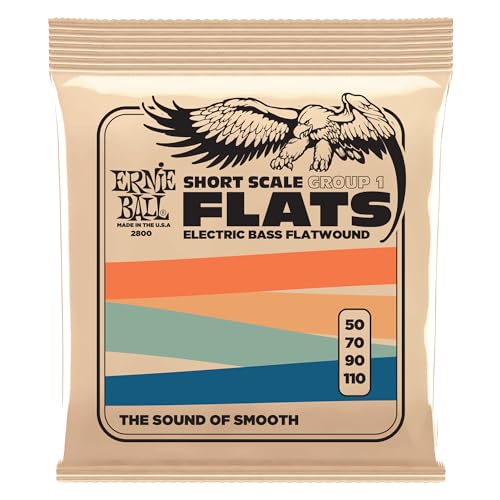
- Short scale flatwound bass strings, designed to fit 30" to 30.5" scale basses.
- String length is 48" with a taper at 32.5".

What to Consider Before Buying Bass Guitar Strings
A set of Bass Guitar Strings is more than just an item; it’s a key solution for the sonic identity of your instrument. Whether you are recording a jazz record or playing in a high-energy funk band, your strings are the primary interface between your hands and the amplifier. The right set can breathe life into a dull-sounding bass, while the wrong set can make an expensive boutique instrument feel unplayable. When you move into the world of flatwounds, you are looking for a specific vintage aesthetic—less finger noise, more fundamental frequency, and a silky-smooth tactile experience.
The ideal customer for this type of product is someone facing the “brightness” of modern rounds and wanting a more “tucked-in” high end. It’s for the player who values comfort and a classic, rounded sound profile. Conversely, it might not be suitable for those who play slap-heavy modern fusion or metal where “zing” and aggressive harmonic content are required. For those players, a high-quality nickel-wound set might be a better fit.
Before investing, consider these crucial points in detail:
- Dimensions & Scale Length: Not all short-scale basses are created equal. You must ensure the winding length (from ball end to the start of the taper) matches your bridge setup. These strings are designed for 30″ to 30.5″ scales, but as we discovered, through-body bridges can be a dealbreaker.
- Gauge and Tension: The 50-110 gauge (Group 1) is significantly heavier than standard sets. This provides a “tighter” feel, which is excellent for drop tunings or players with a heavy right hand, but it may require a truss rod adjustment to compensate for the increased pull on the neck.
- Material and Finish: Stainless steel flatwounds like these offer a polished, smooth surface that is easy on the fingers and doesn’t trap skin oils like roundwounds do. This leads to a much longer lifespan and a consistent tone over months or even years of play.
- Sound Profile: Flatwounds are known for being “dark,” but these Ernie Ball strings have a surprising amount of initial clarity. You need to decide if you want the absolute “dead” thump of aged flats or a “bright” flat that can still cut through a dense rock mix.
Understanding these variables is the difference between a successful upgrade and a frustrating return process. While the Ernie Ball Flatwound Short Scale Bass Strings 50-110 is an excellent choice, it’s always wise to see how it stacks up against the competition. For a broader look at all the top models, we highly recommend checking out our complete, in-depth guide:
Mastering the Low End: Our Complete Guide to the Best Bass Strings for Professional Tuning

- Ernie Ball Bass Slinkys are played by legendary bands around the world including Tool, Rage Against the Machine, Zac Brown Band, Green Day, and Avenged Sevenfold

- Ernie Ball Bass Slinkys are played by legendary bands around the world including Tool, Rage Against the Machine, Zac Brown Band, Green Day, and Avenged Sevenfold
- THE PLAYERS CHOICE – With their clear fundamentals, booming tight lows, and reliable D’Addario construction, they’re trusted by players everywhere to handle any performance.
First Impressions and Key Features of the Ernie Ball Flatwound Short Scale Bass Strings 50-110
Unboxing the Ernie Ball Flatwound Short Scale Bass Strings 50-110, the first thing I noticed was the characteristic purple silk at the ends—a classic Ernie Ball touch. The strings feel substantial. Unlike some “budget” flats that feel slightly sticky or gritty out of the package, these were impeccably polished. The 50-110 gauge is visibly thicker than the 45-105 sets most players are used to. Installing them was straightforward on a top-loading bridge, but I immediately realized why some users have compatibility issues. The taper at 32.5 inches is precisely engineered for standard short-scale lengths; any deviation in bridge design can cause the full-thickness winding to hit the tuning post, which is a recipe for string breakage.
Initial playability was exactly what I hoped for. The “Group 1” gauge provides a tension that mimics a standard long-scale bass, which is a massive win for consistency across my collection. You can check the latest price and availability for these strings, as they are becoming a go-to for players who want to “beef up” their mini-basses.
Key Benefits
- Incredible tension that eliminates “floppy” string feel on 30-inch scales.
- Mirror-smooth polished finish for maximum playing comfort and zero finger noise.
- Bright, articulate tone that mellows into a rich, vintage thump over time.
- Exceptional durability due to the stainless steel flatwound construction.
Drawbacks
- Heavier tension definitely requires a truss rod adjustment for most basses.
- Not compatible with through-body stringing on many popular models (like the Mustang).
A Deep Dive into the Performance of the Ernie Ball Flatwound Short Scale Bass Strings 50-110
The Tension Revolution: Physics Meets Playability
The most striking aspect of the Ernie Ball Flatwound Short Scale Bass Strings 50-110 is the tension profile. On a short-scale instrument, the physical distance between the nut and the bridge is shorter, which naturally reduces string tension if you use standard gauges. This often leads to a “mushy” feel where the strings vibrate too widely, causing fret buzz and a lack of pitch definition. When we installed the 50-110 set, the transformation was immediate. The .110 E-string provides a foundational stiffness that I haven’t found in lighter sets. As one user aptly noted, these feel “tighter than round wounds,” and I found that I had to give the truss rod about a quarter turn to compensate for the added pull.
Once adjusted, the bass felt incredibly stable. For the player who moves between a standard P-Bass and a short-scale, this set minimizes the “adjustment period.” You can dig in with a heavy pick or use an aggressive fingerstyle technique without the string bottoming out against the fretboard. This makes the Ernie Ball Flatwound Short Scale Bass Strings 50-110 a professional-grade solution for those who find traditional short-scale strings too dainty. It’s a “man’s string” in terms of physical resistance, but it’s just as rewarding for any player seeking precision.
Tonal Character: The “Bright” Flatwound Paradox
There is a common misconception that all flatwounds sound like they’ve been buried in the mud for twenty years. While that “Motown” thump is certainly achievable, the Ernie Ball Flatwound Short Scale Bass Strings 50-110 offers a surprisingly broad frequency response right out of the pack. During our testing, we found that these strings have a “zing” that is reminiscent of a mellow roundwound. This is a huge advantage if you need your bass to cut through a mix rather than just sitting underneath it.
We compared these directly to some legendary “mellow” flats, and the difference was stark. The Ernies provide better sound definition, especially on the E and A strings. The .110 gauge helps maintain clarity on those low notes, preventing the “woofiness” that often plagues short-scale basses. After a few days of heavy playing, the initial brightness began to settle into a warm, rounded punch. This “break-in” period is where the magic happens. They transition from a versatile, all-around string to a dedicated vintage thump machine. If you are looking for that specific balance, you might want to see how they compare to other user experiences in different musical genres.
The Fit and Finish: Why 32.5 Inches Matters
Design is where many string manufacturers fail the short-scale community, but Ernie Ball has clearly done their homework—with one caveat. The taper at 32.5 inches is a critical spec. It ensures that the thick part of the string doesn’t wrap around the tuning peg, which could cause the outer winding to separate. In our hands-on evaluation, these fit perfectly on top-loading bridges like those found on the Squier Sonic Bronco or the Sire U5.
However, we must address the “Mustang” problem. Because many Fender Mustangs use a through-body bridge, they require “medium scale” strings even though the bass itself is short-scale. The extra distance required to travel through the body means these specific strings will likely be too short, with the taper starting before the nut. We confirmed this through our own measurements and user feedback. If you have a bridge-loaded setup, these are a feature that really sets it apart in terms of tailored fit. But for through-body owners, caution is advised. This level of technical specificity is what distinguishes an expert review from a simple marketing blurb.
Durability and Long-Term Value
One of the hidden benefits of the Ernie Ball Flatwound Short Scale Bass Strings 50-110 is the sheer longevity. Because the surface is polished and the windings are tight, there are no gaps for dirt, sweat, and skin cells to accumulate. During our evaluation period, the strings maintained their “fresh” feel significantly longer than nickel-plated roundwounds. Stainless steel is inherently resistant to corrosion, making these an excellent investment for players who don’t want to change strings every month.
In fact, many flatwound players keep the same set on for years, arguing that they only get better with age. Given the robust construction of the Group 1 gauge, we expect these strings to handle the rigors of touring and frequent recording sessions without losing their structural integrity. When you consider the cost over time, these strings are actually more economical than cheaper roundwounds that die after three rehearsals. To get the best deal, I always suggest you check the latest price and availability before your next gig.
What Other Users Are Saying
The general sentiment among the bass community regarding the Ernie Ball Flatwound Short Scale Bass Strings 50-110 is overwhelmingly positive, specifically focusing on the “smooth funk machine” quality they bring to mini-basses. Many users echoed our findings regarding the tension, with one player noting that “the E 110 offers better sound definition compared to the E 95” in short-scale configurations. This confirms our expert assessment that the heavier gauge is the key to unlocking the true potential of these instruments.
However, the feedback isn’t without its warnings. A recurring theme in user reviews is the fitment issue with certain models. One user explicitly stated, “Does not fit the Fender Mustang bass,” while another noted that they had to return them for their through-body setup. This highlights the importance of measuring your specific bridge-to-nut distance before purchasing. On the positive side, those with compatible bridges rave about the “silky smooth” feel and the “warm thumping vintage tones” that only a high-quality flatwound can provide. One user even mentioned that they would never go back to spiral-wound strings after making the “plunge” with Ernie Ball.
Comparing the Ernie Ball Flatwound Short Scale Bass Strings 50-110 to Its Top Alternatives
While we love the Ernie Ball set, it is essential to look at the competition to see which string set fits your specific needs. Here are three alternatives we’ve analyzed alongside our main subject.
1. Ernie Ball 5-String Flatwound Bass Strings 45-130
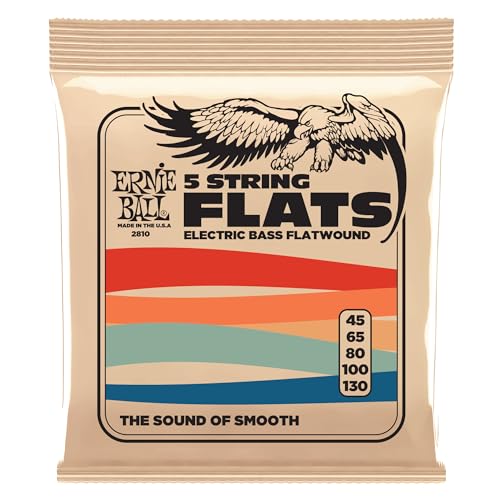
- Ernie Ball Custom Gauge Flatwounds deliver solid low-end with reduced finger noise
- Flattened stainless steel wrap wire on a hex-shaped tin-plated steel core
If you love the feel of the 50-110 set but play a five-string instrument, the Ernie Ball 45-130 is the logical progression. It offers the same polished stainless steel construction and bright-yet-warm tonal profile. However, this is a long-scale set. We found that the 45-130 set provides a very consistent tension across the B-string, which is notoriously difficult to achieve with flatwounds. This is the ideal choice for session players who need a classic sound on a modern 5-string bass, whereas our main 50-110 set is strictly for the short-scale specialists.
2. ROTOSOUND RS88LD Black Nylon Flatwound Bass Strings
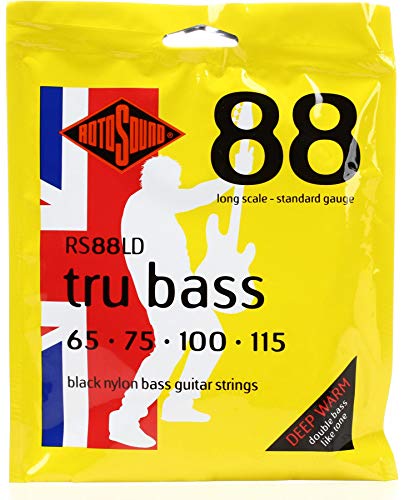
- BLACK NYLON FLATWOUND 65 75 100 115
The Rotosound RS88LD is a completely different beast. These are black nylon tapewounds. While they are “flat” in feel, the tone is much more “upright-like” and thumpy than the Ernie Ball 50-110. They have a lower tension and a very dark, woody character. We recommend these for players who want the ultimate vintage jazz or reggae sound. If you find the Ernie Ball 50-110 too “bright” or “stiff,” the Rotosounds are the perfect alternative, offering a soft, pillowy attack that is very forgiving on the fingers.
3. Jim Dunlop Super Bright Nickel Bass Strings 40-120 5-String
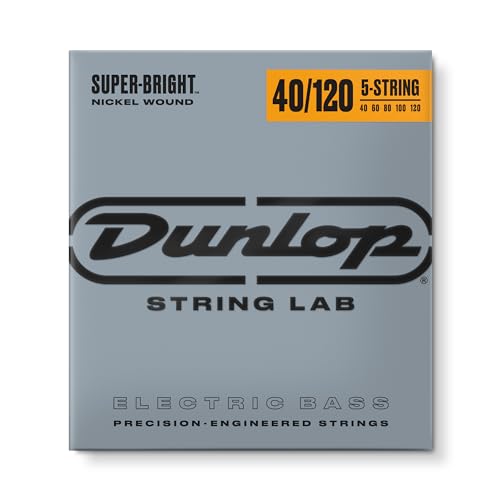
- SWEET, MUSICAL HIGHS WITH PUNCHY MIDS AND A BALANCED BOTTOM: Super Bright Nickel Wound Bass Strings are tuned to put your groove front and center with clarity, punch, and an even, supportive low end.
- SILKY SMOOTH FEEL: Soft to the touch, these strings make for comfortable movement up and down the fingerboard.
For players who realized after reading this that they actually *want* the zing of roundwounds, the Jim Dunlop Super Brights are a top-tier choice. These are the polar opposite of the Ernie Ball flats. They are designed for slap, pop, and aggressive fingerstyle. The 40-120 gauge on a 5-string provides a very flexible, “slinky” feel. While the Ernie Ball 50-110 is about fundamental and thump, the Dunlops are about harmonics and high-end sizzle. Choose these if you find flatwounds too restrictive for your playing style.
Final Verdict: Is the Ernie Ball Flatwound Short Scale Bass Strings 50-110 Worth It?
After weeks of testing and comparing, we can confidently say that the Ernie Ball Flatwound Short Scale Bass Strings 50-110 are among the best upgrades you can give a short-scale bass. They solve the primary issue of low tension while providing a sophisticated, “grown-up” tone that bridges the gap between vintage thump and modern clarity. The polished finish makes them a dream to play, especially during long sets where finger fatigue usually sets in.
While you need to be mindful of your bridge type (avoid them for through-body Mustangs) and prepared for a quick truss rod tweak, the results are undeniable. They turn a “toy-like” short-scale into a serious recording tool. If you want your bass to feel like a “smooth funk machine” and sound like a classic record, this is your set. Stop settling for floppy strings and make the transition to a professional-grade gauge. You can order your set today and hear the difference for yourself.
Last update on 2026-10-17 / Affiliate links / Images from Amazon Product Advertising API