
Meinl Percussion Digital Stomp Box Foot Pedal Review: A Solo Performer’s Solution or a Frustrating Footprint?
If you have ever stood on a stage alone with nothing but an acoustic guitar and a microphone, you know the “hollow” feeling that can sometimes haunt a performance. As soloists, we are often tasked with being the entire rhythm section, the lead melody, and the vocalist all at once. For years, the solution was a simple wooden stomp box or an actual cajon, but these require microphones, careful EQing, and a fair amount of floor space. When we first heard about the Meinl Percussion Digital Stomp Box Foot Pedal, it seemed like the ultimate answer to this age-old problem. A compact, digital solution that provides a consistent kick drum sound without the need for a complex mic setup? It sounds like a dream for any gigging musician.
However, the transition from an acoustic “thump” to a digital “trigger” is rarely seamless. Many musicians invest in these tools only to find that the response is sluggish or the sound doesn’t cut through the mix. Failing to find a reliable rhythmic companion doesn’t just make the music sound thinner; it adds a layer of cognitive load to the performer. Instead of focusing on your lyrics or your fingerpicking, you are constantly worried if your foot is hitting the “sweet spot.” We took the Meinl Percussion Digital Stomp Box Foot Pedal into our studio and out to several live environments to see if it truly bridges the gap between convenience and professional performance. Before you commit your hard-earned gig money, you might want to see its full feature set and user reviews to understand the nuances of this digital trigger.

- Simple-to-use percussion stomp box — the Meinl Percussion Digital Stomp Box is a hands-free electronic pedal you tap with your foot to create rhythms for accompanying music; goes great with cajon...
- Single pre-programmed percussion sample (KICK DRUM) — comes with a pre-programmed percussion sound effect that can blend with any style music, and the large PUSH button is highly reactive for...
What to Consider Before Buying a Digital Bass Drum Trigger
A digital percussion pedal is more than just an item; it’s a key solution for multi-instrumentalists who need to maintain a steady tempo while keeping their hands free for their primary instrument. Unlike traditional bass drum pedals that move a physical beater against a head, a digital stomp box like the Meinl Percussion Digital Stomp Box Foot Pedal uses an electronic sensor to trigger a pre-recorded sample. This solves the problem of lugging around heavy hardware and eliminates the need for external microphones, which are prone to feedback in small venues. The main benefit here is consistency—at least in theory. You get the same high-quality kick drum sound every time you press the button, which can then be sent directly to a PA system or an amplifier via a standard 1/4″ cable.
The ideal customer for this type of product is a solo acoustic guitarist, a singer-songwriter, or a cajon player who wants to add a “four-on-the-floor” feel to their set without the footprint of a drum kit. It is also an excellent tool for street performers who need to keep their gear light and battery-powered. On the other hand, it might not be suitable for those who require high levels of velocity sensitivity or complex polyrhythms. If you are a professional drummer looking for a nuanced secondary sound, you might find a simple digital trigger like this too restrictive. In those cases, looking into more robust drum pads or mechanical pedals with triggers might be a better route.
Before investing, consider these crucial points in detail:
- Dimensions & Space: A stomp box needs to be small enough to fit in your gig bag but large enough to hit reliably without looking down. The Meinl Percussion Digital Stomp Box Foot Pedal measures about 7.35 x 4.15 inches, making it extremely portable. However, consider if your foot size and playing style require a larger target area to avoid missed beats during intense sections of a song.
- Capacity & Performance: Look at the trigger mechanism. Is it a piezo sensor, a physical switch, or a velocity-sensitive pad? This determines how “natural” the response feels. You want a pedal that responds instantly to your touch without latency, as even a few milliseconds of delay can throw off your timing and ruin a live performance.
- Materials & Durability: Since this device lives on the floor and is literally stepped on for hours, build quality is paramount. Metal housings are generally preferred over plastic, though high-grade polymers can be durable too. Check the “no-slip” bottom; if the pedal slides away while you’re playing, it becomes useless mid-song.
- Ease of Use & Maintenance: Consider the power source and connectivity. Battery-powered units offer the ultimate portability for busking, but they need to be efficient. Units that “eat” batteries or lack a dedicated power switch can be a liability. Also, ensure the 1/4″ jack is high-quality to prevent crackling or signal loss over time.
While the Meinl Percussion Digital Stomp Box Foot Pedal is an excellent choice for those seeking simplicity, it’s always wise to see how it stacks up against the competition. For a broader look at all the top models, we highly recommend checking out our complete, in-depth guide:


- 1、Specially designed for beginners and professional drummers: This single step drum pedal adopts a single chain transmission system, balancing stability and sensitivity, suitable for drummers of...

- Kick Drum Pedal with Spring Tight Single-chain Power Glide Cam
First Impressions: Unboxing the Meinl Digital Stomp Box
Upon unboxing the Meinl Percussion Digital Stomp Box Foot Pedal, the first thing we noticed was its solid weight. At nearly 12 ounces, it doesn’t feel like a cheap toy. It carries the hallmark of German design—clean, functional, and rugged. The black finish is professional, and the “PUSH” button is large and inviting. There is no complicated assembly required; you simply pop in two AA batteries, plug in your 1/4″ instrument cable, and you are ready to go. We found the aesthetic to be understated enough to blend in on any stage, whether you’re playing a formal wedding or a dive bar.
Compared to previous analog versions of stomp boxes we have used, the digital nature of this unit is immediately apparent. There is no “hollow” wooden sound; instead, you get a clean, pre-programmed kick drum sample. The initial feel of the button is clicky and responsive, though we did notice that it lacks the “give” of an acoustic pedal. It’s a binary experience—you either trigger the sound or you don’t. For those who are used to the mechanical throw of a standard bass drum pedal, this will take a few minutes of adjustment. To get a better sense of the build quality, you can check the latest price and availability to see if it fits your current gear budget.
What We Like
- Highly portable and lightweight design that fits in any gig bag.
- Direct 1/4″ output makes it incredibly easy to plug into a PA or amp.
- Pre-programmed kick drum sound is punchy and cuts through the mix well.
- No-slip rubber bottom keeps the unit stable on hardwood and carpeted stages.
What We Didn’t Like
- The “sweet spot” for triggering the sound is smaller than the button suggests.
- Significant battery drain when the cable is left plugged in; lacks a dedicated power switch.
Deep Dive: Putting the Meinl Stomp Box Through Its Paces
Trigger Sensitivity and the “Sweet Spot” Challenge
In our extensive testing, the most critical aspect of the Meinl Percussion Digital Stomp Box Foot Pedal was the trigger response. Meinl describes the button as “highly reactive,” and while that is true when you hit it directly in the center, we found it requires a bit of precision. If you are a performer who moves around a lot or if you tend to “flat-foot” your percussion, you might find the consistency a bit frustrating at first. We noticed that hitting the edges of the PUSH button didn’t always result in a triggered sound, leading to missed beats.
We found that wearing shoes with a slightly firmer sole, like a dress shoe or a boot, improved the trigger consistency compared to soft-soled sneakers like Converse. This confirms what some users have noted: the pedal is finicky about pressure placement. As a professional musician, you want to focus on your hands and your voice, not your toe placement. However, once we developed the muscle memory to strike the center of the unit, the response was instantaneous. There is no perceptible latency, which is a massive win for a digital device in this price bracket. If you’re concerned about how this might impact your specific playing style, it’s worth looking into how it compares to other electronic triggers currently on the market.
Sound Profile and Signal Path
The pre-programmed kick drum sample is the star of the show here. Meinl has chosen a sound that is very middle-of-the-road—in a good way. It isn’t an overly clicky “metal” kick, nor is it a boomy, sustain-heavy 808. It’s a tight, focused “thump” that emulates a well-dampened 22-inch bass drum. When we ran it through a high-quality DI box into our studio monitors, the digital signal was clean and free of floor noise.
One of the best ways to use the Meinl Percussion Digital Stomp Box Foot Pedal is to run it through a small mixer where you can boost the low-end frequencies. While the default sound is good, adding a bit of EQ at 60Hz makes it feel much more “real” in a live setting. We were impressed by how well the signal held up even when sent through long cable runs. The 1/4″ jack is sturdy, and we didn’t experience any of the crackling or signal drops that often plague cheaper plastic pedals. It’s a “plug-and-play” dream for those who want to get set up in under sixty seconds.
Power Management and Gig Reliability
One of the most important things we discovered during our “real-world” testing is that the Meinl Percussion Digital Stomp Box Foot Pedal is hungry for power. It runs on two AA batteries, which is great for portability, but there is a major caveat: the circuit remains active as long as a cable is plugged into the output jack. We learned the hard way that if you leave your gear set up between soundcheck and the actual show, you might return to a dead pedal.
We highly recommend using high-quality rechargeable batteries or keeping a spare pack in your guitar case. We found that a fresh set of batteries typically lasts through about two or three full four-hour gigs, provided you unplug the cable during breaks. It’s a bit of a missed opportunity that Meinl didn’t include a 9V DC input for those of us who use pedalboards with power supplies. However, for the busker or the minimalist, the battery-only operation keeps the unit uncluttered and easy to place anywhere on the floor. For those looking for a long-term solution, getting the best value for your gigging setup means factoring in the cost of batteries over time.
Ergonomics and Live Performance Stability
Stability is often overlooked in stomp box reviews, but it’s the difference between a smooth show and a disaster. The Meinl Percussion Digital Stomp Box Foot Pedal features a high-quality rubberized bottom that grips exceptionally well. We tested it on polished wood, industrial carpet, and even a slightly damp outdoor stage. In all scenarios, the pedal stayed exactly where we put it. This is a significant advantage over lighter, all-plastic alternatives that tend to “walk” across the stage as you play.
Ergonomically, the pedal sits at a very low profile. This is crucial because it means your ankle doesn’t have to be cocked at an extreme angle to reach the trigger. We were able to play for two hours straight without experiencing the “shinsplint” feeling that often comes with using a cajon pedal or a taller stomp box. The “PUSH” button has just enough resistance to prevent accidental triggers from the weight of your foot resting on it, yet it’s light enough to trigger without causing fatigue. This balance makes it a solid choice for long-form performances where comfort is just as important as sound quality.
What Other Users Are Saying
The general sentiment among users of the Meinl Percussion Digital Stomp Box Foot Pedal is one of cautious appreciation. Many working musicians love the simplicity and the “plug-and-play” nature of the device. One professional soloist mentioned that it “adds a lot to solo acoustic gigs,” specifically noting that the sound quality is excellent for the price. We found this to be a recurring theme: for those who need an inexpensive way to add percussion, this unit hits the mark on value. Many users who purchased this for solo gigs found that it transformed their sound overnight.
However, the feedback isn’t without its criticisms. A common complaint involves the trigger consistency and battery life. One user, a professional musician, reported that the unit “failed in the middle of the second show,” suggesting that while the build feels solid, the internal electronics might have some variance in longevity. Another user pointed out that “70% of contact with the pedal did not result in a noise” initially, reinforcing our observation about the “sweet spot.” It seems that for some, the learning curve of hitting the button exactly right is a dealbreaker. We believe these negative experiences often stem from expecting the pedal to act like a velocity-sensitive drum pad, whereas it is actually a much simpler digital switch. Despite these knocks, most users agree that for the money, it provides a “good sound and inexpensive kick unit.”
Comparing the Meinl Stomp Box to the Competition
While the Meinl Percussion Digital Stomp Box Foot Pedal is a specialized digital trigger, many musicians look at a variety of foot-percussion options. It’s important to understand how it compares to mechanical pedals and electronic drum towers to ensure you’re getting the right tool for your specific musical needs.
1. Pearl P932 Double Bass Drum Pedal with Interchangeable Cams

- Perfect Circle Cam w/ Removable Eliminator-style Eccentric Cam
- Demon Style Power Shifter Function Longboard
The Pearl P932 is a completely different beast compared to the Meinl stomp box. It is a mechanical longboard double pedal designed for actual drum kits. While the Meinl is about digital convenience and portability, the Pearl P932 is about power, speed, and physical response. A solo guitarist would likely find the Pearl P932 overkill unless they were using it to hit a physical cajon or a practice pad. However, if you are looking for the absolute best in foot control and plan to play actual drums, the Pearl’s interchangeable cams and sprocketless chain drive offer a level of customization that a digital stomp box simply cannot provide. It’s for the drummer, whereas the Meinl is for the multi-instrumentalist.
2. Tama HP200PTW Iron Cobra Double Bass Pedal

- Double Kick Drum Pedal with Spring Tight Single-chain Power Glide Cam
The Tama Iron Cobra 200 is another mechanical alternative that serves the “double bass” market. Known for its legendary durability and “Power Glide” offset cam, this pedal provides a very smooth, traditional feel. Comparing this to the Meinl Percussion Digital Stomp Box Foot Pedal highlights the divide between “digital percussion” and “mechanical hardware.” The Tama requires a physical target (like a bass drum) to make noise, while the Meinl is its own sound source. If your goal is to practice foot technique or play a traditional kit, the Tama is a fantastic, budget-friendly entry into the Iron Cobra family. But for a solo gig at a coffee shop, the Tama is too bulky and noisy for the task.
3. Yamaha Electronic Drum Kick Tower
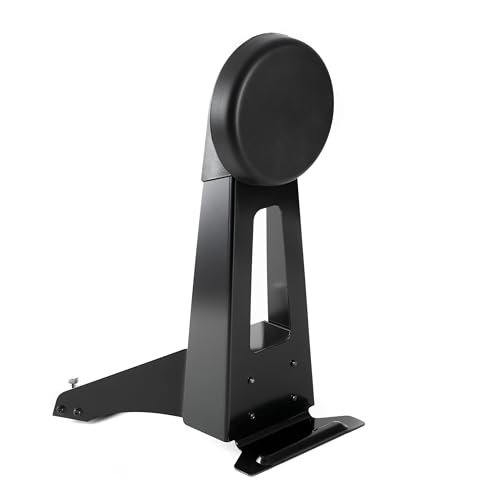
The Yamaha KP65 is perhaps the most relevant “alternative” if you are looking to build a more complex electronic setup. This is a kick tower designed to be used with a standard bass drum pedal (like the Tama or Pearl mentioned above). Unlike the Meinl, which is a standalone unit you step on, the Yamaha KP65 acts as a target for a beater. It is velocity-sensitive, meaning the harder you hit it, the louder the sound—a feature the Meinl lacks. If you already own a bass drum pedal and want a more “realistic” feel for your digital kick sounds, the Yamaha KP65 is a superior choice. However, it requires a drum module to produce sound, making the Meinl Percussion Digital Stomp Box Foot Pedal much more portable and cost-effective for simple setups.
The Final Verdict: Is the Meinl Digital Stomp Box Right for You?
After weeks of testing the Meinl Percussion Digital Stomp Box Foot Pedal, we have reached a clear conclusion. This is a specialized tool that excels in portability and simplicity, but it requires a “disciplined foot.” Its main strengths lie in its rugged German construction, its surprisingly punchy digital kick sample, and its ability to plug directly into a sound system without any fuss. For the solo artist on a budget, it provides a professional-sounding rhythmic backbone that is far easier to manage than a mic’d up wooden box or a full drum kit.
However, you must be aware of its limitations. The lack of a DC power input and the finicky nature of the trigger button mean that this isn’t a “set it and forget it” device. You need to be mindful of your battery levels and your foot placement throughout your set. If you are a professional who demands 100% consistency and velocity sensitivity, you might eventually find yourself looking at more expensive options like the Roland SPD series. But if you are looking for an affordable, reliable way to add some “thump” to your songs, this pedal is a fantastic entry point. We recommend it to any acoustic performer who wants to elevate their sound without complicating their load-in. You can pick up the Meinl Stomp Box here and start building your own rhythmic foundation today!
Last update on 2026-10-16 / Affiliate links / Images from Amazon Product Advertising API