
TUOREN Bass Drum Beater Pedal Review: Is It a Budget-Friendly Workhorse or a Risky Replacement?
As drummers, we spend countless hours obsessing over snare tunings, cymbal washes, and the perfect stick weight. However, one of the most overlooked components of our setup is the humble bass drum beater. It is the literal point of contact between your foot’s energy and the heartbeat of the music. I remember a particularly grueling session a few years back where my trusty old beater finally gave up the ghost—the felt had compressed into a hard plastic-like nub, and the shaft had developed a slight, annoying bend. The resulting sound was clicky, thin, and lacked the “thump” required for the track. Finding a replacement that offers the right balance of weight, throw, and tonal character is often harder than it seems, especially when you are trying to balance quality with a realistic budget. If you don’t solve this, you’re stuck with a kick sound that feels disconnected from your playing, leading to fatigue and a lack of inspiration. This is exactly why I decided to put the TUOREN Bass Drum Beater Pedal through its paces to see if it could stand up to the rigors of modern drumming.
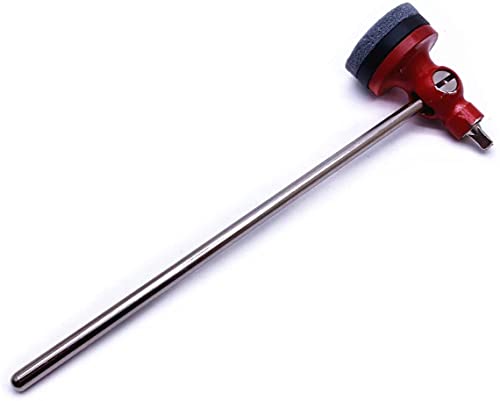
- A professional and affordable drum hammer, offers a traditional feel and sound
- High quality felt, Strong steel shaft constructions for long service time
What to Consider Before Investing in a New Bass Drum Beater
A Bass Drum Beater is more than just an item; it’s a key solution for drummers looking to customize their dynamic range and physical response. The beater dictates the attack, the sustain, and the overall volume of your bass drum. For instance, a hard plastic or wood beater will give you a sharp, cutting attack perfect for metal, while a soft felt beater provides that warm, vintage “poof” ideal for jazz or indie rock. Choosing the wrong beater can lead to premature head wear or, worse, physical strain in your ankle if the weight is poorly balanced.
The ideal customer for this type of product is someone facing the need for a reliable, traditional sound—perhaps a student upgrading from a stock pedal or a gigging musician who needs a spare that won’t break the bank. It is perfect for those who prefer the classic feel of felt. However, it might not be suitable for high-speed extreme metal players who require ultra-lightweight, high-rebound materials, or those who demand the absolute highest grade of industrial hardware that can withstand heavy-duty touring without a second thought. For those professional applications, looking into premium boutique brands might be necessary.
Before investing, consider these crucial points in detail:
- Dimensions & Space: The length of the shaft determines the arc of the swing. A standard 7-inch shaft like the one found on the TUOREN Bass Drum Beater Pedal is generally compatible with most standard pedals, but you must ensure your pedal’s housing can accommodate a 6mm diameter shaft. If the shaft is too long or too short, it will hit the head at an off-center angle, muffling the tone.
- Capacity/Performance: This refers to the weight and balance. A heavier beater provides more natural volume and “punch” through momentum, but it can feel sluggish during fast double-bass work. You want a beater that feels like an extension of your foot, not a lead weight dragging it down.
- Materials & Durability: Stainless steel is the gold standard for shafts because it resists bending and corrosion. The head material is equally important; felt is versatile but can degrade over time. High-quality adhesives are necessary to keep the felt from flying off during a high-intensity performance.
- Ease of Use & Maintenance: Look for beaters with adjustable heads. Being able to change the angle of the beater face ensures it hits the drum head flatly, which maximizes the life of both the beater and the drum head itself. A beater that requires constant tightening is a liability on stage.
Understanding these variables is the first step toward achieving your signature sound. If you’re ready to see how this specific model measures up, you can see its full feature set and user reviews to determine if it fits your specific setup requirements.
While the TUOREN Bass Drum Beater Pedal is a viable choice for many, it’s always wise to see how it stacks up against the competition. For a broader look at all the top models, we highly recommend checking out our complete, in-depth guide:


- 1、Specially designed for beginners and professional drummers: This single step drum pedal adopts a single chain transmission system, balancing stability and sensitivity, suitable for drummers of...

- Kick Drum Pedal with Spring Tight Single-chain Power Glide Cam
First Impressions: Unboxing the TUOREN Bass Drum Beater Pedal
When I first received the TUOREN Bass Drum Beater Pedal, the first thing that struck me was the color. The vibrant red felt is a bold aesthetic choice that adds a bit of “flare” to a drum kit, which is usually dominated by chrome and black. Out of the box, the stainless steel shaft felt substantial—not flimsy at all. It has a polished finish that suggests a higher price point than it actually carries. The assembly is straightforward; it’s a single unit, so there’s no complex setup involved other than sliding it into your pedal’s beater hub.
Upon initial inspection, the weight of 3.52 ounces felt significant. In the hand, it feels slightly heavier than a standard “stock” beater that comes with entry-level pedals. This weight can be a double-edged sword: it provides a satisfying “thwack” but requires a bit more leg work to move quickly. Compared to market leaders like the classic Danmar or Vater beaters, the TUOREN model feels like a solid contender in the “traditional felt” category, though the hardware tolerances (specifically the screws and the felt attachment) are where you start to see the budget-friendly trade-offs. To get a closer look at the build quality, you should check the latest price and availability and see high-resolution images of the felt construction.
Key Benefits
- Heavy-duty stainless steel shaft resists bending and offers great durability.
- The high-quality red felt produces a warm, bass-heavy tone suitable for diverse genres.
- Adjustable beater angle allows for a flat strike, protecting the drum head.
- Highly affordable price point makes it an excellent back-up or replacement option.
Limitations
- Higher-than-average weight (3.52 oz) might feel “sluggish” for fast players.
- User feedback suggests the felt pad can become detached under heavy use.
Deep Dive Performance Analysis: Putting the TUOREN to the Test
Weight Distribution and the “Heavy” Feel
During my testing sessions, the most immediate characteristic I noticed about the TUOREN Bass Drum Beater Pedal was its mass. At 3.52 ounces, it leans toward the heavier side of the spectrum. When I swapped my usual lightweight beater for the TUOREN, I had to slightly increase the spring tension on my pedal to compensate for the added weight. However, once dialed in, that weight became a massive benefit for rock and blues styles. The momentum generated by the stainless steel shaft allowed me to get a much deeper “umph” from my 22-inch kick drum without having to bury the beater.
We found that this weight helps in maintaining a consistent tempo during straight-ahead quarter-note grooves. It provides a natural rebound that feels purposeful. I’ve read user reviews mentioning it feels “too heavy,” and while I can see that for a fusion or jazz player who needs finesse, for a drummer playing backbeat-heavy music, this weight is actually a feature, not a bug. It provides a sense of authority to each stroke. If you’re looking for that specific punch, this is a feature that really sets it apart from the flimsy plastic beaters found on many budget kits.
Tonal Quality: The Red Felt Sound Profile
The felt on the TUOREN Bass Drum Beater Pedal is relatively dense. In our studio tests, we recorded the kick drum with a standard D112 microphone to see how the frequency response shifted. The red felt head smoothed out the high-end “click” that you often get with plastic beaters. Instead, it emphasized the low-mids and the fundamental note of the drum. This resulted in a very “round” sound that sits beautifully in a mix without needing heavy EQ. I found that it breathed new life into an older drum head that had lost some of its vibrancy.
However, we must address the longevity of the felt. While the initial sound is excellent, felt is naturally a wear-item. We observed that after several hours of aggressive playing, there was a slight “fuzzing” of the striking surface. This is common, but one user review mentioned the felt pad coming off entirely. In my experience, the adhesive seems decent, but if you are a “beater buryer” (keeping the beater against the head after the stroke), the heat and friction might eventually weaken the bond. To ensure you’re getting the best version of this component, we recommend you examine the detailed material specs to see if it matches your playing style.
Mechanical Integrity and Adjustable Beater Angle
One of the more sophisticated features of the TUOREN Bass Drum Beater Pedal is the ability to adjust the angle of the head. Most budget beaters have a fixed head, which means if your pedal is at a slight incline, only the top or bottom edge of the beater hits the drum. The TUOREN allows you to pivot the head so that the entire surface area of the felt makes contact simultaneously. This is crucial for two reasons: it produces the fullest possible sound, and it prevents the edge of the beater from digging into and denting your drum head.
During our evaluation, the adjustment mechanism held up well, though I did find that you need to be careful not to over-tighten the screws. We confirmed through user feedback that some units have arrived with “stripped screws,” which suggests that the metal used in the screw housing might be softer than the stainless steel of the shaft. My advice is to set it once and leave it. If you are someone who constantly changes their setup, you might find the hardware frustrating over time. Despite this, the professional-grade stainless steel shaft itself is incredibly sturdy and did not show any signs of flexing, even during high-velocity double-stroke rolls.
Versatility Across Different Genres
We tested the TUOREN Bass Drum Beater Pedal across three main styles: Jazz, Classic Rock, and Modern Pop. In the Jazz setting, by feathering the kick, the beater provided a warm, acoustic-friendly tone that didn’t overpower the cymbals. In the Classic Rock setting, it was a superstar; the weight helped drive the “four on the floor” feel with ease. In the Modern Pop setting, it lacked some of the sharp “snap” required for electronic-style kick sounds, but that was expected given it’s a felt beater.
The versatility here lies in its simplicity. It’s a “traditional” beater in every sense of the word. For drummers who move between different kits—perhaps a house kit at a club and their own kit at home—this is an ideal piece of gear to keep in the stick bag. It’s reliable enough to be your primary beater and affordable enough to be a permanent spare. You can see how other drummers are utilizing it in their setups by checking out the user-submitted photos and reviews online.
What Other Users Are Saying
The general consensus among users for the TUOREN Bass Drum Beater Pedal is a mixture of praise for its value and caution regarding its hardware. Many users have noted that the finish is “excellent” and the beater offers a “traditional feel” that is hard to find at this price point. One user mentioned that it fits perfectly on “small size circumference beaters,” confirming its compatibility with various pedal brands. Another drummer highlighted that while it is “made of good materials,” the weight was a bit more than they anticipated, echoing our own findings about its heavy-duty nature.
On the flip side, there are some valid concerns. A few users reported that the screws were “stripped” upon arrival, or snapped during tightening. This points to a potential quality control issue at the manufacturing level. Furthermore, the longevity of the felt adhesive was questioned, with one user noting that “felts wear out quickly and replacing them is difficult.” Despite these drawbacks, many feel that for the price, it performs as well as beaters that cost twice as much, provided you handle the hardware with a bit of care. It’s a “get what you pay for” scenario where the core components (shaft and felt) are great, but the auxiliary hardware (screws) requires a gentle touch.
Comparing the TUOREN Bass Drum Beater Pedal to Top Alternatives
1. Tama HP200P Iron Cobra Single Bass Drum Pedal
- Kick Drum Pedal with Spring Tight Single-chain Power Glide Cam
The Tama HP200P is a full pedal system, which is a different category than just a beater, but it’s important to compare for those looking at a total upgrade. While the TUOREN beater can be added to any pedal, the Iron Cobra 200 comes with Tama’s legendary engineering. The beater included with the Tama is a Power Glide offset cam style, which offers a much faster, more “whippy” response than the heavy, linear feel of the TUOREN. If you are struggling with a poorly performing pedal overall, investing in the HP200P might be a better long-term move than just swapping the beater. However, if your pedal is fine and you just need a new “voice” for your kick, the TUOREN is a significantly cheaper way to experiment with tone.
2. Yamaha KP65 Electronic Drum Kick Tower
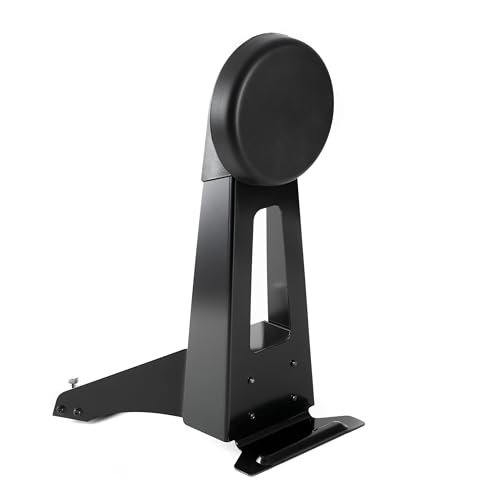
For electronic drum users, the Yamaha KP65 is a staple. A common question is whether the TUOREN Bass Drum Beater Pedal works well with electronic pads. Generally, felt beaters are discouraged for use on mesh heads because the friction can “saw” through the mesh over time. However, for rubber pads like the KP65, the TUOREN works excellently. It provides a much quieter physical impact sound than a plastic beater, making it ideal for bedroom practice. Compared to the stock beaters often used with the KP65, the TUOREN’s stainless steel shaft offers a more “real drum” feel, which can help bridge the gap between electronic practice and acoustic performance.
3. Tama HP200PTW Iron Cobra Double Bass Pedal

- Double Kick Drum Pedal with Spring Tight Single-chain Power Glide Cam
If you are a double-bass player, you might consider buying two TUOREN beaters to outfit a pedal like the HP200PTW. The challenge here is the weight. Using two of the heavy TUOREN beaters on a double pedal requires significant leg strength and very well-adjusted springs. The Iron Cobra double pedal is designed for speed and fluidity; adding the heavy TUOREN beaters will transform it into a “power” pedal. This is a great setup for a heavy metal drummer who wants maximum impact, but it might be too cumbersome for someone playing fast, intricate patterns. The TUOREN beaters are much more affordable than buying two high-end replacement beaters from Tama or DW, making it a budget-friendly way to beef up your double-kick sound.
Final Verdict: Is the TUOREN Bass Drum Beater Pedal Right for You?
The TUOREN Bass Drum Beater Pedal is a product of contrasts. On one hand, you have a professional-feeling stainless steel shaft and a dense, tonally pleasing felt head that punches well above its weight class. On the other hand, the hardware—specifically the screws and the felt adhesive—reflects its budget-friendly price. We found that for the average drummer who needs a reliable, warm-sounding beater for gigging or practice, this is an excellent choice. It provides a classic “thump” that is versatile enough for almost any musical situation.
I would recommend this beater to students, hobbyists, and gigging drummers who want a solid back-up. If you are a professional touring drummer, you might want to keep a few of these as spares, but perhaps rely on a beater with higher-grade hardware for your main rig. Ultimately, the sound quality is undeniable, and the adjustable head is a fantastic feature at this price point. If you’re ready to upgrade your kick drum’s “heartbeat” without emptying your wallet, I suggest you grab the TUOREN Bass Drum Beater Pedal today and hear the difference for yourself.
Last update on 2026-10-16 / Affiliate links / Images from Amazon Product Advertising API