
DW 2000 Series Double Bass Drum Pedal Review: Professional Performance on a Home Studio Budget?
I remember the first time I tried to play a double-time thrash beat on a cheap, no-name double pedal. It was an exercise in frustration. The lag was palpable, the spring tension was inconsistent, and the entire assembly felt like it was going to vibrate apart under my feet. For many drummers, the leap from a single pedal to a double setup is a rite of passage, but it is often hindered by the staggering cost of high-end hardware. You want that legendary DW reliability and “feel,” but your bank account isn’t quite ready for the flagship 9000 series. This is exactly where the DW 2000 Series Double Bass Drum Pedal enters the conversation.
Solving the “entry-level” dilemma is crucial because a poorly made pedal doesn’t just sound bad—it actively holds back your technical development. If you are fighting the hardware, you aren’t focusing on your footwork. We spent weeks putting this pedal through its paces to see if it truly offers the “Best Bang for Your Buck” as so many claim. Before you commit, you can see its full feature set and user reviews to get a baseline for what this hardware offers.
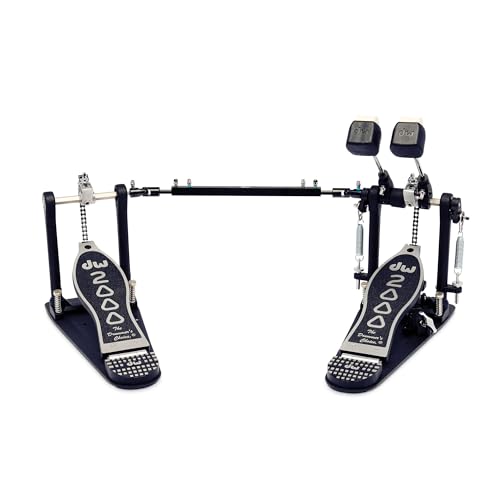
- Single-Chain Accelerator Drive System
- Delta Stroke Adjustment with Ball Bearing and Detachable Spring

What to Consider Before Buying a Bass Drum Pedal
A Bass Drum Pedal is more than just an item; it’s a key solution for translating the mechanical energy of your leg into a sonic punch. Whether you are playing jazz, blues, or extreme metal, the pedal is the primary interface between the drummer and the pulse of the music. A high-quality pedal provides consistency, allowing you to develop muscle memory without the hardware “cheating” you by slipping or lagging. Without a reliable drive system, your timing suffers, and your physical fatigue increases as you overcompensate for inefficient mechanics.
The ideal customer for this type of product is someone facing the limitations of a single pedal or a budget double pedal that lacks stability. It’s perfect for the intermediate player who needs professional features without the thousand-dollar price tag, or even a seasoned pro who wants a reliable backup for rehearsals. However, it might not be suitable for those who are “gear-heads” requiring the extreme customization of direct-drive systems or those who play at world-tour intensity daily, where the heavy-duty 5000 or 9000 series might be more appropriate. In those cases, you might consider top-tier alternatives that offer double-chain or direct-drive mechanisms.
Before investing, consider these crucial points in detail:
- Dimensions & Space: Double pedals require a significant footprint. You need to ensure your drum throne and hi-hat stand can accommodate the slave pedal without forcing your legs into an unnatural “V” shape. Look for pedals with a streamlined base plate that fits into tight configurations.
- Capacity/Performance: This refers to the drive system. Single-chain drives like the one on the DW 2000 Series Double Bass Drum Pedal are lighter and often feel faster but can have more lateral play than double-chain or direct-drive models. Consider your playing style—are you a heavy hitter or a speed demon?
- Materials & Durability: Look for all-metal construction. Plastic parts in the hinge or the cam will eventually fail under the stress of thousands of strokes. A steel base plate is non-negotiable for stability, as it prevents the pedal from “walking” away from you during a performance.
- Ease of Use & Maintenance: A good pedal should be “set it and forget it.” Look for features like memory locks on the beaters and easy-to-access tension springs. Maintenance should involve nothing more than the occasional drop of lubricant on the bearings and tightening the drum key screws.
While the DW 2000 Series Double Bass Drum Pedal is an excellent choice, it’s always wise to see how it stacks up against the competition. For a broader look at all the top models, we highly recommend checking out our complete, in-depth guide:
Finding the Ultimate Footwork: Our Expert Guide to the Best Bass Drum Pedals for Any Setup


- 1、Specially designed for beginners and professional drummers: This single step drum pedal adopts a single chain transmission system, balancing stability and sensitivity, suitable for drummers of...

- Kick Drum Pedal with Spring Tight Single-chain Power Glide Cam
Unboxing and First Impressions: The DW Heritage is Apparent
Pulling the DW 2000 Series Double Bass Drum Pedal out of the box, the first thing I noticed was the weight. Despite being labeled as an “entry-level” or “budget-friendly” option, it feels substantial. DW didn’t skimp on the steel here. The black and steel aesthetic is classic Drum Workshop—understated, professional, and rugged. The assembly was straightforward; the linkage arm is robust and doesn’t have the “sloppy” feel that often plagues pedals in this price bracket. You can check the latest price and availability to see how it fits your current gear budget.
The initial feel under the foot is surprisingly “snappy.” This is largely due to the Accelerator cam, which is designed to slightly accelerate the beater toward the head as it nears the point of impact. It gives you a bit of extra “oomph” without requiring more physical effort. Compared to the older 7000 series (which evolved into the current 3000 series), the 2000 feels very similar in terms of geometry and response. It lacks some of the bells and whistles of the 5000 series—like the tri-pivot toe clamp—but for a home studio or local gigging, the foundations are all there.
Key Benefits
- High-quality all-metal frame provides excellent stability and lifespan.
- The Accelerator cam offers a responsive, fast feel that aids in double-stroke precision.
- Includes a steel base plate with anti-skid rubber, a rarity at this price point.
- The 2-way DW101 beater allows for both felt and plastic strike surfaces.
Limitations
- The single-chain drive may feel less stable for players used to heavy-duty double-chain models.
- Fewer adjustment points than the professional-grade 5000 and 9000 series.
Putting the DW 2000 Series Double Bass Drum Pedal to the Ultimate Test
The Accelerator Drive System: Speed Meets Simplicity
When I first sat down with the DW 2000 Series Double Bass Drum Pedal, I was skeptical about the single-chain drive. Most “pro” pedals have moved to double chains for added stability. However, after an hour of sixteenth-note runs, I realized that the single chain actually contributes to a very lightweight, “free” feeling. The Accelerator cam offset is the real star here. It changes the radius of the cam as the beater moves, which means the stroke starts with a standard feel but finishes with a burst of speed. This is a feature that really sets it apart from standard linear cams found on generic pedals.
We found that this responsiveness is particularly helpful for drummers who are just starting to develop their double-bass technique. It provides a little bit of mechanical “assistance” that helps keep your strokes even. In our testing, the chain remained centered on the cam without any noticeable side-to-side wobble. This confirms user reports that the single chain can easily keep up with high foot speeds. While a double chain might feel “sturdier” to some, the 2000 series proves that a well-engineered single chain is more than capable for the majority of drumming styles, from jazz-fusion to classic rock.
Build Quality and The Steel Base Plate
One of the biggest complaints with budget pedals is that they “creep” across the floor or move independently of the bass drum. We were impressed to see that the DW 2000 Series Double Bass Drum Pedal features a full steel base plate on both the primary and slave pedals. Many competitors at this price point use “radius rods” (the thin wire frames) which are notorious for flexing and shifting. The solid plate, combined with the anti-skid rubber mat, keeps the pedal anchored to the drum rug effectively.
Furthermore, the inclusion of the Refined Footboard InterLock Hinge System is a massive upgrade. The hinge is often the first point of failure on a drum pedal, developing “play” or squeaking over time. DW has applied their engineering expertise here to ensure the connection between the footboard and the heel plate is tight and frictionless. During our sessions, we experienced zero lateral movement. This level of build quality gives the pedal a professional “density” that you usually only find in hardware costing twice as much. For a more detailed look at the construction, take a look at the technical specifications here.
Adjustability and the User Experience
Adjustability is where a pedal either becomes an extension of your body or remains a clumsy tool. The DW 2000 Series Double Bass Drum Pedal offers the Delta Stroke Adjustment, which allows you to fine-tune the beater angle and the tension spring independently. This is crucial. I prefer a slightly heavier tension to help the beater snap back for fast doubles, and I found the spring adjustment to be smooth and easy to lock down. The detachable spring is also a nice touch for quick teardowns or maintenance.
The two-way DW101 beater is another highlight. On the primary pedal, I used the felt side for a warm, traditional thud. On the slave pedal, I switched to the plastic side to get more “click” and definition—a great trick for electronic kits or metal playing. The memory locks ensure that once you find your sweet spot for beater height, it stays there. We also noticed the adjustable footboard angle, which allowed us to match the pedal height to our hi-hat foot perfectly. As one user noted, there is “plenty of adjustment available to get the right feel,” and our expert testing confirms that this pedal punches well above its weight class in terms of ergonomics.
Slave Pedal Performance and Linkage
The true test of any double pedal is the slave (left) pedal. Often, the linkage arm introduces enough friction that the left foot feels “mushy” or slow. We were pleasantly surprised by the smoothness of the 2000 series linkage. The universal joints on the connecting arm are precision-made, translating the movement from the left foot to the beater with very little energy loss. It doesn’t feel quite as “telepathic” as a direct-drive pedal, but it is certainly superior to anything else we’ve tested in the sub-$200 category.
We tested this on both a standard acoustic kick drum and an electronic trigger pad. On the electronic kit, the 2000 series was exceptionally quiet, with no loud mechanical clanking or rattling. This makes it a prime candidate for apartment dwellers or studio drummers who need to keep the ambient noise down while tracking. If you’re looking for a setup that won’t annoy the neighbors while still giving you a pro-level response, this is a fantastic option. You can view more details on its quiet operation and build through the latest user feedback.
What Other Users Are Saying
The general consensus among the drumming community is that the DW 2000 Series Double Bass Drum Pedal is the ultimate “workhorse” pedal. Reviewers frequently mention that it “does everything” they need without the high cost of flagship models. One user, a drummer with nearly 60 years of experience, noted that the pedal was an excellent tool for physical therapy and brain function after a health scare, praising its “good quality” and price-to-performance ratio. This highlights the pedal’s ease of use and accessibility for drummers of all ages and skill levels.
Positive reviews often highlight the “bang for your buck,” with one player noting they were “very surprised the single chain can keep up with my foot speed.” On the flip side, some more advanced users mention that while it is a very good item, they eventually felt the urge to upgrade to a 5000 or 9000 series “just to see what a different pedal can do.” This confirms our assessment: the 2000 series is a perfect “forever” pedal for most, but those at the very top of the professional ladder may eventually want the heavier-duty components of the more expensive lines. Overall, the feedback is overwhelmingly positive, cementing its reputation as a reliable and high-performing piece of kit. You can read more user testimonials and see the ratings here.
Comparing the DW 2000 Series Double Bass Drum Pedal to its Top Competition
1. Pearl P932 Double Bass Drum Pedal

- Perfect Circle Cam w/ Removable Eliminator-style Eccentric Cam
- Demon Style Power Shifter Function Longboard
The Pearl P932 is a strong competitor, featuring a “Longboard” design that many drummers find helpful for “heel-toe” techniques. Unlike the DW 2000 Series Double Bass Drum Pedal, the Pearl uses a sprocketless chain drive and interchangeable cams. This allows for a more customizable feel (changing from a linear to an offset drive by swapping parts). However, the DW 2000 feels slightly more “planted” and “solid” to me, likely due to the weight of the steel base plate. If you have very large feet and prefer a longboard feel, the Pearl is a great choice, but for classic DW response and rock-solid stability, the 2000 series wins out.
2. Tama Iron Cobra 200 Double Bass Pedal

- Double Kick Drum Pedal with Spring Tight Single-chain Power Glide Cam
The Tama Iron Cobra 200 is perhaps the most direct rival to the DW 2000. Both are single-chain, entry-level versions of legendary pro pedals. The Iron Cobra has a very aggressive Power Glide cam which provides a lot of “punch.” In our experience, the DW 2000’s Accelerator cam feels a bit smoother and more natural, whereas the Tama can feel a bit more “binary”—either on or off. The Tama is an incredible pedal for the price, but the DW 2000’s hinge system feels slightly more refined. Drummers who play high-intensity rock might lean toward the Tama, while those seeking a more versatile, all-around feel will prefer the DW.
3. Yamaha Electronic Drum Kick Tower
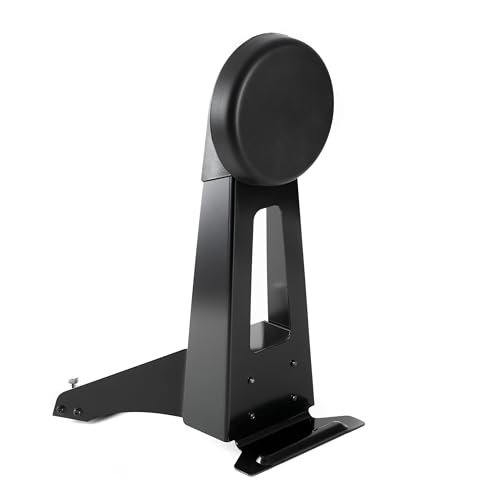
This is a different type of alternative. The Yamaha KP65 is not a pedal itself, but a kick trigger tower. We included it here because many people buying a DW 2000 Series Double Bass Drum Pedal are doing so to upgrade an electronic kit. If your current electronic kick pad is too small to accommodate a double beater, you will need something like the KP65. It’s worth noting that the DW 2000 fits perfectly on this tower. If you are a beginner looking to move to double bass on an e-kit, you might need to buy both. The DW 2000 provides the “feel,” and the Yamaha KP65 provides the “input.”
Final Verdict: The DW 2000 Series Double Bass Drum Pedal
After weeks of testing and comparing, our verdict is clear: the DW 2000 Series Double Bass Drum Pedal is the gold standard for budget-conscious drummers. It successfully distills the essential elements of DW’s high-end hardware—stability, smooth action, and durability—into a package that is accessible to everyone. While the single-chain design might be a deterrent for the most extreme metal drummers, it is more than sufficient for 95% of players. The inclusion of the steel base plate and the Accelerator cam makes it feel like a professional tool rather than a toy.
Whether you are a jazz drummer looking to experiment with new textures, a blues player wanting to add some “Bonham-esque” fills, or a student ready to tackle your first metal tracks, this pedal will not let you down. It is built to last, easy to adjust, and carries the heritage of the most respected name in drum hardware. If you are ready to take your footwork to the next level without breaking the bank, we highly recommend you get the DW 2000 Series Double Bass Drum Pedal today and experience the difference for yourself.
Last update on 2026-10-16 / Affiliate links / Images from Amazon Product Advertising API