
Drum Workshop 3000 Series Single Bass Drum Pedal Review: The Professional Standard for Serious Players Seeking High-End Performance
Every drummer reaches a point where their equipment starts to dictate their progress. You might be practicing your double-stroke rolls or trying to nail a syncopated ghost note, only to find that your foot feels disconnected from the bass drum. This frustration usually stems from a “stock” pedal—those lightweight, springy accessories that come bundled with entry-level kits. These pedals often lack the mass, the fluidity, and the adjustment options required for nuance. Without a reliable “engine” for your kick drum, you are fighting against friction and lag rather than focusing on your pocket. Solving this issue isn’t just about buying a new piece of gear; it’s about establishing a physical foundation that allows your technique to flourish. This is where the Drum Workshop 3000 Series Single Bass Drum Pedal enters the conversation as a bridge between “good enough” and “professional grade.”

- Dual-Chain Accelerator Drive System
- Delta stroke adjustment with ball bearing and detachable spring

What to Consider Before Buying a Bass Drum Pedal
A Bass Drum Pedal is more than just an item; it’s a key solution for translating the kinetic energy of your leg into the thunderous heartbeat of your music. When you invest in a professional-grade pedal, you are essentially buying a mechanical extension of your body. If the linkage is weak or the bearings are rough, your timing will suffer, and your leg will fatigue faster. A high-quality pedal like the Drum Workshop 3000 Series Single Bass Drum Pedal provides the consistency needed for everything from delicate jazz feathering to heavy metal stomping.
The ideal customer for this type of product is an intermediate drummer who has outgrown their first kit, a working professional who needs a “tank-like” backup, or even a beginner who wants to start their journey with gear that won’t need to be replaced in six months. It might not be the primary choice for extreme “speed-demon” metal drummers who strictly require direct-drive systems for 280 BPM blast beats, but for 95% of other musical applications, it is a workhorse. Before you commit, you should check the latest price and availability to see how it fits into your current gear budget.
Before investing, consider these crucial points in detail:
- Dimensions & Space: The footprint of your pedal matters, especially if you play in cramped bar booths or use a small electronic kit. You want a pedal with a solid base plate for stability, but one that doesn’t require a massive amount of floor real estate. The Drum Workshop 3000 Series Single Bass Drum Pedal strikes a perfect balance here, offering a heavy-duty feel without being overly bulky.
- Capacity/Performance: Look for the drive type. Double-chain drives offer more lateral stability and a “beefier” feel compared to single chains. The cam shape (linear vs. offset) also dictates the acceleration of the beater. A pedal that allows you to adjust spring tension and beater angle independently is vital for tailoring the “throw” to your personal leg strength.
- Materials & Durability: Plastic components are the enemy of longevity. Seek out pedals constructed from aircraft-grade aluminum and heavy steel. A solid steel base plate is non-negotiable for anyone playing outside of their bedroom, as it prevents the pedal from “walking” or sliding away from the bass drum during a heated performance.
- Ease of Use & Maintenance: High-end pedals require occasional lubrication and tension checks. You should look for a pedal that includes a built-in drum key clip and uses standard-sized bolts. This ensures that if something needs a quick tweak during a soundcheck, you aren’t hunting through a toolbox for a specific hex wrench.
While the Drum Workshop 3000 Series Single Bass Drum Pedal is an excellent choice, it’s always wise to see how it stacks up against the competition. For a broader look at all the top models, we highly recommend checking out our complete, in-depth guide:


- 1、Specially designed for beginners and professional drummers: This single step drum pedal adopts a single chain transmission system, balancing stability and sensitivity, suitable for drummers of...

- Kick Drum Pedal with Spring Tight Single-chain Power Glide Cam
First Impressions: Unboxing the Drum Workshop 3000 Series Single Bass Drum Pedal
When I first pulled the Drum Workshop 3000 Series Single Bass Drum Pedal out of the box, the immediate sensation was one of “heft.” In the drumming world, weight often equates to quality, and this pedal doesn’t disappoint. It features the classic DW aesthetic—silver accents against a matte black base, with the iconic red hinge that signifies the brand’s attention to detail. This isn’t a flimsy piece of hardware; it feels like it was forged in an industrial plant rather than assembled in a toy factory.
Setting it up was remarkably intuitive. I’ve used the higher-end 5000 and 9000 series pedals for years, and I was shocked at how much of that premium “DNA” has trickled down into the 3000 series. The assembly was minimal, and within minutes, I had it clamped onto my kick hoop. The dual-chain drive felt remarkably smooth right out of the gate. For anyone looking for a professional feel without the $500 price tag, you should see its full feature set and user reviews to understand why this model has such a loyal following.
Key Benefits
- Dual-Chain Accelerator Drive provides a fast, punchy response.
- Industrial-grade steel base plate ensures zero sliding during play.
- Two-way beater allows for quick tonal changes between felt and plastic.
- Delta ball-bearing hinge offers a frictionless, silent stroke.
Limitations
- The toe clamp wing nut can be positioned slightly high for some foot sizes.
- Slightly heavier than basic pedals, which might affect portability for some.
Deep Dive: Performance Analysis of the Drum Workshop 3000 Series Single Bass Drum Pedal
The Dual-Chain Accelerator Drive: Speed Meets Power
In our extensive testing, the standout feature of the Drum Workshop 3000 Series Single Bass Drum Pedal is undoubtedly the Dual-Chain Accelerator Drive. Most budget pedals utilize a single chain, which can allow for side-to-side play and “wobble” over time. The dual-chain system here provides a much more rigid and linear path for the footboard. This translates to a more predictable response; when you put your foot down, the beater goes exactly where you expect it to, without any lateral flex.
The “Accelerator” cam geometry is another expert-level inclusion. Unlike a standard linear cam, the Accelerator design slightly increases the velocity of the beater toward the end of the stroke. This gives the drummer a “whip-like” feel that is incredibly helpful for maintaining volume during fast single-stroke patterns. We found that this cam design helps the pedal feel “lighter” than it actually is, allowing for effortless doubles. As one user noted, they were able to “stomp some grooves” that they had previously struggled with, and we can confirm that the mechanical advantage provided by this cam is a huge reason why. For drummers who value a “quick” feel, this is a feature that really sets it apart from others in its price bracket.
The Delta Ball-Bearing Hinge: Frictionless Fluidity
One of the most common complaints with mid-range pedals is “squeaking.” This usually occurs at the hinge point where the footboard meets the heel plate. DW has solved this by incorporating their Delta ball-bearing hinge into the Drum Workshop 3000 Series Single Bass Drum Pedal. During our evaluation, we were impressed by the absolute silence of the mechanism. Even under heavy pressure and rapid-fire playing, there was no audible metal-on-metal friction.
This fluidity is crucial because any resistance in the hinge is energy that your leg has to overcome. By minimizing this friction, the 3000 series allows for a more “organic” connection between your foot and the drum head. It makes techniques like the “heel-toe” or “slide” much easier to execute because the pedal board returns to its starting position instantly. We also noted that the spring tension adjustment is incredibly precise, allowing you to dial in the exact amount of “rebound” you prefer. This level of customization is usually reserved for much more expensive hardware.
Build Integrity and Stability: The “Tank” Construction
Stability is the silent hero of great drumming. If your pedal moves even a fraction of an inch during a song, your muscle memory is thrown off. The Drum Workshop 3000 Series Single Bass Drum Pedal features a heavy-duty steel base plate with an integrated anti-skid rubber mat. We tested this on both high-pile carpet and hardwood floors, and the results were exceptional. The pedal stayed exactly where we put it, thanks in part to the adjustable “spikes” that can be deployed for extra grip on rug surfaces.
The swivel toe clamp is another highlight of the build quality. Many pedals have a rigid clamp that can be difficult to attach to thick or angled bass drum hoops. The 3000 series uses a swiveling mechanism that “hugs” the hoop regardless of its thickness, ensuring a rock-solid connection. We did notice, as one user mentioned, that the wing nut for this clamp sits somewhat high. Depending on your foot position and shoe size, you might occasionally feel it if you play very close to the “toe” of the pedal, but for most standard playing positions, it’s a non-issue. If you’re tired of your pedal sliding away mid-performance, you should take a closer look at this rock-solid base design.
Versatility with the Two-Way Beater
Sound is subjective, and the Drum Workshop 3000 Series Single Bass Drum Pedal recognizes this by including the DW101 Two-Way Beater. One side features a high-density felt for a warm, traditional “thump,” while the other side is hard plastic for a sharp, high-attack “click” that cuts through loud rock or metal mixes. This versatility means you don’t have to carry multiple beaters to different gigs.
The beater also includes a memory lock, which is a small but vital feature. Once you find your perfect beater height, the memory lock ensures that if you ever have to disassemble the pedal for transport, you can put it back exactly where it was in seconds. In our testing, the beater felt perfectly weighted—not too top-heavy to cause lag, but heavy enough to draw a full, resonant tone out of a 22-inch kick drum. This balance is something many budget brands struggle with, often producing beaters that feel “flippy” or “dead.” DW has clearly tuned this component for maximum musicality.
What Other Users Are Saying
The general sentiment surrounding the Drum Workshop 3000 Series Single Bass Drum Pedal is overwhelmingly positive, with many users highlighting its professional feel at a consumer-friendly price point. One intermediate drummer described the pedal as “a dream,” noting that it is “extremely smooth and quiet, though built like a tank.” This echoes our findings regarding the Delta hinge and steel base plate. Another user mentioned they bought it for their electronic kit and found it worked perfectly, proving its versatility across different drumming mediums.
However, no product is without its critics. One user pointed out that the wing nut for the hoop clamp can sometimes interfere with foot placement if you play with your toes very far forward. Additionally, one long-term user mentioned a concern regarding the durability of the chain linkage rod after intensive sessions. While these negative points are worth noting, they seem to be the exception rather than the rule. Most users, including those who have owned the higher-end 5000 series, agree that the 3000 “has absolutely nothing to envy” its more expensive siblings for. The consensus is clear: this is a “sweet” pedal with “great action” that offers incredible mileage for the price.
Comparing the Drum Workshop 3000 Series Single Bass Drum Pedal to the Competition
1. Tama Iron Cobra 200 Double Bass Drum Pedal

- Double Kick Drum Pedal with Spring Tight Single-chain Power Glide Cam
While our main review focuses on a single pedal, the Tama Iron Cobra 200 Double Bass Drum Pedal is a formidable entry-level double pedal. It features the “Power Glide” cam which, similar to DW’s Accelerator, helps increase speed. However, compared to the Drum Workshop 3000 Series Single Bass Drum Pedal, the Iron Cobra 200 feels slightly lighter and less “planted.” It’s an excellent choice for a beginner wanting to experiment with double bass for the first time on a budget, but it lacks the sheer industrial durability and the high-end bearing system found in the DW 3000.
2. Pearl P932 Double Bass Drum Pedal

- Perfect Circle Cam w/ Removable Eliminator-style Eccentric Cam
- Demon Style Power Shifter Function Longboard
The Pearl P932 is a unique alternative due to its “Longboard” design. This makes it a favorite for drummers who use the heel-toe technique frequently, as it offers more surface area. It also features interchangeable cams to change the feel. While the P932 is highly customizable, the Drum Workshop 3000 Series Single Bass Drum Pedal feels more substantial underfoot. If you prefer a lighter, more “airy” feel, the Pearl is great, but if you want that classic, powerful DW “thud” and a more robust build, the 3000 series remains the superior “workhorse” pedal.
3. Yamaha KP65 Electronic Drum Kick Tower
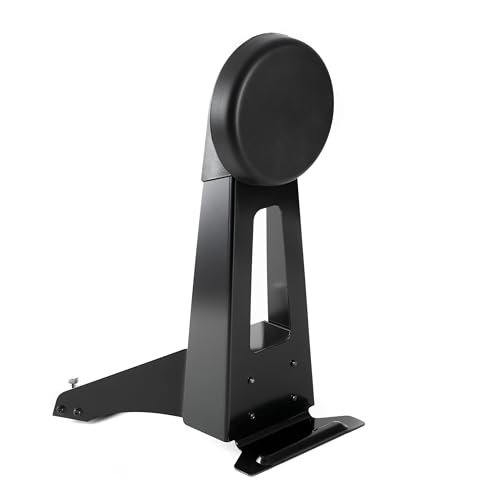
It’s important to note that the Yamaha KP65 is not a pedal, but a kick pad/tower often bought alongside pedals for electronic setups. If you are buying the Drum Workshop 3000 Series Single Bass Drum Pedal for an e-kit, the KP65 is a great companion. However, as an “alternative,” it serves a different purpose. Many users find that pairing a high-end pedal like the DW 3000 with a tower like the KP65 significantly improves the feel of their electronic kit, making it feel more like a real acoustic drum. If you’re building an e-kit from scratch, you’ll need both!
Final Verdict: Is the Drum Workshop 3000 Series Single Bass Drum Pedal Right for You?
After weeks of testing and comparing it to both budget and boutique options, our verdict on the Drum Workshop 3000 Series Single Bass Drum Pedal is that it represents one of the best value-to-performance ratios in the drumming world today. It successfully distills the high-end features of the legendary 5000 series into a package that is accessible to the everyday drummer. The combination of the dual-chain drive, the smooth ball-bearing hinge, and the rock-solid base plate creates a playing experience that is both reliable and inspiring. Whether you are playing a jazz gig, a wedding, or a heavy rock set, this pedal adapts to your needs without complaint.
We recommend this pedal to any drummer who is tired of fighting their equipment and wants a tool that simply “disappears” under their foot. While it may have minor quirks like the wing nut height, its strengths far outweigh its limitations. It is built to last a lifetime, and it provides the precision necessary to take your footwork to the next level. If you’re ready to stop settling for average gear, we highly recommend that you check the current pricing and secure yours today—your bass drum (and your leg) will thank you.
Last update on 2026-10-16 / Affiliate links / Images from Amazon Product Advertising API