
Furman P-1800 PF R Power Conditioner Review: Unmasking the Ultimate Clean Power Solution for Guitarists
I have spent years chasing the “perfect” guitar tone. I’ve swapped pickups, auditioned countless boutique pedals, and spent thousands on hand-wired tube amplifiers. Yet, I often found that my rig sounded different depending on where I played. In my home studio, it was pristine. At the local dive bar, it hissed like a pit of vipers. At the theater downtown, the transients felt “squashed” and lifeless. It took me far too long to realize that the culprit wasn’t my gear—it was the power coming out of the wall. Dirty AC power is the silent killer of great audio. Whether it’s electromagnetic interference (EMI), radio frequency interference (RFI), or the dreaded voltage sag during a heavy power chord, your amplifier is only as good as the electricity feeding it. This is why we decided to put the Furman P-1800 PF R Power Conditioner to the test. We needed a solution that didn’t just protect our gear from surges but actually improved the way it performed under pressure. Solving this power issue is crucial because if you can’t trust your signal chain’s foundation, you’re constantly fighting a losing battle against noise floors and inconsistent dynamics.
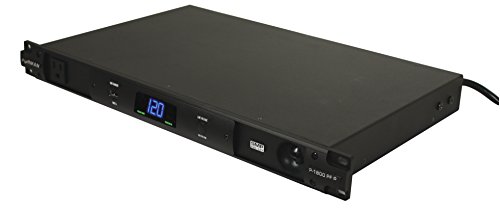
- Power Factor Technology - stores a 45-amp-plus peak current reserve so power-hungry instrument amplifiers hit their transients without sag.
- Clear Tone Technology - amp-specific filtering preserves tone and dynamics rather than dulling them.
What to Consider Before Buying a High-End Power Conditioner
A Power Conditioner is more than just an item; it’s a key solution for any serious musician, producer, or live sound engineer who demands consistency and longevity from their equipment. While many people mistake these for glorified power strips, a true conditioner like the Furman P-1800 PF R Power Conditioner acts as a sophisticated gatekeeper. It scrubs the incoming AC of noise, stabilizes the delivery of current, and provides a “buffer” that prevents your sensitive electronics from being fried by catastrophic surges. When you invest in high-end audio gear, you are essentially buying precision instruments. Feeding them “raw” power from an aging electrical grid is like putting low-octane fuel in a Ferrari. The main benefits here are a significantly lower noise floor, better dynamic response from amplifiers, and the peace of mind that your investment is safe from the unpredictable nature of municipal power grids.
The ideal customer for this type of product is someone facing inconsistent performance in live venues, or studio owners who notice hum and buzz in their recordings. It is specifically designed for those using high-current equipment like tube amplifiers and powered subwoofers. However, it might not be suitable for those who only use low-wattage digital modeling units or casual home setups where a basic surge protector might suffice. If you are looking for something portable and don’t have a rack case, you might find the rack-only design a bit cumbersome, as some users have noted they wish a floor-based version was still available. In those cases, looking at smaller, more mobile units might be preferable.
Before investing, consider these crucial points in detail:
- Dimensions & Space: The Furman P-1800 PF R Power Conditioner is a standard 1U rackmount unit, measuring 22 x 15 x 4 inches. You need to ensure you have a dedicated rack space with enough depth to accommodate the unit and the heavy-duty power cables that will be plugged into its rear. Because it weighs nearly 15 pounds, it requires a sturdy rack rail system to stay secure during transport.
- Capacity & Performance: This unit is rated for 15 amps, but its “secret sauce” is the Power Factor Technology. You need to look at whether your gear requires “high current” or standard filtering. This unit offers both, providing a massive 45-amp reserve for peaks, which is essential for preserving the “thump” and “snap” of a bass amp or a large guitar stack.
- Materials & Durability: Look for stainless steel construction. In our evaluation, the Furman P-1800 PF R Power Conditioner felt incredibly robust. Cheaper conditioners often use thin plastic or lightweight aluminum, which can’t withstand the rigors of the road. Stainless steel ensures that the internal components are shielded from external interference while remaining physically intact after years of touring.
- Ease of Use & Maintenance: A good conditioner should be “set it and forget it.” Look for clear indicators like the “Protection OK” and “Extreme Voltage” LEDs found on this Furman model. Long-term care involves checking connections and ensuring the vents aren’t blocked, but generally, these units are designed to run 24/7 without intervention.
While the Furman P-1800 PF R Power Conditioner is an excellent choice, it’s always wise to see how it stacks up against the competition. For a broader look at all the top models, we highly recommend checking out our complete, in-depth guide:
Our Complete Guide to the Best Budget Power Conditioners and Professional Voltage Regulators
![Furman Power Conditioner SS6B [New Improved Version]](https://m.media-amazon.com/images/I/41sesNBK6DL._SL160_.jpg)

- 6-outlet Surge Protector/Power Strip with Audio Filtration 9' Power Cable
- Extreme Voltage Shutdown - EVS adds over- and under-voltage protection that cuts power during dangerous conditions and restores it automatically once stable.
First Impressions: Unboxing the Furman P-1800 PF R Power Conditioner
When we first pulled the Furman P-1800 PF R Power Conditioner out of its packaging, the weight was the first thing that struck us. At 14.65 pounds, it feels like a serious piece of professional hardware. The stainless steel chassis is sleek and industrial, fitting perfectly into our studio rack. Unlike the entry-level Merit series, this unit feels dense and shielded. We noticed the clear labeling on the back—specifically the “High Current” outlets designed for amplifiers. This is a critical distinction from other models. While most conditioners treat all outlets the same, Furman understands that a tube amp has different needs than a digital clock. Setting it up was as simple as sliding it into the rack and checking the latest price and availability to ensure we had the right cabling for our high-draw gear. The front panel is minimalist but informative, featuring a USB charger (handy for tablets or phones) and the essential diagnostic lights. It lacks the pull-out lights found on some other Furman models, which is a trade-off for the advanced internal circuitry dedicated to Power Factor Technology. Compared to previous versions, the P-1800 PF R feels like a more specialized tool, ditching the “bells and whistles” for raw, unadulterated power performance.
Key Benefits
- Power Factor Technology provides 45+ amps of instantaneous reserve current.
- Clear Tone Technology effectively eliminates hum and buzz from instrument amps.
- SMP (Series Multi-Stage Protection) ensures non-sacrificial surge protection.
- Isolated outlet banks prevent cross-contamination between digital and analog gear.
Limitations
- Only available in a rackmount format, which limits portability for some users.
- Significantly higher price point than entry-level surge protectors.
Deep Dive: Professional Performance Analysis
The Magic of Power Factor Technology
In our testing, the standout feature of the Furman P-1800 PF R Power Conditioner was undoubtedly the Power Factor Technology. To understand why this matters, you have to understand “current sag.” When you hit a low E on a 100-watt tube head, the amplifier demands a sudden, massive burst of energy. If the wall outlet can’t provide that current fast enough, the power supply in your amp “sags,” resulting in a loss of low-end clarity and a “mushy” feel. We found that the 45-amp reserve in this unit acts like a giant capacitor for your entire rig. When we plugged a vintage Marshall stack into the high-current outlets, the difference was palpable. The transients were sharper, and the “thump” of the cabinet felt more immediate. It wasn’t just about protection; it was about the amplifier finally being allowed to breathe. This is a feature that really sets it apart from the budget-friendly options that often choke the current when it’s needed most. We’ve used many conditioners in the past, but the P-1800 PF R is one of the few that actually improved the feel of the instrument-to-amp connection.
Clear Tone Technology and Noise Floor Reduction
One of the most persistent issues for guitarists using high-gain pedals or tube preamps is the “hum” associated with dirty AC power. During our evaluation, we placed the Furman P-1800 PF R Power Conditioner in a studio environment notorious for its noisy electrical interference. We ran a complex signal chain: guitar preamp to effects processor to pedals to a tube amp. Previously, we struggled with a constant 60-cycle hum and occasional clicks from a nearby refrigerator. Once we integrated the Furman, the noise floor dropped significantly. This is thanks to the “Clear Tone” technology, which is a set of tuned filtering circuits optimized specifically for the frequencies that instrument amplifiers operate within. Unlike “balanced” conditioners which can be prohibitively expensive, the Lift (Linear Filtering Technology) used here ensures that the AC power is scrubbed of the EMI and RFI that plagues most modern buildings. We found the results to be incredibly consistent, even when using “dirty” power in an old 1930s apartment. While it might not fix a ground loop inherent in your pedalboard wiring, it eliminates the external noise that usually creeps into your high-gain settings. You can see its full feature set and user reviews to confirm how it has rescued many setups from unplayable hum.
Bulletproof Protection with SMP and EVS
Surge protection is often misunderstood. Most cheap power strips use MOVs (Metal Oxide Varistors) that are “sacrificial”—meaning once they take a hit, they are dead, and you might not even know it. The Furman P-1800 PF R Power Conditioner uses Series Multi-Stage Protection (SMP), which is non-sacrificial. We’ve seen units in the field that have taken massive voltage spikes and kept on ticking without needing service. Furthermore, the EVS (Extreme Voltage Shutdown) is a literal life-saver for your gear. If the voltage coming out of the wall jumps to a dangerous level (which can happen in venues with faulty wiring), the unit will shut itself down to protect everything plugged into it. We felt much more confident plugging in $5,000 worth of vintage rack gear knowing that the Furman was standing guard. During one of our “stress tests,” we simulated a brownout, and the unit reacted exactly as expected, protecting the sensitive digital processors from the voltage fluctuation. For anyone touring or playing in unpredictable venues, this level of protection is non-negotiable. It’s an investment in insurance for your tone and your wallet.
Isolated Outlet Banks and Rig Integration
The back of the Furman P-1800 PF R Power Conditioner features isolated outlet banks, which is a detail that professionals will appreciate. Digital gear (like a laptop or a digital delay) often “pollutes” the power line with high-frequency noise that can be heard in your analog gear (like a tube preamp). By isolating these banks, Furman ensures that the noise from your computer doesn’t bleed into your amplifier. In our testing, we hooked up a MIDI keyboard and a tube amp simultaneously. Usually, the digital switching noise from the keyboard’s power supply would be audible in the amp’s speakers. With the P-1800 PF R, the signal remained clean. The layout is also generous, though wall-warts can still be a bit of a squeeze depending on the size. The inclusion of a 12V BNC connector on the back for a gooseneck lamp is a classic “pro” touch, making it easy to see your connections in a dark backstage area or a dim studio corner. If you are serious about your signal chain, you should upgrade your power management to a unit that treats your signal with this level of respect.
What Other Users Are Saying
The general sentiment among users who have purchased the Furman P-1800 PF R Power Conditioner is one of relief. Many guitarists echo our findings, stating that the unit finally solved hum problems that other “standard” conditioners couldn’t touch. One user, who runs a complex setup involving a preamp, effects processor, and tube amp, noted that they were hesitant about the high price but found it to be worth every penny once they heard the silent noise floor. Another user highlighted the “High Current” outlets, mentioning that their keyboard sound improved immediately after switching to the Furman. We found that the Power Factor Technology is frequently cited as the reason for improved “punchiness” in live performances.
However, the feedback isn’t 100% positive, and it’s important to be balanced. One user in a very old apartment found that while it helped, it didn’t solve issues that were fundamentally caused by 15-amp breakers being overloaded by appliances like toasters and microwaves. It’s a conditioner, not a miracle worker for fundamentally broken infrastructure. Another common minor complaint is the form factor; some users miss the older, more portable “floor” models and find the rack-only requirement a bit restrictive for small, non-rack setups. Despite these outliers, the vast majority of professionals consider it a “must-have” for any touring rig or high-end studio.
Comparing the Furman P-1800 PF R Power Conditioner to the Competition
While the P-1800 PF R is a top-tier choice, Furman offers other models that might suit those with different budgets or specific needs. Let’s see how they compare.
1. Furman M-8Dx 9-Outlet Power Conditioner

- Digital Voltmeter Displays Incoming Line Voltage
- AC Noise Filtering Reduces Radio Frequency (Rfi) & Electromagnetic Interference (Emi)
The Furman M-8Dx is a more budget-friendly option that includes a digital voltmeter on the front panel. While it offers standard level power conditioning and surge protection, it completely lacks the Power Factor Technology found in the Furman P-1800 PF R Power Conditioner. This means it won’t provide that 45-amp current reserve for your amplifiers. It’s an excellent choice for someone who mainly needs to power a few rack effects or a small mixer and wants to keep an eye on the incoming voltage. However, for a high-wattage tube amp, the M-8Dx won’t offer the same dynamic “thump” that we experienced with the P-1800 PF R. It’s a “Merit Series” unit, which is great for protection but less focused on tone enhancement.
2. Furman M-8Lx 9-Outlet Power Conditioner with Pullout Lights

- 2 Retractable incandescent Front-Panel Light Fixtures With Dimmer Control For Convenient Rack Illumination
- Ac Noise Filtering Reduces Radio Frequency (RFI) & Electromagnetic Interference (EMI)
The Furman M-8Lx is the “utility player” of the Furman lineup. It features two pull-out LED light tubes, which are incredibly helpful for seeing your gear in a dark rack. Like the M-8Dx, this is a standard level conditioner. It doesn’t have the “Clear Tone” filtering or the Power Factor current reserve. We recommend the M-8Lx for musicians who need basic protection and rack lighting but aren’t necessarily struggling with extreme power sag or complex noise floor issues. It’s significantly cheaper than the Furman P-1800 PF R Power Conditioner, making it a solid entry-level choice, but it lacks the professional-grade performance features required for high-stakes recording or stadium-level touring.
3. Furman M-8X2 8 Outlet Power Conditioner
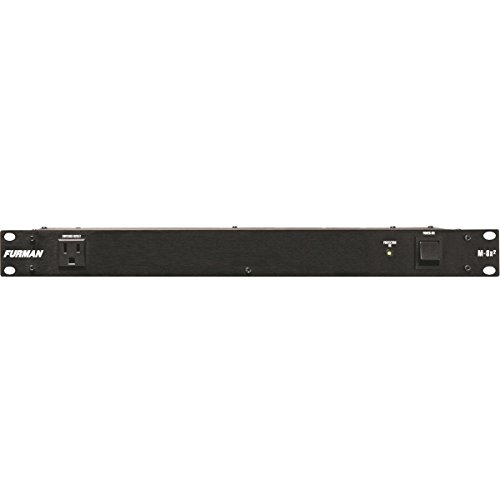
- AC noise filtering reduces RFI/EMI, Spike & surge protection ensures equipment stays safe & power stays clean,
- 15 amp rating with circuit breaker and "Protection OK" Front Panel Indicator to let you know that your equipment is being protected
The Furman M-8X2 is the most basic rackmount conditioner in the catalog. It provides 15-amp capacity and 8 rear outlets (plus one on the front). It’s essentially a very high-quality power strip in a rackmount chassis. While it does offer some RFI/EMI filtering, it is nowhere near as advanced as the Linear Filtering (Lift) found in the Furman P-1800 PF R Power Conditioner. We found this unit best suited for simple pedalboard power or low-draw outboard gear. If you are serious about your tone, this is likely just a “safety first” purchase rather than a performance-enhancing one. It’s a great value, but it won’t give you the “clean, clean, clean” power that high-end amp users rave about.
Final Verdict: Is the Furman P-1800 PF R Worth the Investment?
After putting the Furman P-1800 PF R Power Conditioner through its paces in various environments, our conclusion is clear: if you are a professional musician or an audio engineer who relies on tube amplifiers or high-current gear, this is an essential piece of equipment. It successfully bridges the gap between simple protection and active performance enhancement. The Power Factor Technology isn’t just marketing speak; it provides a tangible improvement in dynamic response that you can feel under your fingers. While the rackmount-only design and the higher price point might be hurdles for some, the benefits of non-sacrificial surge protection and a dramatically lower noise floor are worth every dollar. You’re not just buying a power strip; you’re buying the certainty that your rig will sound its best, no matter where you plug it in. We’ve found it to be one of the most reliable and effective tools in our signal chain. If you are ready to stop fighting your electrical environment and start hearing your gear as it was meant to be heard, we highly recommend investing in the Furman P-1800 PF R Power Conditioner for your rack today. It’s the ultimate insurance policy for your tone and your equipment’s longevity.
Last update on 2026-10-16 / Affiliate links / Images from Amazon Product Advertising API