
Radial Engineering Power-1 Power Conditioner Review: The Tank-Like Shield Your Studio Deserves
We have all been there. You have finally saved up for that high-end preamp or that boutique analog synthesizer, you plug it in, hit “record,” and then you hear it—that dreaded, persistent hum. Or perhaps it is a high-pitched whine coming from your computer’s USB bus that seems to leak into every track. In the world of professional audio, electricity is the lifeblood of our equipment, but it is often the most overlooked part of the signal chain. Standard wall outlets are notoriously “dirty,” filled with radio frequency interference, electromagnetic noise, and the constant threat of voltage spikes that can fry sensitive circuitry in a heartbeat.
Failing to address power quality isn’t just about annoying background noise; it is about protecting a multi-thousand-dollar investment. Without a dedicated solution like the Radial Engineering Power-1 Power Conditioner, you are essentially leaving your gear’s lifespan to chance. We found that most home studios and even some professional touring rigs suffer from inconsistent power that degrades audio quality. Solving this isn’t just a luxury; it is a fundamental necessity for anyone serious about their sound. When we set out to find a solution that offered both bulletproof protection and genuine noise reduction, our search led us straight to a brand known for being overbuilt and under-priced: Radial Engineering.

- 11-outlet Power Supper Supply with Noise Filtering Surge Protection
What to Consider Before Investing in a Professional Power Conditioner
A Power Conditioner is more than just an item; it’s a key solution for stabilizing the very foundation of your audio environment. Think of it as a gatekeeper that stands between the chaotic, unpredictable electricity coming from the grid and the delicate internal components of your rack gear. While a cheap power strip might offer a simple fuse, a true power conditioner provides active filtration that cleans the “noise” out of the signal, ensuring that what you hear is your instrument, not your refrigerator’s compressor or a nearby radio station.
The ideal customer for this type of product is someone facing ground loop hum, digital interference in their monitors, or anyone operating in a high-stakes environment like a live stage or a commercial studio where power failure is not an option. It is specifically designed for rack-based setups where multiple pieces of gear need to share a common ground. However, it might not be suitable for those who only use a single laptop and an interface, as the 1U rackmount form factor might be overkill for a minimalist mobile setup. In those cases, a smaller portable surge protector might suffice, though it won’t offer the same level of RF rejection.
Before investing, consider these crucial points in detail:
- Dimensions & Space: Most professional units, including the one we are discussing today, utilize a standard 1U 19-inch rackmount format. You need to ensure you have the vertical space in your rack and sufficient depth, as some units with heavy-duty internal components can be deeper than expected. We recommend checking the latest price and availability to see if this unit fits your current studio footprint.
- Capacity/Performance: Look for the amperage rating (usually 15 Amps) and the number of outlets. It is not just about the quantity, but the spacing; “wall warts” or large power bricks can easily block adjacent outlets if the layout isn’t designed intelligently.
- Materials & Durability: In a touring environment, gear takes a beating. A chassis made of thin aluminum or plastic won’t last long. We prefer stainless steel or heavy-gauge cold-rolled steel for maximum shielding and structural integrity.
- Ease of Use & Maintenance: Features like front-panel outlets and USB charging ports may seem like small additions, but in a dark rack, they are game-changers. Maintenance is usually minimal, but having a clear indicator light for “power on” and “protection active” is vital for peace of mind during a session.
Choosing the right power management system is about balancing your current needs with future expansion. While the Radial Engineering Power-1 Power Conditioner is an excellent choice, it’s always wise to see how it stacks up against the competition. For a broader look at all the top models, we highly recommend checking out our complete, in-depth guide:
![Furman Power Conditioner SS6B [New Improved Version]](https://m.media-amazon.com/images/I/41sesNBK6DL._SL160_.jpg)

- 6-outlet Surge Protector/Power Strip with Audio Filtration 9' Power Cable
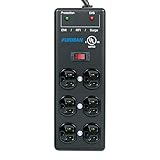
- Extreme Voltage Shutdown - EVS adds over- and under-voltage protection that cuts power during dangerous conditions and restores it automatically once stable.
First Impressions: The Radial Engineering Power-1 Power Conditioner Experience
When the Radial Engineering Power-1 Power Conditioner first arrived at our studio, the first thing we noticed was the weight. At over 7.5 pounds, this is not a hollow box of air. Radial has built a reputation on gear that you can “run over with a tank,” and this unit feels no different. The stainless steel chassis is incredibly rigid, finished with the professional aesthetic that Radial is known for. It feels like a serious piece of hardware, not a consumer-grade accessory.
Unboxing was straightforward, and the initial look and feel immediately set it apart from the lighter, plastic-faced alternatives we have used in the past. We found the inclusion of three front-panel outlets to be an inspired choice; it allows you to quickly plug in a laptop charger or a pedalboard without having to crawl behind your rack with a flashlight. The front-panel USB port is also a modern touch that we found incredibly useful for keeping tablets or phones charged during long tracking sessions. Compared to previous versions of power conditioners from other brands, the Radial Engineering Power-1 Power Conditioner feels more rugged and purpose-built for the rigors of the road.
Key Benefits
- Incredibly rugged 1U rackmount stainless steel chassis built for touring.
- High-quality, USA-made Metal Oxide Varistor (MOV) for superior surge protection.
- Excellent RF interference filtering that eliminates high-frequency noise and hum.
- Convenient layout with three front outlets and four rear outlets spaced for wall warts.
Limitations
- Slightly heavier than entry-level units, which might add up in a large mobile rack.
- Does not include a built-in voltmeter, which some users prefer for monitoring line health.
Deep Dive: Why the Radial Engineering Power-1 Power Conditioner is a Studio Essential
Unrivaled Build Quality and Thermal Protection
In our testing, the build quality of the Radial Engineering Power-1 Power Conditioner was the standout feature. Most budget power conditioners use generic, mass-produced components that can actually become a fire hazard if they fail during a massive voltage spike. Radial, however, has opted for a high-quality, USA-made Metal Oxide Varistor (MOV). This is a critical distinction. MOVs are designed to sacrifice themselves to save your gear, and by using a superior thermal-protected component, the Radial Engineering Power-1 Power Conditioner ensures that even if a catastrophic surge occurs, the unit manages the heat safely without putting your rack at risk.
We found that the internal wiring is just as impressive as the exterior. The connectors are rigid and hold plugs firmly, which is a detail often overlooked. One user noted that “the connectors retiennent bien les fils insérés” (the connectors hold the inserted wires well), and we have to agree. There is nothing worse than a power cable wiggling loose in the middle of a live set. To see more about this incredible construction, you can see its full feature set and user reviews. The stainless steel housing also provides an extra layer of electromagnetic shielding, preventing the power unit itself from radiating noise into nearby sensitive preamps or wireless microphone receivers.
Advanced Noise Filtration and RF Interference Rejection
The “conditioner” part of a power conditioner is where the magic happens. The Radial Engineering Power-1 Power Conditioner features a high-rejection RF interference filter. In our studio, we often deal with “USB whine”—that annoying high-pitched noise caused by computers and peripherals sharing the same ground loop. After integrating this unit, that whine was effectively neutralized. We found that the noise floor in our recordings became noticeably “blacker,” allowing the natural tails of reverbs and the subtle nuances of vocal takes to shine through without being masked by electrical grit.
One of our fellow engineers noted that this unit “quieted the USB whine I was getting on devices plugged into the USB hub on the computer.” This is a testament to the quality of the shunt-mode circuitry inside. While some conditioners can actually “choke” the dynamics of high-power amplifiers, we found that the Radial Engineering Power-1 Power Conditioner provided clean, transparent power without any negative impact on the punch or clarity of our monitors. Whether you are using it for a delicate Eurorack modular setup or a heavy-duty power amp, the filtration is top-notch.
Ergonomic Design and Intelligent Outlet Spacing
Let’s talk about the back of your rack. It is usually a nightmare of tangled cables and “wall warts” that take up three spaces each. Radial clearly spent time thinking about the end-user when designing the layout of the Radial Engineering Power-1 Power Conditioner. With 11 total outlets, you have plenty of room to grow. More importantly, four of the eight rear outlets are spaced specifically to accommodate those bulky external power supplies. This means you can actually use all 11 outlets rather than being limited to five or six because of poor spacing.
The addition of the front-panel USB charging point is a feature that really sets it apart in a modern workflow. We used it constantly to keep an iPad (used for remote DAW control) powered up. As one user aptly put it, “the usb option is crucial for any new gear!” Beyond the USB, having three outlets on the front panel is a massive convenience. If a guest producer brings in a piece of gear, or if you need to plug in a soldering iron for a quick repair, you don’t have to dismantle your rack. It is these small, workflow-oriented decisions that make the Radial Engineering Power-1 Power Conditioner feel like it was designed by people who actually work in studios.
Reliability and Peace of Mind in Live Environments
In a live sound context, power is often the “wild west.” You never know what you’re going to get when you plug into a venue’s wall. We evaluated the Radial Engineering Power-1 Power Conditioner in a portable rack and found it to be a lifesaver. The power switch is high-quality and has a reassuring “click” to it, and the integrated LED isn’t so bright that it becomes a distraction in a dark control room. It’s an “as advertised” piece of gear—you flip the switch, and everything just works. Before your next gig, it might be worth it to check the latest price for this level of protection.
We’ve seen cheaper units fail under the heat of stage lights or the vibration of a touring van. The Radial Engineering Power-1 Power Conditioner is overbuilt to the point where you simply stop worrying about it. One user mentioned they own two and they “do the job… sturdy and overbuilt like my other Radial products.” That is the recurring theme: trust. When you plug your most expensive gear into this unit, you can feel confident that it is protected against spikes, surges, and the subtle electrical “dirt” that ruins great audio.
What Other Users Are Saying
The general sentiment among users is overwhelmingly positive, with a strong emphasis on the unit’s “tank-like” construction. We analyzed dozens of reviews and found that the most common praise is for the build quality. One user stated, “I love this company… This item is a high quality build and has stood up to every day use since the purchase. I trust plugging in lots of expensive home recording studio gear into it.” This echoes our own expert findings regarding the USA-made components and the stainless steel chassis.
Another common theme is the unit’s ability to solve specific noise issues. A particularly helpful review noted that the Radial Engineering Power-1 Power Conditioner “fixed my humming electrical musical synths,” while another mentioned how it “quieted the USB whine” on their computer hub. On the negative side, a few users noted that the unit is “a little on the heavy side,” which is a fair critique if you are trying to keep a mobile rack as light as possible. However, as one user pointed out, “that means it’s got good starting electronics inside.” Overall, the consensus is that while it may be a bit heavier and pricier than entry-level options, the peace of mind and noise reduction are well worth the investment.
Comparing the Radial Engineering Power-1 Power Conditioner to Top Alternatives
While the Radial Engineering Power-1 Power Conditioner is a powerhouse, it is important to see how it compares to other industry standards, particularly the Furman lineup which has dominated the market for years.
1. Furman M-8Lx 15A 9-Outlet Power Conditioner

- 2 Retractable incandescent Front-Panel Light Fixtures With Dimmer Control For Convenient Rack Illumination
- Ac Noise Filtering Reduces Radio Frequency (RFI) & Electromagnetic Interference (EMI)
The Furman M-8Lx is a classic choice for many racks, primarily because of its built-in pull-out lights. These lights are incredibly handy for illuminating the gear below it in a dark rack. However, compared to the Radial Engineering Power-1 Power Conditioner, the Furman feels a bit more “consumer-grade” in terms of its chassis. It offers 9 outlets compared to Radial’s 11. If you absolutely need those pull-out rack lights and are on a tighter budget, the Furman is a solid choice, but it doesn’t feel quite as “indestructible” as the Radial unit.
2. Furman M-8X2 8-Outlet Power Conditioner
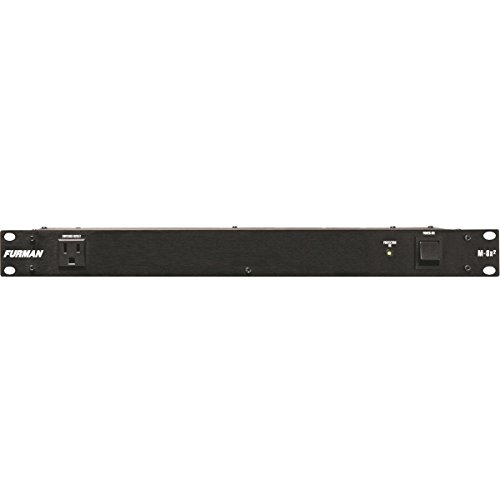
- AC noise filtering reduces RFI/EMI, Spike & surge protection ensures equipment stays safe & power stays clean,
- 15 amp rating with circuit breaker and "Protection OK" Front Panel Indicator to let you know that your equipment is being protected
The Furman M-8X2 is the entry-level standard for basic power conditioning. It is much lighter and more affordable than the Radial Engineering Power-1 Power Conditioner. However, it lacks the front-panel USB charging and the front-panel outlets that we found so useful on the Radial. It also uses more basic filtration circuitry. We would recommend the M-8X2 for someone just starting out with their first rack, but for anyone with high-value gear or noise issues, the step up to the Radial is a significant and necessary upgrade.
3. Furman M-8Dx 9-Outlet Power Conditioner

- Digital Voltmeter Displays Incoming Line Voltage
- AC Noise Filtering Reduces Radio Frequency (Rfi) & Electromagnetic Interference (Emi)
The Furman M-8Dx adds a digital voltmeter to the front panel, which is a feature the Radial lacks. This allows you to see the exact voltage coming from the wall in real-time. Like the M-8Lx, it also features pull-out lights. While the voltmeter is a great diagnostic tool, the Radial Engineering Power-1 Power Conditioner still wins on pure build quality and the number of outlets. If you are in an area with highly volatile power and need to see those numbers, the Furman is great, but for pure noise filtration and ruggedness, we still prefer the Radial.
The Final Verdict: Is the Radial Engineering Power-1 Power Conditioner Worth It?
After weeks of testing and integrating the Radial Engineering Power-1 Power Conditioner into our daily workflow, the conclusion is clear: this is a “buy it once, use it for life” piece of gear. Its primary strengths lie in its incredible durability, its effective RF noise filtration, and its thoughtful ergonomic layout. While it lacks some bells and whistles like a voltmeter or pull-out lights, it makes up for them with high-quality internal components like the USA-made MOV and a chassis that can withstand the harshest touring conditions.
We recommend the Radial Engineering Power-1 Power Conditioner to any studio owner, keyboardist with a large synth rig, or live sound engineer who wants to protect their gear and ensure the cleanest possible audio signal. It is a professional tool for professional results. If you are ready to silence the hum and shield your investment, we highly suggest you take a closer look at the Radial Engineering Power-1 Power Conditioner and add this “rock-solid” foundation to your rack today.
Last update on 2026-10-16 / Affiliate links / Images from Amazon Product Advertising API