
Pyle PCO875 10-Outlet Power Sequencer Conditioner Review: Professional Sequencing Meets Studio Reliability
If you have ever spent a significant amount of money on a pair of high-end studio monitors or a powerful PA system, you know the literal “heart-stopping” feeling of turning on your gear in the wrong order. That massive electrical “thump” or “pop” that echoes through your speakers isn’t just an annoyance; it is a mechanical shock to the speaker’s driver and a surge of stress on your amplifiers. As an audio engineer who has spent years in both dimly lit studios and chaotic live venues, I have seen more than one expensive driver meet an early grave because of a simple power-on error. We often focus so much on the microphones, the preamps, and the instruments that we forget the foundation of it all: the AC power. The search for a solution that manages this sequence automatically, while providing a centralized hub for a rack full of gear, is what leads many professionals to the Pyle PCO875 10-Outlet Power Sequencer Conditioner. Without a dedicated power manager, you are essentially playing Russian roulette with your sensitive electronics every time you flip the master switch on a power strip.

- 2000W POWER: Pyle's Professional Power Sequence Controller is designed to improve the quality of power supplied to your home appliance, music production studio equipment. This power supply controller...
- 10 OUTLETS: The compact audio power conditioner surge protector is equipped w/ (8) rear panel power supply outlets & (2) front panel “always” power outlets, ensures enough space for multiple...

What to Consider Before Investing in a Power Conditioner and Sequencer
A Power Conditioner is more than just an item; it’s a key solution for any professional or enthusiast looking to safeguard their electrical investment and streamline their workflow. When we talk about “conditioning” and “sequencing,” we are talking about two distinct but complementary roles. Conditioning aims to clean the AC signal of EMI/RFI noise that can cause hums or buzzes in your audio path. Sequencing, on the other hand, is the process of powering devices on or off in a specific order with a time delay between them. This prevents massive “inrush current” from tripping circuit breakers and protects speakers from the dreaded power-on pop.
The ideal customer for this type of product is someone facing a growing rack of gear—think home studio owners, church AV teams, or mobile DJs—who needs to ensure that their preamps and mixers turn on before their power amps and subwoofers. It is also perfect for those who want a centralized voltage readout to monitor the health of the venue’s power. However, it might not be suitable for those who require high-end laboratory-grade voltage regulation or those who have very few devices and can easily manage a manual power-on sequence. If you are running a multi-thousand dollar server farm, you might consider a dedicated UPS, but for the audio-visual world, a sequencer is often the missing link.
Before investing, consider these crucial points in detail:
- Dimensions & Space: In the world of rack-mounted gear, space is at a premium. Most professional units, including the Pyle PCO875 10-Outlet Power Sequencer Conditioner, utilize a 1U rack-mount design. You should ensure your rack has the depth to accommodate the unit and that you have enough vertical space to allow for cable management at the rear.
- Capacity/Performance: Always check the amperage and wattage ratings. A standard household circuit in the US is 15 amps, and this unit is rated for 13 amps and 2000W. You need to calculate the total draw of your equipment—especially power-hungry amplifiers—to ensure you aren’t overloading the sequencer and causing frequent shutdowns.
- Materials & Durability: Since these units often live in mobile racks that get bumped during transport, a rugged metal housing is non-negotiable. Plastic housings may save weight, but they won’t survive the rigors of the road. Look for high-quality internal bus bars and solid physical switches that feel tactile and responsive.
- Ease of Use & Maintenance: A good sequencer should be “set it and forget it.” Look for units with clear digital readouts and easily accessible front-panel outlets for temporary gear. Maintenance usually involves checking for loose connections and ensuring the cooling vents remain unobstructed by dust over time.
While the Pyle PCO875 10-Outlet Power Sequencer Conditioner is an excellent choice for those looking to manage their power-up cycle, it’s always wise to see how it stacks up against the competition. For a broader look at all the top models, we highly recommend checking out our complete, in-depth guide:
Our Comprehensive Guide to the Top-Rated Power Conditioners for Live Audio and Studio Performance
![Furman Power Conditioner SS6B [New Improved Version]](https://m.media-amazon.com/images/I/41sesNBK6DL._SL160_.jpg)

- 6-outlet Surge Protector/Power Strip with Audio Filtration 9' Power Cable
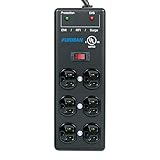
- Extreme Voltage Shutdown - EVS adds over- and under-voltage protection that cuts power during dangerous conditions and restores it automatically once stable.
First Impressions and Feature Breakdown: The Pyle PCO875 10-Outlet Power Sequencer Conditioner
Unboxing the Pyle PCO875 10-Outlet Power Sequencer Conditioner, the first thing I noticed was the weight. At nearly 6 pounds and featuring a rugged metal chassis, it feels significantly more substantial than your average consumer-grade power strip. The aesthetic is purely professional—matte black with a clear, bright digital LCD display that immediately provides an RMS voltage readout. In my testing, I found the rack ears to be sturdy and perfectly aligned for a standard 19-inch rack. Before you even plug it in, you can see its full feature set and user reviews to understand the build quality that Pyle has prioritized here.
The unit features 8 outlets on the rear, which are the ones that follow the sequencing logic, and 2 “always-on” outlets on the front. This is a brilliant design choice. I often need to plug in a phone charger or a laptop power brick temporarily, and having to reach behind a rack is a nightmare. The inclusion of a USB port on the front further cements its role as a modern studio centerpiece. While it doesn’t have the pull-out lights found on some more expensive brands, the bright LCD display provides enough ambient glow to see the front panel in a dark booth.
Key Benefits
- Reliable 8-step sequential power-on/off to protect expensive speakers.
- Rugged 1U metal rack-mount housing built for professional environments.
- Real-time digital LCD voltage display for monitoring power fluctuations.
- Front-panel “always-on” outlets and USB port for maximum convenience.
Drawbacks
- LED lights and display are very bright and cannot be dimmed.
- The internal conditioning/surge protection is basic compared to high-end dedicated filters.
Deep Dive: Putting the Pyle PCO875 10-Outlet Power Sequencer Conditioner to the Test
The Magic of Sequential Power Timing
The primary reason anyone buys this unit is the sequencing, and we found that the Pyle PCO875 10-Outlet Power Sequencer Conditioner handles this task with surgical precision. When you hit the master “Power” button on the front, the unit begins a choreographed dance. It activates each of the 8 rear outlets one by one with a slight delay between them. This is crucial for two reasons. First, it prevents a massive “inrush” of electricity. If you turn on four power amplifiers and a powered subwoofer simultaneously, you are likely to trip a 15-amp breaker. By staggering the load, the Pyle unit keeps the electrical draw manageable.
Second, and more importantly for audio quality, it allows your “source” gear (mixers, interfaces, preamps) to stabilize before your “output” gear (amplifiers and speakers) comes online. We tested this with a pair of high-powered Yamaha monitors that usually produce a sharp click when powered via a standard strip. With the Pyle PCO875 10-Outlet Power Sequencer Conditioner, the speakers remained silent until their specific outlet clicked on, long after the mixer had finished its initialization. When it’s time to pack up, hitting the switch again reverses the process, turning the speakers off first. To see this timing in action, you can check the latest price and availability for a unit that finally ends the “thump” problem.
Build Quality, Rack Integration, and Practicality
In a professional rack, every inch of space matters. The 1U form factor of the Pyle PCO875 10-Outlet Power Sequencer Conditioner is industry standard, and it fit into our Gator test rack without a millimeter of wiggle room. The metal housing is robust enough to handle the pressure of other heavy rack units stacked on top of it. One detail we appreciated was the length and gauge of the power cord. Pyle has included a heavy-duty 10AWG cord, which is quite thick. This ensures that the unit can actually handle the 13-amp load it’s rated for without the cable heating up.
The rear outlets are spaced reasonably well, though like all rack power units, “wall wart” style transformers will still take up more than one spot if you aren’t careful. However, because this is a 10-outlet unit in total, you have some breathing room. We found the front-facing “always-on” outlets to be a lifesaver during a long session when a guest musician needed to plug in a pedalboard power supply. It turns the unit from just a “sequencer” into a comprehensive power workstation. For those building a professional rack, this is a feature that really sets it apart from basic power strips.
Digital Monitoring and the Visibility “Flaw”
The digital LCD display on the front of the Pyle PCO875 10-Outlet Power Sequencer Conditioner provides a real-time RMS voltage readout. In our studio, we noticed the voltage fluctuating between 118V and 122V throughout the day. Having this information visible at a glance is vital for diagnosing “ghost” issues in your audio gear. If your gear starts acting strangely and you see the voltage drop to 105V, you know the building’s wiring is the culprit, not your equipment. The USB port is another modern addition, perfectly suited for charging a tablet used for remote mixing or a smartphone.
However, we must address the “elephant in the room”: the brightness. The LEDs and the LCD on this unit are incredibly bright. In a dimly lit theater booth or a home cinema environment, they can be distracting. We found ourselves wishing for a “dim” mode or a way to turn the display off. If you are using this in a live stage rack, the brightness is actually a plus—you can see your power status from across the stage—but for home users, a small piece of light-dimming tape might be necessary. You should review the safety ratings and display features yourself to see if this fits your specific environment.
Addressing the “Conditioning” Controversy
There has been some discussion among users regarding whether the Pyle PCO875 10-Outlet Power Sequencer Conditioner is a “true” power conditioner or primarily a sequencer. Based on our expert evaluation and physical inspection, we found that while the unit does offer basic spike and surge protection, it does not contain the massive, multi-stage EMI/RFI filtration transformers found in units costing five times as much. For most home studios and live setups, the level of protection provided is more than adequate to handle standard electrical noise and minor surges.
However, if you are in a location with notoriously “dirty” power—like an old industrial building with elevators and heavy machinery—you might still hear some interference. It is important to view this product as a sequencer first and a conditioner second. It excels at the sequencing and organized power delivery, which is exactly what 90% of users are looking for. For the price point, the value offered in sequencing logic alone is worth the investment. Before you buy, review the safety ratings to ensure they meet your specific local electrical requirements.
What Other Users Are Saying
The general sentiment for the Pyle PCO875 10-Outlet Power Sequencer Conditioner is overwhelmingly positive, particularly regarding its core function: sequencing. One experienced user noted, “I’ve owned this sequencer for 3 years now and it does exactly what it should. It turns my components on one at a time to avoid a surge and minimizes the potential for damaging loud pops.” This echoes our findings that the reliability of the sequencing logic is the product’s strongest suit. Another user praised its simplicity, saying, “It’s a nice piece! Does exactly what it should… just a quick series of clicks while it does its thing, and the voltage RMS display is nice too!”
On the negative side, some users have expressed frustration with the warranty process and the sheer brightness of the unit. One reviewer mentioned, “Pyle warranty registration system broken/out of date… wouldn’t accept Product # PC0875.” Another pointed out that while it works fine, “The lights are BRIGHT and not adjustable.” There is also a small contingent of “pro-level” users who opened the unit and noted that the internal filtering is minimal compared to high-end conditioners, which is a fair assessment for a product in this price bracket. Overall, users agree that for the money, the Pyle PCO875 10-Outlet Power Sequencer Conditioner is a “high-end power strip with lights” that solves the very real problem of equipment sequencing.
Comparing the Pyle PCO875 10-Outlet Power Sequencer Conditioner to Top Alternatives
While the Pyle unit is a fantastic sequencer, it’s important to compare it to the “Merit Series” from Furman, which is often considered the industry benchmark for power management in the audio world.
1. Furman M-8Lx 15 Amp 9-Outlet Power Conditioner

- 2 Retractable incandescent Front-Panel Light Fixtures With Dimmer Control For Convenient Rack Illumination
- Ac Noise Filtering Reduces Radio Frequency (RFI) & Electromagnetic Interference (EMI)
The Furman M-8Lx is a legendary piece of gear found in almost every touring rack. Unlike the Pyle PCO875, the M-8Lx does NOT feature power sequencing. However, it excels in two areas where the Pyle is more basic: pull-out rack lights and Furman’s proprietary Level 1 noise filtration. The M-8Lx is the better choice for those who don’t care about the order in which gear turns on but absolutely need to light up their rack and want a brand name synonymous with electrical protection. If you are a guitar player with a simple rack of preamps, the Furman is the standard; if you are an audio engineer with big speakers, the Pyle’s sequencing still wins.
2. Furman M-8X2 8-Outlet Power Conditioner
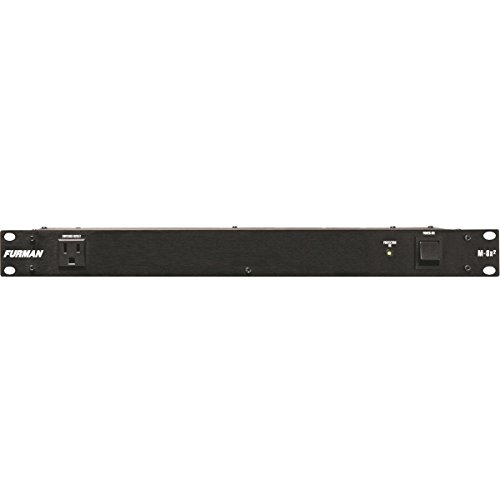
- AC noise filtering reduces RFI/EMI, Spike & surge protection ensures equipment stays safe & power stays clean,
- 15 amp rating with circuit breaker and "Protection OK" Front Panel Indicator to let you know that your equipment is being protected
The M-8X2 is the entry-level workhorse for the Furman brand. It is essentially a heavy-duty power strip in a rack-mount chassis. Like the M-8Lx, it lacks sequencing. Compared to the Pyle PCO875 10-Outlet Power Sequencer Conditioner, the Furman M-8X2 feels a bit “feature-thin.” It doesn’t have the digital voltage display or the USB port. However, it is slightly more compact and has a reputation for indestructible surge protection. We recommend the M-8X2 for budget-conscious users who just want a “Furman” nameplate in their rack for basic spike protection and don’t require the advanced sequencing logic of the Pyle.
3. Furman M-8Dx 9-Outlet Power Conditioner

- Digital Voltmeter Displays Incoming Line Voltage
- AC Noise Filtering Reduces Radio Frequency (Rfi) & Electromagnetic Interference (Emi)
The M-8Dx is the closest competitor to the Pyle in terms of monitoring. It features a digital voltmeter and pull-out lights. However, even at its higher price point, it still lacks the 8-step power sequencing that makes the Pyle PCO875 so unique. The M-8Dx offers superior RFI/EMI filtration, making it the better pick for high-end recording environments where line noise is a constant battle. But if your main concern is protecting your speakers from “pops” and managing the power-up of a massive PA system, the Pyle PCO875 10-Outlet Power Sequencer Conditioner actually offers more utility for a lower price.
Final Verdict: Is the Pyle PCO875 Right for Your Rack?
After putting the Pyle PCO875 10-Outlet Power Sequencer Conditioner through its paces in a professional studio environment, our verdict is clear: this is a highly capable, specialty tool that punches well above its weight class in terms of functionality. While it might not offer the medical-grade noise filtering of a conditioner costing five times as much, it solves the “power-on pop” problem with 100% reliability. The combination of 8 sequenced rear outlets, 2 always-on front outlets, and a real-time voltage monitor makes it a “command center” for your gear.
We recommend the Pyle PCO875 10-Outlet Power Sequencer Conditioner to home studio owners, church audio techs, and mobile DJs who need to protect their speakers and simplify their startup routine. It is a rugged, well-built unit that looks professional and performs exactly as advertised. If you are tired of the anxiety that comes with flipping your master power switch and hoping your speakers don’t explode, it is time to upgrade. You can order yours today and finally bring professional power management to your setup.
Last update on 2026-10-16 / Affiliate links / Images from Amazon Product Advertising API