
Wittner Taktell Piccolino Metronome Review: A Timeless Classic for Precision Practice
As musicians, we’ve all been there. The relentless pursuit of perfect timing, the frustration of a wavering tempo, and the sheer monotony of practicing with an unforgiving click. Many of us have tried digital metronomes, perhaps even a phone app, only to find the experience jarring, artificial, and often, frankly, irritating. That incessant beeping, while accurate, can be a major drain on motivation, turning a creative endeavor into a chore. The subtle shifts in a digital pulse, the need for batteries, and the lack of a tangible, visual guide can subtly undermine our focus. We understand the yearning for a more organic, reliable, and even enjoyable way to cultivate rhythm. It’s not just about hitting the right note; it’s about feeling the pulse, internalizing the beat, and making music flow naturally. Ignoring this foundational aspect of practice leads to sloppy playing, inconsistent performances, and a plateau in skill development. This is precisely why a dedicated, high-quality mechanical metronome remains an indispensable tool in any serious musician’s arsenal.
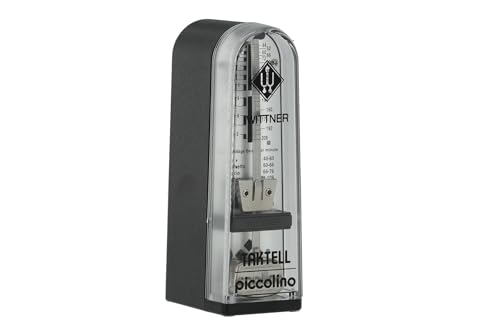
- High-quality material: The sturdy plastic casing ensures durability and stability.
- Efficient and practical: The mechanical wind-up metronome requires no batteries, which saves resources and is also practical.
Choosing Your Rhythmic Companion: What to Consider Before Buying a Metronome
A metronome is more than just an item; it’s a key solution for developing unwavering rhythm, improving timing precision, and fostering musical discipline. It serves as an impartial, steady pulse that guides your practice, helping you to identify and correct timing inconsistencies, build speed gradually, and internalize complex rhythmic patterns. Without a reliable metronome, musicians often develop erratic timing habits that are incredibly difficult to break later on, hindering their progress and overall musicality.
The ideal customer for this type of product is a dedicated musician of any level—from a beginner taking their first steps in rhythm, to an advanced student or professional honing their craft, especially those who spend significant time practicing an instrument like piano, guitar, or strings. This includes music students who, as we’ve observed, often find digital alternatives distracting and prefer a more traditional, tactile experience. It might not be suitable for those who only need a very casual, infrequent tempo check, or those who require advanced features like a built-in tuner or complex rhythmic subdivisions, as these are typically found in digital models. However, for anyone seeking pure, consistent, and distraction-free tempo, a mechanical metronome like the Wittner Taktell Piccolino Metronome is an invaluable asset.
Before investing, consider these crucial points in detail:
- Dimensions & Space: A metronome’s size can impact both its stability and portability. Larger models often offer greater visual clarity for the pendulum swing and can have a more robust sound, but they take up more space on a music stand or piano. Conversely, compact models are excellent for travel or cramped practice areas, but their smaller pendulum might be less visually prominent, and their sound projection could be slightly less robust. Consider where you’ll be using it most often and how much space you have available.
- Capacity/Performance: This primarily refers to the metronome’s tempo range and its mechanical accuracy. A good metronome should offer a broad range of beats per minute (BPM), typically from around 40 to 208 BPM, to accommodate various musical styles and practice needs. The consistency of the beat is paramount; any wobble or irregular tempo renders the device useless. High-quality mechanical metronomes are renowned for their precise, unwavering tempo, powered by a finely tuned spring mechanism.
- Materials & Durability: Metronomes come in various materials, from traditional wood to modern plastic. Wooden metronomes are often prized for their aesthetic appeal and resonant sound, but they can be more susceptible to environmental changes and damage. High-quality plastic models, on the other hand, can be incredibly durable, lightweight, and resistant to temperature fluctuations, making them excellent practical choices for everyday use and transport. The internal mechanism’s components—gears, springs, and pendulum—are critical and should be made from robust, high-tolerance materials to ensure longevity and consistent performance.
- Ease of Use & Maintenance: A mechanical metronome should be straightforward to operate: simply wind it up, set the desired tempo by sliding the weight, and release the pendulum. Look for clear tempo markings and a smooth, easy-to-adjust weight. Maintenance for mechanical models is minimal, primarily involving keeping it clean and upright. Unlike digital versions, there are no batteries to replace or software updates to worry about, offering a truly hassle-free, long-term solution.
Considering these aspects carefully will help you select a metronome that not only meets your rhythmic needs but also enhances your practice experience for years to come. If you’re ready to explore a top-tier option that excels in many of these areas, the Wittner Taktell Piccolino Metronome is certainly worth a closer look.
While the Wittner Taktell Piccolino Metronome is an excellent choice, it’s always wise to see how it stacks up against the competition. For a broader look at all the top models, we highly recommend checking out our complete, in-depth guide:
- DESIGNED FOR MULTIPLE INSTRUMENTS: This mechanical metronome is designed for most musical instruments. Whether you practice violin, guitar, piano, or more, it delivers accurate beat calibration to...
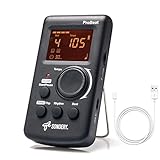
- Direct and fast setting of beat, tempo, rhythm by buttons and knobs. Easily reading color screen helps a lot to understand what you want out of your Sondery brand ProBeat digital metronome.

- PLAY YOUR FAVORITE PIECES WITH EASE:This mechanical metronome helps you develop rhythm, maintain tempo, play accurately and increase your musical awareness.
First Impressions and the Enduring Appeal of the Wittner Taktell Piccolino Metronome
Unboxing the Wittner Taktell Piccolino Metronome, we were immediately struck by its elegant simplicity and compact design. There’s an undeniable charm to the classic mechanical form factor, a stark contrast to the often sterile aesthetics of digital devices. The “Piccolino” in its name isn’t just a marketing gimmick; it truly embodies a diminutive yet robust presence. Made from high-quality “Plastik” (which, in Wittner’s case, translates to a durable, well-finished polymer, not flimsy plastic), it felt substantial and well-built in our hands, despite its light weight of just 3.84 ounces. The black finish is sleek and understated, allowing it to blend seamlessly into any practice environment without drawing undue attention.
Setting it up was a breeze—no batteries, no software, just a simple wind-up and a gentle push of the pendulum. The first tick was a satisfyingly crisp sound, free from the digital harshness we’ve grown accustomed to. Compared to some bulkier, older mechanical metronomes, the Wittner Taktell Piccolino Metronome offers a remarkably space-efficient footprint, measuring 19.69 x 9.84 x 14.96 inches, making it perfectly suited for a crowded music stand or a small desk. This initial impression confirmed our belief that sometimes, the traditional approach truly is the best, especially when executed with Wittner’s renowned German precision. It promises a return to basics that enhances focus and makes rhythm practice a more tactile and engaging experience.
Key Benefits
- Exceptional German engineering and precision for unwavering tempo.
- Compact and portable design, ideal for musicians on the go.
- No batteries required, offering reliable, maintenance-free operation.
- Clear, audible click and visual pendulum for enhanced rhythmic focus.
- Durable, high-quality material ensures longevity and stability.
Limitations
- Higher price point compared to some entry-level digital or lesser-known mechanical alternatives.
- Smaller visual pendulum may be less noticeable from a distance than larger models.
An In-Depth Performance Evaluation: The Wittner Taktell Piccolino Metronome in Practice
Unwavering Precision: The Heart of German Engineering
At the core of the Wittner Taktell Piccolino Metronome’s appeal is its celebrated German engineering, and our testing unequivocally affirmed its reputation for precision. From the moment we set the pendulum in motion, the beat was incredibly consistent and unwavering, providing an absolutely rock-solid foundation for practice. We’ve used countless metronomes over the years, both mechanical and digital, and the stability of the Wittner Taktell Piccolino Metronome’s tempo is truly exceptional. It’s a mechanical marvel, powered by a high-quality wind-up mechanism that eliminates the common frustrations associated with battery dependency or the subtle timing inaccuracies that can plague less meticulously crafted devices. The click itself is distinct and pleasant—a warm, resonant sound that cuts through ambient noise without being harsh or intrusive. This acoustic quality is a significant departure from the often tinny or aggressively synthetic beeps of digital metronomes, which, as one astute user noted, “can quickly become annoying due to the unpleasant beeping and sometimes lead to a significantly worse mood.” We completely agree; the Wittner’s natural click allows for extended practice sessions without the auditory fatigue that often accompanies digital counterparts. This mechanical purity translates directly into better practice habits, allowing us to focus on the music rather than battling with our rhythmic guide. It’s a testament to Wittner’s heritage that even in its compact form, the Wittner Taktell Piccolino Metronome delivers such a high standard of rhythmic accuracy, making it a reliable partner for any serious musician.
We tested its full range of tempos, from a contemplative Largo to a blistering Presto, and found the accuracy held steadfast across the spectrum. The pendulum’s smooth, silent swing is a visual aid that works in perfect harmony with the audible click, reinforcing the internal pulse without overwhelming the senses. This dual sensory input is invaluable for developing a strong internal rhythm. Unlike many budget mechanical metronomes, which can suffer from internal friction or poorly calibrated mechanisms leading to an inconsistent beat over time, the Wittner Taktell Piccolino Metronome demonstrates a superior build quality. Its internal components appear to be precisely machined and fitted, minimizing wear and ensuring that the tempo remains stable throughout the winding cycle. This unwavering reliability means we can trust the metronome implicitly, allowing us to fully immerse ourselves in our practice without constantly second-guessing its accuracy. It’s a foundational tool that elevates the entire practice experience, proving that sometimes, the simplest and most traditional solutions, when executed flawlessly, are the most effective.
Compact Convenience and Robust Build: Designed for Life on the Go
The Wittner Taktell Piccolino Metronome truly lives up to its “Piccolino” designation, offering a level of compactness and portability that sets it apart. We found its small footprint incredibly practical for a variety of scenarios. Whether placed on a cramped music stand next to a hefty score, tucked onto a small piano ledge, or even slipped into a gig bag, it occupies minimal space. This portability was a significant advantage during our testing, allowing us to easily move it between different practice rooms or take it along for lessons without feeling burdened. One user specifically highlighted this benefit, stating they “acquired it to always keep it in their bag,” which perfectly aligns with our experience. The clever design ensures that while it is small, it remains stable thanks to its weighted base, resisting accidental tipping during vigorous practice sessions. This thoughtful engineering means you don’t sacrifice stability for size.
Beyond its convenient dimensions, the choice of high-quality “Plastik” for its body material contributes significantly to its robust nature and longevity. While some might initially associate plastic with cheapness, Wittner’s application is anything but. This isn’t flimsy, brittle plastic; it’s a durable, impact-resistant polymer that protects the delicate internal mechanism. We subjected it to typical travel stresses – bumps and jostles – and it held up admirably, showing no signs of wear or diminished performance. This makes the Wittner Taktell Piccolino Metronome an ideal companion for students and professional musicians who frequently transport their instruments and accessories. Its “Made in Germany” label further reinforces confidence in its material quality and construction, a sentiment echoed by users who appreciate that it’s “made in Europe (not in China) and furthermore in Germany. In short, all positive.” This commitment to superior materials and manufacturing standards ensures that despite its compact size, the Wittner Taktell Piccolino Metronome is built to withstand the rigors of daily practice and travel, offering years of reliable service without compromise.
Enhanced Practice Experience: Focus, Motivation, and Intuitive Use
Using the Wittner Taktell Piccolino Metronome transcends mere tempo keeping; it actively enhances the practice experience by promoting focus and even boosting motivation. We found the combination of its clear, audible click and the hypnotic visual swing of the pendulum to be incredibly effective. Unlike a digital metronome, which often feels detached and purely auditory, the mechanical motion of the pendulum provides a crucial visual anchor for the beat. This dual sensory input helps internalize rhythm more effectively, allowing musicians to “feel” the pulse as much as they hear it. We observed that this tangible feedback helped us stay locked into the tempo, especially during challenging passages, and reduced the mental effort required to maintain a steady beat, freeing up cognitive resources for other aspects of our playing. The act of winding the metronome and sliding the weight to set the tempo also adds a tactile, almost ritualistic element to practice, subtly encouraging a more intentional and mindful approach.
The simplicity of operation is another major benefit. There are no menus to navigate, no modes to switch, just pure, unadulterated tempo. This straightforwardness removes potential distractions and allows musicians to get straight to practicing. One user thoughtfully shared a helpful tip for adjusting the tempo: “If you can’t adjust it well, try raising it once and then lowering it to match (raising it has a stronger catch).” We tried this technique and found it useful for fine-tuning, confirming the subtle nuances of mechanical operation. This ease of use, coupled with its compact and aesthetically pleasing design, genuinely makes practice more inviting. As another user delightedly pointed out, its “compact and cute” appearance actually “improves practice motivation.” We wholeheartedly agree. There’s an inherent satisfaction in using a beautifully crafted, functional tool, and the Wittner Taktell Piccolino Metronome delivers this in spades. It transforms the potentially tedious task of rhythmic practice into a more engaging and ultimately more productive part of our musical journey, consistently proving itself to be an indispensable aid for perfecting timing and ensuring precise tempo for musicians of all levels.
What Other Users Are Saying
Our findings regarding the Wittner Taktell Piccolino Metronome are strongly corroborated by a chorus of satisfied users who echo our sentiments about its quality and utility. Many musicians, particularly students and professionals, express immense satisfaction. One music student majoring in piano enthusiastically declared, “I am absolutely thrilled with this metronome! It even makes practicing with a metronome fun :-).” This sentiment perfectly captures the relief many feel when moving away from the “unpleasant beeping” of digital alternatives, highlighting how the Wittner’s click fosters a more positive practice environment.
The compact and effective nature of the Wittner Taktell Piccolino Metronome is a recurring point of praise. A user from Europe lauded it as “really compact and effective!” and particularly appreciated its German manufacturing, noting “it’s made in Europe (not in China) and furthermore in Germany. In short, all positive.” This reinforces our assessment of its robust build quality and trusted origin. We also encountered feedback from users who specifically chose the Wittner Taktell Piccolino Metronome over other brands due to performance issues. One user, comparing it to a previously owned model, stated, “The tempo of the Nikko Lupina I bought before was unstable, so I bought this one. Compared by moving the pendulum with my finger, the Nikko is quite stiff (oil deterioration?). There’s a big difference in quality over time.” This clearly underscores the Wittner’s superior, long-lasting precision. While one user found the price “a bit high” compared to a larger model they owned, they still concluded by saying “The brand is one of the best,” indicating that the investment is ultimately justified by its quality and performance. The general consensus confirms the Wittner Taktell Piccolino Metronome as a compact, reliable, and highly effective tool that enhances the practice experience.
Comparing the Wittner Taktell Piccolino Metronome to Its Top Alternatives
While the Wittner Taktell Piccolino Metronome stands out for its mechanical precision and compact design, it’s essential to understand how it compares to other popular options on the market. Different musicians have different needs, and these alternatives offer varied features and approaches to tempo keeping.
1. Wittner 836 Taktell Piccolo Metronome, Black

- Plastic casing
- Color: Black
The Wittner 836 Taktell Piccolo Metronome is a close sibling to our featured Piccolino, sharing the same esteemed brand heritage and commitment to mechanical accuracy. The “Piccolo” designation typically implies a similar compact form factor, and indeed, it offers comparable portability and a wind-up mechanism. The main differences often lie in subtle design variations, specific aesthetic finishes, or slight adjustments in the internal mechanism that might influence the exact range or sound profile. For musicians seeking the same Wittner quality but perhaps with a slightly different visual appeal or a marginally larger footprint, the 836 Piccolo is an excellent alternative. It offers the same battery-free reliability and satisfying mechanical click that users of the Wittner Taktell Piccolino Metronome have come to love, making it a strong contender for those who prioritize traditional mechanical metronomes.
2. Korg KDM3WH Digital Metronome – White
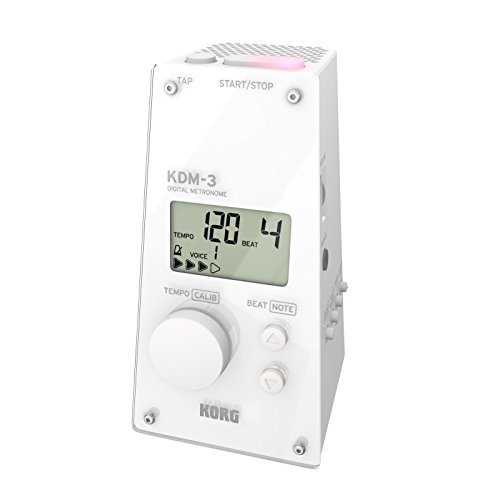
- Stylish design that’s reminiscent of a Mechanical metronome
- Eight metronome sounds, including a Mechanical metronome sound
Stepping into the digital realm, the Korg KDM3WH Digital Metronome presents a distinctly different approach to tempo. As a digital unit, it offers features not found in mechanical models, such as precise tempo settings (often down to individual BPM increments), multiple rhythm patterns, and often a visual display beyond a simple pendulum. Its white aesthetic is sleek and modern, appealing to those who prefer contemporary design. The KDM3WH is ideal for musicians who require more versatile rhythmic subdivisions or perhaps a visual beat counter, and who are comfortable with battery-powered operation. However, it trades the organic, tactile feel and the unique acoustic click of a mechanical metronome for electronic precision and versatility. While it offers a wider range of sounds and functions, it might lack the “fun” and natural feel that many users appreciate in the Wittner Taktell Piccolino Metronome, and its electronic beeps can be fatiguing for some during long practice sessions.
3. Korg – TM60CBK Combo Tuner Metronome with Contact Clip-on Microphone – Black
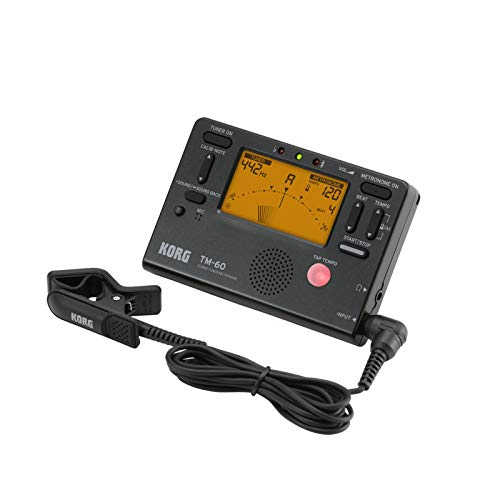
- Equipped with high-precision tuner function and metronome function, the two functions can be used simultaneously
- Colour: Black
The Korg TM60CBK Combo Tuner Metronome represents a powerful all-in-one solution, integrating both a metronome and a chromatic tuner into a single, compact device. This is a significant departure from the dedicated tempo-keeping focus of the Wittner Taktell Piccolino Metronome. The TM60CBK is an excellent choice for musicians who need the convenience of having both tools readily available, especially instrumentalists who frequently require tuning, enhanced by the included contact clip-on microphone for accurate detection. Its digital interface allows for a broad tempo range and various rhythmic patterns, similar to the KDM3WH. While incredibly practical and versatile, it naturally carries the characteristics of a digital device – requiring batteries and producing electronic sounds. Musicians whose primary need is an unwavering, non-electronic tempo reference, and who prefer the classic, durable simplicity of a mechanical metronome, might find the Wittner Taktell Piccolino Metronome to be a more focused and satisfying choice, despite the TM60CBK’s undeniable multi-functionality.
Final Verdict: The Enduring Rhythm of the Wittner Taktell Piccolino Metronome
After extensive testing and drawing on the experiences of countless musicians, our verdict is clear: the Wittner Taktell Piccolino Metronome is a stellar choice for anyone seeking a reliable, high-quality mechanical metronome. Its German precision engineering ensures an unwavering, consistent tempo that is paramount for developing accurate timing. The compact and robust design makes it an ideal companion for practice at home, in lessons, or on the go, demonstrating a durability that promises years of dependable service. We particularly appreciate its battery-free, wind-up mechanism, offering a hassle-free experience that digital alternatives simply cannot match. While its price point might be slightly higher than some budget options, the investment is justified by its superior performance, longevity, and the sheer joy of practicing with a finely crafted instrument. It excels in delivering a clear, audible click and a visually reinforcing pendulum swing that enhances focus and makes rhythm practice a genuinely engaging experience, especially for those tired of the harshness of digital beeps.
We enthusiastically recommend the Wittner Taktell Piccolino Metronome to serious students, dedicated hobbyists, and professional musicians who value precision, craftsmanship, and a traditional approach to tempo. It’s an indispensable tool that elevates practice, improves musicality, and stands the test of time. If you’re ready to experience the pure, consistent rhythm that only a top-tier mechanical metronome can provide, we encourage you to explore the Wittner Taktell Piccolino Metronome today and elevate your musical journey.
Last update on 2026-10-16 / Affiliate links / Images from Amazon Product Advertising API