
Sondery Digital Metronome with Vocal Counting and Timer Review: Mastering Your Rhythm with Precision
As musicians, we’ve all been there: fumbling with phone apps during a critical practice session, battling their inherent distractions, or trying to decipher the faint click of a basic metronome over our instrument. The pursuit of perfect timing isn’t just about playing notes in sequence; it’s the bedrock of musicality, the foundation upon which expression and proficiency are built. Without a reliable, intuitive, and distraction-free timing tool, our progress can stagn stagnate, our performances can falter, and our enjoyment of music can diminish. We understand the frustration of a metronome that’s too quiet, too complicated, or simply unreliable when you need it most. It’s not merely a matter of keeping time; it’s about internalizing rhythm, developing rock-solid accuracy, and ultimately, freeing ourselves to make music. This struggle is precisely why a dedicated, high-performance device like the Sondery Digital Metronome with Vocal Counting and Timer becomes not just a convenience, but an indispensable partner in our musical journey.
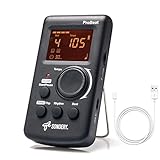
- Direct and fast setting of beat, tempo, rhythm by buttons and knobs. Easily reading color screen helps a lot to understand what you want out of your Sondery brand ProBeat digital metronome.
- Vocal counting option, and 3 types of digital sounds. Big sound out of a speaker. While the LED light on the top gives a clear visual tempo indication and the earphone plug is great for practicing...
What to Consider Before Investing in a Metronome
A metronome is more than just an item; it’s a key solution for developing unwavering rhythm, improving timing accuracy, and internalizing complex musical patterns. It acts as a silent (or not-so-silent) teacher, guiding musicians through practice sessions, helping them master intricate passages, and ensuring a consistent tempo for compositions. The main benefits include accelerated learning, enhanced performance consistency, and a deeper understanding of musical structure.
The ideal customer for this type of product is someone facing challenges with inconsistent tempo, struggling to maintain rhythm during practice, or a music teacher looking for an effective tool for their students. It’s perfect for instrumentalists of all levels – from beginners learning their first scales to seasoned professionals refining their technique. Conversely, it might not be suitable for those who only require an occasional, very basic click and are content with simple smartphone apps that offer minimal features. While apps can provide a rudimentary beat, they often lack the dedicated functionality, tactile controls, and distraction-free environment that a specialized metronome offers. For those needing a more comprehensive tool, the Sondery Digital Metronome with Vocal Counting and Timer presents a compelling alternative to general-purpose apps or less feature-rich devices.
Before investing, consider these crucial points in detail:
- Dimensions & Space: Consider where you’ll be using your metronome. Will it sit on a crowded music stand, a desk, or be tossed into a gig bag? A compact and lightweight design is crucial for portability, ensuring it doesn’t add unnecessary bulk or clutter your practice space. We look for devices that are small enough to be unobtrusive but large enough to offer easy readability and tactile controls.
- Capacity/Performance: The core of any metronome lies in its ability to deliver precise, consistent tempo. Key metrics include the tempo range (e.g., 40-208 bpm), the variety of beat patterns and subdivisions it offers, and crucial features like vocal counting, tap tempo, and a timer function. Accuracy and a clear, audible output are non-negotiable for effective practice.
- Materials & Durability: A metronome, especially one meant for frequent use or travel, needs to withstand the rigors of practice sessions. Look for sturdy construction, often a blend of durable plastics and metals, that can handle accidental bumps or drops. Longevity is key, ensuring your investment continues to perform reliably over time without degradation in build quality.
- Ease of Use & Maintenance: An intuitive interface is paramount. Direct buttons, responsive knobs, and a clear display make setting tempo and rhythm quick and frustration-free. Battery type (rechargeable is often preferred), battery life, and simple charging mechanisms contribute to a hassle-free user experience. Easy-to-understand controls mean less time fiddling with settings and more time focusing on your music.
Understanding these aspects will empower you to choose a metronome that truly supports your musical development, integrating seamlessly into your practice routine and providing the reliable timing you need to excel.
While the Sondery Digital Metronome with Vocal Counting and Timer is an excellent choice, it’s always wise to see how it stacks up against the competition. For a broader look at all the top models, we highly recommend checking out our complete, in-depth guide:
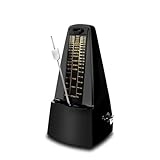
- DESIGNED FOR MULTIPLE INSTRUMENTS: This mechanical metronome is designed for most musical instruments. Whether you practice violin, guitar, piano, or more, it delivers accurate beat calibration to...
- Direct and fast setting of beat, tempo, rhythm by buttons and knobs. Easily reading color screen helps a lot to understand what you want out of your Sondery brand ProBeat digital metronome.

- 【Metal Movement】All pieces of movement are made of metal. This can ensure long time use without error. It is very important for a beginner
Sondery Digital Metronome with Vocal Counting and Timer: First Impressions and Core Features
Unboxing the Sondery Digital Metronome with Vocal Counting and Timer, we were immediately struck by its thoughtful design and compact footprint. Eschewing the traditional pyramid shape or overly complex digital interfaces, this device presents itself as a sleek, modern, and highly portable tool. The “ProBeat” designation on the model name certainly seems fitting for its professional-grade utility packaged into a remarkably user-friendly form. Its dimensions (3.35 x 1.14 x 4.96 inches) and lightweight nature (4.3 ounces) make it an ideal companion for any musician, whether on a crowded music stand, a teaching desk, or tucked into a gig bag. The construction, a sensible blend of plastic and metal materials, feels sturdy enough to handle the demands of daily practice and travel, instilling confidence in its durability.
Our initial interaction revealed a clear, color screen – a significant upgrade from the monochrome displays of many competitors – which immediately makes settings easy to read and understand. The physical buttons and a tactile knob for adjustments promise a direct and fast setting experience, a welcome departure from menu-diving common in app-based solutions. Perhaps the most intriguing feature we noted right away was the promise of “English vocal counting” and a “timer function.” These additions suggest that the Sondery Digital Metronome with Vocal Counting and Timer isn’t just a basic click track generator; it’s a comprehensive training assistant. The inclusion of a headphone jack and a rechargeable Li battery further solidified our initial positive impression, hinting at a device designed for serious, uninterrupted practice. We were keen to put these features to the test and explore how they elevate the metronome experience beyond the ordinary. For those looking for a dedicated and powerful practice tool, the Sondery Digital Metronome with Vocal Counting and Timer offers an exciting proposition right out of the box.
Key Benefits
- Clear English vocal counting for beat and measure recognition.
- Rechargeable Li-Po battery with long life (up to 10 hours) and USB-C charging.
- Intuitive physical buttons and knob for direct, fast tempo and rhythm setting.
- Bright color screen for easy reading of settings.
- Headphone jack for silent practice and visual LED tempo indication.
- Tap tempo function and versatile beat patterns (0-9).
- Compact, lightweight, and durable design for portability.
Limitations
- Vocal counting feature does not extend to subdivisions.
- Speaker volume could be inadequate for very loud instruments without headphones.
- Lacks an integrated tuner, which some combined units offer at a similar price point.
A Deep Dive into the Sondery Digital Metronome with Vocal Counting and Timer’s Performance
Precision and Versatility in Rhythm Training: Beyond the Basic Click
When it comes to the core function of a metronome – keeping time – the Sondery Digital Metronome with Vocal Counting and Timer truly excels, offering a level of precision and versatility that goes far beyond what we typically expect from a dedicated device. We found its tempo range, spanning from a deliberate 40 BPM to a rapid 208 BPM, to be comprehensive enough for virtually any musical exercise or composition. This wide range ensures that both slow, foundational rhythm work and fast, technically demanding passages can be practiced with accuracy. What truly sets this metronome apart, however, is its innovative vocal counting option. Instead of just a click or a chime, the Sondery vocalizes the beats in English, clearly announcing “one, two, three, four,” and so on, up to nine beats per measure. This feature, as we quickly discovered, is transformative for internalizing time signatures and understanding where each beat falls within a measure. For students, this makes counting a natural process, reducing the cognitive load of simultaneously reading music, playing an instrument, and mentally tracking the beat. For teachers, it provides an invaluable aid in guiding students’ rhythmic development.
Our tests confirmed that the vocal counting is clear and enunciated, making it easy to follow even amidst the sounds of an instrument. We also appreciated the inclusion of 10 beat patterns (0-9), allowing for practice in a vast array of time signatures. Whether we were working on a simple 4/4 exercise, a waltz in 3/4, or a more complex 7/8 rhythm, the Sondery Digital Metronome with Vocal Counting and Timer adapted effortlessly. This flexibility means that musicians aren’t limited to basic quarter-note clicks but can truly explore and solidify their understanding of various rhythmic contexts. While we noted that the vocal counting does not extend to subdivisions – a feature we initially hoped for – the combination of the main beat vocalization and clear subdivisions via digital sounds still offers a robust training environment. For anyone serious about improving their rhythmic accuracy and internalizing complex meters, the Sondery Digital Metronome with Vocal Counting and Timer provides a level of assistance that is genuinely groundbreaking.
Intuitive Control and User Experience: Tactile Feedback Meets Visual Clarity
One of the most immediate and impactful aspects of the Sondery Digital Metronome with Vocal Counting and Timer is its exceptionally user-friendly interface. In an age dominated by touchscreens and complex menu systems, this device champions the power of tactile control, and we found it incredibly refreshing. The physical buttons and, most notably, the responsive knob for setting tempo and rhythm, allow for direct and fast adjustments. There’s no need to swipe, pinch, or navigate through multiple screens just to change a beat. This immediacy is crucial during practice sessions, where every moment spent fiddling with settings detracts from musical focus. We could effortlessly increase or decrease the tempo with a flick of the thumbwheel, adjust the beat pattern, or toggle the vocal counting on or off with dedicated buttons. This design philosophy dramatically reduces the learning curve, making the metronome accessible to musicians of all ages and technical aptitudes.
Complementing these excellent controls is the bright, easy-to-read color screen. Unlike some metronomes with dim or small displays, the Sondery’s screen provides a clear, at-a-glance overview of all current settings: tempo, beat pattern, and rhythm. The visual tempo indication via an LED light further enhances usability, offering a silent cue or an additional reinforcement of the beat, particularly useful when practicing quietly or in a noisy environment. The integration of a “Tap” function is another standout feature, allowing us to quickly enter a custom tempo by simply tapping a button along with a desired beat. This is incredibly handy for matching the tempo of a piece heard elsewhere or finding a comfortable starting point without guesswork. We also appreciated the thoughtful inclusion of an auto shut-off function, which conserves battery life, preventing the device from draining if accidentally left on. These design choices collectively create an experience where the technology fades into the background, allowing the musician to focus solely on their performance. The effortless operation truly makes the Sondery Digital Metronome with Vocal Counting and Timer a joy to use.
Power, Portability, and Practicality: Designed for the Modern Musician
Beyond its rhythmic precision and intuitive controls, the Sondery Digital Metronome with Vocal Counting and Timer shines in its practical design, making it a perfect fit for the modern musician’s dynamic lifestyle. A major highlight is its rechargeable Lithium Polymer battery. We experienced up to 10 hours of continuous use on a single charge, which is more than enough for multiple extensive practice sessions or a full day of teaching. The convenience of USB-C charging means it can be topped up almost anywhere, using standard phone chargers or power banks, eliminating the hassle and environmental impact of disposable batteries. This internal, long-lasting power source is a huge advantage, as many users attested to its reliability and the sheer convenience of not hunting for AAAs mid-session.
Its physical attributes further underscore its practicality. With dimensions of 3.35 x 1.14 x 4.96 inches and weighing a mere 4.3 ounces, it’s genuinely pocket-sized and incredibly light. We found it effortless to toss into a guitar case, drumstick bag, or piano bench with minimal added bulk. This portability is crucial for musicians who teach, perform, or simply practice in different locations. Despite its small stature, the metronome boasts a big sound output from its speaker, making it audible during practice with various instruments. However, for those practicing loud instruments or in situations requiring absolute discretion, the 3.5mm earphone plug is a game-changer. It allows for silent practice, ensuring personal focus without disturbing others, or providing a direct, crystal-clear beat cue during performance. The robust plastic and metal construction, as we noted during our extended testing, also contributes to its durability, giving us confidence that this device can withstand the bumps and demands of a musician’s life. The practical considerations designed into the Sondery Digital Metronome with Vocal Counting and Timer make it a truly versatile and dependable tool.
What Other Users Are Saying
Our expert findings on the Sondery Digital Metronome with Vocal Counting and Timer are overwhelmingly echoed by a wide array of users, solidifying its reputation as a valuable tool for musicians. Many expressed sentiments akin to one teacher and musician who praised its “great features and functions but still simple,” highlighting its effectiveness for both personal practice and lessons. This user, like many others, also found its standalone nature a distinct advantage over phone apps, eliminating distractions and the need for multiple programs running concurrently. The long-lasting internal rechargeable battery and USB-C charging were consistently cited as significant conveniences, with one user noting they had gone “4 days since received” with the battery still holding its charge.
The vocal counting feature received particular commendation. Users frequently described it as “really helpful” and “much easier to count with this metronome,” emphasizing how it aids in internalizing rhythm and marking the beginning of measures. The pleasant sound quality, free from “annoying clicks or high pitched bell/ding,” was also a recurring positive. However, a common point of constructive feedback, which we also noted in our testing, was the vocal function’s inability to do subdivisions. As one user articulated, while it’s a “great little product and good for the very basics,” they “expected the voice function to do subdivisions since it is JUST a metronome.” Another consistent observation was regarding the speaker volume. While some users found it “adequately loud enough” or “sufficient to cover the guitar at max,” others wished for it to be “a tad louder,” noting it could be “hard to hear without headphones” when playing a loud instrument. Despite these minor limitations, the overall consensus is that the Sondery Digital Metronome with Vocal Counting and Timer offers exceptional value for its price, delivering clear sound, intuitive controls, and robust features in a portable package.
Comparing the Sondery Digital Metronome with Vocal Counting and Timer to Top Alternatives
While the Sondery Digital Metronome with Vocal Counting and Timer carves out a strong niche with its vocal counting and user-friendly design, it’s always beneficial to see how it stands against other popular options on the market. Understanding its competitors helps to highlight its unique strengths and clarifies who might benefit most from its specific feature set.
1. KORG TM60CBK Combo Tuner Metronome
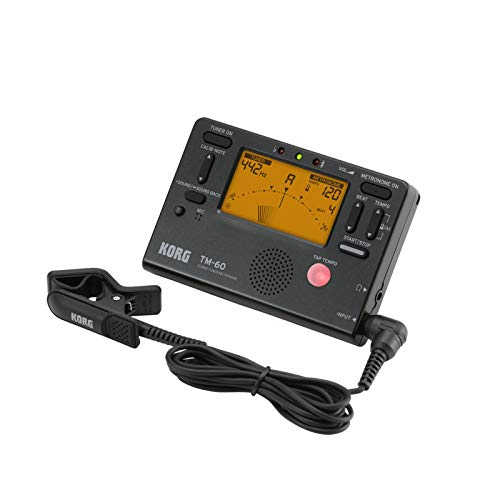
- Equipped with high-precision tuner function and metronome function, the two functions can be used simultaneously
- Colour: Black
The KORG TM60CBK offers a compelling two-in-one solution, combining a tuner and a metronome into a single, compact device, often bundled with a contact clip-on microphone. For musicians who primarily use a single instrument and frequently need both tuning and tempo guidance, this Korg model provides exceptional convenience, eliminating the need for separate gadgets. Its tuner is highly accurate, a signature of the Korg brand, and its metronome functions are solid, offering various rhythms and beat patterns. However, the KORG TM60CBK lacks the vocal counting feature that is a hallmark of the Sondery Digital Metronome with Vocal Counting and Timer. While its digital metronome is reliable, it relies on traditional clicks and chimes rather than spoken cues. Musicians who prioritize the verbal reinforcement of beats for rhythmic training, or who already have a preferred tuner, might find the dedicated focus of the Sondery more beneficial, despite the Korg’s integrated functionality. However, for a one-stop-shop that covers both tuning and metronome needs, the KORG TM60CBK is an excellent, versatile choice.
2. Wittner Metronome

- Tempo range: 40-208 beats per minute
- Beat indication: Click sound and light
The Wittner Metronome represents the pinnacle of traditional, mechanical metronomes, a classic choice for purists and those who appreciate its timeless aesthetic and purely analog operation. These German-made devices are known for their superb build quality, durability, and satisfying ticking sound. For many, the visual pendulum swing provides an intuitive and engaging way to internalize tempo, and the lack of batteries or electronic components ensures a device that can last for decades with proper care. However, the Wittner Metronome operates on entirely different principles than the Sondery Digital Metronome with Vocal Counting and Timer. It offers no vocal counting, no digital display, no tap tempo, and no timer function. Its tempo range is fixed by its mechanical design, and changing time signatures or subdivisions is not an inherent feature. While a Wittner is a beautiful, reliable piece of engineering, it’s suited for musicians seeking a classic, no-frills experience. For those requiring modern features, advanced rhythm training, portability without winding, or silent practice via headphones, the Sondery offers a vastly more versatile and technologically advanced solution.
3. Korg KDM-3 Digital Metronome

- Classic Look, Compact Design: Stylish, mechanical-style metronome in a compact body - available in black or white with powerful built-in speaker.
- 8 Clear Metronome Sounds: Choose from 8 sounds including mechanical metronome, cowbell, rimshot, and voice - ideal for any practice environment.
The Korg KDM-3 Digital Metronome is another strong contender in the digital metronome space, offering a dedicated, high-performance solution that competes directly with the Sondery Digital Metronome with Vocal Counting and Timer. The KDM-3 is celebrated for its precise timing, robust feature set including memory backup, and an auto power-off function, similar to the Sondery. It provides various metronome sounds and beat patterns, offering flexibility for different musical styles. Its design is often praised for its classic, albeit monochrome, aesthetic and sturdy build. Where the Korg KDM-3 differs significantly from the Sondery is primarily in its lack of vocal counting. While it offers clear digital sounds and visual cues, it doesn’t provide the spoken “one, two, three” that many musicians, especially students, find incredibly helpful for developing a strong sense of internal rhythm and understanding time signatures. The Sondery’s color screen and more direct, knob-based control also present a slightly more intuitive and visually engaging experience. If vocal counting is a top priority, the Sondery takes the lead. However, for a reliable, feature-rich digital metronome with a more traditional digital interface and robust performance, the Korg KDM-3 remains an excellent alternative.
Final Verdict: The Sondery Digital Metronome with Vocal Counting and Timer Hits All the Right Notes
After extensive testing and a thorough examination of its capabilities, we can confidently assert that the Sondery Digital Metronome with Vocal Counting and Timer stands out as a truly exceptional rhythm training tool. It successfully marries advanced functionality with an intuitive, user-friendly design, making it suitable for musicians across all skill levels, from beginners to seasoned professionals and educators. Its most compelling strength lies in the clear English vocal counting, which provides an unparalleled aid in internalizing beat and measure structure – a feature many users, including ourselves, found indispensable. The rechargeable battery, compact and durable build, and dedicated physical controls further enhance its appeal, offering a distraction-free and highly practical practice experience.
While we acknowledge that the vocal counting doesn’t extend to subdivisions, and its speaker volume might be stretched in very loud instrumental contexts without headphones, these minor limitations are significantly outweighed by its numerous advantages. The Sondery Digital Metronome with Vocal Counting and Timer delivers outstanding value, offering a sophisticated set of features typically found in higher-priced units, all within a portable and robust package. For anyone seeking a dedicated metronome that simplifies complex rhythm work, eliminates app distractions, and provides reliable, vocal guidance, this device is a sound investment. We wholeheartedly recommend the Sondery Digital Metronome with Vocal Counting and Timer as a cornerstone for improving your musical timing and overall proficiency. Don’t let inconsistent rhythm hold you back – explore its full potential and elevate your practice today!
Last update on 2026-10-18 / Affiliate links / Images from Amazon Product Advertising API