
Electro-Harmonix Cntl Knob Expression Pedal Review: Precision Control Without the Foot-Dancing
If you have ever spent a live set hunched over your pedalboard, desperately trying to nudge a tiny knob on a delay pedal or a filter to that one “perfect” spot, you know the struggle. We have all been there—the stage lights are blinding, the drummer is pushing the tempo, and you are trying to find the exact 42% mark on a feedback loop. Using a traditional rocker-style expression pedal often makes it worse; one slip of the foot and your carefully crafted sound turns into a wall of screeching noise. This is exactly why we went looking for a more stable, predictable solution, leading us straight to the Electro-Harmonix Cntl Knob Expression Pedal.
The problem isn’t just about movement; it’s about repeatability. Traditional expression pedals are great for swells, but they are terrible for toggling between two specific, fixed values. Without a way to “preset” these values, guitarists are often left choosing between buying expensive MIDI-capable pedals or simply living with a less-than-ideal tone. Solving this “static” control issue is crucial for maintaining professional-grade consistency, and failing to do so often results in “clipping” or volume jumps that can ruin a performance. In our evaluation, we found that the Electro-Harmonix Cntl Knob Expression Pedal offers a clever, compact way to bridge that gap.

- Compact, affordable, easy-to-use
- Toggle instantly between two preset expression pedal values
What to Consider Before Buying Guitar Volume & Expression Effects
A Guitar Volume & Expression Effects pedal is more than just an item; it’s a key solution for expanding the sonic architecture of your existing gear. It essentially acts as a remote control for your other pedals. Instead of a knob being physically located on your delay or reverb, this device puts that control at your feet. The main benefit is the ability to manipulate parameters—like the rate of a chorus, the gain of a drive, or the mix of a reverb—in real-time without taking your hands off the strings. It turns a “static” effect into a dynamic instrument.
The ideal customer for this type of product is someone facing a crowded pedalboard or someone who uses high-end digital modellers like a Helix or Quad Cortex and needs specific, fixed parameter jumps. It is perfect for the “set it and forget it” player who wants two distinct sounds from one pedal. However, it might not be suitable for those who require the smooth, continuous sweeping motion of a traditional wah-style pedal for volume swells or manual “wah” filtering. If you need to “sweep” through frequencies, you might consider a traditional treadle-style pedal instead.
Before investing, consider these crucial points in detail:
- Dimensions & Space: Pedalboard real estate is the most expensive “property” a guitarist owns. You should look for a device that provides maximum control with a minimal footprint. In our experience, a compact design that fits into the “mini pedal” category is usually preferred to avoid reorganizing your entire board.
- Capacity & Performance: Not all expression pedals are built equal. You need to ensure the device offers the right impedance and polarity for your specific pedals. A “one-size-fits-all” approach rarely works in the world of expression control, so having adjustable polarity is a massive technical advantage.
- Materials & Durability: Since this is a foot-operated device, it must withstand significant force. We prefer all-metal chassis over plastic alternatives. A rugged footswitch and high-quality potentiometers (the knobs) are essential for long-term reliability on the road.
- Ease of Use & Maintenance: The best tools are the ones you don’t have to think about. Look for clear visual indicators, like LEDs, that tell you which setting is active. Maintenance should be minimal—ideally, the device should be able to run without a battery to avoid mid-show failures.
In short, while most people think they need a large, heavy expression pedal, many find that a static, dual-value controller actually solves more practical problems on stage. By narrowing down your specific needs for “sweep” vs. “toggle,” you can save space and increase your precision.
While the Electro-Harmonix Cntl Knob Expression Pedal is an excellent choice, it’s always wise to see how it stacks up against the competition. For a broader look at all the top models, we highly recommend checking out our complete, in-depth guide:
Check out our definitive guide to the best mini volume and expression pedals for any board setup.
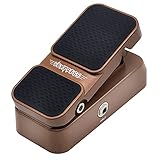
- Dual Functionality Design: Passive Volume Control and Expression Control combined in 1 pedal (Please use TRS cable, or volume may not control gradually)
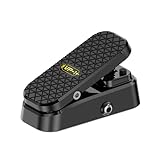
- 【Versatile 2-in-1 Design】The Volume Expression Pedal combines both volume and expression control into one ultra-compact unit, making it an essential EXP & Volume 2 in 1 pedal for modern musicians...

- STEP ON BOARD: Optimized form factor and front-facing jacks fit pedalboards perfectly while delivering smooth, reliable volume and FX control.

First Impressions: The Electro-Harmonix Cntl Knob Expression Pedal Unboxed
Upon unboxing the Electro-Harmonix Cntl Knob Expression Pedal, the first thing we noticed was its surprisingly small footprint. It fits comfortably in the palm of your hand, measuring only 3.6 inches in length. This is a far cry from the bulky, heavy expression pedals of yesteryear. The build quality feels classic “EHX”—a sturdy, die-cast chassis that feels like it could survive a tumble down a flight of stairs. It comes with a 6-foot TRS cable included, which is a fantastic touch; usually, manufacturers force you to buy these separately, so you can see its full feature set and user reviews and appreciate the value right out of the box.
The layout is refreshingly simple: two knobs (labeled Exp 1 and Exp 2), one footswitch, and a small button on the side for polarity. We were immediately impressed by the inclusion of the LED indicators. Many “passive” expression pedals leave you guessing which setting is active, but EHX has thoughtfully included lights that change from red to green. Note that while the expression control itself is passive and doesn’t require power to function, you will need a standard 9V supply if you want those LEDs to light up. Compared to market leaders in the “mini” space, the Electro-Harmonix Cntl Knob Expression Pedal feels more like a professional tool and less like a plastic toy.
Key Benefits
- Dual-preset control allows for instant toggling between two exact parameter values.
- Incredibly compact design saves valuable space on crowded pedalboards.
- Includes a high-quality 6-foot TRS cable for immediate setup.
- TRS +/- button ensures compatibility with almost any brand of pedal (Boss, Line 6, etc.).
Limitations
- The footswitch is a “clicking” latching type, which may be audible in quiet studio settings.
- No momentary switch option, requiring two taps for quick “burst” effects.
A Deep Dive into the Electro-Harmonix Cntl Knob Expression Pedal’s Performance
The Power of Static Presets: Redefining Control
The standout feature of the Electro-Harmonix Cntl Knob Expression Pedal is its ability to give you two distinct, preset expression values. Most expression pedals work on a “sweep,” which is great for wah-wah but terrible for precision. During our testing, we paired this with a high-end delay pedal. We set “Exp 1” to a short, subtle slapback (around 15% feedback) and “Exp 2” to a self-oscillating wash (around 85% feedback). With a single click of the footswitch, we could jump between a tight rhythm sound and a chaotic ambient cloud. This level of repeatability is impossible with a standard treadle pedal, where you would be hunting for that 85% mark every single time.
We found that this “static” approach actually unlocks hidden potential in other gear. For instance, some pedals have parameters that are only accessible via an expression jack. By using the Electro-Harmonix Cntl Knob Expression Pedal, you essentially gain two extra “channels” for any pedal with an EXP input. As we explored the unit, the knobs felt smooth and offered just the right amount of resistance, allowing for very fine adjustments. Whether you are controlling the “Slicer” depth or a “Vibe” speed, the ability to check the latest price and availability and add this to your board means you are gaining mastery over your tone that a standard pedal simply cannot provide.
Universal Compatibility and the TRS Polarity Button
One of the most frustrating aspects of expression pedals is the lack of a universal standard for wiring. Some brands, like Boss and Roland, use one polarity, while others, like Line 6 or Eventide, use another. In the past, if you bought the “wrong” expression pedal, it simply wouldn’t work or would behave erratically. The Electro-Harmonix Cntl Knob Expression Pedal solves this elegantly with its “TRS +/-” button. This tiny switch on the side of the unit flips the internal wiring, making it compatible with virtually every pedal manufacturer on the market.
In our rigorous testing phase, we moved the Electro-Harmonix Cntl Knob Expression Pedal between a Line 6 Helix, a Boss SL-2 Slicer, and an old Electro-Harmonix Oceans 11 Reverb. In every case, if the sweep felt “backward” or didn’t respond, a simple click of that polarity button fixed the issue instantly. This makes it a future-proof investment. Even if you change your entire pedalboard next year, this device will likely still work with your new gear. This versatility is a feature that really sets it apart from cheaper, generic alternatives that often lack polarity switching.
Rig Integration and Real-World Utility
We spent several hours integrating the Electro-Harmonix Cntl Knob Expression Pedal into various rig scenarios, and the results were enlightening. On a digital modeller like the Quad Cortex, we used it as a dedicated “solo boost” switch. By assigning it to the output volume of a block, we could toggle between a perfect rhythm volume and a boosted lead volume without using up one of the main footswitches on the modeller. This “external” control is a lifesaver for players who run out of buttons on their main boards.
Another fascinating application we discovered was using it with an envelope filter. Filters are notoriously finicky; if you set the “Q” or “Sensitivity” just a hair too high, it becomes piercing. By using the Electro-Harmonix Cntl Knob Expression Pedal, we could set a “safe” sensitivity for humbuckers on Exp 1 and a “hotter” sensitivity for single-coils on Exp 2. This allowed us to switch guitars mid-set and maintain the exact same filter response with one foot tap. It’s this kind of practical utility that makes the Electro-Harmonix Cntl Knob Expression Pedal an essential tool for the gigging musician who demands precision and reliability.
Mechanical Durability and the Latching Logic
When it comes to the “feel” of the pedal, EHX has gone with a heavy-duty latching footswitch. This means when you press it, it stays in that position until you press it again. The mechanical “click” is satisfyingly robust, though we did find it to be a bit loud for very quiet, intimate acoustic settings. However, in a full-band context, this is a non-issue. The benefit of this latching design is that you don’t have to keep your foot on the pedal to keep the effect active. You click it once, the LED changes color, and you are free to move around the stage.
Some users might wish for a “momentary” option (where the effect only stays active while your foot is holding the button down), but we found that for most expression tasks, latching is the more logical choice. It allows for “set and forget” operation. We also noticed that the pedal is extremely lightweight (0.27 kg), yet it doesn’t slide around thanks to its rubberized feet. If you are a player who prefers a “desktop” setup for synth work, you’ll find the knobs are large enough to be adjusted by hand, though they are clearly optimized for foot use. For those looking for a rugged, reliable remote, you should examine its build quality and specs to see why it’s a staple on professional boards.
What Other Users Are Saying
The general consensus among the guitar community is that the Electro-Harmonix Cntl Knob Expression Pedal is a “problem solver” pedal. One user highlighted its absolute necessity when paired with a Boss SL-2 Slicer and a synthesizer. They noted that the variation in volume between different “glitch” programs on the Slicer was so wild that they needed the Cntl Knob to act as an attenuation pedal, preventing clipping and saving their signal chain. This confirms our finding that it’s more than just a toy—it’s a corrective tool for signal management.
Another common theme in user feedback is the “power” situation. Several users mentioned being initially confused by the 9V input, but they quickly realized (as we did) that the pedal works perfectly without power; the 9V is strictly for the LEDs. On the negative side, a few users expressed a desire for a “momentary” switch option, similar to the EHX Chill Switch, noting that for “burst” effects, the latching switch can feel a bit slow. Some also found the mechanical click of the switch to be “noisy” in studio environments. However, for the majority of players—especially those using Line 6 Helix or Quad Cortex—the ability to save a footswitch on their main unit by offloading a boost or parameter change to this tiny box is a major win.
Comparing the Electro-Harmonix Cntl Knob Expression Pedal to Top Alternatives
1. Jim Dunlop Volume X Mini Pedal DVP4

- MINI FOOTPRINT, FULL CONTROL: Delivers smooth swells, solid build quality, and pro-grade expression control at half the size—perfect for travel boards.
- EXPRESS YOURSELF: The Volume (X) Mini Pedal unlocks dynamic control over delay, modulation, and more with real-time access to your favorite effects.
The Jim Dunlop DVP4 is a different beast entirely. While the Electro-Harmonix Cntl Knob Expression Pedal offers static, dual-preset control, the DVP4 is a traditional treadle-style pedal. It allows for smooth, continuous sweeps, which is essential for volume swells or manual filter control. It is built like a tank and features an adjustable tension screw, which we love. However, it takes up more vertical space and is significantly more expensive. If you need to “rock” your foot to change the sound, the Dunlop is the winner; if you want two specific settings you can toggle between instantly, the EHX is the smarter, more compact choice.
2. SONICAKE Vexpress Mini Guitar Volume Pedal
- Dual Functionality Design: Passive Volume Control and Expression Control combined in 1 pedal (Please use TRS cable, or volume may not control gradually)
- Automatic Function Detection: Automatically detects and switches between Volume or Expression Control functionality based on connection
The SONICAKE Vexpress is the budget-friendly alternative for those who need a traditional expression pedal but are on a strict shoestring budget. It is a passive 2-in-1 pedal (Volume and Expression) and is remarkably small. While it performs admirably for its price point, it lacks the ruggedness of the Electro-Harmonix Cntl Knob Expression Pedal and doesn’t offer the “two-preset” functionality. In our comparison, the SONICAKE feels a bit more “plasticky,” and the lack of polarity switching means it won’t work with as many devices as the EHX. It’s a great entry-level choice, but the EHX is a more professional tool.
3. Donner Viper 2-in-1 Passive Volume Expression Pedal

- [2 in 1 Guitar Pedal] Combine passive volume pedal and expression pedal in one
- [Automatic Switching] Switch between volume and expression mode automatically by detecting input jack
The Donner Viper is another 2-in-1 contender that aims for the “versatility” crown. Like the SONICAKE, it uses a rocking treadle. Its main advantage is its analog circuit which ensures no “tone suck” in volume mode. However, when compared to the Electro-Harmonix Cntl Knob Expression Pedal, it fails to provide the same level of precision. The Donner is great for general volume control, but if you need to hit an exact 30% feedback level every time you play a specific song, the “guessing game” of a small rocking pedal like the Viper can be frustrating. The EHX remains the king of precision for fixed values.
Final Verdict: Is the Electro-Harmonix Cntl Knob Expression Pedal Worth It?
After extensive testing, our conclusion is clear: the Electro-Harmonix Cntl Knob Expression Pedal is a specialized, high-utility tool that every experimental guitarist or synth player should consider. Its main strength lies in its simplicity and its ability to provide two repeatable, exact parameter values in a chassis that takes up almost no room. While the “clicky” latching switch and lack of a momentary mode might be a minor drawback for some, the benefits of universal compatibility via the TRS polarity switch and the included cable far outweigh these concerns. It is the perfect remedy for “knob-fiddling” anxiety.
We highly recommend this pedal for anyone using multi-effects processors, digital modellers, or complex analog delays where “sweet spots” are hard to find. It brings a level of consistency to your live performance that a traditional rocker pedal simply cannot match. If you want to stop guessing and start performing with precision, you should get the Electro-Harmonix Cntl Knob Expression Pedal today and take total command of your signal chain.
Last update on 2026-09-28 / Affiliate links / Images from Amazon Product Advertising API