
DigiTech DOD-MiniEXP-U Mini Expression Pedal Review: Small Footprint, Big Compatibility—But is it Built to Last?
If you have ever spent a late night hovering over a crowded pedalboard with a screwdriver and a handful of patch cables, you know the struggle. We’ve all been there: you have the perfect delay, three different drives, and a modulation section that sounds like heaven, but there is simply no room left for a full-sized expression pedal. For years, adding expression control meant sacrificing two or three other pedals or upgrading to a board the size of a coffee table. This is the exact problem we were looking to solve when we first got our hands on the DigiTech DOD-MiniEXP-U Mini Expression Pedal. We needed something that could control our pitch shifters and delay times without requiring its own zip code.
Solving this problem is crucial for modern players who rely on digital modelers or complex MIDI setups. Without an expression pedal, you are essentially “locking” your effects into static settings, missing out on the dynamic swells and parameter morphing that make a performance feel alive. However, the complication is that many “mini” pedals are either too flimsy for stage use or lack the compatibility to work with different brands. In our search for the ultimate compact solution, we put the DigiTech DOD-MiniEXP-U Mini Expression Pedal through its paces to see if it truly offers the best of both worlds.

- The Mini Expression Pedal features a TRS (25kΩ)/TS (10kΩ)/RTS (25kΩ) selector, making it flexible to work with most gear with expression pedal inputs.
- Gear drive for Reliable performance
What to Consider Before Buying Guitar Volume & Expression Effects
A Guitar Volume & Expression Effects pedal is more than just an item; it’s a key solution for unlocking the hidden potential of your existing gear. These pedals act as an extension of your foot, allowing you to manipulate parameters like gain, delay feedback, or wah frequency in real-time. This tactile control is what separates a sterile studio recording from a breathing, dynamic live performance. Whether you are using a high-end digital modeler or a simple analog delay with an “EXP” jack, the right pedal can transform your sound into something much more expressive and professional.
The ideal customer for this type of product is someone facing space constraints on their board who still demands professional-grade functionality, while it might not be suitable for those who have very large feet or prefer the long, traditional “throw” of a full-sized wah pedal. If you are a touring musician who values a lightweight fly-rig, this compact format is a godsend. However, if you are a player who performs heavy-duty footwork or “stands” on their pedal during a set, you might find the smaller physical footprint less stable than a standard-sized alternative.
Before investing, consider these crucial points in detail:
- Dimensions & Space: In the world of mini pedals, every millimeter counts. You should measure the remaining gap on your board and ensure that the “toe-down” position of the pedal doesn’t interfere with the cables of the pedal mounted above it. Compact pedals like the DigiTech DOD-MiniEXP-U Mini Expression Pedal are designed to mimic the footprint of a standard stompbox, which is a major advantage for tight setups.
- Capacity & Compatibility: Not all expression pedals work with all gear. Some brands require a 10kΩ pot, while others need 25kΩ or even a different wiring configuration (TRS vs. RTS). Look for a pedal with a selector switch so you don’t end up with a piece of gear that only works with half of your collection. You can see its full feature set and compatibility specs here.
- Materials & Durability: Since this is a moving part that you literally step on, the build quality is paramount. While many manufacturers use plastic to save weight, all-steel housings are preferred for longevity. However, pay close attention to the internal drive mechanism—gear drives are generally more reliable than string drives, provided the gears themselves are made of high-quality materials.
- Ease of Use & Maintenance: Consider how the pedal attaches to your board. Some mini pedals have feet that are difficult to remove or screws that protrude from the bottom, making Velcro or Dual-Lock application a headache. Also, check if the “tension” or “torque” of the pedal is adjustable, as some players prefer a loose, fast sweep while others want a stiff, deliberate movement.
While the DigiTech DOD-MiniEXP-U Mini Expression Pedal is an excellent choice for those prioritizing space and versatility, it’s always wise to see how it stacks up against the competition. For a broader look at all the top models, we highly recommend checking out our complete, in-depth guide:
Finding the Perfect Sweep: Our Complete Guide to the Best Guitar Volume and Expression Pedals
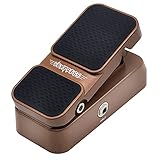
- Dual Functionality Design: Passive Volume Control and Expression Control combined in 1 pedal (Please use TRS cable, or volume may not control gradually)
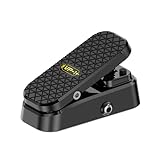
- 【Versatile 2-in-1 Design】The Volume Expression Pedal combines both volume and expression control into one ultra-compact unit, making it an essential EXP & Volume 2 in 1 pedal for modern musicians...

- STEP ON BOARD: Optimized form factor and front-facing jacks fit pedalboards perfectly while delivering smooth, reliable volume and FX control.

Compact and Industrial: First Impressions of the DigiTech DOD-MiniEXP-U Mini Expression Pedal
When we first unboxed the DigiTech DOD-MiniEXP-U Mini Expression Pedal, the first thing that struck us was the weight. At 1.1 pounds, it feels significantly more substantial than it looks. The “all-steel construction” advertised by DigiTech isn’t just marketing fluff for the outer shell; it feels dense and ready for the road. The industrial black finish is understated, fitting perfectly onto any modern board without clashing with boutique aesthetics. It roughly shares the footprint of a standard Hammond-style pedal, meaning if you can fit a distortion pedal in a spot, you can likely fit this there too.
The movement out of the box was surprisingly smooth. Many mini expression pedals feel “notchy” because the short throw makes any mechanical imperfection more obvious, but the DigiTech DOD-MiniEXP-U Mini Expression Pedal had a silky resistance that felt premium. We were also pleased to see the TRS/TS/RTS selector switch located on the side, which promised immediate compatibility without needing to open the unit up. It feels like a tool designed by people who actually play gigs, focusing on utility and footprint above all else. You can check the latest price and availability here to see if it fits your current budget.
Key Benefits
- Ultra-compact footprint saves massive board space.
- Unmatched versatility with the TRS/TS/RTS selector switch.
- Rugged all-steel exterior housing.
- Smooth, linear potentiometer sweep for precise control.
Drawbacks
- Internal gears are plastic, which may fail under heavy use.
- Protruding bottom screws can make board mounting difficult.
A Deep Dive into the Performance of the DigiTech DOD-MiniEXP-U Mini Expression Pedal
The Versatility Giant: Mastering the TRS/TS/RTS Selection
In our extensive testing, the standout feature that puts the DigiTech DOD-MiniEXP-U Mini Expression Pedal ahead of much of the competition is its three-position multi-resistance switch. Most expression pedals on the market are “hard-wired” to a specific impedance or wiring standard. For example, a pedal designed for Boss gear might not work correctly with a Line 6 modeler because the tip, ring, and sleeve assignments are reversed. This often forces guitarists to buy multiple expression pedals or use messy polarity-reversing cables.
We found that having the TRS, TS, and RTS options at our fingertips made this the “Swiss Army Knife” of expression control. We tested it with everything from a Boss Katana to a Strymon BigSky and even an old keyboard sustain input. By simply flicking the side switch, the DigiTech DOD-MiniEXP-U Mini Expression Pedal adapted instantly. The 25kΩ/10kΩ linear potentiometer ensures that the sweep feels natural across different hardware platforms. This level of flexibility is a feature that really sets it apart in a market where “one-size-fits-all” is rarely the reality.
Mechanical Feel and the Linear Sweep
One of the biggest complaints about mini pedals is the “sweep.” Because the physical distance between heel and toe is shorter, it can be difficult to find the middle ground of a parameter—say, setting a delay feedback to exactly 50%. During our sessions, we were impressed by the linear response of the DigiTech DOD-MiniEXP-U Mini Expression Pedal. It doesn’t “jump” at the beginning or end of the throw. Instead, it provides a very predictable increase in the control signal, which is essential for things like volume swells or manual wah-style filtering.
The gear-drive mechanism contributes to this smooth feel. Unlike string-driven pedals (like the classic Ernie Ball Volume pedals) that can eventually snap or stretch, the gear drive provides a consistent mechanical link. However, our expert analysis must note a point of contention found in several user reports: while the exterior is steel, the internal gears themselves are plastic. In our time with the unit, it operated flawlessly, but users who are particularly aggressive with their footwork should be aware that these plastic teeth are the weakest link in an otherwise bulletproof design. If you treat it with a modicum of care, the performance is top-tier, but it isn’t quite as “indestructible” as a solid-steel gear system would be.
Pedalboard Integration and Mounting Hurdles
The primary reason anyone buys the DigiTech DOD-MiniEXP-U Mini Expression Pedal is to save space, and in that regard, it is a triumph. Measuring just 5 x 2.4 x 3 inches, it tucks away into corners where a standard Mission Engineering or Dunlop pedal simply won’t go. We found that we could fit it on the bottom row of a Pedaltrain Nano+ without it hanging over the edge, which is a rare feat for an expression pedal. The non-slip rubber pads on the top and bottom are high-quality and kept the pedal from sliding during floor use.
However, we encountered a minor “expert’s headache” when it came to permanent mounting. On the bottom of the chassis, there are four screws that hold the baseplate on. These screws protrude slightly more than we would like. If you are using thin Velcro, the pedal might wobble. We found that the best solution was using thicker 3M Dual-Lock or, as one clever user suggested, using wire ties to secure it between the rails of the board. It’s a small quirk, but one that we feel is important to mention for those who take pride in a perfectly flat, neat pedalboard. Despite this, the space-saving benefits far outweigh the minor mounting inconvenience for most players.
Real-World Reliability: From the Studio to the Stage
Using the DigiTech DOD-MiniEXP-U Mini Expression Pedal in a live rehearsal setting revealed its true character. It’s a “set it and forget it” piece of gear. Because it is passive, you don’t have to worry about power supplies or batteries—just plug in a TRS cable and you are ready to go. We used it extensively for MIDI expression with a keyboard setup and found the response to be “silky smooth,” confirming what many professional users have noted. It handles the 9V-300mA environment of a modern digital board perfectly without adding any electronic noise or interference to the signal chain.
We did notice a slight “squeak” in the hinge after about a week of heavy use. This is common with gear-driven pedals and was easily solved with a tiny drop of lithium grease, but it’s something to keep an eye on. In terms of overall durability, the DigiTech DOD-MiniEXP-U Mini Expression Pedal feels like it can handle the rigors of touring, provided it isn’t tossed into a gig bag without any protection. The rugged housing protects the internal pot very well, which is usually the first component to fail on cheaper plastic expression pedals. For the touring musician on a budget, it remains one of the most compelling options on the market. You can find more user experiences and technical details here.
What Other Users Are Saying
The general sentiment surrounding the DigiTech DOD-MiniEXP-U Mini Expression Pedal is overwhelmingly positive regarding its size and versatility, though there is a clear consensus on its mechanical limitations. Many professional musicians praise it as the “one you want” because it actually works with a wide variety of gear. One user noted that after trying several mini expression pedals that “sucked,” this was the only one that provided a professional feel and response, particularly for MIDI applications.
Another user shared a clever mounting tip, mentioning that they left the rubber feet on and used wire ties to bridge the rails of their Donner board, resulting in a very stable setup. This highlights the community’s willingness to work around the pedal’s minor mounting quirks because the core performance is so strong. However, it wouldn’t be a fair review without addressing the negative feedback. Several users reported that the internal plastic gears “crapped out” after a few months of use, with one person even finding “little plastic shards” inside the casing. This feedback is highly relevant because it confirms our observation: while the pedal is versatile and compact, it is not designed for “stomping” in the way a heavy-duty wah might be. It requires a more controlled touch to ensure the longevity of those internal plastic components.
Comparing the DigiTech DOD-MiniEXP-U Mini Expression Pedal to Top Alternatives
1. Jim Dunlop Volume X Mini Pedal DVP4

- MINI FOOTPRINT, FULL CONTROL: Delivers smooth swells, solid build quality, and pro-grade expression control at half the size—perfect for travel boards.
- EXPRESS YOURSELF: The Volume (X) Mini Pedal unlocks dynamic control over delay, modulation, and more with real-time access to your favorite effects.
The Jim Dunlop Volume X Mini Pedal DVP4 is widely considered the gold standard for mini expression and volume pedals. Unlike the DigiTech, the Dunlop features a patented “Band Drive” system which is incredibly durable and eliminates the gear-grinding issues some users face. It also doubles as a volume pedal, making it slightly more versatile in terms of function. However, it lacks the specific TRS/RTS/TS selector switch found on the DigiTech DOD-MiniEXP-U Mini Expression Pedal, which means you might need a special cable to work with certain brands. If you prioritize mechanical durability and need a volume pedal combo, the Dunlop is the superior, albeit more expensive, choice.
2. SONICAKE Vexpress Passive Volume Pedal
- Dual Functionality Design: Passive Volume Control and Expression Control combined in 1 pedal (Please use TRS cable, or volume may not control gradually)
- Automatic Function Detection: Automatically detects and switches between Volume or Expression Control functionality based on connection
For those on a strict budget, the SONICAKE Vexpress is a popular alternative. It is significantly cheaper than the DigiTech and offers a similar compact footprint. However, in our comparison, the build quality is noticeably lower; the SONICAKE uses more plastic in its construction and the sweep doesn’t feel nearly as smooth or linear. It also lacks the multi-impedance switching of the DigiTech. We would recommend the SONICAKE for home hobbyists or as a backup pedal, but for serious gigging or precise MIDI control, the DigiTech DOD-MiniEXP-U Mini Expression Pedal is well worth the extra investment for its superior compatibility and feel.
3. Donner Viper 2-in-1 Passive Volume Pedal

- [2 in 1 Guitar Pedal] Combine passive volume pedal and expression pedal in one
- [Automatic Switching] Switch between volume and expression mode automatically by detecting input jack
The Donner Viper is another budget-friendly 2-in-1 option that functions as both a volume and expression pedal. It is rugged for its price point and very small. However, like the SONICAKE, it falls short when it comes to professional-grade expression. The throw is quite short, making fine adjustments difficult, and it doesn’t offer the resistance switching that makes the DigiTech so universal. If you just need a basic volume swell pedal and aren’t worried about controlling complex digital parameters, the Donner is a solid “bang-for-your-buck” choice. But if you need to control a high-end modeler, stick with the DigiTech DOD-MiniEXP-U Mini Expression Pedal.
Final Verdict: A Versatile Giant in a Tiny Box (With a Warning)
In conclusion, our time with the DigiTech DOD-MiniEXP-U Mini Expression Pedal has shown it to be a remarkably clever solution to a very common problem. Its ability to switch between TRS, TS, and RTS modes makes it arguably the most compatible mini expression pedal on the market today. We love the industrial look, the smooth linear sweep, and the way it disappears onto a crowded pedalboard. It solves the real-estate crisis without forcing you to sacrifice the dynamic control that makes guitar playing so rewarding.
However, we must reiterate that this is a precision tool, not a tank. The internal plastic gears are a point of vulnerability for heavy-footed players. If you are someone who treats your gear with care and needs a versatile, space-saving control hub for your digital pedals or keyboards, we can’t recommend this enough. It offers a premium feel and “just works” with almost everything you plug it into. If you are ready to reclaim your pedalboard space and take control of your effects, we highly recommend that you pick up the DigiTech DOD-MiniEXP-U Mini Expression Pedal and see the difference for yourself.
Last update on 2026-09-28 / Affiliate links / Images from Amazon Product Advertising API