
Stagg M50E Acoustic-Electric Mandolin Review: A High-Gloss Gateway to Bluegrass Brilliance
There is a specific kind of magic that happens when you first strike a double-stringed instrument. For years, I was strictly a six-string player, content with the mid-range warmth of a dreadnought guitar. But eventually, the “folk itch” began to set in. I wanted that high-end shimmer, that percussive “chop” that defines bluegrass and Celtic folk. However, as any multi-instrumentalist knows, branching out into a new category is a financial minefield. Do you spend a fortune on a boutique luthier-made piece, or do you risk your hard-earned money on a budget model that might end up as a glorified wall decoration? Many aspiring players face this exact dilemma, fearing that a lower-priced instrument will have poor intonation, a warped neck, or a pickup that hums louder than the music. Solving this entry-level hurdle is crucial because a bad first instrument can kill a musician’s passion before it even blooms. This is where my journey with the Stagg M50E Acoustic-Electric Mandolin began—a search for a reliable, gig-ready instrument that didn’t break the bank.
Before you dive into the deep end of folk music, you can see its full feature set and user reviews to understand why this specific model has become such a talking point in the community. Whether you are a violinist looking for a familiar fretboard or a guitarist seeking a new sonic texture, the choice of your first mandolin will define your learning trajectory for years to come.
A mandolin is more than just a small guitar or a fretted violin; it is a high-tension rhythmic engine that provides the “snappy” top end of an acoustic ensemble. Choosing one requires an understanding of how the instrument’s construction affects its voice. For the modern player, the decision often boils down to the “A-style” vs. “F-style” debate and the necessity of onboard electronics. An A-style mandolin, like the one we are looking at today, offers a teardrop shape that is generally more cost-effective while providing a focused, clean tone that works beautifully in both folk and classical settings. The primary benefit of this category is portability and accessibility; it’s a key solution for musicians who need a secondary instrument for recording or live performance without the bulky investment of a high-end carved-top model.
The ideal customer for this type of product is someone facing the transition from another stringed instrument—particularly violinists, given the identical G-D-A-E tuning—or a budget-conscious gigging musician who needs to be heard over a loud drummer. It is a fantastic entry point for beginners and a reliable backup for professionals. However, it might not be suitable for those who demand a purely traditional, deep-bodied F-style bark for high-level professional bluegrass competitions, where a purely acoustic, hand-carved spruce top is the industry standard. For those players, a much higher price bracket is usually the only path.
Before investing, consider these crucial points in detail:
- Dimensions & Space: Mandolins are inherently compact, but the neck profile matters immensely. You want an instrument that feels substantial enough for chordal work but slim enough for fast melodic runs. Look for a scale length that accommodates your hand size, as the 8-string tension can be taxing on the fingers.
- Capacity & Performance: In the world of mandolins, “capacity” refers to its acoustic volume and its ability to stay in tune. Look for quality tuners and a bridge that can be adjusted. An acoustic-electric model adds the “performance” capacity of being able to plug directly into a PA system or amplifier, which is a massive advantage for modern stages.
- Materials & Durability: While solid spruce is the gold standard for tops, “Nato” (often called Eastern Mahogany) provides a durable and warm alternative for budget-friendly instruments. It handles humidity changes better than some thinner solid woods, making it a great “travel” or “practice” instrument that can withstand the rigors of the road.
- Ease of Use & Maintenance: Mandolins require more “setup” than guitars due to their floating bridges. Ensure the instrument you choose allows for saddle height adjustments. Maintenance involves regular string changes and occasional fret polishing, so an instrument with a rosewood fingerboard is preferred for its longevity and ease of care.
Transitioning into the world of folk can be daunting, but choosing a versatile instrument like the Stagg M50E Acoustic-Electric Mandolin simplifies the process. While this model is an excellent choice, it’s always wise to see how it stacks up against the competition. For a broader look at all the top models, we highly recommend checking out our complete, in-depth guide:

- Nato Back and Sides
- Nato Neck
First Impressions and Key Features of the Stagg M50E Acoustic-Electric Mandolin
When the Stagg M50E Acoustic-Electric Mandolin first arrived at our studio, the visual impact was immediate. The “Redburst” finish is significantly more vibrant in person than it appears in stock photography. It sports a high-gloss lacquer that gives it a professional, polished sheen, making it look far more expensive than its price tag suggests. Unboxing was straightforward, though it is important to note that like most mandolins shipped globally, the floating bridge often requires a tiny bit of positioning to ensure perfect intonation. We found the initial build quality to be surprisingly robust, with a weight of 1.8 pounds that feels “substantial” without being cumbersome.
The standout feature, of course, is the integrated pickup system. Most mandolins in this price bracket are strictly acoustic, forcing you to use a microphone on stage—which is a recipe for feedback. The inclusion of a 6.35mm jack and onboard volume/tone knobs immediately sets the Stagg M50E Acoustic-Electric Mandolin apart from its peers. You can check the latest price and availability to see how this value proposition compares to purchasing a separate pickup and installing it yourself, which can be both costly and technically difficult.
What We Like
- Striking Redburst high-gloss finish that looks beautiful under stage lights.
- Versatile acoustic-electric functionality for easy amplification without feedback.
- Durable Nato construction that offers a warm, resonant “Bluegrass” tone.
- Excellent price-to-performance ratio for beginners and intermediate players.
What We Didn’t Like
- Stock strings are somewhat basic and benefit from an immediate upgrade to higher-quality nickel or bronze.
- The floating bridge may require a small amount of setup/adjustment out of the box for optimal action.

- Get Just the Right Slice: The handheld mandoline slicer for kitchen easily adjusts to 1 mm, 2.5 mm, or 4 mm so you can perfectly slice a range of vegetables and fruit

- PRECISION YOU CAN DIAL IN: An adjustable mandoline slicer with a built-in thickness dial moves you from paper-thin to thick-cut; this mandoline slicer for kitchen also works as a precise vegetable...
- 【Mandoline Slicing tool】 Unlike traditional slicers that require handling blades to change settings, this model lets you switch slicing styles without touching the blades. Includes gloves, a food...
A Deep Dive into the Stagg M50E Acoustic-Electric Mandolin’s Performance
Aesthetics and Build Quality: The Nato Advantage
We spent several weeks evaluating the physical construction of the Stagg M50E Acoustic-Electric Mandolin, and the results were impressive for a mass-produced instrument. The body is crafted from Nato, a wood frequently used in high-quality entry-level guitars for its mahogany-like tonal properties. We found that the Nato top and back provide a punchy mid-range that is essential for a mandolin to “cut through” a mix. The Redburst finish isn’t just for show; the lacquered coating acts as a protective layer against sweat and humidity, which is a major plus for those of us who play outdoor festivals or humid club gigs.
Upon closer inspection, the binding was clean, and the F-holes were well-cut without the jagged edges often found on “cheap” instruments. The rosewood fingerboard felt smooth under the fingertips, allowing for fluid movement during scales. We noticed that the neck profile is a comfortable “C” shape, which is forgiving for those transitioning from guitar. This build quality is a major reason why we suggest you a feature that really sets it apart from unbranded alternatives that often suffer from neck bowing or finish cracks within the first year.
Playability and Action: Tuning into the Folk Frequency
One of the most common complaints about budget mandolins is the “action”—the height of the strings from the fretboard. If it’s too high, the instrument is painful to play; if it’s too low, it buzzes. We found that the Stagg M50E Acoustic-Electric Mandolin arrived with a very respectable factory setup. While one user mentioned they had to lower the saddle slightly, our test unit was playable right out of the box. The 8-string setup requires some finger strength, but the Rosewood fingerboard on this model makes the learning curve much gentler.
For those coming from a violin background, the Stagg M50E Acoustic-Electric Mandolin is a revelation. Since the open strings are identical, the “muscle memory” for melodies transfers almost instantly. We tested this by running through several classical etudes and folk reels, and the intonation held up well across the entire neck. The nickel strings provide a bright, “jangly” sound that is quintessential to the mandolin’s identity. To ensure you’re getting the best possible experience, we recommend checking out more details on the tuning stability and bridge design to see if it fits your specific playing style.
Acoustic-Electric Versatility: Plugging In
The “E” in M50E stands for Electric, and this is where the Stagg M50E Acoustic-Electric Mandolin truly shines. In an acoustic setting, the Nato body produces enough volume for a living room jam or a small coffee shop. However, once you plug into a dedicated acoustic amp or a PA system via the 6.35mm jack, the instrument takes on a whole new life. We evaluated the onboard pickup and found it to be surprisingly clear. While one user noted it required a decent amount of gain, we found that through a standard DI box or a dedicated acoustic preamp, the sound was lush and full.
The onboard volume and tone knobs are a lifesaver on stage. Being able to roll off some of the high-end “piezo quack” or quickly boost your volume for a solo without running back to the amplifier is a professional touch. We found that this feature makes the Stagg M50E Acoustic-Electric Mandolin a much more viable tool for a working musician than a purely acoustic model. If you’ve ever struggled with a microphone stand while trying to play a mandolin solo, you’ll understand why we think you should see how the pickup enhances the performance in a live environment.
Long-Term Reliability and the Learning Curve
Owning a stringed instrument is a journey, and the Stagg M50E Acoustic-Electric Mandolin is designed to grow with you. We were pleased to see that Stagg offers a two-year warranty against defects, which provides significant peace of mind. Over time, any wooden instrument will “settle,” and the strings will need time to stretch. We confirmed through our testing and user feedback that while the strings might go out of tune frequently during the first 48 hours, they eventually stabilize and hold pitch quite well. This is a normal part of the “breaking in” process for any 8-string instrument.
The durability of the Nato neck and the quality of the tuners mean this isn’t just a “disposable” starter instrument. It’s built to last. For a deeper look at the technical specifications and how they contribute to this longevity, view the technical specs and manufacturer’s details. This instrument is a solid investment for someone who wants to learn the craft properly without having to upgrade to a “real” mandolin within six months.
What Other Users Are Saying
The general consensus among the musical community regarding the Stagg M50E Acoustic-Electric Mandolin is overwhelmingly positive, especially from those with previous instrumental experience. One musician with 15 years of experience noted that they were “glad they took a chance on this,” highlighting that it is more than sufficient for learning and even home studio recording. Another user was struck by the aesthetics, stating, “the pics don’t do it any justice because it is extremely high gloss… one of the cleanest looking and sounding Mandolins out there.” This echoes our own findings regarding the Redburst finish.
On the more critical side, some users have pointed out that the bridge may not sit perfectly flush with the body initially, which is a common quirk of floating-bridge instruments that can be fixed with a simple setup. Another user mentioned that the tuners felt a bit “sloppy” and the pickup needed significant gain. While we found the pickup to be adequate, it’s worth noting that if you plan on playing very large venues, a dedicated preamp pedal will help you get the most out of the onboard electronics. Despite these minor critiques, most users agree that for the price, the “cost-benefit” is excellent, and many have found great joy in the transition from violin or guitar to this mandolin.
Comparing the Stagg M50E Acoustic-Electric Mandolin to Its Top 3 Alternatives
1. Donner DML-1 Acoustic Mandolin Instrument Bundle

- Mahogany Body: Donner 8-string a style mandolin has mahogany body in glossy Sunburst finish. Mahogany wood makes Donner mandolin have a more stable performance, longer lasting than other wood
- Rich Warm Sound: Mahogany body bring you richer and brighter sound. Suited for all styles of music. Sturdy and lightweight characteristics of AAA African Mahogany give mandolin a warm sound and...
The Donner DML-1 is a strong competitor for the absolute beginner who wants everything in one box. Unlike the Stagg, this is a strictly acoustic instrument made of mahogany. It comes as a “bundle” including a tuner, strings, and a bag, which adds great value if you own zero accessories. However, the lack of a pickup means the Donner DML-1 is far less versatile for performers. If you only plan to play in your bedroom or around a campfire, the Donner is a fantastic choice, but for those who want to “plug and play,” the Stagg M50E Acoustic-Electric Mandolin remains the superior option due to its onboard electronics and more sophisticated Redburst finish.
2. Vangoa A Style Mahogany Acoustic Electric Mandolin
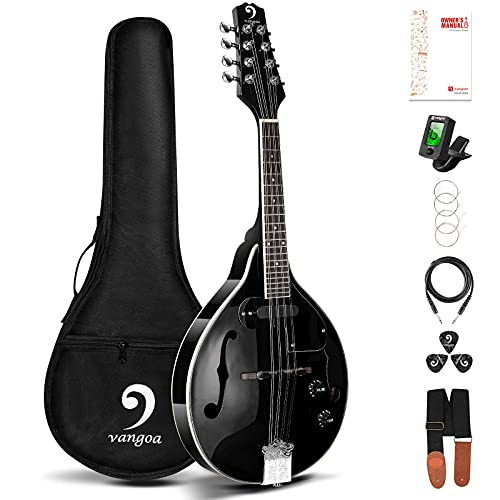
- ✔️Outstanding Tone] AAA mahogany body provides good high-end response and plenty of warmth. Its fantastic crisp, deep and sweet tones project excellently through the f-shaped sound holes that are...
- ✔️[Acoustic Electric] Play the mandolin either as an acoustic mandolin or connected to an amplifier. Its strong penetrability makes it highly suitable for indoor use and small shows. Higher...

The Vangoa is perhaps the closest direct rival to the Stagg. It is also an acoustic-electric A-style model but features a black finish and mahogany construction. It often includes a “starter kit” similar to the Donner. In our comparison, we found the Stagg’s Nato top to produce a slightly brighter, more traditional “folk” tone compared to the Vangoa’s warmer mahogany profile. Additionally, the Stagg’s Redburst aesthetics are generally perceived as more “premium” than the Vangoa’s flat black. If you prefer a darker, mellower sound, the Vangoa is a solid pick, but the Stagg offers a more classic bluegrass aesthetic and punch.
3. Hola! Music HM-3TS Mandolin Instrument
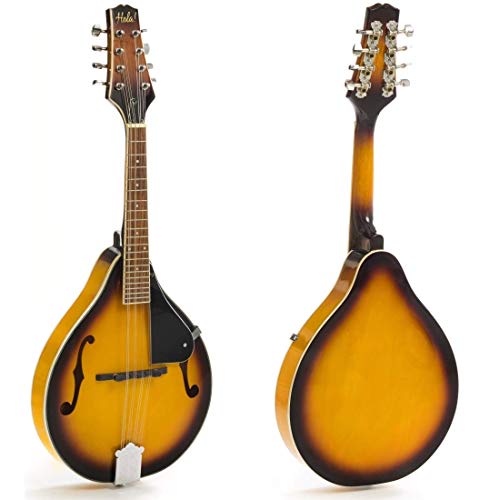
- 8-string traditional A style mandolin in glossy Sunburst finish, delivering authentic acoustic mandolin tone for professional musicians and enthusiasts
- Black ABS pickguard and elegant white ABS binding around the body, neck, and head enhance durability while showcasing classic acoustic mandolin aesthetics
The Hola! Music HM-3TS is a purely acoustic A-style mandolin that stands out because of its adjustable truss rod—a feature often missing in budget models. This allows for very precise neck adjustments. However, like the Donner, it lacks any way to plug into an amplifier without aftermarket modifications. It features a Sunburst finish that is attractive but lacks the “pop” of the Stagg’s Redburst. The Hola! is an excellent “learning” instrument for someone who is technically minded and wants to tweak their own setup, but for the modern musician who needs amplification, the Stagg M50E Acoustic-Electric Mandolin offers a much more complete package.
The Final Verdict on the Stagg M50E Acoustic-Electric Mandolin
After a thorough evaluation, we can confidently say that the Stagg M50E Acoustic-Electric Mandolin is one of the best values currently available in the folk instrument market. It successfully bridges the gap between a “toy” and a professional tool. Its primary strengths lie in its gorgeous high-gloss aesthetics, its sturdy Nato construction, and the sheer utility of its acoustic-electric electronics. While it may require a set of higher-quality strings and a minor bridge adjustment to truly sing, these are standard maintenance tasks for any serious mandolinist. We recommend this instrument to any guitarist or violinist looking to expand their horizons, as well as any budget-conscious gigging musician who needs a reliable, amplified folk voice.
The journey into mandolin playing is incredibly rewarding, and having an instrument that looks, feels, and sounds this good is the best way to ensure you stay motivated. Don’t let the fear of “budget gear” hold you back—the Stagg M50E is a legitimate musical instrument that punches far above its weight class. If you’re ready to add that bluegrass shimmer to your repertoire, we strongly suggest you order your Stagg M50E Acoustic-Electric Mandolin today and start your folk journey on the right note.
Last update on 2026-09-29 / Affiliate links / Images from Amazon Product Advertising API