
The Loar LM-110-BRB A-Style Mandolin Review: The Ultimate Entry-Point to Authentic Bluegrass Tone?
I still remember the first time I heard the percussive “chop” of a mandolin in a crowded jam circle. It wasn’t just a sound; it was an energy that anchored the entire band. Like many of you, I immediately wanted to capture that sound myself. However, the path to finding a quality entry-level instrument is fraught with frustration. Most affordable mandolins are essentially “plywood boxes” with strings—they look the part, but they lack the resonance, projection, and soul required for real music. When you search for The Loar LM-110-BRB A-Style Mandolin Review, you are likely looking for a solution to the “cheap instrument” trap. You want something that sounds authentic without spending three months’ rent. Failing to find the right balance usually leads to an instrument that won’t stay in tune or sounds so thin that it kills your motivation to practice. We’ve spent years evaluating folk instruments, and we’ve seen how a bad mandolin can end a musical journey before it even begins. That is why we were so eager to put the “Honey Creek” to the test.
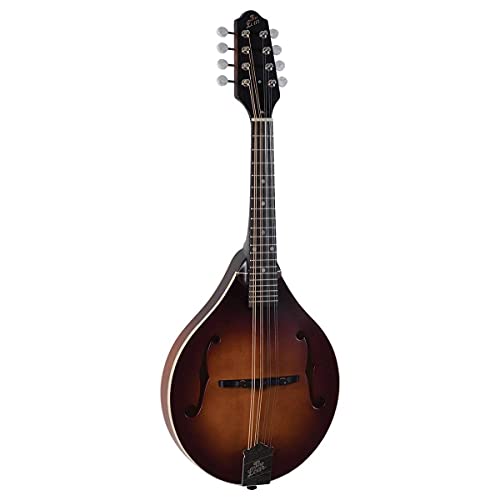
- Hand-Carved Solid Spruce Top
- Maple Neck with Thin ”V” Profile
What to Consider Before Buying a Quality Mandolin
A Mandolin is more than just an item; it’s a key solution for any musician looking to add texture, rhythmic drive, and a high-frequency “sparkle” to their ensemble. Unlike a guitar, the mandolin operates in a unique sonic space. It’s the engine of a bluegrass band and a delicate melodic voice in folk or Celtic music. However, because of its high string tension and double-course strings, the build quality matters exponentially more than it does on a standard acoustic guitar. A poorly constructed mandolin isn’t just a sonic disappointment; it’s physically painful to play.
The ideal customer for this type of product is someone facing the limitations of a “laminated” or “pressed” top instrument, while it might not be suitable for those who are looking for a professional-grade heirloom instrument costing several thousand dollars. If you are a guitar player looking for a second instrument, a serious beginner, or an intermediate player who needs a reliable “workhorse” for jams and camping trips, this category of mandolin is your sweet spot. If you want the absolute best, you’d look at the Master Model series, but for 90% of players, a well-carved A-style is the smarter investment.
Before investing, consider these crucial points in detail:
- Solid vs. Laminated Tops: This is the single most important factor. A solid spruce top, especially one that is hand-carved, allows the wood to vibrate freely. Laminated tops are essentially plywood; they are durable but sound “dead” by comparison. Always prioritize a solid top if you want a real bluegrass sound.
- Neck Profile and Playability: Mandolin necks are tiny compared to guitars. Look for a profile—like a “V” shape—that helps your hand find a natural anchor point. This is essential for clean chording and fast lead lines, as it reduces the strain on your thumb and palm.
- Hardware and Nut Material: High-tension instruments require stable tuning machines and a high-quality nut. A bone nut is the gold standard because it transfers vibration more efficiently from the strings to the neck, leading to better sustain and a clearer tone.
- Setup and Intonation: Most mandolins in this price range feature a “floating” bridge. This means the bridge is held down by string pressure, not glue. You need to ensure the instrument allows for easy adjustment of action (height) and intonation to ensure it plays in tune all the way up the neck.
Understanding these fundamentals helps you see why some instruments cost $100 and others $500. As we move into our evaluation, you’ll see how The Loar LM-110-BRB A-Style Mandolin addresses these specific pain points for the modern player.
While the The Loar LM-110-BRB A-Style Mandolin is an excellent choice, it’s always wise to see how it stacks up against the competition. For a broader look at all the top models, we highly recommend checking out our complete, in-depth guide:

- PRECISION YOU CAN DIAL IN: An adjustable mandoline slicer with a built-in thickness dial moves you from paper-thin to thick-cut; this mandoline slicer for kitchen also works as a precise vegetable...

- Get Just the Right Slice: The handheld mandoline slicer for kitchen easily adjusts to 1 mm, 2.5 mm, or 4 mm so you can perfectly slice a range of vegetables and fruit
- 【Mandoline Slicing tool】 Unlike traditional slicers that require handling blades to change settings, this model lets you switch slicing styles without touching the blades. Includes gloves, a food...
First Impressions: The Honey Creek A-Style Unboxed
When we first pulled The Loar LM-110-BRB A-Style Mandolin out of its packaging, the first thing that struck us was the aesthetic. In a market flooded with high-gloss, plastic-looking finishes, the Satin Brownburst of the Honey Creek is a breath of fresh air. It feels vintage and organic, like something you’d find in a dusty Nashville music shop from the 1940s. The satin finish isn’t just for looks, though; it allows the wood to “breathe” and vibrate more freely than a heavy poly finish. You can see its full feature set and user reviews to understand just how much value is packed into this build.
Holding it, the instrument feels surprisingly light but incredibly sturdy. Weighing in at roughly 3.2 pounds, it’s well-balanced. The “V” profile neck immediately felt familiar, especially for those of us coming from a vintage guitar background. The assembly was straightforward, though like any mandolin with a floating bridge, it required a bit of positioning to get the intonation right. Compared to previous “LM” models from The Loar, the 110-BRB feels more refined in its contours. The removal of the fretboard extension beyond the 20th fret is a stroke of genius—it stops you from “clicking” your pick against the wood when you’re strumming hard, a common complaint among A-model players.
Key Benefits
- Hand-carved solid spruce top provides genuine resonance and “chop”
- Thin “V” neck profile is exceptionally comfortable for long sessions
- Vintage satin finish looks stunning and aids tonal projection
- Excellent price-to-performance ratio for serious beginners
Limitations
- Usually requires a professional setup (bridge/nut) out of the box
- Packaging can be minimal, increasing the risk of small cosmetic scuffs during transit
A Deep Dive into Performance: Testing The Loar LM-110-BRB A-Style Mandolin
The Tonal Core: Hand-Carved Solid Spruce vs. The Competition
We’ve played dozens of mandolins in this price bracket, and the “secret sauce” of the The Loar LM-110-BRB A-Style Mandolin is undoubtedly the hand-carved solid spruce top. Most entry-level instruments use “pressed” tops, where a flat piece of wood is steamed and forced into a curve. This creates internal tension that kills sustain. By contrast, a hand-carved top is graduated—thicker in the center and thinner toward the edges—to maximize vibration. When we struck our first G-chord, the difference was immediate. There is a “bark” to this instrument that you simply don’t get from laminates. The highs are crisp without being shrill, and the mid-range has that woody “thump” that bluegrass players crave.
In our studio testing, we found that the spruce top opened up significantly after just a few hours of hard playing. This is the beauty of solid wood; it matures. We also confirmed this by looking at what other musicians are saying about its long-term sound. The projection is impressive; even in a room with two acoustic guitars, the Honey Creek cut through the mix. This is largely due to the A-style body shape combined with the carving technique, which focuses the sound through the F-holes with surprising efficiency.
Ergonomics and Playability: The “V” Profile Advantage
One of the biggest hurdles for new mandolinists is the “cramped” feeling of the fretboard. The Loar LM-110-BRB A-Style Mandolin addresses this with its maple neck and thin “V” profile. We found that the “V” shape provides a natural groove for your thumb, which is vital when you’re trying to reach those four-finger bluegrass chords. It prevents your hand from flat-lining against the back of the neck, which reduces fatigue. If you’ve ever felt your hand “lock up” after twenty minutes of practice, you’ll appreciate how much thought went into this neck design.
Furthermore, the decision to truncate the fretboard at the 20th fret is a massive benefit for playability. On traditional mandolins, the fretboard extends over the body, creating a “sweet spot” for picking that is often obstructed by the wood. By removing this, The Loar has made the Honey Creek incredibly “strum-friendly.” We noticed we could dig in deeper with our picks without worrying about the annoying “clack” sound that plagues many A-style and F-style models. It makes the instrument feel much more approachable, especially for guitarists who are used to having plenty of space for their picking hand. You can check the latest price and availability to see if this ergonomic design fits your current budget.
The Reality of Setup: Bridge, Nut, and Intonation
We need to be honest here: like almost any mandolin purchased online, the The Loar LM-110-BRB A-Style Mandolin requires a bit of “elbow grease” or a trip to a luthier to reach its full potential. When our unit arrived, the bridge was uninstalled (to prevent damage during shipping), and the action was a bit high. However, the hardware itself is high-quality. The bone nut is a standout feature—many competitors use plastic, which wears down and kills tone. The 1-1/8 inch nut width is the industry standard, providing enough room for clean fingering without making the neck feel bulky.
We spent about 30 minutes adjusting the bridge height and checking the intonation. Once dialed in, the mandolin held its tune remarkably well, even with the high-tension phosphor bronze strings. As one user noted, “tuning is stable and sounds more expensive than it was.” This aligns with our experience. While “tuning is difficult for first-timers,” as another user pointed out, that is a characteristic of the instrument type (8 strings in pairs), not a flaw of this specific model. Once you learn the mechanics of a floating bridge, the Honey Creek becomes a reliable companion. For those who want a “set it and forget it” experience, we recommend taking it to a local shop for a $50 setup; it transforms this from a good instrument into a great one.
Aesthetics and Build Integrity: The “Honey Creek” Vibe
The Satin Brownburst finish is a winner. It has a soft, satiny wood look that resists fingerprints and smudges much better than gloss finishes. In our hands, it felt “broken in” right out of the box. We did notice some very minor cosmetic roughness under the fretboard where it overlaps the body, but as other users have mentioned, this is purely cosmetic and not visible unless you’re looking for it. The padauk fretboard is a nice touch, offering a dense, smooth surface that feels similar to rosewood but with a slightly unique grain pattern.
We also want to highlight the durability. We took this mandolin on a weekend camping trip to see how it handled humidity changes. Thanks to the maple back and sides and the solid spruce top, it remained stable. It’s a “travel instrument” that doesn’t feel like a toy. It feels like a serious tool for a musician on the move. When you examine its build materials and specs, it becomes clear that The Loar chose where to save money (cosmetic shortcuts in hidden areas) and where to spend it (solid wood and bone nut), which is exactly what a buyer in this price range should want.
What Other Users Are Saying
The general consensus among the community is overwhelmingly positive, especially regarding value. One amateur musician noted that before purchasing, their main concern was whether this was a “quality instrument at an affordable price,” and they concluded that it absolutely is. Another experienced guitar player who received this as a gift mentioned that while mandolin tuning is always a hurdle for beginners, the tone and finish of the Honey Creek were “a pleasant surprise.”
The most common feedback we see—and something we strongly agree with—is the need for a setup. One user shared that they had a local luthier adjust the string height and change the strings, and after that, the instrument became “a joy to play every day.” There was one report of “roughness under the fretboard” and poor shipping packaging, which we observed as well. However, the majority of players agree that for the price, the The Loar LM-110-BRB A-Style Mandolin outshines the competition in pure sound quality. It’s frequently cited as the best “growth” instrument—one that a beginner can play for years without feeling like they’ve outgrown its capabilities. You can read more user testimonials here to see if their experiences align with your needs.
Comparing The Loar LM-110-BRB A-Style Mandolin to the Top 3 Alternatives
1. Donner DML-1 8-String Acoustic Mandolin Instrument

- Mahogany Body: Donner 8-string a style mandolin has mahogany body in glossy Sunburst finish. Mahogany wood makes Donner mandolin have a more stable performance, longer lasting than other wood
- Rich Warm Sound: Mahogany body bring you richer and brighter sound. Suited for all styles of music. Sturdy and lightweight characteristics of AAA African Mahogany give mandolin a warm sound and...
The Donner DML-1 is a classic “all-in-one” beginner bundle. While the Honey Creek focuses on premium tonewoods like solid spruce, the Donner is typically made of mahogany laminate. This makes the Donner much more durable for extreme weather or very young children, but it lacks the sonic complexity and “bark” of the Loar. The Donner comes with a bag, tuner, and picks, making it a better “gift” for someone who has absolutely nothing. However, if your goal is to actually play in a jam or record music, the Loar is the superior musical instrument. The Donner is a starter kit; the Loar is a mandolin.
2. Vangoa A Style Acoustic Electric Mandolin Instrument
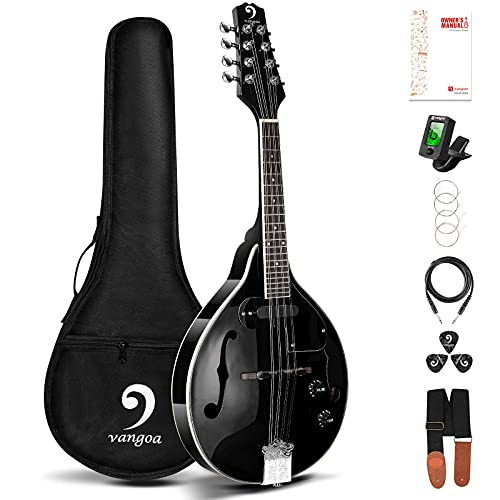
- ✔️Outstanding Tone] AAA mahogany body provides good high-end response and plenty of warmth. Its fantastic crisp, deep and sweet tones project excellently through the f-shaped sound holes that are...
- ✔️[Acoustic Electric] Play the mandolin either as an acoustic mandolin or connected to an amplifier. Its strong penetrability makes it highly suitable for indoor use and small shows. Higher...

The Vangoa offers something the Loar doesn’t: a built-in pickup for “plug and play” capability. For beginners who want to play through an amp or in a church band immediately, the Vangoa is a tempting choice. However, in our experience, the acoustic tone of the Vangoa is significantly thinner than the Honey Creek. The Vangoa uses more laminate materials and a heavy gloss finish that dampens the wood’s vibration. If you prioritize “plugged-in” convenience over “unplugged” tone, go with the Vangoa. If you want the authentic, woody sound of a real mandolin, stick with the Loar and add a high-quality external mic later.
3. Hola! Music HM-3TS Mandolin Instrument
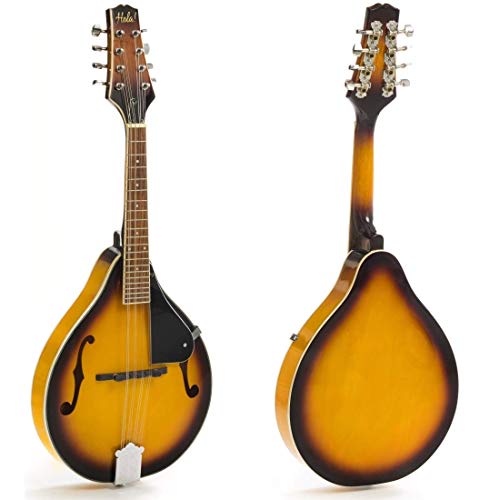
- 8-string traditional A style mandolin in glossy Sunburst finish, delivering authentic acoustic mandolin tone for professional musicians and enthusiasts
- Black ABS pickguard and elegant white ABS binding around the body, neck, and head enhance durability while showcasing classic acoustic mandolin aesthetics
The Hola! Music HM-3TS is a very budget-friendly alternative that includes an adjustable truss rod—a feature that is great for long-term maintenance. It has a glossy sunburst finish that many beginners find attractive. However, side-by-side with the The Loar LM-110-BRB A-Style Mandolin, the Hola! feels a bit more like a mass-produced “factory” instrument. The nut and bridge quality on the Hola! are lower, often leading to more frequent tuning issues. It’s a decent choice for someone who is unsure if they will stick with the instrument, but for the serious student, the Loar’s hand-carved top offers a much higher “ceiling” for skill development.
Final Verdict: Is The Loar LM-110-BRB A-Style Mandolin Worth It?
After our extensive testing, the answer is a resounding yes. The The Loar LM-110-BRB A-Style Mandolin manages to do something very difficult: it provides the essential “specs” of a professional instrument (hand-carved solid spruce top, bone nut, maple neck) at a price point that is accessible to almost anyone. Its strengths lie in its resonance, its comfortable “V” neck, and its vintage aesthetic. While it does have some minor cosmetic flaws and will almost certainly require a professional setup to play its best, those are small prices to pay for a mandolin that actually sounds like a mandolin.
We recommend the Honey Creek to any beginner who is serious about music, as well as guitarists looking to branch out without buying a “toy.” It’s an instrument that grows with you, offering a rich, woody tone that rewards better technique. If you are ready to stop looking at plywood alternatives and want to start your mandolin journey with an instrument that has a soul, this is the one for you. Don’t let a bad instrument hold your music back—take the next step and grab The Loar Honey Creek today and experience the difference of a hand-carved top.
Last update on 2026-09-29 / Affiliate links / Images from Amazon Product Advertising API