
Rupert Neve Designs 500 Series Tape Emulator Review: The Holy Grail of Analog Warmth in a Digital Age?
We’ve all been there. You spend hours meticulously recording a vocal or a guitar track, using the finest microphones and the most transparent interfaces, only to realize that the result sounds… well, a bit “thin.” In the modern digital landscape, we have achieved incredible precision, but often at the cost of the organic, “lived-in” character that defined the classic records of the 60s and 70s. The problem is “Digital Sanity”—tracks that are too clean, too clinical, and ultimately, a bit sterile. Without that harmonic glue and subtle compression that analog tape provides, tracks often feel like they are floating in a void rather than coexisting in a mix. This is exactly why we went searching for a solution that didn’t involve the maintenance nightmare of a vintage reel-to-reel machine. We needed something that could sit right in our lunchbox and provide that legendary Neve character. If you’re looking to bridge that gap, you might want to check the latest price and availability of a tool that promises to change your workflow forever.
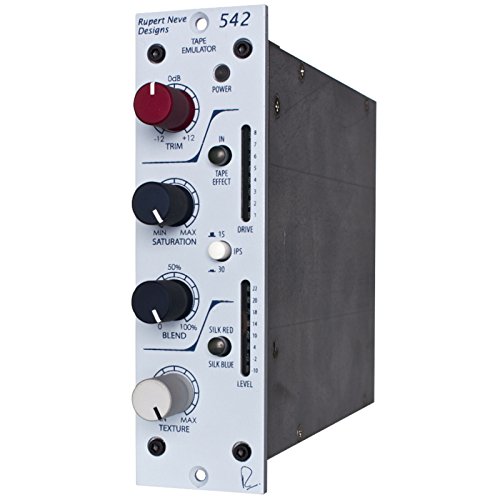
- 500 Series Processor with "True Tape" Silk/Texture Circuitry
What to Consider Before Buying a High-End Signal Processor for Your Studio
A Vocal Effects Processor or high-end signal module like the Rupert Neve Designs 500 Series Tape Emulator is more than just an item; it’s a key solution for producers and engineers who find their mixes sounding brittle or disjointed. It solves the fundamental issue of “digital harshness” by introducing controlled harmonic distortion and non-linear frequency response, which our ears perceive as “musicality.” These units provide the saturation and “rounding off” of transients that make a vocal sit perfectly in the mix without needing excessive EQ or harsh digital limiting.
The ideal customer for this type of product is a professional or serious project studio owner who has already invested in a 500-series chassis and is looking for a “money channel” sound. It’s for the person who wants to add weight to their tracks during the mixing stage or even during tracking. However, it might not be suitable for those who are just starting out and don’t yet own a 500-series rack, as the entry cost (module plus chassis) is significant. If you are strictly looking for “wacky” vocal effects like extreme pitch shifting or robot voices, this is an analog tone-shaper, not a multi-effects pedal.
Before investing, consider these crucial points in detail:
- Dimensions & Space: Since this is a 500-series module, you must ensure you have a free slot in your lunchbox or rack. It occupies a single slot, but the depth of your chassis matters. Always measure your available physical “real estate” before adding more hardware to your signal chain.
- Capacity & Performance: Look at the headroom and the specific type of saturation offered. The Rupert Neve Designs 500 Series Tape Emulator offers a “True Tape” circuit which uses actual tape heads. This is a level of performance far beyond simple FET-based distortion circuits found in cheaper alternatives.
- Materials & Durability: Professional studio gear should be built like a tank. This unit features stainless steel and aluminum construction. Compared to plastic-housed pedals, these metal modules are designed to live in a rack for decades, shielded from RF interference and physical wear.
- Ease of Use & Maintenance: Unlike an actual tape machine, which requires alignment, cleaning, and expensive tape reels, this emulator is “set and forget.” Maintenance is minimal—mostly just keeping your rack dust-free. The interface should be intuitive enough to allow for quick adjustments during a busy session.
Ultimately, choosing a processor like this is about deciding whether you want to spend your time “fixing” sounds in software or “shaping” sounds in the analog domain. While we love plugins, there is a tangible difference in the way hardware reacts to signal peaks. To see how this unit fits into a professional setup, see its full feature set and user reviews before making your final decision.
While the Rupert Neve Designs 500 Series Tape Emulator is an excellent choice, it’s always wise to see how it stacks up against the competition. For a broader look at all the top models, we highly recommend checking out our complete, in-depth guide:

- The FV01 vocal effects Corrector is primarily a pitch-correction pedal that offers everything from pitch correction to full-blown effects overload when your input is a microphone.

- From Subtle Pitch Correction to Hard Antares AutoTune Effect - VX5 is an intuitive vocal effects pedal with dedicated Retune Speed and Humanize knobs enabling adjustments with no computer needed


- Comprehensive Vocal Processing: VE200 brings studio-grade vocal polish, real-time pitch correction, intelligent harmonies, vocoder and character voices, modulation, delay, and reverb into one compact...
Unboxing the Legend: First Impressions of the Rupert Neve Designs 500 Series Tape Emulator
When the Rupert Neve Designs 500 Series Tape Emulator arrived at our studio, the first thing we noticed was the weight. For such a small module, it feels incredibly substantial, a testament to the stainless steel and aluminum construction. Unboxing it was a straightforward affair—no fluff, just a professional piece of gear ready for work. The finish is a sleek matte black with that classic Rupert Neve aesthetic: clear, legible labeling and high-quality knobs that offer just the right amount of resistance.
Sliding it into our 500-series rack was a breeze. Unlike some cheaper modules that have slightly “off” dimensions, this one fit perfectly, aligning with the screw holes without any wrestling. Once powered up, the LEDs are bright and clear (though we did note some user feedback regarding LED longevity, which we’ll discuss later). Compared to previous tape emulators we’ve tested, which often rely purely on digital modeling or simple transistor clipping, the 542 stands out because it contains an actual miniature tape head circuit. It doesn’t just “act” like tape; in a very real, physical way, it is a tape circuit. To get a closer look at the build quality, discover more about its design here.
Key Benefits
- Incredibly musical “True Tape” circuitry that reacts dynamically to your input.
- The Silk/Texture circuit provides two distinct harmonic flavors (Red and Blue).
- Versatile Wet/Dry control allows for parallel processing within the module.
- The soft-clip circuit elegantly tames harsh transients without “choking” the sound.
Drawbacks
- Requires a 500-series chassis (additional investment for beginners).
- Some users have reported minor quality control issues with the indicator LEDs.
Deep Dive: Putting the Rupert Neve Designs 500 Series Tape Emulator to the Test
The “True Tape” Circuit: Real Heads, Real Mojo
We spent several days running various sources through the Rupert Neve Designs 500 Series Tape Emulator, and the most striking feature is undoubtedly the True Tape circuit. This isn’t your standard saturation plugin. By using a real tape head and a specialized transformer-coupled amplifier, the 542 mimics the frequency response and saturation characteristics of magnetic tape with startling accuracy. When we pushed the “Saturation” knob on a vocal track, the sound didn’t just get “fuzzy”—it got thicker. The low-mids filled out, and the sibilant “s” and “t” sounds started to smooth over in a way that felt incredibly natural.
In our experience, the 15 IPS (inches per second) setting provided a nice, punchy response with a slight bump in the low end, perfect for giving a vocal track that “larger than life” feel. Switching to 30 IPS offered a flatter, more high-fidelity response that worked wonders on the drum overheads, adding a cohesive “glue” that made the kit sound like a single instrument rather than a collection of microphones. We found that the saturation interacts with the input level significantly; the harder you hit it, the more the “tape” compresses the signal. This is a feature that really sets it apart from digital emulations that often lose their “sweet spot” when pushed too hard. You can check the latest price and availability to see how this fits into your gear budget.
Silk & Texture: Crafting the Harmonic Profile
The “Silk” circuit is a staple of Rupert Neve Designs gear, and its implementation in the Rupert Neve Designs 500 Series Tape Emulator is masterful. You have two modes: Silk Red and Silk Blue. Silk Red emphasizes the upper-mid and high-frequency harmonics, which we found perfect for bringing a dull vocal to the front of the mix without reaching for a harsh EQ. It adds a “shimmer” that feels expensive and polished. Silk Blue, on the other hand, focuses on the low and low-mid harmonics. We tried this on a bass guitar and a kick drum, and the result was a rich, “woody” tone that added weight without the muddiness of a standard bass boost.
The “Texture” knob allows you to dial in exactly how much of this harmonic saturation you want. We found that for most vocal applications, keeping the Texture around 10 o’clock gave us that classic Neve warmth, while cranking it to 3 o’clock on an electric guitar provided a beautiful, saturated grit that helped the guitar cut through a dense rock mix. The ability to switch between these two “colors” makes the 542 one of the most versatile modules in our rack. It’s not just a tape emulator; it’s a sophisticated harmonic sculptor. For those who want to dive deeper into these sonic possibilities, a feature that really sets it apart is the way these circuits interact with the tape saturation.
The Soft-Clip Limiter: Transparent Transient Taming
One of the most overlooked features of the Rupert Neve Designs 500 Series Tape Emulator is the soft-clip circuit. In a digital recording environment, “clipping” is usually the enemy—a harsh, squared-off wave that sounds terrible. However, the analog soft-clipping in the 542 is designed to mimic the way tape naturally rounds off peak transients. We used this heavily on percussion and aggressive vocals. Instead of the “chopping” sound you get from a digital limiter, the 542 simply rounds the peaks, effectively lowering the crest factor of the signal without making it sound compressed.
This allows you to get your tracks much louder in the final mix without the need for heavy-handed mastering limiting later on. We found that by engaging the soft-clip and finding the right balance with the Wet/Dry knob, we could shave off 2-3dB of transients while actually making the source sound *better*. This “invisible” control over dynamics is a hallmark of high-end analog gear. We found that the 542 reacts to EQ more organically when the soft-clip is engaged, as the signal is already “pre-conditioned” for the mix. If you’re tired of “fighting” your transients, you should see its full feature set and user reviews to understand why pro engineers swear by this.
Workflow Integration: The Hybrid Studio Secret Weapon
How does it actually feel to use in a session? The Rupert Neve Designs 500 Series Tape Emulator is remarkably intuitive. Because of the Wet/Dry control, we never felt like we were over-committing. We could push the tape saturation into “extreme” territory to find the character we liked, and then simply back off the mix knob until it sat perfectly with the original clean signal. This parallel processing capability is built right into the front panel, which saved us from having to set up complex routing in our DAW.
Whether we were tracking a vocal through it or using it as a hardware insert during a mix, the 542 provided a level of tactile control that plugins just can’t match. There is something about turning a physical knob and hearing the low-end bloom that encourages more creative decision-making. We also found it to be incredibly quiet. Despite the complex circuitry inside, the noise floor was non-existent in our tests, making it suitable even for delicate acoustic recordings. To see how you can integrate this into your own workflow, check current deals and availability online.
What Other Users Are Saying
The general consensus among the pro audio community is that the Rupert Neve Designs 500 Series Tape Emulator is a “game-changer” for hybrid setups. One user noted that for all their digital sources, this unit makes them “so much more musical,” allowing them to coexist more peacefully in the mix. This aligns perfectly with our findings—the “glue” factor is real. The same user highlighted that it adds “just the right amount of compression,” which reduces the heavy lifting required during the mastering stage. This is a common sentiment; the 542 is often described as doing more than its name implies.
However, it’s not all sunshine and rainbows. Another user expressed disappointment regarding quality control, specifically mentioning that the blue LED on their unit was not working upon arrival. While the audio performance was still “amazing,” the lack of a proper quality check was a letdown for them. This is an important consideration; while Neve’s reputation for audio is impeccable, like any hardware, there can be occasional manufacturing hiccups. Most users find that the 2-year warranty provides peace of mind, but it’s worth checking your unit thoroughly upon arrival. Overall, the feedback is overwhelmingly positive, with the vast majority of owners considering it an essential part of their signal chain.
Comparing the Best: How Does the Rupert Neve Designs 542 Stack Up?
While the Rupert Neve Designs 500 Series Tape Emulator is a specialized analog tool, many users looking for “vocal effects” or “signal processing” might also be considering digital multi-effects or transformers. Let’s see how it compares to some popular alternatives.
1. MOOER GE1000 Guitar Multieffects Pedal

- MOOER Audio Separator -- MOOER Steamlab splits mixed music into independent isolated tracks with 6 separation modes including vocals, guitar, bass, keyboard,drum and others. Compatible with most audio...
- Advanced AI Technology – Features an AI-powered auto-equalizer with fully customizable parameters. Simply select your playing style, play a musical passage, and the system automatically generates...
The MOOER GE1000 is a very different beast compared to the Rupert Neve Designs 500 Series Tape Emulator. While the 542 is a dedicated analog tone-shaper for studio racks, the GE1000 is a digital powerhouse designed for guitarists. It features AI equalization and a 5″ touch screen with over 300 effects. If you are a live performer looking for a “one-stop-shop” for delays, reverbs, and amp sims, the MOOER is the better choice. However, it lacks the true analog harmonic richness of the 542’s tape heads. The MOOER is about “quantity” and “versatility,” whereas the Neve is about “quality” and “tonal character.”
2. BOSS VE-20 Vocal Effects Processor
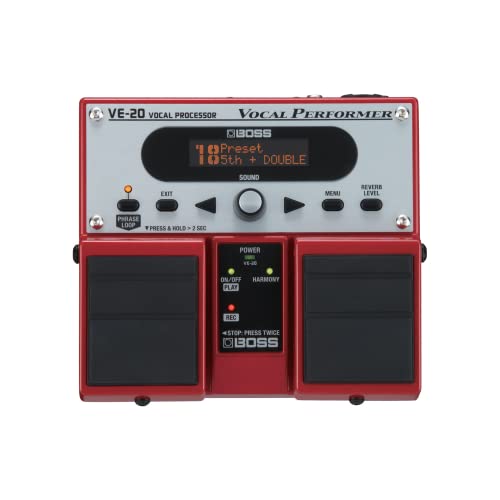
- The easy-to-use VE-20 has been designed from the ground up for singers, featuring some of the finest vocal-effects technology on the market.
- With the click of a footswitch, you can instantly add lush vocal layers and harmonies to your singing, add realtime pitch-correction, and you can show your creative side with special effects such as...
The BOSS VE-20 is a classic floor processor for vocalists. It focuses on harmonies, double-tracking, and real-time pitch correction. If your goal is to add a third-part harmony to your live vocal performance, the BOSS VE-20 is the tool for the job. Comparing it to the Rupert Neve Designs 500 Series Tape Emulator is like comparing a swiss army knife to a master craftsman’s chisel. The BOSS provides specific effects, while the Neve provides a foundational “sound.” For a studio environment where you want your vocals to sound like they were recorded in 1974, the Neve wins every time, but for live utility, the BOSS is indispensable.
3. Roland VT-4 Vocal Transformer

- Roland VT-4 is an easy-to-use but incredibly effective voice transformer
- Features Modern and retro vocal effects, including delay, reverb, formant and vocoding
The Roland VT-4 is a creative “transformer” used heavily in electronic music and streaming. It’s fantastic for radical pitch and formant shifting (making you sound like a robot or the opposite gender). While the Rupert Neve Designs 500 Series Tape Emulator adds subtle, expensive-sounding warmth, the VT-4 adds obvious, digital effects. If you’re a streamer or a modern pop producer looking for “that” vocoder sound, the VT-4 is a blast. But if you’re looking to add professional “weight” and “sheen” to a serious vocal recording, the Roland cannot compete with the 100% analog signal path of the Neve 542.
The Final Verdict: Is the Rupert Neve Designs 500 Series Tape Emulator Worth It?
After extensive testing, our conclusion is clear: the Rupert Neve Designs 500 Series Tape Emulator is one of the most effective tools we’ve ever used for combating the “digital chill” of modern recording. Its ability to add weight, harmonic complexity, and a natural dynamic “squeeze” is unmatched in the 500-series format. While it is an investment—both in the unit itself and the required rack—the sonic dividends it pays are worth every penny for the serious producer. It excels on vocals, drums, and even the master bus (if you have a stereo pair). The only real downside is the potential for minor LED issues, but this doesn’t detract from the world-class audio performance.
If you are tired of your mixes sounding “small” and want to bring that legendary Neve sound into your studio, this is the way to do it. Whether you’re tracking or mixing, the 542 provides a level of musicality that plugins simply can’t replicate. We highly recommend this module for anyone looking to take their production to a professional level. Ready to transform your sound? Click here to get your Rupert Neve Designs 500 Series Tape Emulator and start adding real analog soul to your tracks today.
Last update on 2026-09-26 / Affiliate links / Images from Amazon Product Advertising API