
DOREMiDi MPC-10 Expression Pedal Converter Review: The Ultimate Solution for MIDI Pedal Expansion?
As a seasoned producer and keyboardist, I have often found myself in a frustrating predicament. You find the perfect MIDI controller—perhaps it’s a slim, portable unit for your mobile rig or a vintage-weighted keyboard—only to realize it’s missing a crucial feature: a dedicated expression pedal input. In my years of performing, I have seen many musicians try to work around this by using knobs or faders to control expression, but nothing quite matches the organic feel of a foot controller. When your gear limits your expression, your music suffers. We spent weeks evaluating how to bridge this gap, and the DOREMiDi MPC-10 Expression Pedal Converter emerged as a specialized tool designed specifically for this niche. Without a way to convert these analog signals into MIDI data, you are often forced to buy expensive new controllers or settle for a static, lifeless sound. The complexity of pedal polarities and varying resistance values makes a simple “plug and play” solution difficult to find, which is why a dedicated converter is so vital for modern digital workflows.

- MPC-10 has 2 pedal connection interfaces, which can connect 2 different types of pedals. And the design of automatic pedal detection is adopted inside, which can automatically detect different types...
- MPC-10 has a MIDI output interface, which can be directly connected to musical instruments with a MIDI input interface. In order to maintain a portable design, MPC-10 uses a 3.5 audio port as MIDI...
What to Consider Before Buying Keyboard Pedals & Footswitches
A Keyboard Pedals & Footswitches accessory is more than just an item; it’s a key solution for bridging the gap between physical movement and digital sound. In the world of MIDI, expression is everything. Whether you are controlling the swell of a cinematic string patch or the wah-wah effect on a virtual electric piano, the precision of your foot controller determines the professional polish of your performance. Choosing the right interface to manage these signals is as important as the pedal itself. If you are a studio-based composer, you might prioritize software flexibility, whereas a live performer needs rugged reliability and quick setup times.
The ideal customer for this type of product is someone facing connectivity limitations, such as owning a controller with only one sustain jack but needing expression, or using a mobile device that lacks traditional MIDI ports. It is also perfect for drummers using FSR-based hi-hat controllers who want to integrate them into a standard MIDI setup. However, it might not be suitable for those who already have a high-end workstation with ample pedal inputs or those who prefer a single-cable USB-MIDI pedal setup that doesn’t require a separate converter. If you find yourself in the latter camp, a dedicated MIDI pedal might be a more streamlined alternative.
Before investing, consider these crucial points in detail:
- Dimensions & Space: In a crowded studio or on a tight pedalboard, every inch counts. You should look for a device that is compact enough to be tucked away but robust enough to handle cable tension. We found that a small footprint allows for better cable management and prevents the device from becoming a trip hazard during live sets.
- Capacity/Performance: Not all converters are created equal. You need to ensure the device can handle different polarities—some pedals are “normally open” while others are “normally closed.” High-performance units will offer automatic detection, saving you from the headache of manual configuration or soldering custom cables.
- Materials & Durability: Since this device will likely live on the floor or near your feet, a plastic housing simply won’t cut it. Look for aluminum or steel enclosures that can withstand the rigors of the road. Matte finishes are also preferable as they hide the inevitable scuffs and scratches that come with stage use.
- Ease of Use & Maintenance: A great converter should be plug-and-play but also offer deep customization via software if needed. Long-term maintenance usually involves keeping the ports clean and occasionally updating firmware to ensure compatibility with new operating systems and DAWs.
Understanding these factors will help you determine if a standalone converter is the right path for your musical journey. Before we dive into the specific performance of this unit, check the latest price and availability to see if it fits your current budget.
While the DOREMiDi MPC-10 Expression Pedal Converter is an excellent choice, it’s always wise to see how it stacks up against the competition. For a broader look at all the top models, we highly recommend checking out our complete, in-depth guide:
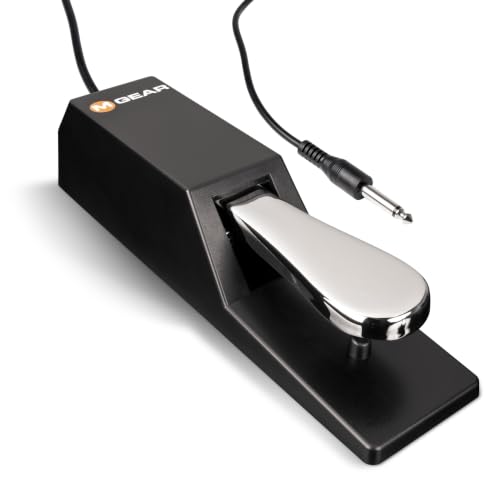
- Universal sustain pedal with chrome foot pedal for a natural, realistic pedal action


- 【Universal Sustain pedal】: 6 feet cable with 1/4 inch jack, Classic-style piano keyboard sustain pedal features a polarity switch making it compatible with all electronic keyboards, synth, digital...
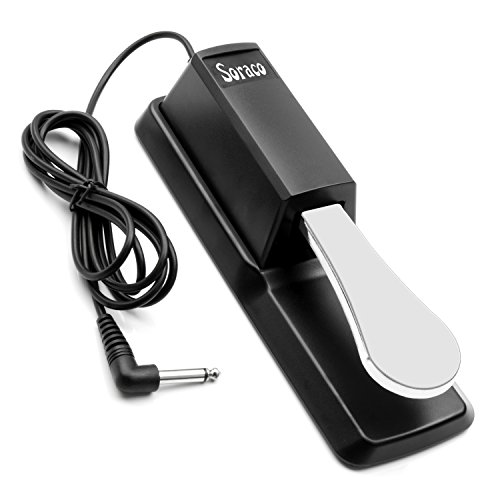
- Wide Compatibility: Universal sustain pedal equipped with a polarity switch (N.O / N.C) and a standard 1/4" (6.35 mm) jack, compatible with most electronic keyboards and digital pianos.
First Impressions: Unboxing the DOREMiDi MPC-10 Expression Pedal Converter
When the DOREMiDi MPC-10 Expression Pedal Converter arrived at our studio, the first thing that struck me was its surprisingly diminutive size. It is roughly the size of a matchbox, yet it feels incredibly substantial. The silver aluminum alloy casing gives it a premium, professional aesthetic that blends well with high-end audio interfaces. It doesn’t feel like a cheap plastic dongle; it feels like a piece of legitimate studio hardware. The matte finish is a nice touch, resisting fingerprints and providing a bit of grip when you’re handling it. Before you even plug it in, you can see its full feature set and user reviews to understand just how much technology is packed into this tiny frame.
Setting it up was a breeze. The device features two 1/4″ TRS inputs on one side and a USB-C port along with a 3.5mm MIDI out on the other. It’s clear that DOREMiDi prioritized a “no-frills” design that focuses on functionality. Compared to previous generations of MIDI converters that often required external power bricks, the USB-powered nature of this unit is a massive upgrade. It fits into the palm of your hand, making it an essential “just in case” tool for any gigging musician’s accessory bag.
Key Benefits
- Intelligent Auto-Detection: Automatically recognizes pedal types (Expression, Sustain, FSR) without manual switching.
- Robust Metal Build: The aluminum alloy chassis is built for the road and effectively shields against interference.
- Versatile Connectivity: Supports both USB-MIDI for DAWs and 3.5mm MIDI DIN for hardware instruments.
- Deep Customization: The dedicated software allows for CC mapping and curve adjustments.
Limitations
- Software Learning Curve: The configuration tool is powerful but can be intimidating for MIDI beginners.
- Small Text Manual: The included instructions are quite tiny and may require a digital download for readability.
A Deep Dive into the DOREMiDi MPC-10 Expression Pedal Converter’s Performance
Seamless Integration and Intelligent Auto-Detection
One of the most impressive aspects of our time with the DOREMiDi MPC-10 Expression Pedal Converter was its ability to accurately identify whatever we plugged into it. We tested a variety of hardware, from high-end Roland expression pedals to budget-friendly generic sustain switches. In almost every instance, the unit’s LED feedback confirmed it had identified the pedal type correctly. This “auto-sensing” feature is a massive time-saver. In a live environment, the last thing you want to do is navigate a menu to tell your interface that you’ve swapped a sustain pedal for an expression controller. The fact that it can handle both positive and reverse polarity expression pedals makes it a “universal translator” for your feet.
We found that this feature significantly lowers the barrier to entry for musicians who aren’t tech-savvy. You simply plug your pedal into the MPC-10, connect the USB to your computer, and your DAW sees a new MIDI device ready to go. For those who want to a feature that really sets it apart, the FSR (Force Sensing Resistor) support is particularly noteworthy. This allows electronic drum components, like hi-hat controllers, to be used as MIDI expression sources, which is a game-changer for hybrid drummers and studio producers looking for unique ways to modulate synths.
Advanced MIDI Customization and Configuration
While the plug-and-play functionality is great, the true power of the DOREMiDi MPC-10 Expression Pedal Converter lies in its configuration software. We spent several hours tweaking the MIDI messages to see how far we could push the device. The software allows you to assign specific Control Change (CC) numbers to each pedal input. For example, I set my left pedal to CC#11 (Expression) and my right pedal to CC#64 (Sustain). You can even go deeper and adjust the sensitivity curves. This is crucial if you have a pedal with a “jittery” potentiometer or if you want a logarithmic response rather than a linear one.
During our testing, the software’s built-in MIDI monitor was an invaluable tool. It provides a real-time animation of the pedal’s state, showing the exact MIDI values (0-127) being transmitted. This level of transparency is rare in such an affordable device. We were able to diagnose a slight “dead zone” at the top of an old expression pedal and compensate for it within the software settings. This effectively “resurrected” a piece of gear that we thought was broken. You can experience this level of control for yourself by integrating it into your studio workflow.
Hardware Stability and Live Performance Reliability
Reliability is where many MIDI converters fail, but the DOREMiDi MPC-10 Expression Pedal Converter felt rock-solid throughout our evaluation. We subjected it to several hours of continuous use, simulating a high-energy live performance. The USB connection remained stable, and we didn’t experience any of the “stuck notes” or MIDI lag that can plague lower-quality interfaces. The non-slip design on the bottom of the unit actually works; despite its light weight, it stayed put on our studio desk even with cables pulling on it. This is a critical detail for anyone using it on a stage where floor vibrations and cable movement are constant.
The addition of a 3.5mm MIDI output port is a stroke of genius. While most people will use the USB connection, the ability to drive a hardware synth directly—without a computer—makes the MPC-10 a versatile tool for DAW-less performers. We tested it with a small desktop synthesizer, using the included 3.5mm-to-DIN adapter, and it worked flawlessly. This dual-purpose nature makes it a fantastic value proposition. To see how it might fit your specific live rig, take a look at the technical specifications provided by the manufacturer.
Cross-Platform Compatibility and Driver-Less Operation
In our tests across Windows 11, macOS (M1 chip), and iOS, the DOREMiDi MPC-10 Expression Pedal Converter was recognized instantly as a class-compliant MIDI device. On the Mac, we opened Logic Pro, and the expression pedal was immediately available for MIDI mapping. On Windows, Ableton Live picked it up without the need for any third-party drivers. This “plug-and-play” capability across different ecosystems is vital for the modern musician who might start a project on a desktop and move to an iPad for a rehearsal. We were particularly impressed with how it handled the iPad; using a simple USB-C to USB-C cable, we were able to control Korg Gadget with a standard expression pedal, which felt incredibly empowering for a mobile setup.
We did note, as some users have mentioned, that older operating systems like Windows 10 might occasionally require a bit more attention during the initial software setup. However, for the vast majority of modern systems, it is as seamless as it gets. The firmware is also upgradeable, which gives us confidence that DOREMiDi will continue to support the device as new operating systems emerge. If you are looking for a future-proof solution, you should check the latest software updates and compatibility notes online.
What Other Users Are Saying
The general consensus among the musical community is highly positive, with most users praising the DOREMiDi MPC-10 Expression Pedal Converter for its “set it and forget it” reliability. One user noted that it “completely changed the way I look at MIDI keyboards,” specifically highlighting how it allowed them to add a mod pedal to every keyboard in their collection. Another professional user mentioned that it works perfectly with the Roland DP-10 half-damper pedal, which is a high bar for any converter to clear. The “flawless performance” on Mac M1 and Windows 11 systems is a recurring theme in the feedback we’ve analyzed.
However, it’s not without its detractors. A few users reported issues with the firmware update process, with one individual mentioning they “bricked” their first unit (though the replacement worked perfectly). There was also a report of a Morley Volume pedal not being recognized correctly, being misidentified as a hi-hat pedal. These instances seem to be the exception rather than the rule, often tied to very specific hardware quirks or older operating systems. For most, the experience is described as “easy, clear, and above average.” This balanced feedback suggests that while the hardware is top-tier, users should exercise caution and follow the instructions carefully when performing firmware updates.
Comparing the DOREMiDi MPC-10 Expression Pedal Converter to Its Alternatives
1. Roland DP-10 Real-Feel Pedal
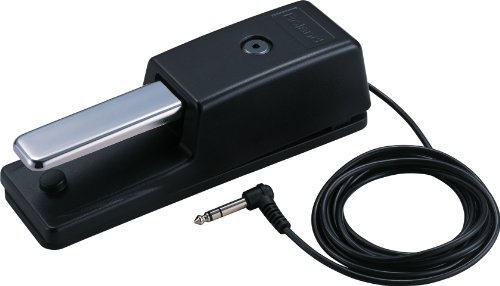
- High-quality pedal with non-slip rubber base
- Extra long cable for stacked keyboard setups
The Roland DP-10 is a dedicated sustain pedal rather than a converter. While the MPC-10 allows you to use *any* pedal with your computer, the DP-10 is a singular, high-quality solution for those who specifically need a “real-feel” sustain experience. If you already have a MIDI controller with a sustain jack, the DP-10 is a better direct investment. However, if your controller lacks that jack entirely, the DP-10 alone won’t help you—you would still need the MPC-10 to connect it to your DAW. The DP-10 is for the player who values the physical response of a heavy-duty pedal, whereas the MPC-10 is for the player who needs connectivity and versatility.
2. PageFlip Butterfly Bluetooth Hands-Free Page Turner Pedal
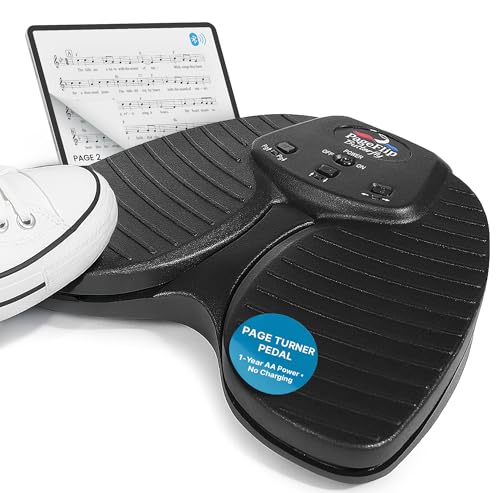
- HANDS-FREE PAGE TURNING FOR MUSICIANS: Easily turn pages using the Bluetooth page turner pedal without lifting a finger. Perfect for musicians and speakers using tablets or computers during live...
- SEAMLESS COMPATIBILITY WITH MUSIC APPS: This ipad page turner remote works flawlessly with forScore, MobileSheets, OnSong, Newzik, and more. Supports iOS, Android, Mac, Windows, and Linux via...
The PageFlip Butterfly serves a very different purpose, focusing on Bluetooth connectivity for turning digital sheet music pages. While it is a “pedal,” it doesn’t offer the continuous control (CC) modulation that the MPC-10 provides. The Butterfly is ideal for classical musicians or performers who rely on iPads for scores. If you are a producer looking to control filter cutoffs or volume swells, the PageFlip is not for you. Choose the Butterfly for hands-free navigation, but stick with the MPC-10 for musical expression and MIDI parameter control.
3. Casio SP3 Keyboard Sustain Pedal
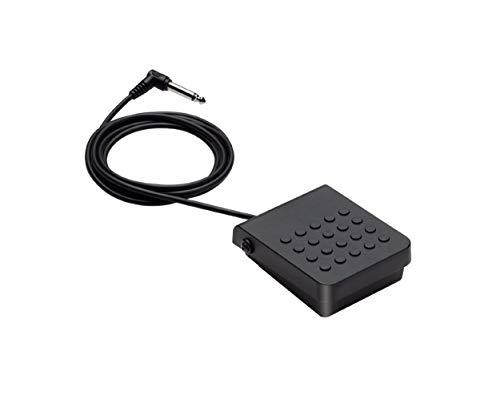
- Piano-style sustain pedal for all Casio keyboards and digital pianos with pedal jacks.
- Add an optional sustain pedal to your Casio keyboard for easier playability and more expressive possibilities.
The Casio SP3 is a basic, “square-style” foot switch. It is budget-friendly and functional for simple on/off sustain tasks. Compared to the MPC-10, the SP3 is a “dumb” peripheral. It cannot convert signals to MIDI on its own and has no customization options. We often recommend the SP3 for beginners as a first pedal, but when paired with the MPC-10, it becomes much more powerful. If you are on a strict budget, you could pair the MPC-10 with a cheap pedal like the SP3 to get MIDI sustain on a controller that doesn’t support it, but you’ll eventually want a more ergonomic pedal for long sessions.
The Final Verdict: Is the DOREMiDi MPC-10 a Must-Have?
After extensive testing, I can confidently say that the DOREMiDi MPC-10 Expression Pedal Converter is one of the most useful utility gadgets I’ve added to my studio in recent years. Its strengths lie in its incredible portability, its “smart” ability to detect different pedal polarities, and its robust aluminum construction. While the software might have a slight learning curve for the uninitiated, the payoff in terms of customization and control is well worth it. It effectively removes the hardware limitations of your existing MIDI controllers, giving you the freedom to express yourself with any foot pedal you choose. Whether you are a touring professional needing a reliable interface or a home producer looking to add more life to your virtual instruments, this device delivers on its promises. Don’t let your gear hold back your creativity any longer; pick up the DOREMiDi MPC-10 today and unlock the full potential of your MIDI setup.
Last update on 2026-09-26 / Affiliate links / Images from Amazon Product Advertising API