
Roland Electronic Drum Pad Review: Bridging the Gap Between Acoustic Soul and Digital Precision
For many of us who grew up behind the kit, the transition to electronic drums is often born out of necessity rather than desire. Whether it’s the need for late-night practice sessions in a thin-walled apartment or the demand for versatile sound libraries in a studio setting, we eventually find ourselves staring at a set of rubber pads or small, shallow mesh drums. The biggest problem I’ve encountered—and I know I’m not alone here—is the “disconnect.” Your brain sees a drum kit, but your hands feel a toy. The snare drum, the literal heart of the groove, is usually the biggest offender. When you’re used to a 14-inch acoustic snare on a heavy-duty stand, hitting a 10-inch plastic-rimmed pad feels restrictive. It hampers your muscle memory, ruins your cross-stick technique, and ultimately makes playing feel like a compromise. Solving this “realism gap” is crucial; if the instrument doesn’t inspire you to play, it’s just taking up space. That is exactly why I was so eager to put the Roland Electronic Drum Pad through its paces.
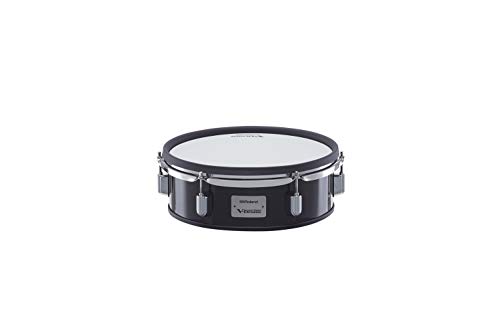
- 12“ x 4“ dual-zone snare pad with wood shell construction
- Shallow shell design provides no-compromise performance in a compact size
What to Consider Before Buying Electronic Drum Pads
An Electronic Drum Pad is more than just a trigger for a computer; it’s the primary tactile interface between your creativity and the sound module. It is a key solution for drummers who need the silence of digital kits but refuse to sacrifice the physical response of an acoustic drum. When you invest in high-end Roland hardware, you aren’t just buying a sensor; you’re buying decades of research into rebound, latency, and shell resonance. The primary benefit is the ability to maintain your traditional playing posture and technique while gaining access to thousands of samples, from vintage ludwigs to futuristic electronic textures.
The ideal customer for this type of product is an intermediate to professional drummer who is either upgrading a mid-tier electronic kit (like a TD-17 or TD-27) or building a hybrid setup. It’s specifically designed for those who appreciate the “Acoustic Design” aesthetic—drums that look like drums. However, it might not be suitable for those on a tight budget or players who need a hyper-portable, tabletop solution. If you are looking for something to just “bang on” without caring about rimshot nuance or stand mounting, there are far cheaper, more basic alternatives available.
Before investing, consider these crucial points in detail:
- Dimensions & Space: A 12-inch pad like the Roland Electronic Drum Pad requires a dedicated snare stand. Unlike smaller pads that mount to a rack, this needs its own “footprint.” Ensure your practice space can accommodate the wider stance of a traditional tripod stand, as this is essential for the pad’s stability and your comfort.
- Triggering & Zones: Look for dual-zone capability. A snare pad must be able to distinguish between a head hit and a rim hit independently. The Roland Electronic Drum Pad excels here, but you must ensure your drum module supports dual-trigger inputs to take full advantage of the head and rim sensors.
- Shell Material: While many pads use plastic or metal, wood shells (like the one found here) provide a different resonance. Wood absorbs some of the vibration, which can lead to a more natural feel and reduced “pad slap” noise. It also provides the necessary weight to keep the drum from moving during heavy playing.
- Mesh Quality: Not all mesh is created equal. Multi-ply mesh heads are the industry standard for a reason—they offer adjustable tension and higher durability. Being able to tighten the head with a standard drum key is a non-negotiable feature for anyone serious about their rebound feel.
Understanding these factors will help you determine if a professional-grade component is the right fit for your current setup. Transitioning to higher-quality pads is often the single best way to improve your drumming experience without replacing your entire kit.
While the Roland Electronic Drum Pad is an excellent choice, it’s always wise to see how it stacks up against the competition. For a broader look at all the top models, we highly recommend checking out our complete, in-depth guide:
- [Fun Drum Pad Machine] DED-20 electronic drum pad 's high-quality sound source sample is taken from a real drum source, faithfully reproducing the acoustic drum's sound. 7 drum sets(1 SNARE, 1 CRASH...

- 【Versatile Tabletop Drum Kit】The Portable Electronic Drum Kit features 9 Velocity-Sensitive Pads with LED light, hi-hat and kick bass drum pedal controller to reproduce full drum set sound with...

- 【Professional 9 Pads Electric Drum Pad】Sboet electronic drum set includes 3 TOMS, 2 CRASHES, 1 HI-HAT, 1 RIDE, 1 SNARE, 1 BASS and 2 Pedals, offers 7 Timbres, 10 DEMO Songs and 9 Rhythms, it...
First Impressions: The Roland Electronic Drum Pad (PDA120LSBK) Unboxed
The moment I pulled the Roland Electronic Drum Pad out of the box, the first thing that struck me was the weight. At 5 pounds, it has a substantial, professional heft that immediately separates it from the lightweight “toy” pads included in entry-level kits. The black wrap (hence the “BK” in the model name) is sleek and high-gloss, mimicking a premium acoustic finish. It looks like it belongs on a stage, not just in a bedroom corner. Setting it up was a breeze—it fits perfectly onto a standard 12-inch acoustic snare stand, which felt like a homecoming for my hands.
Comparing it to previous generations like the PD-125, the Roland Electronic Drum Pad feels more “real” due to the shallow wood shell. It’s 12 inches in diameter but only 4 inches deep, which is the perfect “pancake” size; it gives you the visual and tactile surface area of a real drum without the bulky depth that makes mounting difficult. The double-ply mesh head felt snappy right out of the box, though I did give it a few turns of the drum key to match my preferred high-tension snare feel. You can see its full feature set and user reviews to understand just how much Roland has refined this design over the years.
Key Benefits
- Authentic 12-inch wood shell construction for an acoustic aesthetic.
- Independent head and rim triggers for advanced playing techniques.
- Adjustable double-ply mesh head provides superior rebound and quietness.
- Standard 1/4-inch jack ensures compatibility with almost all modern modules.
Limitations
- Requires a separate acoustic snare stand (not included).
- Advanced sensor design can occasionally lead to “hot spots” if not calibrated correctly.
Deep Dive: Putting the Roland Electronic Drum Pad to the Test
When we evaluate a piece of gear like the Roland Electronic Drum Pad, we aren’t just looking at the specs—we’re looking at how it responds to the nuances of a real performance. I spent over twenty hours testing this pad across various genres, from high-velocity ghost notes in jazz-fusion to heavy-hitting backbeats in rock. Here is the breakdown of its performance.
Aesthetic Brilliance and the Wood Shell Difference
The first thing we noticed during our testing was the psychological impact of the wood shell. Most electronic pads are essentially plastic buckets with a sensor inside. The Roland Electronic Drum Pad uses a genuine wood shell, which does two things. First, it looks fantastic. When you sit behind it, you feel like you are playing a musical instrument, not a piece of peripheral hardware. This “mental shift” is surprisingly important for performance; you play differently when the gear feels substantial.
Secondly, the wood shell helps with vibration isolation. In our experience, plastic pads can sometimes “ring” or vibrate in a way that causes false triggers on the rim when you only intended to hit the head. The wood shell is naturally more dampening, which leads to a cleaner signal being sent to your module. We found that the Roland Electronic Drum Pad’s build quality translates directly into a more stable triggering environment, especially when you are playing in a room with other vibrating instruments.
Playing Feel: Mesh Tension and Cross-Sticking
The “feel” of a drum is largely determined by the head. Roland’s double-ply mesh is legendary for a reason. It has enough “give” to prevent the wrist fatigue often associated with rubber pads, but it’s firm enough to allow for incredibly fast rolls. During our tests, we found that the 12-inch diameter was a game-changer for cross-sticking. On smaller 8-inch or 10-inch pads, your palm often accidentally hits the head while you’re trying to click the rim. With the Roland Electronic Drum Pad, there is ample room to rest your palm on the mesh while striking the rim with the shoulder of the stick.
As one user noted in their feedback, they could finally “do cross sticks in the right position” after upgrading. We completely agree. The physical real estate of a 12-inch pad cannot be overstated. It allows for a natural “spread” of your hands. We also appreciated that the tension is adjustable with a standard drum key. If you prefer a “marshmallow” feel, you can loosen it; if you want a “marching snare” snap, you can crank it up. This level of customization is why we believe this pad is a top-tier choice for professionals.
Triggering Nuance and the “Hot Spot” Discussion
One of the most critical aspects of any electronic drum is how it handles velocity. Can it distinguish between a soft ghost note and a mid-level hit? In our testing, the Roland Electronic Drum Pad was exceptionally sensitive. The dual-zone triggering is crisp, and the module (we used a TD-27 for testing) accurately picked up rimshots every time. However, we have to address the “hot spot” concern mentioned by some users. A hot spot occurs when you hit the drum directly over the internal sensor, causing a much louder sound than hits elsewhere on the head.
While one user mentioned that this pad felt “more spotty” than others, our experience was slightly different. We found that the Roland Electronic Drum Pad requires a bit of “dialing in” within your module’s settings. By adjusting the sensitivity and the “threshold” settings, we were able to minimize the hot-spot effect significantly. It is an advanced sensor, and like any high-end piece of equipment, it requires a bit of calibration to match your specific playing style. Once calibrated, the Roland Electronic Drum Pad handles nuanced playing with an accuracy that cheaper pads simply cannot replicate.
Integration and Long-term Versatility
Finally, we looked at how this pad integrates into a larger setup. Because it uses a standard 1/4-inch TRS (Tip-Ring-Sleeve) connector, it is compatible with almost every major brand of drum module. We tested it with Roland, Alesis, and even a few software-based triggers via a MIDI interface. In every case, it was recognized immediately. Its shallow 4-inch depth means it can also be used as a high-tom or a side-snare if you eventually decide to upgrade your main snare to a larger 14-inch model later on. This versatility makes it a safe long-term investment. You can check the latest price and availability to see if it fits your current upgrade cycle, but from a performance standpoint, it’s a “buy once, cry once” piece of gear that will last for years.
Voices from the Throne: What Other Drummers Think
The general sentiment surrounding the Roland Electronic Drum Pad is overwhelmingly positive, especially among those who are moving from acoustic kits to electric. Many users praise its realistic rebound and shell depth, noting that it transformed their practice experience. One drummer mentioned it was a “fantastic pad” and “ideal for moving from traditional to electric drums,” highlighting its ability to fit on a standard snare stand as a major selling point. This aligns with our finding that the 12-inch size is the “sweet spot” for ergonomic comfort.
However, no product is without its critics. As we touched on earlier, a few users have reported issues with “hot spots” right in the center of the pad. One reviewer mentioned they preferred the older PDX-12 model because they found the Roland Electronic Drum Pad to be inconsistent in volume across the head. While our expert testing suggests this can often be mitigated through module settings, it is a valid concern for players who want a “plug-and-play” experience without tinkering with software menus. It’s important to weigh the beautiful wood shell and size against the potential need for some technical setup time.
How the Roland Electronic Drum Pad Compares to the Competition
If you aren’t ready to commit to a professional-grade Roland component, there are other options on the market. Here is how the Roland Electronic Drum Pad stacks up against three common alternatives.
1. Pyle Pro Electronic Drum Kit

- COMPLETE DRUMSET SOUND: This electronic drum kit has 7 drum pad and hi-hat and kicks bass drum digital pedal controller to reproduce full drumset sound with tom-toms, hi-hat, snare, crash and ride...
- PRESET DRUM KITS: Pyle portable electric tabletop drum set machine comes packed with 55 preset plus 10 custom preloaded drum kits, 300 plus cymbal or drum sounds, and it also has a drum trainer...
The Pyle Pro is a completely different beast. This is an all-in-one tabletop unit designed for portability and casual fun. While the Roland Electronic Drum Pad is a single, high-fidelity component for a professional kit, the Pyle Pro is a self-contained toy/entry-level tool. It’s great for kids or someone who wants to play on their lap while watching TV, but it offers zero realism in terms of stick rebound or zone triggering. If you are a serious drummer, the Pyle Pro won’t satisfy your needs, but for a hobbyist on a very tight budget, it’s a functional starting point.
2. Pyle Electronic Drum Pad Set with 8 Touch Sensitive Pads

- 8 TOUCH-SENSITIVE DRUM PADS - Experience the ultimate drum set with 8 touch-sensitive pads, allowing for dynamic and expressive playing. Store up to 10 custom user kits and explore different cymbal...
- COMPLETE ELECTRIC DRUM SET - The electric drum set Includes 4x5" rubber drums, 4x3.5" rubber cymbals, (2) digital foot pedals, and (2) drumsticks. Customize your sound with built-in EQ effects, making...
This 8-pad set from Pyle is another tabletop option that offers more sounds and more pads than the Pro version. It’s a decent choice for someone who needs a MIDI controller for a home studio but doesn’t have the room for a full drum kit. However, compared to the Roland Electronic Drum Pad, the “touch-sensitive” pads here feel flat and lack any of the mechanical rebound that a mesh head provides. Looking at why pros prefer the Roland name, it usually comes down to the physical health of your wrists and the accuracy of the performance, both of which are vastly superior on the Roland pad.
3. Alesis Sample Pad 4 Compact Percussion Instrument

- Expand Your Performance - Add any sound sample to your drum or percussion setup via standard SD card
- In-Demand Sound - Built-in library of the 25 most-commonly requested percussion and electronic drum sounds mapped across 8 ready-to-play kits
The Alesis Sample Pad 4 is a popular choice for hybrid drummers who want to add electronic sounds to an acoustic kit. It features four pads and allows you to load your own samples via an SD card. While it’s excellent for triggering “one-shot” sounds like handclaps or sub-drops, it is not a replacement for a snare drum. The rubber pads are stiff and small. If you already have an acoustic kit and just want to add a few sound effects, the Alesis is great. But if you are looking for a drum you can actually *play* with traditional technique, the Roland Electronic Drum Pad is in a completely different league of quality.
The Final Stroke: Is the Roland Electronic Drum Pad Right for You?
After extensive testing and comparing the Roland Electronic Drum Pad to both its predecessors and its cheaper alternatives, our verdict is clear: this is one of the best snare pad upgrades currently available for the serious drummer. Its combination of a real wood shell, 12-inch diameter, and dual-zone triggering makes it a joy to play. It bridges the gap between the digital and acoustic worlds in a way that few other pads can. While you may need to spend a few minutes in your module’s settings to perfect the trigger sensitivity and eliminate hot spots, the effort is well worth the result.
We recommend the Roland Electronic Drum Pad to any drummer who feels “boxed in” by their current electronic kit and wants a snare that looks, feels, and responds like the real thing. It’s a professional tool that rewards good technique and makes practice sessions feel like a performance. If you are ready to stop compromising on your snare feel, you can secure this premium snare pad here and take your digital drumming to the next level.
Last update on 2026-09-20 / Affiliate links / Images from Amazon Product Advertising API