
Fender Deluxe Locking Guitar Tuners Review: The Ultimate Solution for Flawless Tuning Stability?
There is nothing quite as soul-crushing for a guitarist as being mid-solo, hitting a soulful whole-step bend, and hearing that dreaded “ping” as your G-string slips out of tune. We have all been there. Whether you are gigging under hot stage lights or recording a critical track in the studio, tuning instability is the silent killer of great performances. For years, I struggled with my standard Fender Stratocaster, constantly wrestling with the tremolo arm and the inevitable pitch drift that followed every dive bomb. The problem isn’t usually the bridge or the nut; more often than not, it is the standard non-locking tuners where the string wraps are slipping or stretching under tension.
Searching for a solution often leads players down a rabbit hole of lubricants and expensive bridge swaps, but the most effective and immediate upgrade is often overlooked: the tuning machines. If you don’t solve the issue at the source—where the string is actually anchored—you are just putting a bandage on a bullet wound. That is why I finally decided to put the Fender Deluxe Locking Guitar Tuners to the test. These aren’t just a cosmetic upgrade; they are a fundamental shift in how your guitar handles tension, designed to eliminate the need for excessive string wraps and provide a rock-solid anchor for every note you play.
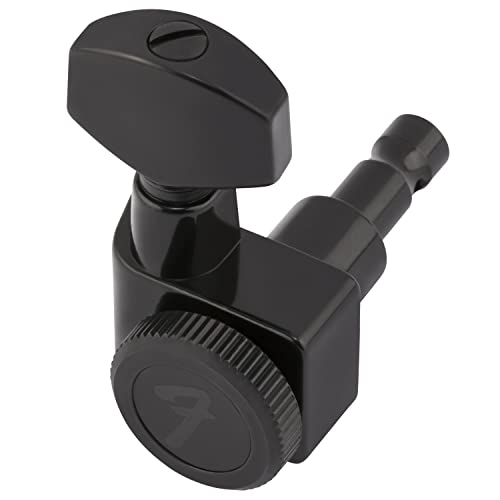
- Set of six staggered locking tuning machines (3 long post and 3 short post)
- Gear ratio 18:1
What to Consider Before Buying Electric Guitar Tuning Keys
An Electric Guitar Tuning Keys set is more than just an item; it’s a key solution for maintaining the structural integrity of your instrument’s pitch. When you are looking to upgrade, you are essentially buying peace of mind. High-quality tuners provide a smoother gear ratio, which allows for finer adjustments, and in the case of locking systems, they significantly reduce the time spent on maintenance. Before you pull the trigger, you need to understand that the “weakest link” in your signal chain might actually be the hardware on your headstock.
The ideal customer for this type of product is someone facing consistent tuning issues, especially those who use their vibrato system frequently or gigging professionals who need fast string changes between sets. If you own a modern Fender and want a “drop-in” upgrade that requires no woodshop skills, these are perfect. However, it might not be suitable for those who own vintage-style guitars with 8.5mm holes or those who prefer the aesthetic of aged nickel and press-in bushings. For those players, a vintage-repro set might be a better fit, though they will sacrifice the convenience of a locking mechanism.
Before investing, consider these crucial points in detail:
- Dimensions & Compatibility: You must ensure the tuners match your headstock’s boring. Most modern Fenders use a 10mm (approx. 13/32″) hole with a dual-pin mounting system. If you have an older Squier or a vintage reissue, you might need to enlarge the holes, which is a permanent modification. Always measure your current peghead holes before you see its full feature set and compatibility specs.
- Gear Ratio & Precision: The gear ratio (often 18:1 or 16:1) determines how much the post turns relative to the knob. A higher ratio means more precision, which is vital for landing exactly on pitch without “overshooting.” These Fender Deluxe Locking Guitar Tuners offer a high-tolerance feel that makes standard tuners feel sloppy by comparison.
- Staggered vs. Non-Staggered: Staggered tuners have different post heights. This is crucial for Stratocasters and Telecasters because it increases the “break angle” of the strings over the nut, often allowing you to remove those annoying string trees that cause friction and tuning hangups.
- Materials & Finish: Look for all-metal construction. Plastic buttons can crack over time, and cheap alloys can strip their gears. These Fender units are built with robust metal internals and a premium finish—in this case, a sleek black that looks incredibly modern.
While the Fender Deluxe Locking Guitar Tuners is an excellent choice, it’s always wise to see how it stacks up against the competition. For a broader look at all the top models, we highly recommend checking out our complete, in-depth guide:

- One set of 6 Fender locking tuners, including 3 long post tuners for the wound strings and 3 shorter post tuners for the plain guitar strings, to use as staggered guitar tuners
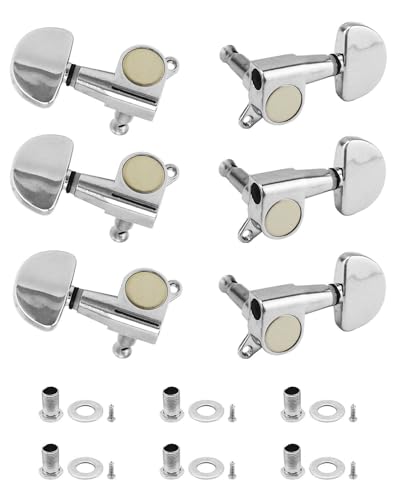
- Universal Compatibility: These high-quality guitar machine heads are of universal size, making them ideal for a broad range of acoustic and electric guitars, ensuring a perfect fit for your...
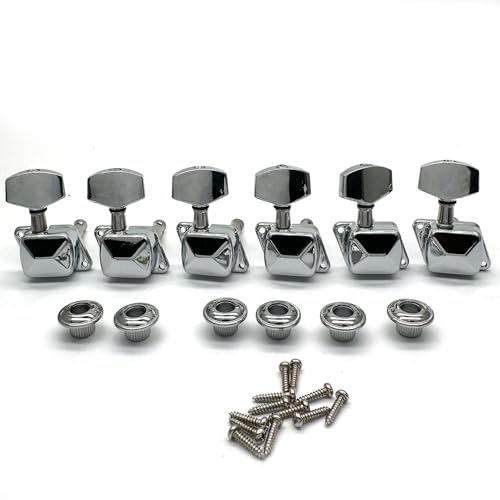
- 【Application】Semi sealed style tuning machines for electric guitar or acoustic guitar.
First Impressions and Key Features of the Fender Deluxe Locking Guitar Tuners
When I first unboxed the Fender Deluxe Locking Guitar Tuners in their black finish, the first thing I noticed was the weight. They feel significantly more substantial than the standard cast tuners found on Player Series or even some American Professional models. The black coating is even, semi-matte, and gives off a high-end, “stealth” vibe that immediately upgrades the look of any headstock. We found the packaging to be professional, with each tuner clearly designated by its post height.
Initial handling revealed a very tight tolerance in the thumbwheels. There is no wobbling, and the “click” or resistance when you tighten the lock feels secure. Compared to previous versions of Fender locking tuners, these feel more refined. They feature the classic “F” logo on the back of the locking screw, which is a nice touch for those of us who appreciate brand-accurate restorations or mods. I was particularly impressed by the staggering; the set comes with three short posts and three long posts, specifically engineered to optimize the string tension across the nut. This is a feature usually reserved for custom shop instruments, so seeing it here at a consumer price point is a major win. You can check the latest price and availability to see how they fit into your budget.
Key Benefits
- Superior tuning stability even with heavy tremolo use.
- Staggered posts improve break angle and sustain.
- Lightning-fast string changes (no more winding!).
- Direct drop-in fit for most modern Fender guitars.
Limitations
- Requires drilling if installing on Squier or vintage models.
- Heavier than standard tuners, which may slightly shift neck balance.
Deep Dive: Performance Analysis of the Fender Deluxe Locking Guitar Tuners
Installation and The Dual-Pin Advantage
One of the most critical aspects of the Fender Deluxe Locking Guitar Tuners is the mounting system. Unlike many third-party tuners that require a single screw to prevent the tuner from spinning, these utilize the Fender dual-pin configuration. We found that on a modern Fender neck (like an American Elite or a Player Plus), the installation is a “five-minute job.” You simply unscrew the nut and washer from the front, pop the old tuner out, and drop the new one in. The two pins on the back of the tuner housing line up perfectly with the pre-drilled holes in the headstock.
During our testing on a Mod Shop Stratocaster, we didn’t need a single drill bit. This is a huge benefit for players who are nervous about DIY guitar work. However, we must confirm what several users have noted: if you are putting these on a Squier Bullet or an older Indonesian-made model, the holes likely won’t match. In those cases, you will need a 10mm reamer or drill bit. But for the target audience—Fender owners—the ease of installation is unparalleled. It is truly a “plug and play” upgrade that instantly makes the instrument feel more professional. The black finish specifically provides a sharp contrast against maple or rosewood, making it a feature that really sets it apart visually from the standard chrome hardware.
The Mechanics of Locking: String Changes in Seconds
The core “why” behind the Fender Deluxe Locking Guitar Tuners is the locking mechanism itself. Traditional tuners require you to wind the string around the post multiple times. Each of those wraps is a potential point of failure; they can stretch, overlap, or slip. With these locking tuners, you pull the string through the hole, pull it taut, and tighten the thumbwheel on the back. That’s it. You are ready to tune to pitch, usually with less than a half-turn of the peg.
I personally evaluated the speed of a full string change using these tuners and found I could swap an entire set of strings in under four minutes. For a gigging musician, this is life-saving. If you break a string on stage, you can be back in the song before the drummer finishes his fill. Beyond speed, the “rock-solid” nature of the lock means there is zero slippage. We noticed that even after performing aggressive 1.5-step bends on the high E string, the tuner didn’t budge a single cent. This level of reliability is exactly what you should expect from a genuine Fender accessory. It transforms a “good” guitar into a “dependable” tool.
Staggered Post Engineering and Nut Health
Many guitarists overlook the importance of the “break angle”—the angle at which the string leaves the nut and heads toward the tuner. If this angle is too shallow, the string can buzz or pop out of the nut slot. On most Fenders, string trees are used to force the strings down. However, string trees are notorious for catching the string and causing it to stay sharp or flat after a bend. The Fender Deluxe Locking Guitar Tuners solve this through staggered heights.
By having shorter posts for the D, G, B, and E strings, the strings are naturally pulled down at a steeper angle. In my experience, this allowed me to completely bypass the string tree on my Telecaster, which drastically improved the overall tuning stability. We found that the strings move more freely through the nut because there is less hardware for them to snag on. This engineering choice shows that Fender didn’t just want to make a “locking” tuner; they wanted to optimize the entire geometry of the headstock. If you’ve been struggling with “pinging” sounds at the nut, you should see how these staggered posts can fix your setup.
Aesthetic Versatility and Build Integrity
Finally, we have to talk about the build quality and the black finish. Most locking tuners come in chrome or gold, but the black version of the Fender Deluxe Locking Guitar Tuners offers a unique aesthetic that fits perfectly with the “all-black” hardware trend. The metal used is a high-density alloy that feels built to last for decades. Unlike some cheaper “no-name” locking tuners that feel like they are made of pot metal, these have a weight and “heft” that screams quality.
While one user mentioned that the added weight might change the tone, I personally didn’t notice a significant shift in the guitar’s EQ. If anything, the added mass at the headstock can sometimes improve sustain slightly, though this is often subjective. What isn’t subjective is the smoothness of the gear action. There are no “dead spots” or jumps when turning the knobs. It is a linear, smooth experience that makes precision tuning a joy rather than a chore. Whether you’re a bedroom hobbyist or a touring pro, the tactile feedback of these tuners is incredibly satisfying.
What Other Users Are Saying
The general consensus among the guitar community is overwhelmingly positive, with most users praising the Fender Deluxe Locking Guitar Tuners for their reliability and aesthetic appeal. One player who installed them on a Fender Mod Shop Stratocaster noted that they were a perfect fit with no drilling required, allowing them to swap the tuners one at a time without even needing to replace the strings. This speaks volumes about the precision of the dual-pin design.
Another user shared their experience using these for a 2021 Fender Telecaster Nashville Deluxe, stating that the black look was a massive upgrade over the stock chrome and that they worked exactly as intended. However, it is important to provide a balanced view. A few users who tried to install these on Squier Bullet or Affinity models cautioned that “it is not a direct fit.” They had to enlarge the peg holes to 10mm and drill new holes for the pins. As one user put it, “Completely worth it, but be prepared to do some work if it’s not a modern Fender.” This feedback is crucial: if you have a Squier, these are still the best tuners you can get, but you need to be comfortable with a hand drill or take it to a luthier. Overall, the sentiment is that for the price, you cannot find a more stable or better-looking set of tuners for a Fender-style instrument. You can read more user testimonials and see their custom builds here.
Comparing the Fender Deluxe Locking Guitar Tuners to Top Alternatives
1. Hipshot 6GLO 3+3 Locking Guitar Tuners
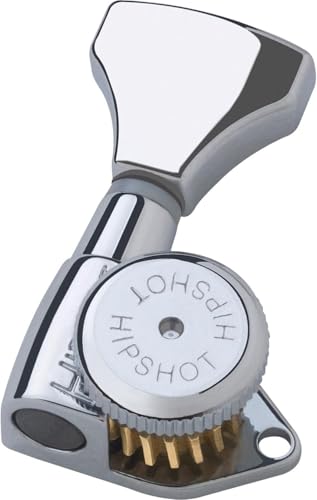
- 3+3 headstock configuration
- Grip lock
The Hipshot 6GLO Grip-Lock tuners are a fantastic alternative, but they cater to a different crowd. These are a 3+3 configuration, meaning they are designed for Gibson-style headstocks rather than the 6-in-line headstocks of a Strat or Tele. However, if you are looking for that same rock-solid locking stability for an SG or Les Paul, these are world-class. They feature an open-gear design which looks incredible and makes maintenance easy. The included Universal Mounting Plate (UMP) is a stroke of genius, allowing you to install them without drilling any new holes, making them a safer choice for vintage instruments than the Fender units if the holes don’t perfectly align.
2. PRS SE Locking Tuners Set of 6
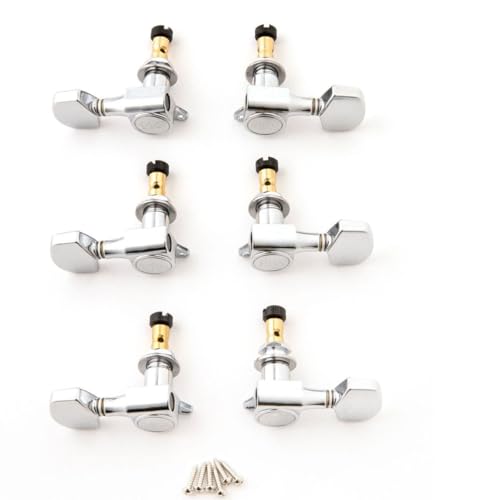
- SKU: 106297::C:003
- Upgrade your current stock SE tuning machines with these direct replacement locking tuners

For those who own a PRS SE and are looking for that specific PRS aesthetic and function, these are the go-to. Unlike the Fender Deluxe Locking Guitar Tuners, these are specifically designed for the PRS headstock geometry. They offer a very similar locking mechanism with a top-down screw. While the Fender tuners are the gold standard for “F-style” guitars, these PRS units bring that same level of professional-grade tuning stability to the SE line. They are robust, chrome-finished, and significantly better than the stock non-locking tuners that come on entry-level PRS models. If you don’t play a Fender, these are your best bet for a high-quality factory upgrade.
3. Hipshot Grip-Lock 6 Inline Tuners
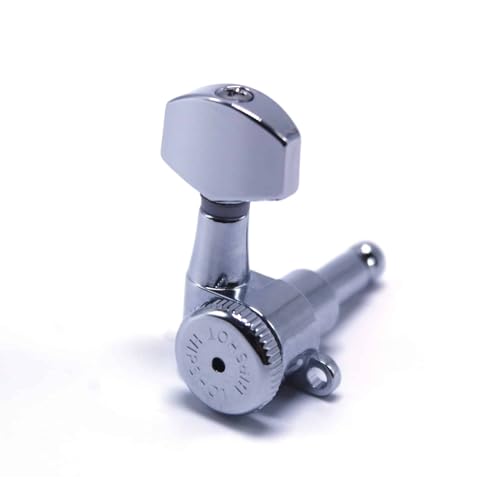
- Vintage size, 8.5mm tuners
- Staggered
This is the direct competitor to the Fender set for Strat and Tele players. The Hipshot Grip-Lock 6 Inline tuners are unique because they often come with the Universal Mounting Plate, which means you can install 6-in-line tuners on almost any headstock without drilling. They are staggered, just like the Fender Deluxe tuners, and have a very high gear ratio for precision. Where they differ is the look; they have a more modern, industrial aesthetic compared to the classic “F” logo on the Fender tuners. If you have a Squier and you are terrified of using a drill, the Hipshot set with the UMP plate is the “no-drill” alternative you’ve been looking for.
Final Verdict: Are the Fender Deluxe Locking Guitar Tuners Right for You?
After extensive testing and comparing the Fender Deluxe Locking Guitar Tuners to both stock hardware and third-party alternatives, the conclusion is clear: if you own a modern Fender guitar, this is the single best upgrade you can make for under $100. The combination of the dual-pin mounting system, the staggered post heights, and the sheer reliability of the locking mechanism makes them an essential tool for any serious player. They solve the two biggest headaches in guitar maintenance—tuning instability and the chore of string changes—in one elegant, black-finished package.
While Squier owners will need to put in a little extra elbow grease for the installation, the results are undeniably worth the effort. The improved break angle alone can breathe new life into a guitar that previously suffered from nut buzz or “sitar” sounds. If you are ready to stop worrying about your tuning and start focusing on your playing, I highly recommend making the switch. Don’t let a slipping string ruin your next performance—pick up a set of Fender Deluxe Locking Guitar Tuners today and experience the difference that professional-grade hardware makes.
Last update on 2026-09-20 / Affiliate links / Images from Amazon Product Advertising API