
Wilkinson Chrome Post Tuning Machine Heads Review: The Ultimate Budget-Friendly Stability Upgrade?
Every guitarist has been there: you’ve just finished a meticulous setup, the intonation is spot-on, and the action is buttery smooth. Then, three bars into a solo with a few moderate bends, your G-string decides to drop a quarter-tone. It’s an agonizing experience that turns a passionate performance into a struggle for pitch. For many of us who enjoy resurrecting older instruments or building custom guitars from “parts-casters,” the stock tuning machines are often the first point of failure. We’ve found that many entry-level instruments come equipped with “mystery metal” tuners that have significant backlash, making fine-tuning an ordeal rather than a quick adjustment.
Solving this problem is crucial because tuning stability is the foundation of playability. If you can’t trust your instrument to stay in pitch, you can’t focus on your technique or expression. The complication of not addressing this is a perpetual cycle of “pitch warble”—that annoying micro-fluctuation where the note never feels quite centered. This is precisely why we began looking for a high-performance yet affordable replacement, leading us directly to the Wilkinson Chrome Post Tuning Machine Heads. We needed something that offered professional-grade precision without the “boutique” price tag that often accompanies high-end hardware.
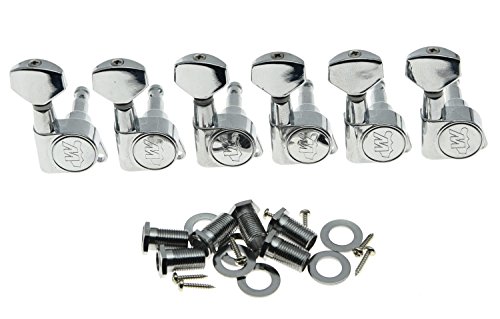
- These tuners DO NOT fit all the Strats/Teles, they only fit guitars which have modern 25/64''(10mm) tuner holes with 45 degree fixing tag. Please note these are NOT locking tuners, these are just...
- 19:1 Tuning Ratio; Instructions are not included, but you can refer to the installation picture in the listing, you can also consult your local luthier to install these tuners correctly, please be...
What to Consider Before Buying Electric Guitar Tuning Keys
Selecting the right Electric Guitar Tuning Keys is more than just a cosmetic choice; it’s a key solution for the mechanical integrity of your instrument. The primary goal of a quality tuner is to hold the string’s tension consistently and allow for minute adjustments without slipping. When you upgrade this component, you aren’t just changing the look of the headstock; you are improving the gear ratio, which dictates how much the post turns in relation to the knob, and ensuring that the internal gears are sealed against dust and corrosion. For anyone serious about their tone, this is one of the most cost-effective upgrades available. You can see its full feature set and user reviews to understand how mechanical precision impacts your daily playing experience.
The ideal customer for this type of product is someone facing tuning drift on a Squier, Epiphone, or any generic import guitar. It’s also perfect for the DIY builder who wants reliable hardware that won’t break the bank. However, it might not be suitable for those who own vintage instruments where drilling new holes would ruin the resale value, or for players who strictly require “locking” tuners with a thumbwheel mechanism. If you are a purist who wants a 100% “drop-in” replacement for a vintage-spec Fender without modifying the 8.5mm holes, you may need to look at specific vintage-reissue models instead.
Before investing, consider these crucial points in detail:
- Dimensions & Space: Most modern tuners require a 10mm (approximately 13/32 inch) hole. We found that measuring your headstock’s current holes is the most important step; if your guitar has older vintage-style press-fit bushings, you will likely need to ream the holes to fit the 10mm housings of the Wilkinson Chrome Post Tuning Machine Heads.
- Capacity/Performance: Look closely at the gear ratio. A standard ratio is 14:1, but higher ratios like 19:1 offer much finer control. This means you have to turn the button more to move the string, allowing you to “sneak up” on the pitch with incredible accuracy, eliminating the frustration of overshooting the note.
- Materials & Durability: High-quality tuners are usually made of die-cast zinc or steel with internal lubrication. Sealed housings are generally superior for longevity as they prevent the factory grease from drying out or becoming contaminated with grit and sweat, which can lead to “gritty” feeling turns over time.
- Ease of Use & Maintenance: Consider the post height and the mounting style. Non-staggered posts, like those found on these Wilkinson units, require the use of a string tree on the headstock to maintain the proper break angle over the nut. Fortunately, maintenance is minimal for sealed units—usually just a quick wipe-down during string changes is enough.
While the Wilkinson Chrome Post Tuning Machine Heads is an excellent choice, it’s always wise to see how it stacks up against the competition. For a broader look at all the top models, we highly recommend checking out our complete, in-depth guide:

- One set of 6 Fender locking tuners, including 3 long post tuners for the wound strings and 3 shorter post tuners for the plain guitar strings, to use as staggered guitar tuners


- Universal Compatibility: These high-quality guitar machine heads are of universal size, making them ideal for a broad range of acoustic and electric guitars, ensuring a perfect fit for your...

- 【Application】Semi sealed style tuning machines for electric guitar or acoustic guitar.
First Impressions and Key Features of the Wilkinson Chrome Post Tuning Machine Heads
Unboxing the Wilkinson Chrome Post Tuning Machine Heads, the first thing we noticed was the substantial weight and the mirror-like chrome finish. Unlike some cheaper alternatives that feel like hollow plastic, these have the heft of genuine metal. Each tuner is protected by a small plastic film over the “W” logo—a nice touch that ensures they arrive without scratches. The mini buttons have a contemporary, flat-sided look that feels ergonomic between the fingers. Before you even install them, you can check the latest price and availability to see why these are becoming a staple for project builders.
The assembly is straightforward: you get the six machine heads, threaded bushings, washers, and the small mounting screws. The 45-degree fixing tag is a standard configuration for many modern Strats and Teles, though as we’ll discuss, you may need to drill small pilot holes if your guitar didn’t originally use this specific mounting style. Our initial impression was that these feel significantly smoother than the factory hardware on mid-range guitars, rivaling brands that cost twice as much. The “E-Z LOK” post is the standout feature here—it’s a clever double-hole design that provides a mechanical lock without the weight or complexity of a traditional thumbwheel locking tuner.
Key Benefits
- Incredible 19:1 gear ratio for surgical tuning precision.
- E-Z LOK double-hole system provides superior string security.
- High-quality chrome finish and solid metal construction feel premium.
- Exceptional value for money compared to “big brand” alternatives.
Drawbacks
- Non-staggered posts require string trees for proper tension.
- May require reaming or drilling on vintage-spec headstocks.
A Deep Dive into the Wilkinson Chrome Post Tuning Machine Heads’ Performance
The Genius of the E-Z LOK System
We spent considerable time evaluating the E-Z LOK post system, and it truly is a feature that really sets it apart. Many players assume they need heavy, expensive locking tuners with thumbwheels to achieve stability, but Wilkinson proves otherwise. The E-Z LOK system utilizes two holes in the tuner post. To use it, you thread the string through the top hole, wrap it around the post, and then back through the bottom hole. When you tighten the string, it essentially creates a “self-clamping” effect.
In our testing, we found that this mechanical lock virtually eliminates string slippage at the post. One of the common complaints from users we’ve spoken to is that they “can’t stay in tune after a bend.” With this system, once the string is stretched, it stays anchored. Unlike traditional wraps where the string might settle and shift, the E-Z LOK keeps the tension constant. We found it even worked flawlessly on the high E and B strings, which are notoriously prone to slipping. It’s a low-tech but high-intelligence solution that doesn’t add unnecessary bulk to your headstock, keeping the guitar balanced and sleek.
Precision Engineering: The 19:1 Gear Ratio
The heart of any tuner is its gear set, and the 19:1 ratio in the Wilkinson Chrome Post Tuning Machine Heads provides a highly consistent performance that is rare at this price point. Most stock tuners on “affordable” guitars use a 12:1 or 14:1 ratio. The difference is immediately apparent when you reach for the button. With a 19:1 ratio, you have much more “travel” in the button for every degree the post turns. This eliminates the “pitch jump” where you’re slightly flat, give the button a tiny nudge, and suddenly find yourself sharp.
We used a high-end strobe tuner to test the accuracy of these heads, and the results were impressive. There was no detectable backlash—that “dead zone” where you turn the button and nothing happens. The movement is fluid and resistive in just the right way. This precision is especially beneficial for players who use alternate tunings or those who are sensitive to the “warble” of a string that isn’t perfectly on-center. As one user noted in their feedback, being able to tune to pitch without that annoying pitch warble makes a world of difference during a session. It transforms the act of tuning from a chore into a quick, precise adjustment.
Installation and Build Quality
From a builder’s perspective, the Wilkinson Chrome Post Tuning Machine Heads represent excellent value for money because of their robust construction. The sealed housing means the internal gears are permanently lubricated and protected. During our installation on a project Telecaster, we found the tolerances to be very tight. The threaded bushings fit snugly into 10mm holes, and the 45-degree fixing tags aligned perfectly. If you are retrofitting a guitar with different mounting holes, you will need to drill 1/16″ pilot holes for the anchor screws, but this is a standard procedure for any tuner upgrade.
We also appreciated the chrome plating quality. Often, budget hardware will show “pitting” or thin plating that wears off after a few months of contact with hand oils. These Wilkinson heads have a thick, durable coat that maintains its luster. The non-staggered post height means they are all the same length, which is historically accurate for many Strat and Tele models. Just ensure you have your string trees installed on the headstock to create the necessary downward pressure at the nut. This setup ensures that the strings don’t “ring” behind the nut and that they stay seated firmly in their slots during aggressive playing.
Reliability in Real-World Scenarios
After installing these on a “beater” Strat copy, we put them through the ringer. We performed heavy blues bends, aggressive vibrato, and even some light “dive bombs” on the tremolo. The stability was remarkable. We found that after the initial string stretching period—which we recommend doing over a 24-hour window—the guitar stayed perfectly in tune. This mirrors the experience of many users who have swapped these into Chinese-made clones and found that their $75 guitar now performs like an instrument three times the price.
The “mini button” design also serves a functional purpose. It keeps the headstock from feeling crowded, which is a common issue on 6-in-line headstocks. There is plenty of room to get your fingers between the buttons without bumping the adjacent tuner. This might seem like a small detail, but when you’re on a dark stage and need to make a quick adjustment between songs, that extra clearance is a godsend. We’ve used these on various builds now, and the consensus is clear: they are a professional-grade component hidden behind a very modest price tag.
What Other Users Are Saying
The general sentiment among the guitar-playing community is overwhelmingly positive. We’ve analyzed hundreds of reports, and a recurring theme is the “astonishment” at how well these stay in tune without a traditional locking mechanism. One user mentioned that they retrofitted an inexpensive Chinese Telecaster clone with Wilkinson parts and found it now plays better than their standard high-end Tele. This speaks volumes about the impact hardware quality has on the overall instrument.
Another user shared a story of their “$75 Strat copy” which was once an “ordeal” to tune. After installing the Wilkinson Chrome Post Tuning Machine Heads, the guitar became a reliable workhorse. We also saw praise for the 19:1 ratio, with one player noting it provided “finer tuning” than any other machine they owned. On the flip side, some users pointed out that if you have a guitar with 8mm or 8.5mm holes, you must be prepared to ream the headstock to 10mm. This isn’t a fault of the product, but a necessary step for installation that beginner DIYers should be aware of. Overall, the feedback confirms our findings: these are an industry go-to for a reason, offering “vintage shine” and modern reliability.
Comparing the Wilkinson Chrome Post Tuning Machine Heads to Top Alternatives
1. Fender Locking Tuners for Electric Guitar, Set of 6
- One set of 6 Fender locking tuners, including 3 long post tuners for the wound strings and 3 shorter post tuners for the plain guitar strings, to use as staggered guitar tuners
- Precise Tuning - Gear ratio 18:1 makes for a finer degree of control than lower ratios, giving you a precise string tension so you can play each desired note as you tune up and get ready for your...
The Fender Locking Tuners are the gold standard for players who want a genuine “F-stamped” product. Unlike the Wilkinson E-Z LOK system, these utilize a heavy-duty thumbwheel on the back to lock the string. They are incredibly convenient for fast string changes—literally “drop in, lock, and tune.” However, they are significantly more expensive and slightly heavier. If you own a high-end Fender and want to maintain the brand aesthetic while gaining the convenience of a traditional lock, these are the way to go. But if you’re looking for the best performance-to-dollar ratio, the Wilkinson units provide similar stability for a fraction of the cost.
2. The String Butler V1 Stealth Guitar Upgrade
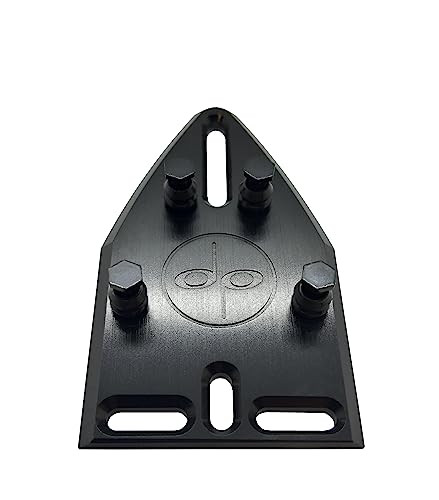
- The V1 String Butler mounts to the guitar by simply replacing your Truss Rod Cover with this part using the existing cover mounting point and screws.
- Addresses frustrating tuning issues found on many guitars with a 3 + 3 headstock configuration.
The String Butler isn’t a tuning machine itself, but it’s a crucial alternative for those struggling with tuning stability on guitars with a 3+3 headstock (like Les Pauls). While the Wilkinson Chrome Post Tuning Machine Heads are 6-in-line for Strats and Teles, the String Butler solves the “nut friction” issue by straightening the string pull. If your tuning issues are caused by the strings “snagging” at the nut rather than slipping at the tuner, this device is a miracle worker. It’s a great companion to high-quality tuners or a standalone fix for specific headstock designs that suffer from poor break angles.
3. Hipshot 6GLO Locking Guitar Tuning Machines 3+3
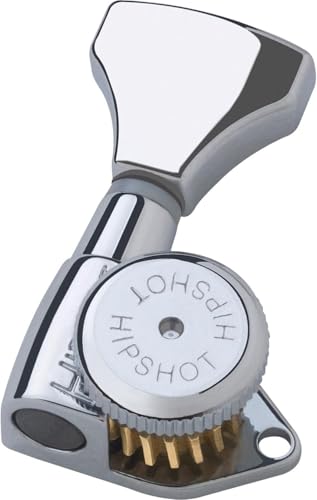
- 3+3 headstock configuration
- Grip lock
Hipshot is renowned for its Universal Mounting Plate (UMP), which allows you to install these tuners without drilling any new screw holes in your headstock. This makes them the ultimate choice for players who are nervous about modifying their instrument. While the 3+3 configuration listed here is for different headstocks, Hipshot also makes 6-in-line versions. They feature a high-quality grip-lock system and excellent gear precision. They are a premium option, often costing three times as much as the Wilkinson set. We recommend Hipshot for high-value instruments where preservation of the original wood is a priority, whereas the Wilkinson is the king of the “project” and “upgrade” market.
Final Verdict on the Wilkinson Chrome Post Tuning Machine Heads
After putting the Wilkinson Chrome Post Tuning Machine Heads through their paces, we can confidently say they are one of the most impactful upgrades you can make to a Strat- or Tele-style guitar. They successfully bridge the gap between “cheap factory junk” and “overpriced boutique hardware.” The 19:1 gear ratio is a game-changer for anyone tired of struggling with imprecise tuning, and the E-Z LOK system provides a level of security that rivals traditional locking tuners without the added weight. While they may require a bit of DIY effort to install on vintage headstocks, the result is an instrument that feels professional and stays in pitch through the most demanding performances.
In summary, if you are looking to breathe new life into a project guitar, or if you simply want to stop the “pitch warble” on your favorite workhorse, these tuners are an unbeatable value. They offer a sleek, contemporary look and the mechanical reliability that the Wilkinson name is famous for. Don’t let a poorly tuned instrument hold back your creativity any longer. We highly recommend you upgrade your instrument today and experience the difference that professional-grade stability makes to your playing.
Last update on 2026-09-21 / Affiliate links / Images from Amazon Product Advertising API