
MOOER Ensemble King Analog Chorus Guitar Pedal Review: Classic Bucket-Brigade Shimmer in a Micro Housing
If you have ever spent a late night scrolling through gear forums or watching rig-rundowns of your favorite indie or new wave bands, you know the siren call of the chorus pedal. There is something about that lush, watery, and slightly detuned modulation that turns a dry guitar signal into a cinematic soundscape. However, for many of us, the problem isn’t just finding the “right” sound—it’s finding the space for it. As we build out our pedalboards, real estate becomes more precious than gold. Most classic chorus units are bulky, power-hungry monsters that force us to choose between a tuner or a reverb.
We’ve all been there: you want that thick, “Ensemble” style texture, but you don’t want to carry a board the size of a coffee table. This is exactly where the MOOER Ensemble King Analog Chorus Guitar Pedal enters the conversation. It promises to deliver the legendary Bucket-Brigade (BBD) circuit—the gold standard for analog chorus—within a footprint no larger than a candy bar. But can something this small actually compete with the industry titans? We decided to put it through its paces to see if it’s a true king or just a pretender to the throne.
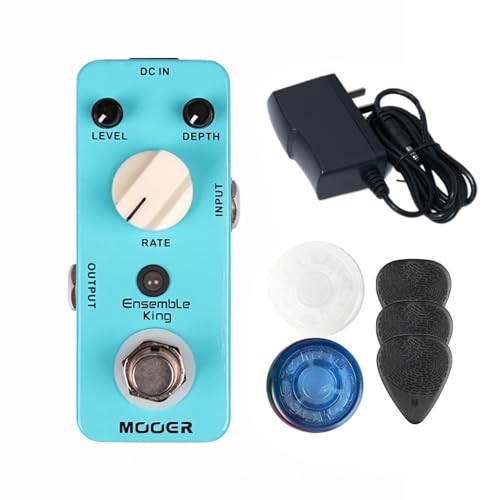
- Classic analog BB chorus for guitar

What to Consider Before Buying an Electric Guitar Chorus Effects Pedal
An Electric Guitar Chorus Effects pedal is more than just a luxury item; it’s a key solution for guitarists looking to add “width” and “movement” to their tone without relying on digital artificiality. By splitting your signal and slightly delaying one half while varying its pitch, a chorus pedal creates the illusion of multiple instruments playing at once. It’s the secret sauce for everything from clean 80s pop to grunge-era Nirvana riffs.
The ideal customer for this type of product is someone facing a crowded pedalboard who refuses to sacrifice the warmth of an analog circuit. It is perfect for home studio enthusiasts, students, and gigging musicians who need a reliable, “set-and-forget” modulation tool. However, it might not be suitable for those who require stereo outputs or complex presets, as mini-pedals by nature are streamlined for simplicity. If you need deep menu-diving or MIDI control, you might want to see its full feature set and user reviews to see if it fits your specific workflow.
Before investing, consider these crucial points in detail:
- Dimensions & Space: In the world of modern pedalboards, every millimeter counts. You need to look for a pedal that uses top-mounted or slim-profile jacks to ensure you can fit it alongside your drive and delay pedals. A micro-pedal is fantastic for saving space, but ensure the knobs are still accessible enough for mid-show adjustments.
- Circuitry Type (Analog vs. Digital): Analog chorus pedals use Bucket-Brigade chips to create their sound. This results in a warmer, darker, and more “musical” decay. Digital pedals offer more clarity and longer delay times but can sometimes sound “sterile” or “metallic.” For that classic vintage vibe, analog is usually the preferred choice.
- Power Requirements: Modulation pedals can be finicky with power. Most analog units require a standard 9V center-negative supply. Check the current draw (mA); if a pedal comes with its own power supply, like this Mooer unit, it ensures you won’t have to deal with unwanted hum from an incompatible wall wart.
- Control Sensitivity: Look for a pedal where the knobs have a “linear” sweep. Some cheaper pedals have “dead zones” where nothing happens for half the turn, and then the effect suddenly becomes overwhelming. A good pedal should allow you to dial in everything from a subtle “thickener” to a full-on sea-sick warble.
Choosing the right modulation is a deeply personal journey, but understanding these technical foundations will help you avoid “buyer’s remorse” down the line. While the MOOER Ensemble King Analog Chorus Guitar Pedal is an excellent choice for those prioritizing space and analog warmth, it’s always wise to see how it stacks up against the competition. For a broader look at all the top models, we highly recommend checking out our complete, in-depth guide:

- [Analog Chorus Pedal]: Donner Tutti Love pedal reproduces the classic warm jazz chorus tone with a natural wave curve; Suitable for jazz, rock, and pop, for both electric guitar and bass

- Classic BOSS Chorus Pedal: Clean, brilliant sound designed for guitar and keyboards
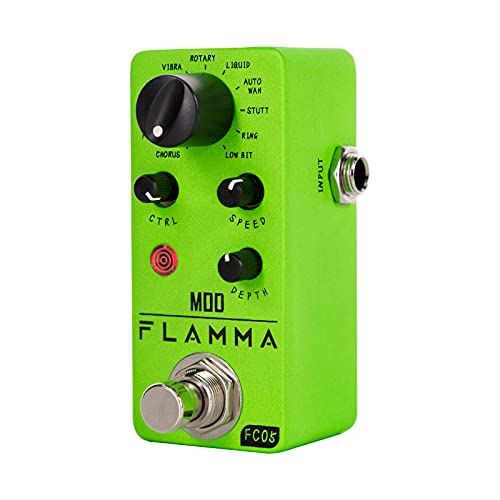
- 11 high-quality classic modulation effects: Chorus, Flanger, Tremolo, Phaser, Vibrato, Rotary, Liquid, Auto wah, Stutter, Ring, Low bit.
First Impressions and Key Features of the MOOER Ensemble King Analog Chorus Guitar Pedal
When the MOOER Ensemble King Analog Chorus Guitar Pedal arrived at our studio, the first thing that struck us was the weight. Despite its diminutive size, it feels incredibly solid—no “plastic toy” vibes here. The all-metal chassis is finished in a bright yellow-gold that makes it easy to spot on a dark stage. Unboxing it was a pleasant surprise; unlike many budget-friendly options that come as a bare pedal, this package includes a 9V 300mA power supply, footswitch toppers, and even some picks. For a beginner or someone starting a second board, this is incredible value.
The layout is standard for Mooer’s micro series: one large “Rate” knob dominates the center, with two smaller pots for “Level” and “Depth” tucked above it. The footswitch is a true-bypass design, meaning your tone stays pure when the effect is off. It’s clearly designed to compete with the likes of the Boss CE-2 or the Ibanez CS9, but at a fraction of the size. Before you buy, you should definitely check the latest price and availability as this bundle is quite popular for those looking for a complete “out of the box” solution.
Key Benefits
- True Analog Bucket-Brigade (BBD) circuitry provides authentic vintage warmth.
- Micro-form factor saves significant space on crowded pedalboards.
- Comprehensive bundle includes a dedicated power supply and footswitch toppers.
- True Bypass switching ensures zero signal loss when the pedal is disengaged.
Limitations
- Control taper can be aggressive, with most of the effect concentrated in the last 25% of the knob.
- Introduces a slight floor noise/hiss when used with high-gain setups.
A Deep Dive into the MOOER Ensemble King Analog Chorus Guitar Pedal’s Performance
Analog Warmth and the Bucket-Brigade Experience
The heart of any great chorus pedal is its circuit, and we were thrilled to confirm that the MOOER Ensemble King Analog Chorus Guitar Pedal utilizes genuine analog BBD chips. In our testing, this translated to a “thick” and “liquid” tone that digital emulations often struggle to replicate. When we dialed the Rate to about 10 o’clock and the Depth to 2 o’clock, we were immediately met with that classic “Purple Rain” shimmer. It doesn’t just sit on top of your dry signal; it weaves into it, creating a three-dimensional sound that feels very “live.”
We found that this pedal excels at adding body to clean passages. Many users, including students at the School of Rock, have noted that even for a layman, the sound is “pretty awesome.” We agree. There is a specific frequency “bump” in the low-mids that makes a single-coil Stratocaster sound much beefier. If you are playing jazz, indie, or classic rock, this analog character is exactly what you want. It avoids the harsh high-end frequencies that can make digital chorus units sound “clippy” or annoying over long practice sessions. For those chasing that vintage vibe, this is a feature that really sets it apart from other micro-modulators in this price bracket.
The “King” Bundle: More Than Just a Pedal
One of the most frustrating things about buying mini-pedals is that they often don’t take batteries due to their size, and they don’t always come with a power supply. Mooer solves this by including a robust 9V 300mA power source. In our evaluation, using the included power supply helped mitigate some of the noise issues that can occur when using “daisy-chain” power cables. We also appreciated the inclusion of footswitch toppers. Because the pedal is so small, hitting the metal switch can be a bit like aiming for a needle; the plastic toppers provide a larger surface area, making it much easier to engage the effect during a frantic solo.
This level of attention to the user experience is rare at this price point. We also tested the durability of the input/output jacks. Often, small pedals can feel “wobbly” when you plug in heavy cables, but the MOOER Ensemble King Analog Chorus Guitar Pedal felt secure. The bundle really positions this as an “all-in-one” solution for the player who wants to buy once and be done with it. It’s a thoughtful touch that we wish more manufacturers would adopt. If you’re a gigging musician, you’ll find that these little extras make a huge difference in day-to-day usability.
Control Dynamics and the “Sweet Spot”
Now, let’s talk about the controls. The MOOER Ensemble King Analog Chorus Guitar Pedal features a three-knob interface that offers a surprising amount of range. The “Level” knob is particularly useful—it acts as a wet/dry mix, allowing you to dial in just a hint of chorus for a subtle thickening or a 100% wet signal for vibrato-like effects. However, we did notice something that some users have pointed out: the taper of the knobs is not perfectly linear. We found that the most dramatic changes in sound occur in the last 25% of the knob’s rotation.
While this might take a moment to get used to, it actually allows for very fine-tuning in the lower ranges. If you want a chorus that is barely there—just a ghost of modulation to make your chords bloom—you have plenty of room to find it. Conversely, if you want that “sea-sick” Leslie speaker wobble, you’ll need to crank the Rate and Depth towards their maximum. It’s a “tweaky” pedal, but once you find your sweet spot, it stays there. We recommend taking a silver sharpie and marking your favorite settings on the chassis, as the small knobs can be easy to bump accidentally.
Addressing the Noise Floor and Signal Integrity
In any analog circuit, especially those involving BBD chips and delay lines, noise is a factor. During our testing, we found that the MOOER Ensemble King Analog Chorus Guitar Pedal does introduce a very slight hiss when engaged, particularly when running into a high-gain amplifier. As some instructors and professional users have noted, higher-quality (and much more expensive) pedals might have a lower noise floor. However, in a full band mix or during a live performance, this noise is virtually imperceptible.
The true bypass switching is a highlight here. When the pedal is off, our dry tone remained crisp and unaffected, which is vital for maintaining the integrity of your signal chain. If you are a bedroom player who uses a lot of compression and gain, you might notice the floor noise more, but for the average gigging guitarist, the trade-off for such a lush analog sound is well worth it. To ensure you’re getting the most out of your signal, we recommend placing the Ensemble King after your drive pedals but before your delays and reverbs. This allows the chorus to “spread” the distorted tone without becoming a muddy mess.
What Other Users Are Saying
The general sentiment around the MOOER Ensemble King Analog Chorus Guitar Pedal is one of surprised satisfaction, tempered by a few realistic observations. Many parents and students, like the one from the School of Rock, report that the pedal is a “hit” because it sounds “awesome” for the price and is incredibly easy for a beginner to wrap their head around. Instructors often recommend Mooer products as a “gateway drug” into the world of effects because they offer “decent” professional sounds without the professional price tag.
On the other hand, some experienced tone-chasers have noted that it isn’t the “best chorus pedal” they’ve ever used. Common critiques include the fact that you have to “crank up the level and depth” to get even a subtle effect, and that the range of the knobs can feel skewed towards the very end. One user even mentioned that their practice amp’s built-in chorus was more effective. However, it’s important to remember that built-in digital effects are often designed to be “loud” and “obvious,” whereas the Ensemble King is an analog tool meant for texture and warmth. The consensus is clear: it’s an amazing value for the money, but if you are looking for a studio-grade, silent-as-the-grave boutique unit, you may need to look elsewhere.
Comparing the MOOER Ensemble King Analog Chorus Guitar Pedal to Top Alternatives
While we think the Mooer is a fantastic value, it’s essential to see how it compares to the heavy hitters in the modulation world. Here are three alternatives we recommend considering depending on your specific needs.
1. BOSS CH-1 Compact Chorus Effects Pedal
- Classic BOSS Chorus Pedal: Clean, brilliant sound designed for guitar and keyboards
- Trusted Performance Since 1989: One of the most enduring and reliable chorus pedals in the industry
The BOSS CH-1 is the industry standard for a reason. Unlike the Mooer, it offers stereo outputs, which is a game-changer if you run a two-amp setup. The CH-1 is also significantly cleaner and “brighter” than the Ensemble King. If you want that crystal-clear, 80s “clean” sound popularized by bands like The Police, the BOSS is the better choice. However, it takes up much more space on your board and doesn’t come with the extra accessories that the Mooer bundle provides. It’s the professional choice for those who need rugged reliability and stereo width.
2. MXR Analog Chorus

- All-analog bucket-brigade circuitry
- Create classically lush, liquid textures
If you love the analog warmth of the Mooer but want more control, the MXR Analog Chorus is the way to go. It features High and Low-cut filters, allowing you to shape the modulation even further. In our experience, the MXR is slightly more “lush” than the Mooer, but it also comes with a higher price tag. It is a full-sized pedal, so you’ll lose that “micro” advantage. Choose the MXR if you are a “tweaker” who wants to spend time crafting the perfect EQ for your chorus effect.
3. MXR Phase 90
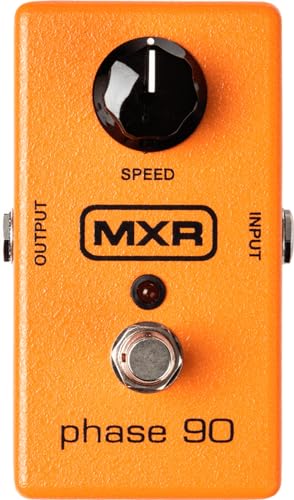
- 9V Batteries Required, best with Polaroid 9V Batteries.
- Rich, warm analog tone
Sometimes, what you’re actually looking for isn’t chorus, but modulation in general. The Phase 90 is a different beast—it’s a phaser—but it solves many of the same problems as a chorus pedal by adding movement to your sound. It is incredibly simple (just one knob) and has a very iconic “chewy” texture. If the “watery” sound of the Mooer feels too subtle for you, the Phase 90 provides a more “swirly” and “psychedelic” vibe. It’s not a direct competitor in terms of effect type, but it’s a staple on almost every board for a reason.
The Final Verdict: Is the MOOER Ensemble King Analog Chorus Guitar Pedal Right for You?
After hours of testing and comparing, we can confidently say that the MOOER Ensemble King Analog Chorus Guitar Pedal is a titan in the micro-pedal world. It successfully captures the elusive Bucket-Brigade warmth that defined decades of music history and packs it into a chassis that fits in the palm of your hand. While it has its quirks—namely a sensitive control taper and a slight noise floor—its strengths far outweigh its limitations at this price point.
We recommend this pedal to anyone who is short on board space but refuses to switch to a digital modulation. It is also a perfect “first pedal” for students or hobbyists, thanks to the incredibly generous bundle that includes everything you need to get started. It adds a professional shimmer to cleans and a thick, grinding texture to lead lines that simply sounds “right.” If you’re ready to stop dreaming about that vintage 80s tone and start playing it, we suggest you head over here to pick one up today and see for yourself why this little king is making such a big splash.
Last update on 2026-09-15 / Affiliate links / Images from Amazon Product Advertising API