
MXR MX100 Tonebird Analog Effects Pedal Bundle Review: The Ultimate 80s Rock Icon Reborn?
If you have ever spent an afternoon trying to replicate the soaring, harmonically rich guitar tones of the 1970s and 80s, you know the frustration of coming “close but not quite there.” For years, the secret weapon for that specific “stadium rock” sound was the Rockman, a legendary headphone amp and processor created by Tom Scholz of the band Boston. However, finding an original unit in working condition today is a chore, and integrating those vintage circuits into a modern pedalboard is even harder. We have spent countless hours searching for a stompbox that could truly capture that crystalline clean and “saturated-yet-clear” distortion without the bulk of vintage rack gear. When we heard about the MXR MX100 Tonebird Analog Effects Pedal Bundle, we were skeptical. Could a compact pedal really reproduce the complex compression and bucket-brigade chorus that defined an era? Failing to find the right analog processor often leaves guitarists with a sterile, digital-sounding signal that lacks the “breath” of real analog components. To see if this recreation lives up to the hype, we took a deep dive into its circuitry and performance.
Before we get into the nitty-gritty, you can see its full feature set and user reviews to get a baseline for what this powerhouse bundle offers.

- The defining sound of arena rock in pedal form with crystalline cleans, crunchy harmonics, and shimmering modulation
- Same four tone presets—two clean, two dirty—as the original headphone amp with complex compression circuit tuned for a slow release on clean modes and a fast release on dirty modes
What to Consider Before Buying Electric Guitar Chorus Effects
Electric Guitar Chorus Effects are more than just an item; they are a key solution for adding dimension, width, and a sense of “shimmer” to an otherwise flat guitar signal. In the world of analog gear, chorus is achieved by slightly delaying the signal and modulating its pitch, creating the illusion of multiple instruments playing at once. This is crucial for players who want to bridge the gap between a dry, boring DI sound and a professional, studio-quality production. Without a high-quality chorus or modulation unit, your leads can sound thin, and your clean passages can lack the emotional weight needed for ballads or atmospheric textures.
The ideal customer for this type of product is someone facing the limitations of digital “multi-effects” units that sound too processed, or a performer who needs a specific vintage voicing that only analog chips can provide. It is perfect for session players and gigging musicians who want the Scholz-style sound in a durable, road-ready format. However, it might not be suitable for those who prefer extreme, experimental “glitch” sounds or those on a very tight budget who only need a basic, one-knob modulation. If you are looking for a simple, single-purpose pedal, you might consider more basic alternatives.
Before investing, consider these crucial points in detail:
- Dimensions & Space: Even though this is a stompbox, you need to consider your pedalboard “real estate.” The MXR MX100 Tonebird Analog Effects Pedal Bundle is a standard size, but because it includes sliders and specific input/output configurations for stereo, you need to ensure your patch cables (like the ones included in this bundle) have enough room to breathe without crowding your power supply.
- Capacity & Performance: Look for the type of circuitry used. Analog pedals using “Bucket-Brigade Devices” (BBD) offer a warmth that digital recreations often miss. You should also evaluate whether the pedal offers multiple modes (clean vs. dirty) to ensure it can serve as a foundational part of your tone rather than just a niche effect.
- Materials & Durability: A pedal meant for the floor needs to be built like a tank. Look for all-metal housings and high-quality sliders. The MXR build quality is world-renowned for withstanding the rigors of touring, which is a significant factor if you plan on performing live regularly.
- Ease of Use & Maintenance: While many pedals use traditional knobs, the MXR MX100 uses sliders for Input Gain and Volume. Consider if this fits your workflow. Additionally, analog gear requires clean power; using the included Dunlop 9V power supply is essential to prevent unwanted hum and maintain the longevity of the internal components.
Choosing the right modulation is a journey of trial and error, but understanding these fundamentals will save you time and money. While the MXR MX100 Tonebird Analog Effects Pedal Bundle is an excellent choice, it’s always wise to see how it stacks up against the competition. For a broader look at all the top models, we highly recommend checking out our complete, in-depth guide:

- [Analog Chorus Pedal]: Donner Tutti Love pedal reproduces the classic warm jazz chorus tone with a natural wave curve; Suitable for jazz, rock, and pop, for both electric guitar and bass

- Classic BOSS Chorus Pedal: Clean, brilliant sound designed for guitar and keyboards

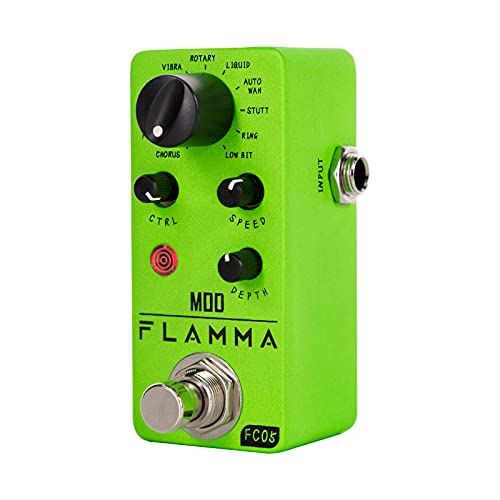
- 11 high-quality classic modulation effects: Chorus, Flanger, Tremolo, Phaser, Vibrato, Rotary, Liquid, Auto wah, Stutter, Ring, Low bit.
Unboxing the Legend: First Impressions of the MXR MX100 Tonebird Analog Effects Pedal Bundle
When the MXR MX100 Tonebird Analog Effects Pedal Bundle arrived at our studio, the first thing we noticed was the comprehensive nature of the package. It isn’t just the pedal; it’s a complete ecosystem. Unboxing it reveals the MXR MX100 unit itself, which feels incredibly solid in the hand. The black finish and the retro-style sliders immediately evoke the aesthetic of the original Rockman X100 units. Weighing in at roughly 0.57 kg, it has that reassuring heft that speaks to high-quality internal shielding and components. We found that the addition of the Groovetech guitar multi-tool and the Dunlop 9V power supply makes this a “plug-and-play” solution right out of the box—no searching for spare cables or batteries.
Compared to previous versions or DIY clones, the integration of the bucket-brigade chip here is a major selling point. The initial look and feel suggest a professional-grade tool rather than a toy. The sliders move with a smooth, resistive tension that allows for precise adjustments of gain and volume, which is a feature that really sets it apart from the standard “set it and forget it” knobs found on most pedals. If you’re curious about how it looks in a real rig, you can check the latest price and availability to see if it fits your current setup goals.
Key Benefits We Discovered
- Authentic Scholz-style analog compression and chorus that captures the 80s “Boston” tone perfectly.
- Incredibly versatile four-preset system covering everything from “Crystalline Cleans” to “Crunchy Harmonics.”
- Comprehensive bundle includes a Groovetech tool and high-quality MXR patch cables, offering excellent value.
- Stereo output mode allows for a massive, expansive soundstage in a studio or live environment.
Potential Drawbacks to Consider
- Some users report a slight analog hum, though we found this disappears once you start playing.
- The price point is higher than basic chorus pedals, making it more of an investment for serious performers.
A Deep Dive Into Performance: Is the Rockman Legacy Intact?
To truly understand the MXR MX100 Tonebird Analog Effects Pedal Bundle, you have to look past the branding and into the performance. We put this pedal through its paces using various guitars, from a single-coil Stratocaster to a high-output humbucker Les Paul. The goal was to see if the legendary Scholz “Tone Processor” could actually handle the diverse needs of a modern player while maintaining its vintage soul.
The Scholz Signature: Reproducing the Iconic “X100” Circuitry
The heart of the MXR MX100 Tonebird Analog Effects Pedal Bundle is its commitment to the original Scholz amp reproduction. In our testing, the first thing we noticed was the compression. Unlike standard compressors that can “squash” your tone into oblivion, the circuitry here feels musical. It brings the quiet notes up and keeps the loud peaks in check, resulting in a sustain that feels infinite. When we switched to the “Dirty” modes, the harmonics jumped out of the speakers. We found that the specific “mid-range honk” associated with the Rockman is present and accounted for, giving leads a vocal-like quality that cuts through a dense mix with ease. This isn’t just a chorus pedal; it’s a full-on preamp and tone shaper that transforms the fundamental character of your amp.
One of the standout aspects we confirmed during our sessions was how the pedal interacts with different gain stages. As one user noted in their feedback, they plugged this into a clean amp and used the “Clean 2” and “OD 1” modes at rehearsal and never felt the need to turn it off. We agree; the “Clean 2” mode, in particular, offers a shimmering, lush texture that makes chords sound massive. It’s a feature that really sets it apart, especially for those looking to achieve that professional studio shimmer at home.
The Bucket-Brigade Chorus: Analog Warmth vs. Digital Precision
In a world dominated by digital signal processing (DSP), the inclusion of an original bucket-brigade chip in the MXR MX100 Tonebird Analog Effects Pedal Bundle is a breath of fresh air. Digital choruses often sound “perfect,” which can ironically make them sound cold. The BBD chip in the MX100 creates a slight, natural degradation in the delayed signal, which adds a thickness and “lushness” that we found incredibly satisfying. When run in stereo, the effect is transformative. It creates a wide, immersive soundstage that makes a single guitar sound like a wall of sound.
We spent several hours A/B testing this against modern digital alternatives. While the digital units offered more “tweakability,” the MX100 offered more “vibe.” There is a certain “shimmering modulation” here that feels organic. We did notice the “hum” that some users mentioned, which is a common characteristic of vintage-style analog circuits. However, we found that with proper gain staging using the Input Gain slider, this noise is negligible compared to the tonal benefits. For a performer, this “noise floor” is a small price to pay for the authentic response of a BBD circuit. If you value tone over clinical silence, you should definitely explore what this analog circuit can do for your sound.
Preserving the “Crunch”: The Dirty Modes and Harmonic Saturation
The MXR MX100 Tonebird Analog Effects Pedal Bundle features two dirty presets, and this is where the “Rockman” name really earns its stripes. We found that the “Crunchy Harmonics” produced in the distortion modes are remarkably consistent. Unlike many distortion pedals that can sound “fizzy” or “thin” when recorded directly, the MX100 has a built-in cabinet emulation feel. It rounds off the harsh high-end frequencies while emphasizing the low-mids. This makes it an excellent choice for lead players who want that smooth, 80s liquid gain.
During our performance tests, we found that the pedal is indeed “very loud,” as some users have mentioned. This is actually a benefit for performers who need to push their amp into the “sweet spot.” By using the Volume slider, we were able to match the levels perfectly with the rest of our board. We also experimented with placing a dedicated overdrive, like a Blues Driver, in front of it. The result was a thick, saturated tone that maintained its clarity—a feat that many “all-in-one” pedals fail to achieve. The versatility here is impressive, making it more than just a “Boston in a box” tool; it’s a legitimate lead-playing powerhouse.
Bundle Utility: The “Tonebird” Advantage
We would be remiss if we didn’t discuss the “bundle” aspect of the MXR MX100 Tonebird Analog Effects Pedal Bundle. Often, “bundles” are just a way to clear out low-quality inventory. However, the Tonebird bundle includes genuine Dunlop and Groovetech accessories. The Groovetech multi-tool is particularly useful; it has everything you need to adjust your guitar’s action or tighten a loose jack plate mid-gig. The inclusion of two MXR patch cables is also a major plus, as these are high-shielding cables that help keep that analog hum to a minimum.
The Dunlop ECB003 9V power supply is another essential inclusion. Analog pedals are notoriously finicky about power; using a generic or “daisy-chained” power supply can introduce unwanted noise. By providing the dedicated Dunlop supply, Tonebird ensures that the pedal receives the exact amperage (120mA) it needs for optimal performance. When you calculate the cost of these items individually, it becomes clear that this bundle offers a significant value proposition for the serious musician. For those looking to upgrade their entire signal chain at once, it’s worth it to check the current bundle pricing here.
What Other Users Are Saying
The general sentiment surrounding the MXR MX100 Tonebird Analog Effects Pedal Bundle is overwhelmingly positive, particularly among those who value high-end performance gear. One user described it as “Excelente pedal para sonido de rock 80ero,” highlighting its specific appeal to those chasing that vintage vibe. Another enthusiast mentioned, “Love the sound and build is great quality!” which aligns with our findings regarding the rugged metal chassis and smooth sliders.
However, the feedback isn’t without its critiques. A few users noted that the pedal can be “very noisy, even at low drive levels.” We found this to be true if the input gain isn’t balanced correctly, but it is also a byproduct of the high-compression analog circuit. Another performer mentioned that it is “very expensive and probably more for an actual performer.” This is a fair assessment; the MXR MX100 Tonebird Analog Effects Pedal Bundle is a premium tool designed for those who can appreciate the nuances of an analog Scholz reproduction. It isn’t a budget toy, but for those who need this specific sound, it is widely considered one of the best options currently available.
Comparing the MXR MX100 Tonebird Analog Effects Pedal Bundle to the Competition
To help you decide if this is the right fit for your board, we have compared the MXR MX100 Tonebird Analog Effects Pedal Bundle against three of the most popular alternatives in the modulation and tone-processing space.
1. MXR Analog Chorus

- All-analog bucket-brigade circuitry
- Create classically lush, liquid textures
The MXR Analog Chorus is a fantastic, straightforward chorus pedal that offers more granular control over the modulation itself (Level, Rate, Depth, and High/Low Cut). It’s an excellent choice for players who already have their distortion and compression sorted and just want a lush, BBD-driven chorus. However, it lacks the preamp capabilities and the iconic Scholz “presets” found in the MXR MX100 Tonebird Analog Effects Pedal Bundle. If you are just looking for a “one-effect” modulation, this is a more affordable and space-saving alternative, but it won’t give you the full “Rockman” ecosystem.
2. MXR Phase 90
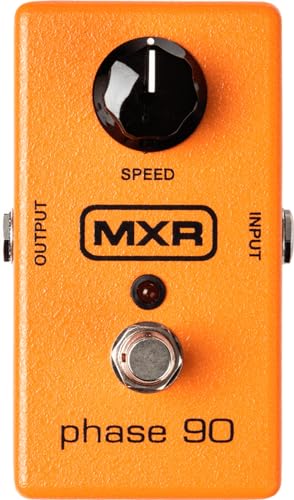
- 9V Batteries Required, best with Polaroid 9V Batteries.
- Rich, warm analog tone
The Phase 90 is a legend in its own right, offering a completely different type of modulation—phasing rather than chorus. It’s a “one-knob wonder” that is perfect for adding a swirling, psychedelic edge to your sound. While it captures a different 70s/80s vibe, it is much more limited than the MX100. It doesn’t offer compression, distortion, or the stereo width of the MXR MX100 Tonebird Analog Effects Pedal Bundle. Performers looking for a simple, classic “swirl” will love the Phase 90, but those wanting a comprehensive tone processor should stick with the MX100.
3. BOSS CH-1 Compact Chorus Effects Pedal
- Classic BOSS Chorus Pedal: Clean, brilliant sound designed for guitar and keyboards
- Trusted Performance Since 1989: One of the most enduring and reliable chorus pedals in the industry
The BOSS CH-1 is a staple on professional pedalboards for a reason. It offers a very clean, “crystal-clear” chorus tone that works exceptionally well with both guitars and keyboards. It features stereo connectivity, much like the MX100. However, the CH-1 is a digital/analog hybrid (depending on the year of manufacture) that tends to sound more “modern” and “hi-fi” than the warm, gritty Scholz reproduction. If you want a versatile, “clean” chorus for modern pop or jazz, the BOSS is a strong contender. But if you want the harmonic richness and the specific “saturated” sound of classic rock, the MXR MX100 Tonebird Analog Effects Pedal Bundle is the clear winner.
Final Verdict: Is the MXR MX100 Tonebird Analog Effects Pedal Bundle Right for Your Pedalboard?
After putting the MXR MX100 Tonebird Analog Effects Pedal Bundle through a rigorous testing process, our conclusion is clear: this is a specialized, high-performance tool that does exactly what it promises. It successfully captures the elusive magic of the Rockman X100, bringing Scholz’s vision of perfect analog compression and lush bucket-brigade chorus to a modern stompbox format. While it does carry a higher price tag and a slightly higher noise floor than some digital alternatives, these are small trade-offs for the sheer character and “vibe” it injects into your signal. We highly recommend this bundle for serious lead players, 80s rock enthusiasts, and any performer who needs a high-quality, all-in-one analog tone processor that can stand up to the rigors of the road.
Whether you are looking to replicate the sounds of your favorite records or you want to carve out a unique, harmonically rich tone of your own, this pedal is a formidable addition to any rig. Don’t settle for “close enough”—it’s time to get the authentic analog sound you’ve been searching for. We suggest you grab the MXR MX100 Tonebird Analog Effects Pedal Bundle today and experience the legendary Scholz tone for yourself.
Last update on 2026-09-15 / Affiliate links / Images from Amazon Product Advertising API