
Caline CP-66 Classic Guitar Flanger Effects Pedal Review: Boutique Analog Tones at a Budget-Friendly Price Point
As guitarists, we are all on an endless quest for “that sound.” Whether it’s the iconic jet-plane woosh found on early Van Halen records, the ethereal textures used by The Police, or the psychedelic sweeps of the 1970s, a flanger is a foundational tool in the modulation arsenal. However, finding a pedal that balances authentic analog warmth with reliability and affordability is a common frustration. I have spent years cycling through modulation pedals that either sounded too “digital” and sterile or cost more than my first amplifier. The complication of choosing a budget pedal often involves sacrificing build quality or dealing with an unbearable noise floor. When I first plugged into the Caline CP-66 Classic Guitar Flanger Effects Pedal, I wanted to see if a budget-friendly unit could truly replicate the lush, organic sweep of vintage bucket-brigade (BBD) circuits without the boutique price tag. Solving the modulation puzzle is crucial because a bad pedal doesn’t just sound weak—it sucks the life out of your entire signal chain.
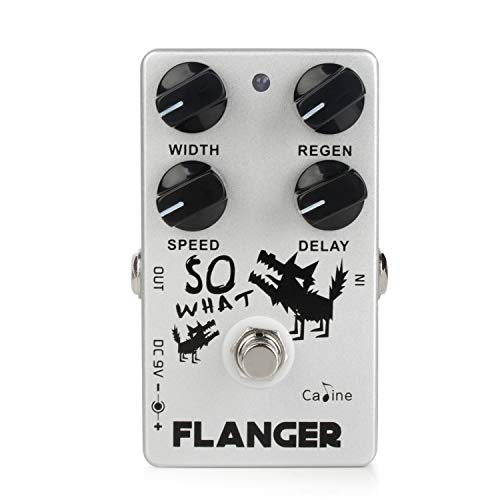
- BBD analog circuit. The four adjustment knobs (SPEED, REGEN, WIDTH and DELAY) allow you easy to shape your desire sound.
- Jet-plane effects, space effects, short delay, wave-like chorus and vibrato sounds.
What to Consider Before Investing in Electric Guitar Chorus and Flanger Effects
An Electric Guitar Chorus or Flanger effect is more than just an item; it’s a key solution for adding three-dimensionality and movement to an otherwise static guitar tone. These pedals work by splitting your signal, delaying one part slightly, and modulating that delay time. The result is a thickening of the sound that can range from a subtle shimmer to a chaotic, metallic swirl. Without these tools, a clean guitar signal can often feel “flat” in a mix, especially in three-piece bands where the guitar needs to occupy more sonic space. By introducing modulation, you create a sense of width and depth that draws the listener in.
The ideal customer for this type of product is someone facing a stale or thin tone who wants to experiment with classic rock, new wave, or shoegaze textures. It is perfect for the gigging musician who needs a reliable, metal-housed unit that won’t break the bank, or the home studio enthusiast looking for “that” specific analog flavor. Conversely, it might not be suitable for those who require ultra-modern, MIDI-controllable digital multi-effects or those who exclusively play high-gain metal where a subtle flanger might get lost in the saturation (though some metal players love it for lead boosts!). If you are looking to explore the full technical specifications of such a device, you’ll find that the balance of controls is everything.
Before investing, consider these crucial points in detail:
- Dimensions & Space: Pedalboard real estate is precious. You want a pedal that offers a standard footprint (around 4.4″ x 2.5″) so it fits comfortably alongside your overdrives and delays. A compact design ensures you don’t have to sacrifice another effect just to get your modulation fix.
- Circuitry & Performance: Look for “BBD” (Bucket Brigade Device) analog circuits. This technology is what gives classic pedals their “warmth” and “richness.” Digital emulations are getting better, but for many purists, nothing beats the organic decay and slight harmonic coloration of a true analog signal path.
- Materials & Durability: Since these pedals are meant to be stepped on, an aluminum alloy shell is non-negotiable. Plastic housings can crack under pressure, and weak foot switches are the first thing to fail during a live performance. Always check for a sturdy “True Bypass” switch to maintain your core tone when the effect is off.
- Control Versatility: A good flanger should offer at least four controls: Speed, Width (Depth), Regen (Feedback), and Delay. This allows you to transition from a subtle chorus-like shimmer to a full-on jet engine roar, making the pedal useful across multiple genres.
While the Caline CP-66 Classic Guitar Flanger Effects Pedal is an excellent choice for those seeking that vintage analog sweep, it’s always wise to see how it stacks up against the competition. For a broader look at all the top models, we highly recommend checking out our complete, in-depth guide:
Finding the Best Budget Modulation: Our Top 7 Picks for Chorus and Flanger Pedals Under $100

- [Analog Chorus Pedal]: Donner Tutti Love pedal reproduces the classic warm jazz chorus tone with a natural wave curve; Suitable for jazz, rock, and pop, for both electric guitar and bass

- Classic BOSS Chorus Pedal: Clean, brilliant sound designed for guitar and keyboards

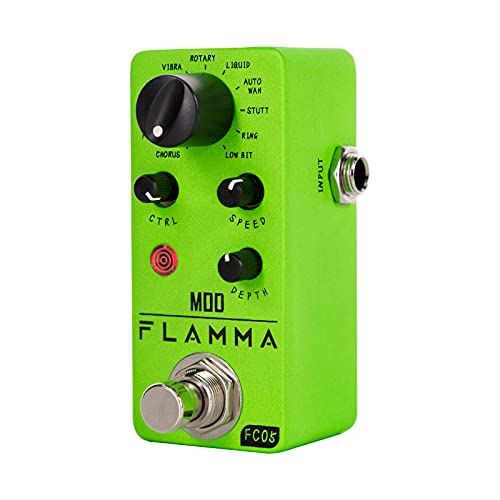
- 11 high-quality classic modulation effects: Chorus, Flanger, Tremolo, Phaser, Vibrato, Rotary, Liquid, Auto wah, Stutter, Ring, Low bit.
First Impressions: Unboxing the Caline CP-66 Classic Guitar Flanger Effects Pedal
When the Caline CP-66 Classic Guitar Flanger Effects Pedal arrived, the first thing I noticed was the weight. At 8.2 ounces and encased in a silver and black aluminum alloy shell, it feels significantly more substantial than other “budget” brands. The aesthetics are straightforward and professional, reminiscent of boutique pedals that cost three times as much. Out of the box, there is no assembly required; you simply plug in your 1/4-inch cables and a 9V power source (or battery) and you are ready to go. The knobs have a satisfying resistance to them—they don’t feel loose or “toy-like.”
The initial “plug and play” experience was impressive. Even with all the knobs at noon, the pedal produced a lush, musical sweep that immediately reminded me of the classic Ibanez FL-9. The LED indicator is bright enough to be seen on a dark stage, and the True Bypass switch engaged with a solid, mechanical click. Compared to market leaders like the MXR Micro Flanger, the Caline CP-66 Classic Guitar Flanger Effects Pedal offers significantly more control with its four-knob layout, allowing for a much wider palette of sounds. It’s a professional-looking piece of gear that feels like it can handle the rigors of the road. Before you buy, you might want to check the current availability and pricing to see just how much value is packed into this metal box.
Key Benefits
- Genuine BBD analog circuit provides a warm, rich, and “liquid” modulation tone.
- Four-knob control interface allows for extreme versatility, from chorus to jet-plane effects.
- Rugged aluminum alloy construction ensures long-term durability on a pedalboard.
- True Bypass design prevents signal degradation when the pedal is not in use.
Potential Drawbacks
- The noise floor can become noticeable when the “Regen” and gain are turned to maximum levels.
- Does not include a power adapter, which is standard but worth noting for beginners.
A Deep Dive into the Performance of the Caline CP-66 Classic Guitar Flanger Effects Pedal
To truly understand what the Caline CP-66 Classic Guitar Flanger Effects Pedal is capable of, I spent several weeks putting it through its paces in various musical contexts. From clean jazz chords to high-gain rock leads, I tested every knob to see where the “sweet spots” lived. This isn’t just a one-trick pony; it’s a tool that can drastically alter the character of your instrument depending on how you dial it in.
The Analog Soul: BBD Circuitry and Sonic Warmth
At the heart of the Caline CP-66 Classic Guitar Flanger Effects Pedal lies a Bucket Brigade Device (BBD) circuit. We found that the use of 3207 and 4558 chips—standard in many high-end analog pedals—gives this unit a distinct sonic advantage. Unlike digital flangers that can sound “metallic” or “pixelated” in the high frequencies, the CP-66 has a natural roll-off that feels organic and integrated with your guitar’s tone. When we played through a clean tube amp, the flanging effect felt like it was “swirling” around the notes rather than just sitting on top of them. This is the hallmark of a good analog circuit.
The depth of the modulation is particularly impressive. As you turn up the “Width” control, the sweep becomes incredibly wide, dipping low into the frequencies to create a “whoosh” that is physically palpable. Many users have compared this to the old Boss HF-2 or Ibanez FL-9, and our testing confirms that it captures that same vintage spirit. It adds a “chewy” texture to your playing that is addictive. For players who value that authentic 80s modulation sound, this pedal is a versatile addition to any setup that rivals much more expensive boutique options.
Mastering the Four-Knob Control Interface
One of the strongest features of the Caline CP-66 Classic Guitar Flanger Effects Pedal is the level of customization provided by its four adjustment knobs: SPEED, REGEN, WIDTH, and DELAY. Most budget flangers limit you to two or three knobs, but the addition of the “Delay” and “Regen” (Regeneration) controls opens up a world of possibilities. We found that the “Speed” knob has a great range, going from a slow, glacial crawl to a fast, vibrato-like wobble. The “Width” control determines the intensity of the sweep, while “Regen” acts as a feedback control, adding that metallic “ring” and resonance that flangers are famous for.
The “Delay” knob is the secret weapon here. It adjusts the offset of the modulated signal, allowing you to fine-tune the “hollow” sound of the effect. By keeping the Regen low and the Width moderate, we were able to achieve a beautiful, wave-like chorus sound that was indistinguishable from dedicated chorus pedals. Conversely, cranking the Regen and adjusting the Delay created the classic “jet-plane” sound popularized by Eddie Van Halen. This level of control allows the user to tailor the effect to their specific guitar and amp combo, ensuring the pedal never sounds “out of place.” If you want to see how these controls look in action, view the latest deals and user feedback to see how others are dialing in their tones.
Build Quality, Noise Floor, and Pedalboard Integration
In terms of physical construction, the Caline CP-66 Classic Guitar Flanger Effects Pedal is built like a tank. The aluminum alloy shell is rigid and the paint job is durable enough to resist chipping. We were particularly impressed with the foot switch; it requires just the right amount of pressure to engage—not so hard that you stumble, but not so soft that you accidentally trigger it. The layout of the jacks (input on the right, output on the left, power on top) is standard and makes for easy integration into any pedalboard. The “True Bypass” functionality is excellent; we noticed zero tone loss or “blanketing” of the signal when the pedal was turned off.
We did investigate some user reports regarding noise. In our testing, the pedal remained very quiet in most standard settings. However, like most analog flangers with a high “Regen” (feedback) setting, a slight hiss can be introduced when you are using high-gain distortion or when the Regen knob is maxed out. This is a common characteristic of BBD circuits and not necessarily a defect of the Caline specifically. For home practicing and studio work, it is perfectly acceptable. For live use, we recommend using a quality power supply rather than a daisy-chain to keep the noise floor as low as possible. Despite this minor quirk, we believe it’s a feature that really sets it apart in the budget category.
Versatility Across Instruments: Guitar and Bass Performance
While designed for guitar, we also tested the Caline CP-66 Classic Guitar Flanger Effects Pedal with an electric bass. Many flangers lose the low-end “thump” when engaged, but the CP-66 maintained a solid foundation. On bass, it provides a subtle thickening effect that works beautifully for fretless-style passages or for adding a bit of “gristle” to a distorted bass line. The “Delay” knob again proved useful here, allowing us to shift the modulation to higher frequencies so it didn’t muddy up the low E string.
On guitar, the pedal excels at “Space” sounds. By slowing the speed down and cranking the width, you get a cinematic, sweeping soundscape that is perfect for ambient music. We also found that it handles “Short Delay” and “Vibrato” effects quite well when the controls are pushed to their extremes. This versatility means you might be able to remove a chorus pedal from your board entirely, saving even more space. It’s rare to find a pedal at this price point that performs so well across different instruments and genres. You can see why this pedal is gaining traction among multi-instrumentalists who need a reliable workhorse.
What Other Users Are Saying
The general consensus among the guitar community regarding the Caline CP-66 Classic Guitar Flanger Effects Pedal is overwhelmingly positive, especially when considering the price-to-performance ratio. Many users have expressed surprise at how “clean” and “impressive” the sound is, with one owner noting that the “foot switch is perfect” and the unit adds a “nice depth to the instrument” without identifiable hiss in their setup. Another user, who previously owned a more expensive MXR unit, stated they “definitely like this pedal better” because of the increased versatility of the four controls.
The “clone” aspect of this pedal is a major talking point. One knowledgeable user confirmed that the internal components (3207 and 4558 chips) make it a “good bargain” for those seeking the sound of an Ibanez FL-9 or a Boss F-2. On the negative side, a few users mentioned that it can be “really noisy” if you turn the gain up significantly, suggesting it might be better for “home pedal boards” rather than high-stakes live performances. However, most users seem to disagree, with many claiming it is “equal in every way” to vintage pedals they have owned for 25 years. This balanced feedback highlights that while it may have some analog quirks, its sonic richness is undeniable.
Comparing the Caline CP-66 Classic Guitar Flanger Effects Pedal to Top Alternatives
While the Caline CP-66 is a fantastic flanger, you might be considering other modulation options. Here is how it compares to three of the most popular pedals on the market today.
1. BOSS CH-1 Compact Chorus Effects Pedal
- Classic BOSS Chorus Pedal: Clean, brilliant sound designed for guitar and keyboards
- Trusted Performance Since 1989: One of the most enduring and reliable chorus pedals in the industry
The BOSS CH-1 is a legendary chorus pedal known for its “crystal-clear” tone. Unlike the Caline CP-66 Classic Guitar Flanger Effects Pedal, which provides a dramatic “sweeping” flanger effect, the CH-1 focuses on clean, shimmering chorus. If you strictly want a “pretty” and polished sound for 80s pop or clean jazz, the BOSS is the gold standard. However, it lacks the “jet-plane” intensity and the “Regen” controls found on the Caline. The BOSS is better for players who want a “set and forget” sparkle, whereas the Caline is for those who want to experiment with more aggressive and varied modulation textures.
2. MXR Phase 90
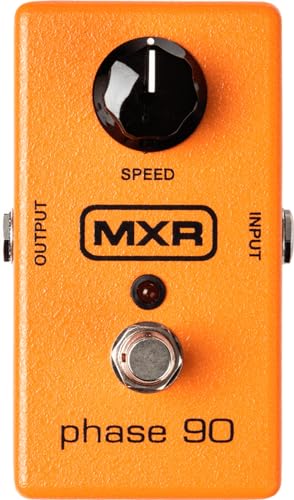
- 9V Batteries Required, best with Polaroid 9V Batteries.
- Rich, warm analog tone
The MXR Phase 90 is a different beast entirely. It is a phaser, not a flanger. While both are modulation effects, the Phase 90 uses all-pass filters to create “notches” in the signal, resulting in a more “vocal” and “swirly” sound rather than the “metallic” sweep of a flanger. The Phase 90 has only one knob, making it incredibly simple to use but much less versatile than the Caline CP-66 Classic Guitar Flanger Effects Pedal. If you want that iconic Eddie Van Halen “Eruption” swirl with zero fuss, get the MXR. If you want to sculpt your own unique modulation sounds with four separate controls, the Caline is the better choice.
3. MXR Analog Chorus

- All-analog bucket-brigade circuitry
- Create classically lush, liquid textures
The MXR Analog Chorus is perhaps the closest competitor in terms of “analog feel.” Like the Caline, it uses BBD circuitry for a warm tone. It also features high and low cut filters, which are great for tone shaping. However, as a dedicated chorus pedal, it cannot achieve the deep “resonance” and “feedback” of the Caline CP-66 Classic Guitar Flanger Effects Pedal. The MXR is fantastic for lush, liquid textures, but the Caline offers a wider range of “extreme” sounds, including vibrato and space-like effects. If you want a more traditional chorus, the MXR is a great pick, but for sheer versatility and value, the Caline holds its own.
Final Verdict: Is the Caline CP-66 Classic Guitar Flanger Effects Pedal Right for You?
After extensive testing and comparison, the Caline CP-66 Classic Guitar Flanger Effects Pedal stands out as one of the best values in the modulation market. It successfully bridges the gap between affordable entry-level gear and high-end boutique performance. Its greatest strengths are its authentic analog BBD warmth, its incredibly versatile four-knob interface, and its tank-like build quality. While it can introduce a bit of noise at extreme settings—a common trait among analog flangers—its musicality far outweighs this minor limitation. Whether you are a beginner looking for your first modulation pedal or a seasoned pro wanting a reliable back-up that sounds like a vintage Ibanez, this pedal delivers.
If you’re tired of thin, digital-sounding effects and want to add some serious “weight” and movement to your guitar tone, the CP-66 is a no-brainer. It provides the “jet-plane” sweeps, the wave-like choruses, and the psychedelic space sounds that have defined rock music for decades. For the price of a few sets of strings, you can transform your entire sonic identity. Don’t let your tone stay flat any longer—grab this affordable flanger today and start exploring the endless possibilities of analog modulation!
Last update on 2026-09-15 / Affiliate links / Images from Amazon Product Advertising API