
MXR Uni-Vibe Chorus/Vibrato Review: Capturing the Elusive ’60s Swirl in a Modern Box
If you have ever spent a late night hunched over a Stratocaster, trying to capture the haunting, viscous throb of Jimi Hendrix’s “Machine Gun” or the ethereal, rotating-speaker wash of Robin Trower’s “Bridge of Sighs,” you know the frustration of the “almost” sound. For years, I chased that elusive texture. I tried standard chorus pedals that felt too “shimmery” and digital, and phasers that felt too rhythmic and mechanical. The problem is that the original Shin-ei Uni-Vibe was a strange, beautiful beast—an analog photo-cell circuit that created a lopsided, chewy modulation that defies simple categorization. Solving this sonic puzzle is crucial for any player looking to delve into classic rock, psychedelic blues, or even modern ambient textures. Without the right “throb,” your tone remains flat, lacking the three-dimensional movement that defines some of the greatest guitar moments in history. This led us to put the MXR Uni-Vibe Chorus/Vibrato through its paces to see if it could truly deliver that legendary magic in a pedalboard-friendly format.

- Iconic chorus/Vibrato true to the classic late '60s tone
- Simple three-knob interface

What to Consider Before Buying Electric Guitar Chorus and Vibe Effects
An Electric Guitar Chorus or Vibe Effect is more than just an item; it’s a key solution for guitarists who feel their sound is static or “small.” These pedals introduce pitch and phase modulation that simulate the sound of multiple instruments playing at once or the Doppler effect of a physical Leslie spinning speaker cabinet. The main benefit is the creation of a “wet,” lush soundstage that can make a solo cut through a mix or make a clean passage feel like a warm embrace. Before you see its full feature set and user reviews, you need to understand that not all modulations are created equal.
The ideal customer for this type of product is someone facing the limitations of a “dry” amp sound, particularly those playing blues, classic rock, or shoegaze. It is for the player who wants their guitar to “breathe” and pulse. However, it might not be suitable for those who prefer hyper-clean, modern digital precision or those who strictly play high-gain metal where subtle phase relationships might get lost in a wall of distortion. In those cases, a dedicated flanger or a high-headroom digital multi-modulator might be a better fit.
Before investing, consider these crucial points in detail:
- Dimensions & Space: On a crowded pedalboard, every inch counts. While vintage vibe units were the size of a toaster, modern equivalents like the MXR Uni-Vibe Chorus/Vibrato fit into a standard housing. You should look for a pedal that provides top-tier tone without forcing you to sacrifice three other pedals just to make room.
- Capacity & Performance: Look for the “throb” factor. A good vibe effect should have a wide sweep—from a slow, oceanic wave to a fast, Leslie-style shimmer. Check if the pedal maintains your signal integrity or if it introduces unwanted noise when paired with overdrive.
- Materials & Durability: Since this is an effect you will likely be stepping on frequently during a performance, a heavy-duty metal chassis is non-negotiable. The footswitch should feel positive and reliable, and the knobs should have enough resistance to stay in place if your foot accidentally grazes them.
- Ease of Use & Maintenance: Complex menus are the enemy of creativity. A three-knob interface is often the “sweet spot” for modulation, allowing you to tweak speed and depth on the fly without getting lost in sub-menus. Also, consider the power requirements; standard 9V operation is much more convenient than pedals requiring proprietary adapters.
Understanding these variables will help you decide if a classic analog-voiced unit is the right tool for your musical journey. Before we dive into the specifics of this pedal, it’s worth seeing how it fits into the broader landscape of affordable modulation.
While the MXR Uni-Vibe Chorus/Vibrato is an excellent choice, it’s always wise to see how it stacks up against the competition. For a broader look at all the top models, we highly recommend checking out our complete, in-depth guide:

- [Analog Chorus Pedal]: Donner Tutti Love pedal reproduces the classic warm jazz chorus tone with a natural wave curve; Suitable for jazz, rock, and pop, for both electric guitar and bass

- Classic BOSS Chorus Pedal: Clean, brilliant sound designed for guitar and keyboards
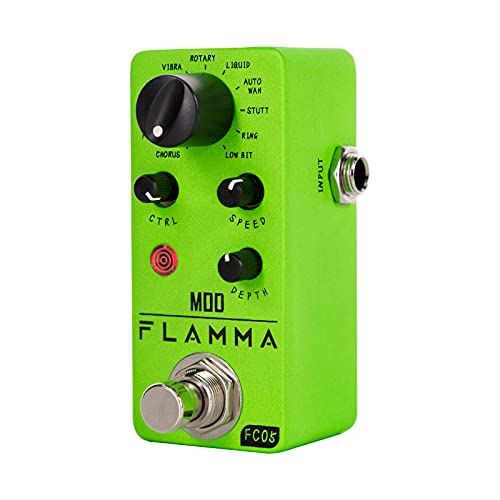
- 11 high-quality classic modulation effects: Chorus, Flanger, Tremolo, Phaser, Vibrato, Rotary, Liquid, Auto wah, Stutter, Ring, Low bit.
First Impressions: The MXR Uni-Vibe Chorus/Vibrato Unboxed
When we first pulled the MXR Uni-Vibe Chorus/Vibrato out of the box, we were immediately struck by its “classic-meets-modern” aesthetic. Clad in a textured black finish with stark white lettering, it feels like a piece of vintage studio gear. Unlike the massive, heavy original units from the ’60s, this pedal fits comfortably in the palm of your hand. It uses the standard MXR housing that has become an industry staple for its bulletproof reliability. Setting it up was a breeze—plugged into a 9V power supply and positioned between a Strat and a clean tube amp, it looked ready for a gig right out of the gate.
The interface is refreshingly simple: Level, Speed, and Depth. There is also a small “Vibe” button that toggles between the classic Chorus mode (the dry signal mixed with the shifted signal) and the Vibrato mode (only the shifted signal). We found that the knobs have a high-quality, weighted feel, which is important when you are trying to check the latest price and availability for a pedal that needs to survive life on the road. While some “boutique” vibes can be finicky about where they sit in the signal chain, the MXR Uni-Vibe Chorus/Vibrato felt immediately accessible and rugged.
Key Benefits
- Highly authentic ’60s “chewy” tone that captures the Hendrix/Trower vibe perfectly.
- Compact, pedalboard-friendly footprint compared to bulky vintage units.
- Simple three-knob interface makes it incredibly easy to dial in great sounds quickly.
- True bypass switching ensures your dry signal remains uncolored when the pedal is off.
Drawbacks
- The “Vibe” selector is a small plastic button that can be hard to hit with your foot.
- Can be sensitive to high-gain pedals placed before it, occasionally leading to clipping.
Deep Dive: Putting the MXR Uni-Vibe Chorus/Vibrato to the Test
The Core Tone: Dialing in the Hendrix/Trower Swirl
The primary reason anyone buys a Uni-Vibe clone is for the “throb.” We spent hours testing the MXR Uni-Vibe Chorus/Vibrato to see if it could replicate that iconic, asymmetrical pulse. In Chorus mode, with the Depth at 2 o’clock and the Speed at noon, we were immediately transported to the sounds of Woodstock. What makes this pedal special is the way it handles the low-end frequencies. Many phasers thin out the sound as they sweep, but this pedal maintains a “thick” and “chewy” texture that feels more like a physical movement of air than a electronic filter. We found that the analog circuitry manages to capture that slightly “out-of-phase” watery sound that defines the best vintage units.
We also explored the subtle side of the pedal. By backing the Depth down to 9 o’clock, the MXR Uni-Vibe Chorus/Vibrato acts as a beautiful enhancer for clean passages. It adds a sense of motion that is less intrusive than a standard chorus. As one user aptly noted, at lower settings, it provides a very usable and subtle chorus effect that doesn’t overwhelm the natural tone of the guitar. This versatility is a feature that really sets it apart from simpler modulation pedals that only do one “extreme” sound well. Whether you are aiming for a full-on psychedelic trip or just a touch of shimmer, the core tone remains musical and warm.
Interface and Usability: The Three-Knob Magic
In a world of complex digital processors, the simplicity of the MXR Uni-Vibe Chorus/Vibrato is its greatest strength. The Level knob is a critical addition that wasn’t always present on older designs. It allows you to boost the volume of the effect so it doesn’t get lost when you engage it—a common complaint with vintage vibe units. We found that setting the Level slightly above unity gain helped our leads jump out of the mix with a glorious, swirling authority. The Speed control has a massive range; at its slowest, it’s a slow-motion tectonic shift, and at its fastest, it enters “ring-modulator-lite” territory, perfect for experimental textures.
The Depth knob controls the intensity of the “swing.” We found that even at maximum depth, the pedal doesn’t become harsh or metallic. It retains an organic, “rubbery” quality. We did notice, however, that the Vibe button—while effective—is quite small. If you are a player who likes to switch between Chorus and Vibrato modes mid-song, you might find it a bit fiddly to hit with a boot. However, for most of us who set our preference and leave it, it’s a minor quibble. The ease of dialing in a professional sound is a huge plus for gigging musicians who don’t want to spend their soundcheck menu-diving.
Rig Integration: Pedal Chain Dynamics
One of the most debated topics among vibe enthusiasts is where to put the pedal in the signal chain. We tested the MXR Uni-Vibe Chorus/Vibrato in several configurations. Traditionally, these effects go before your dirt pedals (Overdrive/Fuzz) to get that classic “gritty swirl.” We found that placing it before a germanium fuzz face created the most authentic vintage tones. However, some users have reported that the pedal can be noisy if placed after certain high-gain overdrives. In our testing, we found that placing it at the very front of the chain—even before the wah—resulted in the cleanest, most “musical” sweep.
Interestingly, we also tested it in the FX loop of a high-gain amp. Like many analog modulation pedals, it didn’t quite love the FX loop, adding a bit too much high-end hiss for our liking. It clearly performs best “in front” of the amp. When used this way, the internal preamp adds a very slight, pleasant “sweetening” to the tone. This is consistent with what we’ve heard from other professionals: this pedal is designed for the player who wants to interact with their amp’s front end. If you want to see how it might fit your specific setup, you should read more about its technical compatibility here.
Durability and Gig-Readiness
As with almost everything MXR produces, the build quality of the MXR Uni-Vibe Chorus/Vibrato is exceptional. The housing is a die-cast zinc alloy that feels like it could survive being dropped from a tour bus. The true bypass switching is a must-have for modern players; we noticed zero “tone suck” when the pedal was disengaged. This is a significant upgrade over original Uni-Vibe units, which were notorious for dragging down the high-end of your signal even when they weren’t being used. We also appreciated the low amperage draw (only 5mA), which means it won’t tax your power supply.
The only minor design “annoyance” we encountered was the placement of the 9V power jack on the side of the pedal. In a world where many manufacturers are moving to top-mounted jacks to save horizontal board space, this side-mount can be a bit of a squeeze on tight boards. But given the compact size of the housing itself, it’s a trade-off most players will be happy to make. For a pedal in this price bracket, the level of professional construction is impressive. It feels like a tool designed to be used every night, not just a toy for the studio.
What Other Users Are Saying
The general consensus among the guitar community is that the MXR Uni-Vibe Chorus/Vibrato provides the best “bang for your buck” in the vibe market. Many users praise its ability to get incredibly close to the Hendrix sound without the “boutique” price tag. One enthusiast noted that after going through numerous modulation effects, this became their favorite specifically because the Vibrato mode (the Vibe button) is subtle and does not color the base tone of the guitar. This sentiment is shared by many who use it as a “set and forget” tonal sweetener.
However, the feedback isn’t exclusively positive. A few users mentioned that the pedal can struggle with high-output active pickups or very aggressive distortion pedals placed before it, occasionally causing the internal circuit to “overload” or clip slightly. One user mentioned returning the pedal because they felt it cut too much high-end from their specific high-gain signal. While we didn’t experience significant high-end loss in our clean and mid-gain tests, it’s a relevant point for players who rely on a very bright, modern metal sound. Overall, for the classic rock and blues crowd, the reviews are overwhelmingly glowing, with many calling it a “board staple.”
Comparing the MXR Uni-Vibe Chorus/Vibrato to Top Alternatives
1. BOSS CH-1 Compact Chorus Effects Pedal
- Classic BOSS Chorus Pedal: Clean, brilliant sound designed for guitar and keyboards
- Trusted Performance Since 1989: One of the most enduring and reliable chorus pedals in the industry
The BOSS CH-1 is a legend in its own right, but it offers a very different flavor of modulation. While the MXR Uni-Vibe Chorus/Vibrato focuses on that dark, chewy, ’60s phase-style throb, the CH-1 is all about “crystal clear” 80s shimmer. The BOSS unit features EQ controls (Effect Level and EQ) which allow you to brighten or darken the effect, making it much more surgical. If you are looking for that “Purple Rain” or “Message in a Bottle” sound, the CH-1 is the better choice. However, if you want the soulful, pulsing heart of a psychedelic blues solo, the BOSS will feel too “polite” and sterile compared to the MXR’s grit.
2. MXR Phase 90
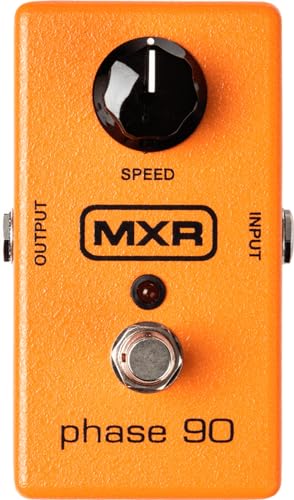
- 9V Batteries Required, best with Polaroid 9V Batteries.
- Rich, warm analog tone
Many people confuse vibes with phasers, and for good reason—they are cousins. The MXR Phase 90 is the ultimate “one-knob wonder.” It provides a much more rhythmic, sweeping “whoosh” that is iconic for Van Halen-style leads. Compared to the MXR Uni-Vibe Chorus/Vibrato, the Phase 90 is simpler but less versatile. The Uni-Vibe has a lopsided, “thump” in its sweep that the Phase 90 lacks. If you just want a classic swirl for your solos, the Phase 90 is great. But if you want to emulate a rotating speaker or get that deep, watery Hendrix texture, you’ll find the Phase 90 feels a bit too “perfect” and lacks the Uni-Vibe’s unique character.
3. MXR Analog Chorus

- All-analog bucket-brigade circuitry
- Create classically lush, liquid textures
The MXR Analog Chorus is a Bucket Brigade (BBD) pedal that offers a wide range of lush, watery chorus sounds. It features High and Low cut filters, which give it incredible flexibility. When comparing it to the MXR Uni-Vibe Chorus/Vibrato, the Analog Chorus is much “prettier.” It’s perfect for adding depth to clean arpeggios. However, it cannot do the “vibe throb.” Vibe effects are technically four-stage phase shifters with specific capacitor values, whereas the Analog Chorus works by slightly delaying the signal. If you want a traditional chorus for pop or jazz, go with the Analog Chorus. If you want a rock-and-roll pulse that feels alive and slightly dangerous, the Uni-Vibe is the clear winner.
Final Verdict: Is the MXR Uni-Vibe Chorus/Vibrato Right for Your Board?
After extensive testing and comparison, we can confidently say that the MXR Uni-Vibe Chorus/Vibrato is a triumph of modern engineering. It manages to condense a massive, complex, and often finicky vintage circuit into a reliable, compact, and affordable stompbox. Its greatest strength lies in its musicality; it doesn’t just “add an effect” to your guitar—it changes the way you play, inspiring you to hold notes longer and feel the rhythm of the modulation. While it may have a few minor quirks, such as the small vibe button and a sensitivity to placement with high-gain gear, these are easily managed by any experienced player.
We recommend this pedal to anyone who loves the classic sounds of the late ’60s and early ’70s, as well as modern players looking for a unique modulation that stands out from the standard chorus crowd. It offers a warmth and “chewiness” that is hard to find elsewhere. If you’re ready to add that legendary pulse to your rig, we suggest you click here to grab the MXR Uni-Vibe Chorus/Vibrato and start swirling today.
Last update on 2026-09-14 / Affiliate links / Images from Amazon Product Advertising API