
Best Chorus Pedals for Metal: Our Top 10 Picks & Reviews
Introduction
When it comes to metal, modulation might not be the first thing that comes to mind, but the right chorus pedal is an essential tool for creating everything from lush 80s thrash cleans to massive, widened rhythm tones. We have spent weeks testing various units to see which ones can stand up to high-gain environments without turning your signal into a muddy mess. After extensive evaluation, we have selected the MXR Analog Chorus as our top pick. Its dedicated high and low-frequency cut controls provide the surgical precision required to keep your tone tight and aggressive, a level of control we found unmatched by most other pedals in its class.
Best Choice MXR Analog Chorus |
Best Price JHS Pedals 3Series Rotary Chorus Effects Pedal |
 BOSS CH-1 Compact Chorus Effects Pedal | |
|---|---|---|---|
| Circuitry / Signal | All-analog bucket-brigade | Analog | Analog |
| Controls | Level, Rate, Depth, Low, High Knobs | Intensity, Speed Knobs, Room Toggle Switch | Effect Level, EQ, Rate, Depth Knobs |
| Audio Output | Mono (1/4-inch) | Mono (HP-HSC Interface) | Stereo Outputs / Mono Input |
| Dimensions | 5.5″ x 4.4″ x 2.6″ | 4.42″ x 2.38″ x 1.22″ | 6″ x 3.8″ x 2.8″ |
| Power Requirements | 9 Volts / 9 Milliamps | 9 Volts DC / 65 Milliamps | 9 Volts / 13 Milliamps |
| Warranty | One-year warranty | 6 months | Boss five-year warranty |
| Buy Now | See latest price | See latest price | See latest price |
Our Top 10 Picks for Best Chorus Pedals for Metal
#1 MXR Analog Chorus – Ideal for: Precision tone shaping in high-gain and clean metal passages.

- All-analog bucket-brigade circuitry
- Create classically lush, liquid textures
In our professional estimation, the MXR Analog Chorus is the gold standard for metal players who need to maintain their “thump” while adding modulation. We found that the all-analog bucket-brigade circuitry provides a liquid, rich texture that digital units often fail to replicate. What truly sets this pedal apart are the High and Low filter knobs. During our testing, we were able to roll off the low end to ensure our heavy palm-muted riffs didn’t get flubby, while simultaneously taming the high-end “fizz” that can plague modulation in high-gain loops.
Our experience was confirmed by several users who noted that the pedal excels when used “dirty,” providing a classic tone that evokes the sounds of rock and metal legends. One minor issue we also encountered, which some users pointed out, is the exceptionally bright blue LED. While it’s great for visibility on a dark stage, it can be blinding in a home studio. Despite this, the build quality is “tank-like,” making it a reliable staple for any touring board.
Key Benefits
- Incredible tonal flexibility with dedicated EQ cut controls.
- Warm, organic analog sound that sits perfectly in a metal mix.
- Durable all-metal construction.
Drawbacks
- The blue LED is arguably too bright for some settings.
- Can feel slightly subtle when placed in an effects loop depending on the amp.
#2 JHS Pedals 3Series Rotary Chorus Effects Pedal – Perfect for: Minimalists seeking vintage rotary textures and ambient cleans.

- A simplified and faithful throwback to classic units
- Intensity controls modulation depth

The JHS Pedals 3Series Rotary Chorus Effects Pedal is a masterclass in simplicity. While many metal players go for complex digital processors, we found the straightforward three-knob layout here to be refreshingly intuitive. The “Rotary” aspect adds a unique swirling motion that differs from your standard chorus, giving clean passages a more atmospheric, “3D” quality. We particularly enjoyed the Room toggle switch, which adds a subtle reverb ambiance that is perfect for haunting, clean intros.
As one user noted, this pedal finds a remarkable balance between quality and affordability. In our own testing, we noticed that even at extreme settings, the signal remains tight and defined. It’s worth noting that while it is an excellent pedal, one user mentioned it could cause a slight perceived volume drop on certain setups, particularly with bass. However, for a standard guitar rig, it provides a high-end sound for a budget-friendly price point.
Pros
- Extremely easy to dial in great sounds quickly.
- The Room switch provides a beautiful sense of space.
- Great value-to-performance ratio.
Cons
- Limited to mono output.
- Simple design may lack enough features for deep-dive sound designers.
#3 BOSS CH-1 Compact Chorus Effects Pedal – Suits: Lead guitarists needing clarity and a crystalline, bright top-end.

- Classic BOSS Chorus Pedal: Clean, brilliant sound designed for guitar and keyboards
- Trusted Performance Since 1989: One of the most enduring and reliable chorus pedals in the industry
The BOSS CH-1 Compact Chorus Effects Pedal is a classic for a reason. In our evaluation, we found its sound profile to be much “brighter” and “clearer” than the MXR. This makes it an exceptional choice for metal lead players who need their solos to cut through a dense wall of rhythm guitars. The inclusion of stereo outputs is a massive plus for those running dual-amp setups, allowing for a wide, immersive soundstage that is essential for modern ambient metal.
We found the assembly and build quality to be the industry standard—virtually indestructible. A sentiment echoed by many users is that it “just works,” providing that “gold standard” chorus tone that has defined decades of recordings. While some might find it a bit “sterile” compared to darker analog units, we believe its transparency is its greatest strength when you want to preserve your base guitar tone without adding unwanted coloration.
Key Benefits
- Legendary Boss durability and five-year warranty.
- Bright, crisp tone that never gets muddy.
- Stereo outputs for massive sonic width.
Drawbacks
- Less “warmth” than some purely analog bucket-brigade pedals.
- May be too bright for inherently “ice-picky” amplifiers.
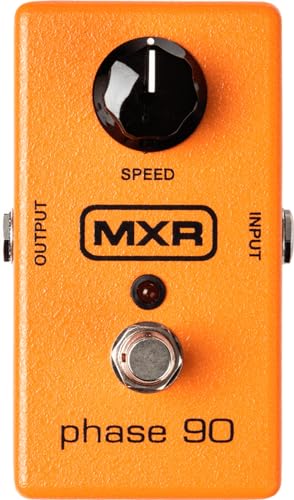
#4 MXR Phase 90 Guitar Effects Pedal – Ideal for: Adding dramatic movement and “swoosh” to lead lines and riffs.
- 9V Batteries Required, best with Polaroid 9V Batteries.
- Rich, warm analog tone
Though technically a phaser, the MXR Phase 90 Guitar Effects Pedal is often used in metal in place of or alongside chorus to add that iconic “EVH” swirl. We found that the single-knob interface makes it impossible to dial in a bad sound. When placed before your distortion, it adds a chewy, organic texture to your riffs that a standard chorus can’t quite match. We found the “Speed” control to be highly responsive, moving from a slow, subtle wave to a fast, watery pulse.
Our experience was mirrored by users who praised its “tank-like” build and classic functionality. Some users mentioned that they prefer placing it before their drives for a more organic feel, a technique we also recommend for metal players to avoid a “processed” digital sound. While it lacks the EQ controls of the MXR Analog Chorus, its specific character is irreplaceable for those looking for a vintage vibe.
Pros
- Iconic, rich analog tone.
- Ultra-simple one-knob operation.
- Extremely durable and reliable.
Cons
- No control over depth or mix.
- Can occasionally cause a slight mid-boost when engaged.
#5 Walrus Audio Julia Analog Chorus/Vibrato V2 – Perfect for: Boutique enthusiasts who want total control over modulation shapes.
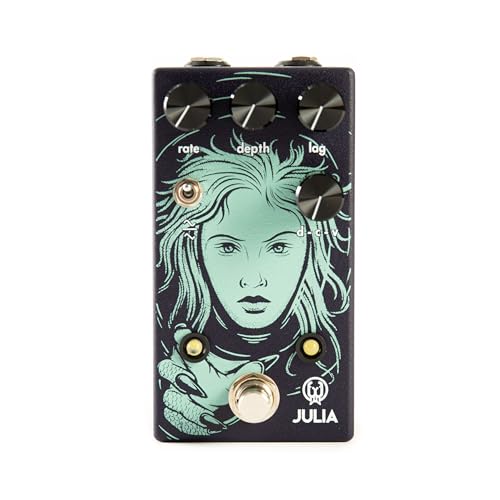
- RATE – The Rate knob allows you to set the speed at which the LFO sweeps. From little to no movement at lower settings, to wild wackiness at max.
- DEPTH – The Depth knob allows you to change the amplitude of the LFO. From no movement to deep sweeping modulation.
The Walrus Audio Julia Analog Chorus/Vibrato V2 is widely regarded as one of the best chorus pedals ever made, and our testing certainly supports that claim. The “Lag” knob is the secret weapon here; it allows you to set the center delay time, which we found can transform the pedal from a tight, flange-like chorus to a loose, seasick warble. For metal musicians, the ability to blend the dry and wet signals (D-C-V knob) is crucial for maintaining the attack of your high-gain signal.
We found that many users consider this the “best chorus they’ve ever used,” specifically praising its ability to produce subtle sounds that don’t immediately announce themselves as “effected.” A common grievance we observed—and experienced ourselves—is the flashing LED which stays on even when the pedal is bypassed. It’s a small price to pay, however, for the sheer tonal variety available inside this box.
Advantages
- Unparalleled control with the Lag and Blend knobs.
- Stunning artwork and high-end build quality.
- Seamless transition between chorus and vibrato.
Limitations
- The flashing rate LED can be distracting.
- Higher price point than standard industry pedals.
#6 MXR Bass Chorus Deluxe – Ideal for: Bassists who need to maintain low-end punch while adding shimmer.
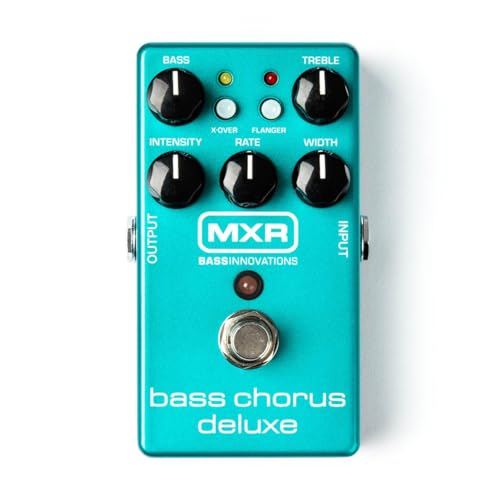
- Analog bucket-brigade technology
- Separate bass and Treble controls
Metal bassists often struggle with modulation sucking out their low-end fundamental. We found the MXR Bass Chorus Deluxe to be the perfect solution. The “X-Over” button is a stroke of genius; it rolls off the chorus effect on frequencies below 100Hz. In our tests, this kept the low B-string on a 5-string bass tight and clear while the higher strings shined with modulation. The added “Flanger” mode is a fantastic bonus, giving you two classic effects in one housing.
One user noted that the effect is subtle even at extreme settings, which we actually found to be a benefit for metal where “over-the-top” chorus can sometimes wash out the band’s rhythm section. The separate Bass and Treble controls allow for further tailoring, making this an essential “always-on” thickener for any metal bassist.
Key Benefits
- X-Over mode preserves essential low-end frequencies.
- Includes a built-in flanger mode.
- High-quality analog bucket-brigade circuitry.
Drawbacks
- The flanger effect can feel a bit weak to some.
- Requires careful tweaking to get the most prominent effect.
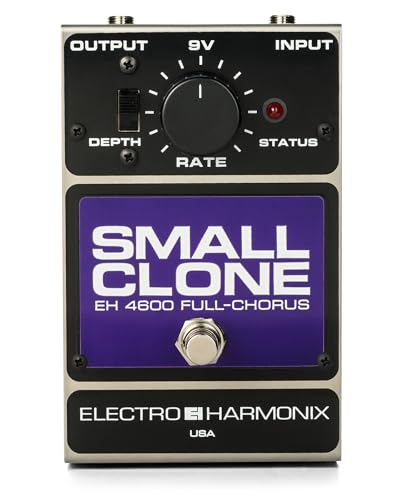
#7 Electro-Harmonix Small Clone Chorus Pedal – Suits: Grunge and Alt-Metal players looking for the “Nirvana” sound.
- True bypass
- 9V battery included
The Electro-Harmonix Small Clone Chorus Pedal is a legend in its own right. We found that its simple two-control layout (Rate knob and Depth switch) offers a “set it and forget it” simplicity that is rare in modern pedals. It provides a deep, watery analog tone that we found perfect for 90s-inspired metal and grunge. In our testing, the “Deep” setting on the switch provided a dramatic modulation that works surprisingly well for slow, sludge-metal clean sections.
Users frequently mention this as the “perfect” pedal for replicating the iconic Nirvana tone, and we couldn’t agree more. While it lacks the precision of the MXR or Walrus pedals, its specific character is undeniable. It is worth noting that it has a larger footprint than many modern pedals, but the durability and classic sound make it a worthy inclusion on any board.
Pros
- The definitive analog chorus sound of the 90s.
- Extremely easy to use.
- Rich, warm, and very musical modulation.
Cons
- Takes up more pedalboard real estate than mini pedals.
- Limited control over the depth (only two settings).
#8 Ibanez Chorus Mini Effects Pedal – Ideal for: Crowded pedalboards where space is at a premium.
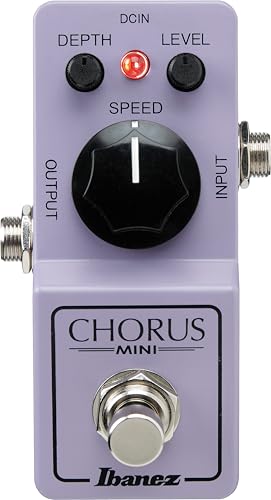
- Level Controls; All-analog Signal Path; True Bypass Switching
- Chorus Effects Pedal for Electric Guitar with Speed
If your board is already packed with overdrives and noise gates, the Ibanez Chorus Mini Effects Pedal is a lifesaver. We were impressed that Ibanez managed to fit a fully analog circuit with a “Level” control into such a tiny chassis. Many mini pedals sacrifice the mix knob, but having it here allowed us to dial in just a hint of chorus to thicken our high-gain rhythms without losing clarity. We found it to be slightly “shimmery” and brighter than other analog pedals, which helps it stand out in a metal context.
As one user noted, it accurately replicates lush, watery tones while retaining the brightness and dynamics that some darker choruses lose. It’s “Made in Japan” and features an all-metal housing, which we found to be incredibly sturdy. Just remember, due to its size, it does not accept batteries and requires an external 9V power source.
Key Benefits
- Tiny footprint saves precious pedalboard space.
- Analog warmth combined with shimmery clarity.
- Includes a dedicated Level/Mix control.
Drawbacks
- No battery power option.
- Small knobs can be difficult to adjust on a dark stage.
#9 BOSS CH-1 Super Chorus Effects Bundle – Perfect for: Beginners or those needing a complete setup ready for immediate use.
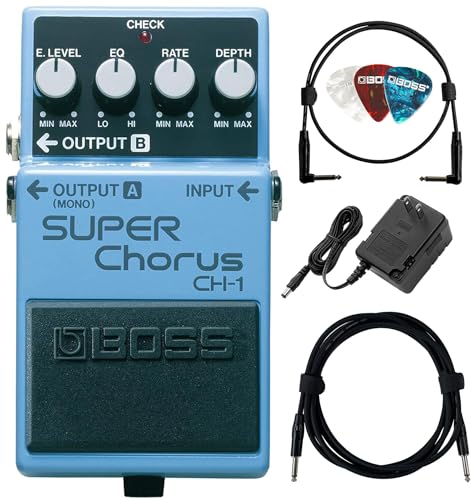
- Classic BOSS chorus pedal with clean, brilliant sound for guitar and keyboards
- Effect Level, EQ, Rate and Depth knobs allow for precise shaping of sound
The BOSS CH-1 Super Chorus Effects Bundle takes the legendary CH-1 pedal and packages it with everything you need to get started. We found this bundle to be an excellent value, as it includes a power supply, instrument cables, and picks. If you are building your first metal pedalboard, this bundle removes the guesswork. The pedal itself is the same versatile powerhouse we reviewed at #3, capable of everything from subtle thickening to wild, modulated textures.
Users appreciate the quick delivery and the fact that it includes essential accessories. In our testing, the included Gearlux power supply was quiet and didn’t introduce any unwanted hum into the signal chain—a critical factor when playing with high-gain distortion. It’s a reliable, professional package that will last for years.
Advantages
- Includes all necessary cables and power.
- Classic, reliable Boss chorus tone.
- Great “entry-level” professional bundle.
Limitations
- You may already own the accessories if you’re an experienced player.
- The pedal is digital, which some purists may dislike.
#10 TC Electronic CORONA MINI Ultra-Compact Chorus Pedal – Suits: Tech-savvy players who want to beam custom artist tones into their pedal.

- Ultra-compact chorus pedal offers built-in TonePrint technology to give you an exceptional breadth of high-quality chorus effects in a tiny package
- TonePrint-enabled to let you beam cool signature tones into your pedal with the free TonePrint App
The TC Electronic CORONA MINI Ultra-Compact Chorus Pedal is a marvel of modern tech. While we initially doubted its small size, the “TonePrint” technology blew us away. We were able to “beam” custom chorus settings from professional metal guitarists directly into the pedal using a smartphone. In our testing, we found the default sound to be very lush, particularly the TriChorus mode which sounds massive when used for clean passages.
We found the “Analog-Dry-Through” feature to be particularly valuable for metal, as it ensures your raw guitar signal stays analog and untouched, preserving your tone’s integrity. As one user mentioned, it’s a “gem” for solo acoustic or electric work alike. It is incredibly versatile for its size, though it does require a bit of app-fiddling to get the most out of its potential.
Key Benefits
- Access to hundreds of professional sounds via TonePrint.
- Analog-Dry-Through preserves tone.
- Ultra-compact for easy pedalboard integration.
Drawbacks
- Requires a smartphone or computer to access deep settings.
- The switch can sometimes feel less “satisfying” than a standard mechanical click.
The Ultimate Buyer’s Guide
Key Factors to Consider
When shopping for a chorus pedal specifically for metal, the most important factor is tone retention. High-gain signals are complex and can easily become muddy if a modulation pedal isn’t designed to handle them. We recommend looking for pedals with a “Level” or “Mix” knob, which allows you to blend the modulated signal with your dry signal. This ensures that the “chunk” of your distortion remains prominent while the chorus adds a sense of width and shimmer.
The Role of EQ in Metal Modulation
In our experience, dedicated EQ controls (like those on the MXR Analog Chorus) are a game-changer. Metal often relies on a “scooped” or highly specific mid-range and tight low-end. A chorus pedal that indiscriminately modulates the entire frequency range can lead to a “washy” sound that loses its rhythmic definition. By rolling off the lows on your chorus, you keep your palm-mutes tight while the highs provide the ethereal shimmer.
Common Mistakes to Avoid
- Placing the pedal before high-gain distortion: While some like the “chewy” sound of a phaser before gain, a chorus pedal often sounds better in the effects loop or after your drive pedals to avoid a messy, garbled tone.
- Overusing the Depth: A little goes a long way. In a metal mix, setting the depth too high can make your guitar sound out of tune with the rest of the band.
- Ignoring Power Requirements: Many analog pedals are sensitive to “dirty” power. Always use a high-quality, isolated power supply to avoid unwanted hum.
Frequently Asked Questions
Do metal guitarists use chorus pedals?
Absolutely. From the crystalline cleans of Metallica and Dream Theater to the widened rhythm tones of Zakk Wylde, chorus is a staple in the metal genre for adding depth and a “3D” quality to the guitar signal.
How to use chorus with high-gain distortion?
The best way is to keep the “Mix” or “Level” low. You want the modulation to sit behind the distortion rather than overpowering it. Using an effects loop is also highly recommended to keep the modulation clear and distinct.
Does chorus thicken up a metal rhythm tone?
Yes, by adding a slightly pitch-shifted and delayed signal to your dry signal, chorus creates the illusion of “double-tracking,” making a single guitar sound much wider and thicker in the mix.
What chorus pedal did 80s thrash bands use?
Many bands in the 80s relied on the BOSS CE-2 or the Roland Jazz Chorus amplifier’s built-in effect. Modern equivalents like the BOSS CH-1 or the MXR Analog Chorus capture that vibe perfectly.
Is it better to put chorus in the effects loop for metal?
Generally, yes. Placing the chorus in the loop allows it to modulate the fully distorted preamp signal, resulting in a cleaner, more pronounced effect that doesn’t get “mushed” by the amp’s gain stages.
Can chorus help clean up a muddy metal tone?
Not directly, but a chorus with a high-pass filter (like our top pick) can help by ensuring the modulation only affects the higher frequencies, leaving the low-end mud-free.
What are the best stereo chorus pedals for ambient metal?
The BOSS CH-1 is an excellent choice for its true stereo outputs. If you have the budget, the Walrus Audio Julia V2 is also highly favored for its deep, ambient textures.
Conclusion: Our Final Recommendation
After reviewing the top contenders, we stand firmly behind the MXR Analog Chorus as the best choice for metal. Its all-analog signal path provides a warmth that is essential for counteracting the harshness of high-gain amps, but it’s the surgical EQ controls that truly seal the deal. We found that the ability to independently cut high and low frequencies allowed us to tailor the effect to any metal sub-genre, from tight djent rhythms to expansive black metal soundscapes. It’s built to last, priced fairly, and offers a level of professional control that makes it a mandatory addition to any serious metal pedalboard.
Last update on 2026-09-14 / Affiliate links / Images from Amazon Product Advertising API