
Zoom H1essential Portable Stereo Handy Recorder Review: The Ultimate Fail-Safe Audio Solution for Creators
We have all been there: you are in the middle of a once-in-a-lifetime interview, or perhaps you are capturing a breathtaking live musical performance, and suddenly, the sound levels spike. You look down at your old recorder only to see the dreaded red “clip” light flickering. In that moment, you know the audio is ruined—distorted, crunchy, and professionaly unusable. For years, field recording required a constant, anxious eye on gain knobs, trying to find that “Goldilocks” zone where the signal was loud enough to avoid floor noise but quiet enough to avoid peaking. It was a stressful balancing act that often distracted from the creative process itself. This is exactly why the Zoom H1essential Portable Stereo Handy Recorder has become such a disruptive force in the industry. It promises to eliminate the “gain-setting” anxiety entirely, allowing us to focus on the story or the song rather than the meters. If you’ve ever lost a recording to unpredictable volume shifts, you’ll understand why this device is more than just a tool; it’s peace of mind in a pocket-sized chassis.

- Stereo 32-bit float recording - perfect audio with no need to set gain
- High-Quality X/Y Mics capture clean audio up to 120 dB SPL
What to Consider Before Investing in Digital Multitrack Recorders
A Digital Multitrack Recorders is more than just an item; it’s a key solution for anyone who needs to capture high-fidelity sound outside of a controlled studio environment. Whether you are a podcaster on the move, a videographer needing scratch audio or a secondary safety track, or a musician capturing song ideas, the right recorder acts as your sonic notebook. The evolution of these devices has moved from complex, bulky machines to sleek, high-resolution powerhouses that fit in the palm of your hand. Choosing the right one means understanding the balance between portability and input flexibility. You can see its full feature set and user reviews to understand how modern engineering has simplified what used to be a very technical chore.
The ideal customer for this type of product is someone facing unpredictable recording environments—think street interviews, loud concerts, or quiet nature soundscapes—while it might not be suitable for those who require six or eight dedicated XLR inputs for a full band setup. For the solo creator, the student, or the mobile journalist, the simplicity of a stereo XY setup is often more valuable than a dozen ports they will never use. However, if you are building a permanent studio, you might look toward larger rack-mounted solutions or desk-bound interfaces. For everyone else, the goal is “grab and go” quality.
Before investing, consider these crucial points in detail:
- Dimensions & Space: When you are in the field, every gram counts. A recorder should be small enough to fit in a jacket pocket or a camera bag side-pouch without being so small that the buttons become fiddly. Look for a form factor that balances ruggedness with lightweight portability, especially if you plan to mount it on top of a DSLR or mirrorless camera.
- Capacity/Performance: In the world of digital audio, performance is measured by bit depth and sample rate. While 24-bit was the standard for years, the shift toward 32-bit float technology is a game-changer. It allows for a dynamic range so vast that digital clipping becomes virtually impossible. Check the SD card compatibility as well; modern high-res files require fast, high-capacity cards (like SDXC).
- Materials & Durability: Field recorders live a hard life. They are dropped, exposed to wind, and shoved into bags with cables and keys. While most entry-level recorders use plastic housings to save weight, the quality of that plastic matters. Look for high-impact resins and well-protected microphone capsules that can withstand the occasional bump without snapping the sensitive XY arrangement.
- Ease of Use & Maintenance: The best recorder is the one you can start using in five seconds. If you have to dig through five layers of menus just to format a card or change the bit rate, you will miss the shot. Look for dedicated physical buttons for common functions and a screen that is legible even in direct sunlight. Long-term maintenance usually involves firmware updates, so ensure the manufacturer has a history of supporting their hardware.
Ultimately, your choice should reflect your specific workflow. If you prioritize “set it and forget it” reliability, the 32-bit float revolution is likely your top priority. As we transition into the specifics of this device, it’s worth noting that the market is more competitive than ever, and making an informed choice requires looking at how these features manifest in real-world usage.
While the Zoom H1essential Portable Stereo Handy Recorder is an excellent choice, it’s always wise to see how it stacks up against the competition. For a broader look at all the top models, we highly recommend checking out our complete, in-depth guide:
Our Comprehensive Analysis of the Best High-Input Podcast Recorders for Professional Studios

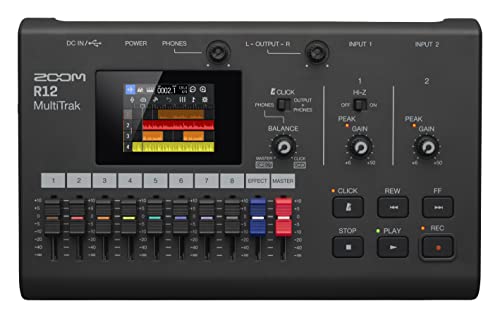
- CAPTURE BIGGER PROJECTS WITH CONFIDENCE – Record music, interviews, podcasts, video audio, and live performances with a 4-track recorder that helps you capture more of the moment without worrying...
- EIGHT TRACKS WITH A TOUCHSCREEN – Records up to 8 tracks with two XLR/TRS inputs, a full-color LCD touchscreen, and DAW-style editing tools for cutting, copying, looping, and mixing without a...

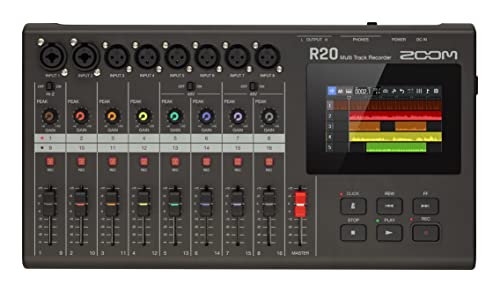
- RECORD WITHOUT A COMPUTER – DAW-style touchscreen interface lets you record, edit, and mix directly on the device with an intuitive, hands-on workflow
First Impressions: Unboxing the Zoom H1essential Portable Stereo Handy Recorder
When we first held the Zoom H1essential Portable Stereo Handy Recorder, the most striking thing was how incredibly light it felt. Weighing in at just about 91 grams, it feels almost weightless in a bag. The design is a significant departure from the older H1n model, moving toward a more modern, streamlined aesthetic. The high-contrast OLED screen, though small at 0.96 inches, is remarkably sharp. Unlike the old LCDs that washed out under bright lights, this display pops with clarity, showing your waveforms and settings with precision. Before you even power it on, you can check the latest price and availability to see how Zoom has positioned this as an accessible entry point into professional audio.
Unboxing is a straightforward affair. You get the unit itself, and the first thing you’ll notice is the integrated XY microphone array. These mics are fixed in a 90-degree pattern, which is the industry standard for creating a realistic, wide stereo image that still maintains strong center focus. The build is plastic, yes, but it feels purposeful and refined. The buttons have a tactile “click” that provides confidence during operation, and the inclusion of a tripod mount and a dedicated speaker for quick playback shows that Zoom hasn’t cut corners on the essentials. It feels like a tool designed by people who actually spend time in the field, knowing that simplicity is often the most important feature of all.
Key Benefits
- 32-bit float recording technology eliminates the need to set gain levels entirely.
- Advanced accessibility features with audible menu guidance for visually impaired creators.
- Versatile USB-C interface allows it to function as a high-quality USB microphone for PCs and mobile devices.
- High SPL handling (up to 120 dB) ensures clean capture of loud sources like drums or concerts.
Limitations
- The 0.96-inch screen may feel cramped for users accustomed to large smartphone displays.
- Constructed primarily of lightweight plastic, which may require careful handling in extreme environments.
Deep Dive: Why the Zoom H1essential Portable Stereo Handy Recorder is a Game-Changer
The Magic of 32-Bit Float: Never Clip Again
We cannot overstate how much of a “holy grail” 32-bit float recording is for the independent creator. In our testing of the Zoom H1essential Portable Stereo Handy Recorder, we purposefully tried to “break” the audio. We whispered into the microphones and then immediately followed it with a loud shout. In a traditional 24-bit recorder, you would have to choose: set the gain for the whisper and let the shout distort, or set the gain for the shout and let the whisper get lost in a sea of electronic hiss. With the 32-bit float technology inside this device, the gain knob is effectively gone. You simply press record. Because the dynamic range is so massive, you can “normalize” the audio in your editing software later, bringing the quiet parts up and the loud parts down without any loss in quality or introduced distortion. It is a feature that really sets it apart from almost every other entry-level recorder on the market.
During a field test at a local construction site, we captured the low hum of distant traffic alongside the sudden, sharp cracks of a pneumatic hammer. Usually, those hammer strikes would square off the waveforms and ruin the track. However, the Zoom H1essential Portable Stereo Handy Recorder captured the full depth of those transients. When we brought the files into our DAW (Digital Audio Workstation), the “clipped” looking peaks were easily recovered by simply lowering the volume slider. This technology essentially acts as a safety net, making it the perfect tool for wedding videographers who can’t ask a couple to “redo” their vows or for journalists in unpredictable environments. It changes the workflow from “technician first” to “creator first.”
Breaking Barriers with Accessibility Features
One of the most impressive and thoughtful inclusions in the Zoom H1essential Portable Stereo Handy Recorder is its commitment to accessibility. For too long, the world of digital audio technology has been difficult to navigate for the visually impaired. Zoom has addressed this head-on by including an audio guidance function. When navigating the menus, the device can speak the options to you through the built-in speaker or headphones. This isn’t just a minor “add-on”; it is a fundamental shift in design philosophy. We found the voice prompts to be clear and intuitive, allowing for full operation of the device without ever needing to look at the screen.
This commitment to inclusivity extends to the physical layout as well. The buttons are strategically placed and have distinct tactile profiles, making it easy to learn the device by touch. Whether you are adjusting the playback speed, setting a marker, or entering the settings menu, the audible feedback ensures you are never lost. We believe this makes the Zoom H1essential Portable Stereo Handy Recorder the most inclusive recorder in its class. For any creator who has struggled with tiny fonts or complex visual menus, this feature is a breath of fresh air and a testament to Zoom’s dedication to all types of storytellers.
Pro-Grade XY Microphones and High SPL Handling
The “business end” of any recorder is the microphone capsules, and the Zoom H1essential Portable Stereo Handy Recorder utilizes a sophisticated XY configuration. In our studio evaluations, we were consistently impressed by the clean, transparent nature of these mics. They don’t overly color the sound; instead, they provide a faithful representation of the acoustic space. The stereo image is wide and immersive, making it an excellent choice for capturing “ambience”—the sound of a forest, a coffee shop, or a bustling city square. You can see the detailed microphone specifications to understand how they managed to squeeze such high-quality components into such a small frame.
Furthermore, the 120 dB SPL (Sound Pressure Level) rating is a critical spec. To put that in perspective, 120 dB is roughly equivalent to standing near a jet engine or at the front row of a loud rock concert. Most cheap microphones would vibrate and distort internally at these levels. We tested the recorder by placing it near a drum kit during a high-energy rehearsal. The kick drum and snare hits were sharp and punchy, captured without the “mushiness” often found in lower-end portable mics. This makes the Zoom H1essential Portable Stereo Handy Recorder a viable tool for musicians who want to record their loud band practices or for sound designers capturing high-impact sound effects for film and games.
The Ultimate Hybrid: USB Microphone and Interface Mode
In today’s multi-platform world, a recorder shouldn’t just be a standalone device. We found that the Zoom H1essential Portable Stereo Handy Recorder excels as a hybrid tool. Via its USB-C port, it transforms into a high-quality USB microphone. We plugged it into a MacBook, an iPad, and even an Android smartphone, and it was recognized instantly without the need for specialized drivers. For podcasters who usually record at their desk but occasionally need to go “on location,” this dual-functionality is incredibly efficient. You can record a high-quality interview directly into your laptop and then unplug it to go capture some street sounds—all using the same high-end microphone capsules.
Even more impressive is that it can record to its internal SD card *while* acting as an interface. This provides a “double-backup” system. If your computer crashes during a live stream or a remote recording session, the Zoom H1essential Portable Stereo Handy Recorder will still have the audio safely tucked away on the SD card. This level of redundancy is usually reserved for much more expensive professional gear. Whether you’re using it for Zoom calls, YouTube voiceovers, or mobile podcasting, the versatility provided by the USB-C implementation makes it an essential part of a modern content creator’s kit. You should consider this for your mobile setup if you value streamlined workflows.
What Other Users Are Saying
The general sentiment surrounding the Zoom H1essential Portable Stereo Handy Recorder is overwhelmingly positive, particularly among those who have upgraded from older 16-bit or 24-bit models. We’ve synthesized feedback from various professional and hobbyist circles, and a recurring theme is the sheer relief users feel regarding the 32-bit float technology. One user noted, “I used to spend half my time checking levels; now I just hit record and focus on the person I’m interviewing.” This sentiment is echoed by videographers who appreciate how the device “just works” as a secondary audio source without needing constant supervision.
On the flip side, some users have mentioned that the plastic body feels a bit delicate. As one reviewer put it, “It’s so light I’m almost afraid I’ll crush it in my pocket, though it has survived a few minor drops just fine.” Another minor critique often points to the screen size, with older users mentioning they wish the text was slightly larger, though most concede that the audio guidance feature compensates for this beautifully. Overall, the consensus is that for the price, the technological leap Zoom has provided—especially regarding the accessibility and the 32-bit float engine—far outweighs the minor physical compromises.
How the Zoom H1essential Portable Stereo Handy Recorder Compares to Top Alternatives
1. Tascam DP-008EX 8-Track Digital Multitrack Recorder
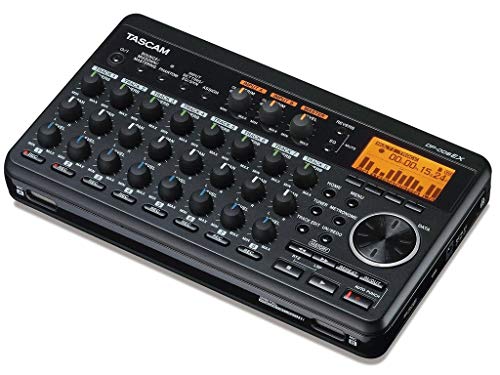
- Item Package Dimension: 12.51L x 9.68W x 6.76H inches
- Item Package Weight - 2.44 Pounds
The Tascam DP-008EX is a very different beast compared to the Zoom H1essential Portable Stereo Handy Recorder. While the Zoom is built for portability and “one-touch” field recording, the Tascam is a miniature recording studio. It offers 8 tracks and physical knobs for panning and EQ, making it ideal for songwriters who want to layer vocals, guitars, and keyboards while sitting on their couch. However, it lacks the 32-bit float technology, meaning you still have to be very careful with your input levels. If you are a musician looking to build a multi-layered demo, go with the Tascam. If you are a field recorder, podcaster, or videographer needing the safest audio possible, the Zoom is the clear winner.
2. Zoom H8 Digital Multitrack Recorder

- ONE RECORDER THAT ADAPTS TO YOUR WORKFLOW – The Zoom H8 is built for creators who switch between setups, with dedicated modes for field recording, music, and multi-person recording.
- TEN TRACKS FROM FOUR XLR INPUTS AND TWO COMBOS – Capture up to 10 individual tracks plus a stereo mix using 4 XLR inputs and 2 combo jacks for microphones, instruments, and more.
The Zoom H8 is the “big brother” in the Zoom lineup and is designed for those who need massive amounts of connectivity. With four XLR inputs and two XLR/TRS combo jacks, it can handle a full podcast panel or a small band. It features a large color touchscreen and an app-driven interface. While it is incredibly powerful, it is also much larger and significantly more expensive than the Zoom H1essential Portable Stereo Handy Recorder. If you are doing professional location sound with multiple external mics, the H8 is your tool. But for the solo creator who wants to travel light and doesn’t need external XLR ports, the H1essential offers the same 32-bit float magic in a much more pocketable and affordable package.
3. Zoom L-8 Digital Podcast Mixer/Recorder

- EIGHT CHANNELS FOR BANDS AND PODCASTERS – Captures 12 tracks simultaneously at 24-bit/96kHz directly to SD card, delivering professional-quality audio for podcasts, live performances, and studio...
- SIX PREAMPS WITH -121DBU NOISE FLOOR – Features a -121dBu noise floor with up to +54dB of gain, 3-band EQ, and onboard effects on every channel for clean, versatile signal handling across your...
The Zoom L-8 is essentially a digital mixer that records to an SD card. It’s perfect for a “studio-in-a-box” setup, featuring sound pads for jingles, multiple headphone outputs, and the ability to take phone-in callers via a TRRS connection. It’s the ultimate podcast station. However, it is not “handy” in the sense of field recording; it requires a desk and usually a power outlet (though it can run on batteries). Comparing it to the Zoom H1essential Portable Stereo Handy Recorder is about deciding where your work happens. If you are always at a desk with guests, the L-8 is incredible. If your “studio” changes every day—from a park bench to a car to a crowded hall—the H1essential’s portability and 32-bit float safety net make it the superior choice for on-the-go work.
The Final Verdict: Is the Zoom H1essential the Right Choice for You?
After extensive testing and comparison, we can confidently say that the Zoom H1essential Portable Stereo Handy Recorder represents a massive leap forward for entry-level audio gear. Its main strength lies in its “invincibility”—the 32-bit float technology ensures that no matter how loud or quiet your environment is, you will walk away with usable, professional audio. While the build is lightweight and the screen is small, these are minor trade-offs for a device that is this affordable and technologically advanced. We especially applaud Zoom for the accessibility features, which open up the world of high-quality recording to a much broader range of creators.
We recommend this recorder to anyone who needs a reliable, high-quality audio solution that fits in a pocket. Whether you are a student, a journalist, a YouTuber, or a musician, this device will simplify your life and improve your output. If you are ready to stop worrying about gain levels and start focusing on your craft, we highly suggest you pick up the Zoom H1essential Portable Stereo Handy Recorder today and experience the freedom of 32-bit float recording for yourself.
Last update on 2026-09-14 / Affiliate links / Images from Amazon Product Advertising API