
Zoom H5 Digital Multitrack Recorder Review: The Swiss Army Knife of Portable Audio Capture
If you have ever tried to record a live band, capture a crisp interview on a busy street corner, or document a high-fidelity piano rehearsal, you know the frustration of “good enough” gear. For years, I struggled with internal camera microphones that hissed like a bag of snakes or bulky field recorders that felt like carrying a brick and required a degree in sound engineering just to navigate the menus. The problem is clear: capturing professional-grade audio shouldn’t require a van full of equipment, but settling for low-quality recordings can ruin a documentary, a podcast, or a musical masterpiece. When your audio is thin or distorted, you lose the emotion and the authority of your work. That is why finding a tool that balances portability with uncompromising fidelity is the holy grail for creators. We spent weeks putting the Zoom H5 Digital Multitrack Recorder through its paces to see if it truly solves the modern creator’s dilemma.

- Uses a system of interchangeable input capsules that can be swapped out as easily as the lens of a camera
- Includes detachable X/Y capsule (XYH-5) with extended signal capacity and shock mounted mics for reduced handling noise

What to Consider Before Buying a Digital Multitrack Recorder
A Digital Multitrack Recorder is more than just a simple voice memo tool; it is a key solution for anyone who needs to isolate sounds, layer tracks, or capture high-resolution environments without the tether of a computer. Whether you are a musician wanting to demo a song with separate vocal and guitar tracks, or a filmmaker needing clean “wild tracks” and sync sound, this category of device is your primary interface with the world of sound. The main benefit here is autonomy. You aren’t reliant on your laptop’s battery or a noisy fan; you have a dedicated processor designed for one job: pristine audio capture.
The ideal customer for this type of product is a field recordist, a podcaster who needs a mobile “studio in a pocket,” or a videographer who requires professional XLR inputs. It is a perfect fit for those who value modularity—the ability to change the way you record based on the environment. However, it might not be suitable for those who only need simple voice memos for grocery lists or students who just want to record a distant lecture from the back of a hall, where a cheaper, specialized long-range mono recorder might suffice. For the enthusiast or professional, though, the Zoom H5 Digital Multitrack Recorder represents a significant step up in capability. You can see its full feature set and user reviews to understand just how far this technology has come.
Before investing, consider these crucial points in detail:
- Dimensions & Space: A portable recorder must be small enough to fit in a camera bag or even a large pocket, but large enough to house physical controls. If a device is too small, you’ll struggle with tiny buttons in the dark; if it’s too large, it stays at home. Look for a balance where the form factor supports handheld use without feeling fragile.
- Capacity & Performance: Look for recorders that support at least 24-bit/96kHz recording for professional headroom. Furthermore, check the SD card limits; many recorders cap at 32GB, which is plenty for WAV files but something to keep in mind if you plan on recording multi-day conferences without offloading data.
- Materials & Durability: Field recording is a rough business. Recorders with rubberized finishes or metal chassis tend to survive drops and eliminate “handling noise” better than cheap, clicky plastic. High-quality shock mounting for the internal microphones is a must-have to prevent every finger movement from being heard on the track.
- Ease of Use & Maintenance: In the heat of a recording session, you don’t want to dive through five layers of menus to engage a low-cut filter or phantom power. Physical gain knobs and dedicated “Record” buttons are essential. Additionally, consider battery life; you want a device that can run for a full day of shooting on standard AA batteries.
Understanding these pillars will help you realize that the Zoom H5 Digital Multitrack Recorder isn’t just a gadget, but a professional instrument designed to withstand the rigors of the field while delivering studio-grade results.
While the Zoom H5 Digital Multitrack Recorder is an excellent choice, it’s always wise to see how it stacks up against the competition. For a broader look at all the top models, we highly recommend checking out our complete, in-depth guide:

- CAPTURE BIGGER PROJECTS WITH CONFIDENCE – Record music, interviews, podcasts, video audio, and live performances with a 4-track recorder that helps you capture more of the moment without worrying...
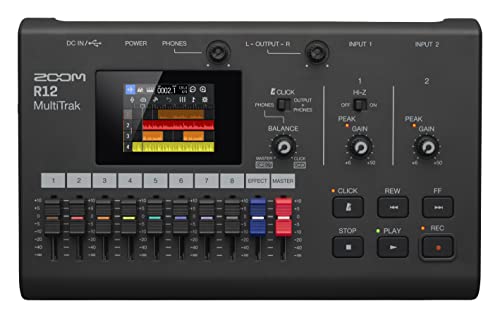
- EIGHT TRACKS WITH A TOUCHSCREEN – Records up to 8 tracks with two XLR/TRS inputs, a full-color LCD touchscreen, and DAW-style editing tools for cutting, copying, looping, and mixing without a...
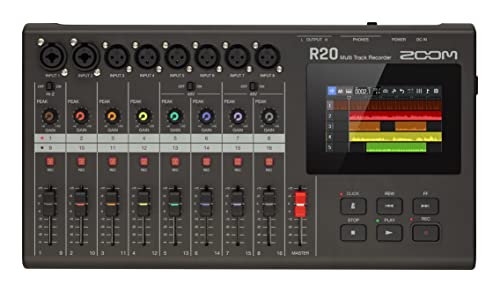
- RECORD WITHOUT A COMPUTER – DAW-style touchscreen interface lets you record, edit, and mix directly on the device with an intuitive, hands-on workflow
First Impressions: Unboxing the Zoom H5 Digital Multitrack Recorder
When I first held the Zoom H5 Digital Multitrack Recorder, the initial sensation was one of ruggedness. Unlike its predecessor, the H4n, which felt a bit more “plasticky,” the H5 has a luxurious, rubberized finish that feels secure in the hand and looks professional. The unboxing experience is straightforward but thoughtful; it comes with a protective plastic case that is essential for preventing the delicate microphone capsules from being crushed in a backpack. You can check the latest price and availability to see why this has remained a staple in the industry for years.
The standout feature upon first glance is the interchangeable capsule system. The H5 comes with the XYH-5 capsule, which features two matched unidirectional condenser microphones set at a 90-degree angle. This “modular” approach makes the H5 feel like a DSLR for audio. You can swap the top for a shotgun mic, an MS (Mid-Side) capsule, or even extra XLR inputs. The physical gain knobs are protected by a metal roll bar, a design choice I immediately appreciated as it prevents accidental level changes during a live recording. It feels like a tool designed by people who have actually been in the trenches of production.
Key Benefits
- Interchangeable capsule system provides unparalleled recording flexibility.
- Rugged, rubberized body significantly reduces handling noise.
- Dedicated physical gain knobs for quick, tactile adjustments.
- Four-track simultaneous recording allows for complex multi-mic setups.
Drawbacks
- The 32GB SDHC card limit feels a bit dated compared to newer models.
- The screen is monochrome and can be difficult to see in direct sunlight.
A Deep Dive into the Zoom H5 Digital Multitrack Recorder’s Performance
The Magic of the Modular Capsule System
In our testing, the modularity of the Zoom H5 Digital Multitrack Recorder proved to be its greatest asset. We didn’t just stick to the included XYH-5 capsule; we explored how the system adapts to different environments. The included XY capsule is shock-mounted, meaning the microphones are suspended within the housing to absorb vibrations. When I walked while recording a field interview, the typical “thump-thump” of footsteps was remarkably absent. This is a feature that really sets it apart from budget-tier recorders where you have to hold your breath to avoid noise.
But the real power lies in the upgrade path. We swapped the XY capsule for the SGH-6 Shotgun capsule for a video project, and the H5 transformed into a highly directional boom mic. Later, for a musical rehearsal, we used the EXH-6 Dual XLR/TRS Combo capsule, giving us a total of four external inputs. This flexibility means you aren’t just buying one recorder; you are buying a platform that grows with your skills. Whether you are recording a solo podcast or a full quartet, the H5 adapts effortlessly. The connection point for these capsules is solid, with a satisfying click and a locking mechanism that ensures the signal is never interrupted during a take.
Professional Preamps and Input Flexibility
For any professional, the preamps are the heart of the machine. The Zoom H5 Digital Multitrack Recorder features high-quality preamps with a very low noise floor. We plugged in a variety of microphones, from standard dynamics like the Shure SM58 to power-hungry condensers, and the results were consistently clean. The inclusion of two XLR/TRS combo jacks at the bottom allows for professional-grade audio capture from external sources while simultaneously using the top capsule. This gives you a total of four tracks of independent audio.
What I found particularly impressive was the independent control for each input. You can engage +12, +24, or +48V phantom power to the external inputs, allowing you to use high-end studio mics in the middle of a forest. There is also a -20dB pad for each input, which is a lifesaver when recording loud sound sources like a drum kit or a loud rock concert. During our tests with a live acoustic piano, the H5 captured the subtle nuances of the hammers hitting the strings without any of the “hiss” often found in cheaper preamps. The clarity at 24-bit/96kHz is stunning, providing plenty of headroom for post-production editing and EQ.
Workflow, Interface, and Battery Efficiency
A recorder’s interface can make or break a session. The Zoom H5 Digital Multitrack Recorder uses a backlit monochrome LCD that, while not as flashy as a smartphone screen, is incredibly battery-efficient. We managed to get nearly 15 hours of continuous recording on a pair of high-quality AA batteries, which is impressive for a device providing phantom power. The menu system is navigated via a side-mounted “jog dial” and a “Menu” button. While it takes a few minutes to learn the layout, it becomes second nature very quickly. This is a highly versatile recording device that respects the user’s time.
One of my favorite workflow features is the “Backup-Record” function. When enabled, the H5 automatically records a second set of stereo tracks with 12dB less input gain. This is an absolute “fail-safe” for live events. If the speaker suddenly shouts or the drummer hits a rimshot that clips the main track, you have a perfectly clean backup track to save the day. This level of professional redundancy is usually reserved for much more expensive rack-mounted equipment. We also used the H5 as a USB audio interface with a laptop, and it was recognized instantly, making it a great backup for a home studio setup or for high-quality Zoom calls (the software, not the brand!).
Real-World Versatility: From Foley to Film
We took the Zoom H5 Digital Multitrack Recorder into the field to record foley—the small, everyday sounds used in film. The sensitivity of the XYH-5 capsule is remarkable. It captured the crisp crinkle of dried leaves and the distant whistle of a bird with a spatial width that feels immersive. Because it records to standard SD cards, offloading files to a DAW (Digital Audio Workstation) was a breeze. The files are BWF-compliant WAVs, meaning they carry time-stamping metadata that is crucial for syncing audio to video in programs like Premiere Pro or DaVinci Resolve.
In a rehearsal setting, the multitrack capabilities really shine. We placed the H5 in front of an acoustic piano using its internal mics and then plugged a vocal mic into Input 1 and a bass guitar DI into Input 2. Being able to mix these four tracks independently later allowed us to create a demo that sounded like it was recorded in a professional studio rather than a living room. For any musician on a budget, this versatility is a game-changer. The H5 doesn’t just record sound; it captures an environment with a level of fidelity that makes the listener feel like they are standing in the room.
What Other Users Are Saying
The consensus among the wider audio community mirrors our own findings. One user specifically noted that the Zoom H5 Digital Multitrack Recorder is a “Wonderful recording device with many great features and so versatile and easy to use. Quality reproduction on my acoustic piano tracks and much more. highly recommend.” This highlights the device’s strength in musical applications, where tonal accuracy is paramount.
Other users frequently praise the “tank-like” build quality and the peace of mind provided by the safety track recording. However, some feedback from the field mentions that the 32GB SD card limit can be a minor hindrance for those doing long-form archival recording at the highest sample rates. While we found 32GB to be more than enough for a standard day’s work, it is a point of comparison for those looking at newer models that support SDXC. Overall, the sentiment is overwhelmingly positive, with the H5 being cited as the “sweet spot” in the Zoom lineup—offering more professional features than the H2n or H4n, without the extreme complexity of the H8.
How the Zoom H5 Digital Multitrack Recorder Compares to the Competition
1. TASCAM DP-008EX 8-Track Digital Multitrack Recorder
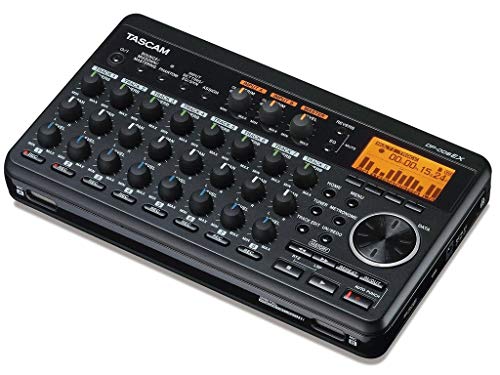
- Item Package Dimension: 12.51L x 9.68W x 6.76H inches
- Item Package Weight - 2.44 Pounds
The TASCAM DP-008EX is a different beast altogether, leaning more towards the “Pocketstudio” philosophy. While the Zoom H5 Digital Multitrack Recorder focuses on field recording and modularity, the TASCAM is designed for the songwriter who wants to build an 8-track song from scratch using built-in mastering effects and a dedicated “reverb” send. It lacks the interchangeable capsules of the Zoom and isn’t as well-suited for mounting on top of a camera. However, if your primary goal is “songwriting in a box” with physical sliders for mixing, the TASCAM is a fantastic, tactile alternative that feels more like a miniature studio console than a field recorder.
2. Zoom H8 Digital Multitrack Recorder

- ONE RECORDER THAT ADAPTS TO YOUR WORKFLOW – The Zoom H8 is built for creators who switch between setups, with dedicated modes for field recording, music, and multi-person recording.
- TEN TRACKS FROM FOUR XLR INPUTS AND TWO COMBOS – Capture up to 10 individual tracks plus a stereo mix using 4 XLR inputs and 2 combo jacks for microphones, instruments, and more.
The Zoom H8 is the H5’s bigger, more ambitious sibling. It features a large color touchscreen and specialized “apps” for podcasting, music, and field recording. While it shares the same modular capsule system as the Zoom H5 Digital Multitrack Recorder, it offers significantly more inputs (6 XLR/TRS inputs). We found the H8 to be excellent for stationary podcasting setups where you need to mic up a whole table of people. However, its “spider-like” shape makes it much less portable and harder to mount on a camera rig. If you need the maximum number of tracks and like a touch-interface, the H8 is the logical step up, but for most handheld work, the H5 remains more ergonomic.
3. Tascam DP-24SD 24-Track Digital Multi-Track Audio Recorder
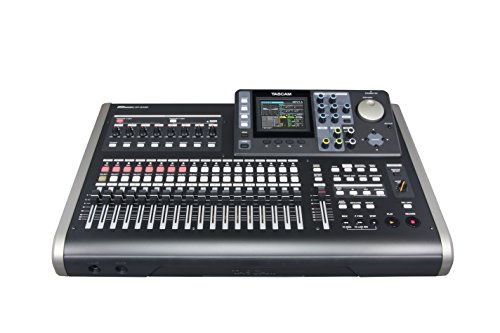
- Item Package Dimension: 23.97L x 17.49W x 7.49H inches
- Item Package Weight - 15.74 Pounds
Comparing the Zoom H5 Digital Multitrack Recorder to the Tascam DP-24SD is a matter of scale. The DP-24SD is a full-sized tabletop workstation capable of recording 24 tracks. It is not portable in the sense that you can’t hold it in one hand or take it on a hike. It is meant to be the centerpiece of a home studio. It offers 8 XLR inputs and a full suite of mixing tools. We recommend this for bands who want to record a full drum kit and multiple instruments simultaneously in a fixed location. For the mobile creator, the Zoom H5 wins on portability, but for the serious home producer, the Tascam Portastudio is a powerhouse.
Final Verdict: Is the Zoom H5 Still the King of Handheld Recorders?
After extensive testing, it is clear that the Zoom H5 Digital Multitrack Recorder remains one of the most versatile and reliable tools in the audio world. Its modular capsule system, combined with high-quality preamps and a rugged design, makes it an indispensable asset for filmmakers, musicians, and podcasters alike. While newer models offer touchscreens and higher storage limits, the H5’s tactile controls and “safety track” feature provide a level of reliability that is hard to beat. It strikes the perfect balance between professional features and ease of use, ensuring that you can focus on the performance rather than the gear.
Whether you are capturing the delicate resonance of an acoustic piano or the chaotic energy of a live concert, this recorder delivers every time. If you are looking for a device that will grow with your creative journey and withstand the test of time, look no further. We highly suggest you get the Zoom H5 here and experience the difference that professional audio can make in your projects.
Last update on 2026-09-15 / Affiliate links / Images from Amazon Product Advertising API