
BOSS Katana-110 Bass Amplifier Review: The Ultimate Swiss-Army Knife for the Modern Bassist
For years, bassists have been caught in a frustrating middle ground. You either own a tiny, thin-sounding practice amp that farts out the moment you drop to a low B, or you haul a massive 4×10 cabinet and a leaden head that breaks your back before the first set is even over. I remember the days of lugging a refrigerator-sized rig up three flights of stairs just for a coffee-shop gig, only to be told I was “too loud” before I even plugged in. The struggle isn’t just about volume; it’s about finding an amp that can whisper in a bedroom and roar on a stage without losing the fundamental character of your instrument. Solving this dilemma is crucial because a bass player’s inspiration is tied directly to their tone. When your amp sounds like a cardboard box, you stop practicing. When it doesn’t have the connectivity for modern recording, your creative output stalls. We need a solution that bridges the gap between home practice, studio precision, and small-club authority, which is exactly why I decided to take a deep dive into this comprehensive BOSS Katana-110 Bass Amplifier Review.

- Versatile combo bass amp with stage-ready sound and advanced features
- 60-watt class AB power amp delivers big, punchy tone

What to Consider Before Buying a Bass Guitar Amplifier Combo Amp
A Bass Guitar Amplifier Combo Amp is more than just a box with a speaker; it’s the heart of your signal chain and the primary filter through which your musical voice is heard. In the modern era, a combo amp serves as a key solution for space-saving, consistency, and tonal flexibility. Unlike separate heads and cabs, a combo is tuned specifically for the enclosure it sits in, ensuring that the power amp and the driver work in perfect harmony. It solves the problem of “tonal guessing” by providing a curated, all-in-one environment where you can sculpt your sound from the ground up without worrying about impedance matching or cable clutter.
The ideal customer for this type of product is the versatile “working bassist”—someone who might be practicing jazz scales in their apartment at 10:00 PM and then playing a rock set at a local bar the next evening. It is also perfect for the home studio enthusiast who needs high-quality direct-out sounds without mic-ing up a cabinet. However, it might not be suitable for those who strictly play massive stadium venues where a 60-watt 1×10 simply cannot push enough air to compete with a wall of 100-watt guitar stacks, or for purists who insist on 100% vintage vacuum tube circuitry regardless of the weight and maintenance costs. For those users, a dedicated high-wattage head and 8×10 stack might be the only path forward.
Before investing, consider these crucial points in detail:
- Dimensions & Space: Bass frequencies require physical space to develop, but your living room might not. Look for an amp that utilizes clever porting or high-quality enclosure materials to deliver deep lows without occupying half your floor space. A 1×10 configuration is often the “Goldilocks” zone for portability and punch.
- Capacity/Performance: In the world of bass, wattage doesn’t just mean volume; it means “headroom.” You want enough power (ideally 50-100 watts for a small combo) so that your clean tones don’t distort prematurely. Look for Class AB power sections if you prefer a more “organic” feel compared to the colder response of some Class D modules.
- Materials & Durability: Bass amps undergo significant internal vibration. A cheap plastic or thin particle board enclosure will rattle and buzz over time. Solid wood or high-grade MDF construction is essential for maintaining a tight, focused low end that lasts through years of transport.
- Ease of Use & Maintenance: While digital modeling offers thousands of sounds, you shouldn’t need a PhD to turn the volume up. A good combo should have an intuitive top-panel layout for quick adjustments, while offering deeper software integration for those who want to “menu dive” in a recording environment.
Ultimately, selecting the right combo amp is about balancing your current needs with your future ambitions. If you plan on moving from the bedroom to the stage, versatility is your most valuable currency. While the BOSS Katana-110 Bass Amplifier is an excellent choice, it’s always wise to see how it stacks up against the competition. For a broader look at all the top models, we highly recommend checking out our complete, in-depth guide:

- The Fender Rumble 15 V3 Bass Amplifier features 15 watts, 11.61Dx17.91Wx17.13H inches

- The Fender Rumble 25 V3 Bass Amplifier features 25 watts, a 1/8 inch auxiliary input jack, a 1/4 inch headphone output jack, and three band EQ
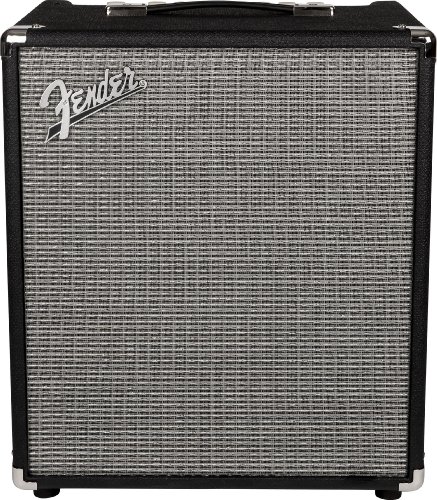
- The Fender Rumble 100 V3 Bass Amplifier features 100 watts, 7.72Dx22.83Wx20.28H inches
First Impressions: Unboxing the BOSS Katana-110 Bass Amplifier
When the BOSS Katana-110 Bass Amplifier first arrived at our studio, the first thing I noticed was the weight. At just under 20kg, it has a reassuring “heft” that speaks to its solid wood construction, yet it’s perfectly manageable with one hand. Unboxing it was a straightforward affair—no complex assembly required. Out of the box, the black textured finish and the classic Katana-style grille look professional and understated. It doesn’t scream “bedroom toy”; it looks like a piece of professional backline. To see it for yourself, you can check the latest price and availability here.
Plugging it in for the first time, I was struck by the logic of the control layout. Everything is where a bassist expects it to be. Unlike some modeling amps that replace knobs with screens, the BOSS Katana-110 Bass Amplifier retains physical pots for the four-band EQ, gain, and volume. The “Shape” switch and the three distinct amp voicings (Vintage, Flat, and Modern) are immediately accessible, allowing you to find a “home base” tone in seconds. It feels much more like a traditional boutique amp that happens to have a supercomputer hidden inside than a piece of computer hardware that happens to have a speaker.
Key Benefits
- 60-watt Class AB power amp provides incredible “punch” and analog-like feel that mimics much larger rigs.
- Incredibly versatile with three amp types and a dedicated “Shape” switch for instant tonal shifts.
- Onboard access to over 60 BOSS effects via the Tone Studio, eliminating the need for a separate pedalboard.
- Flexible output options, including a balanced XLR out and USB for direct-to-DAW recording.
Potential Drawbacks
- Accessing the full library of effects requires a computer or the optional Bluetooth adapter.
- The 60-watt output may struggle in very loud metal bands without PA support.
A Deep Dive into the BOSS Katana-110 Bass Amplifier’s Performance
The Power of Class AB: Why 60 Watts Feels Like 150
One of the most surprising things we discovered during our testing is how the BOSS Katana-110 Bass Amplifier handles volume. Most modern lightweight amps use Class D power sections. While efficient, they can sometimes feel “clinical” or “sterile.” BOSS opted for a Class AB design here, and the difference is palpable. We found that the 60 watts produced by this unit have a significant amount of “weight” behind them. When we pushed the master volume past noon, the amp didn’t just get louder; it got thicker. The way the custom 10-inch woofer interacts with the power section creates a compression that feels very much like a tube amp being driven hard.
In a side-by-side test, we found that this “60-watt” amp easily kept up with a drummer playing a moderate rock beat. One user even noted that on stage, it felt as if they had “150 watts of power,” and I have to agree with that sentiment. The low-end response remains tight and focused, never getting “mushy,” which is a common failing of 10-inch speakers in cheaper enclosures. If you are looking for that specific punchy, mid-forward presence that cuts through a mix, this is a feature that really sets it apart from the sea of generic digital practice amps.
Tonal Architecture: The Three Faces of Katana
The BOSS Katana-110 Bass Amplifier isn’t just one amp; it’s three distinct tonal foundations. We spent hours cycling through the “Vintage,” “Flat,” and “Modern” settings. The Vintage mode is a masterclass in classic rock and Motown tones. It adds a slight warmth to the low-mids and rolls off the ultra-highs, making it perfect for a P-bass with flatwounds. We found it particularly responsive to the gain knob; if you dig in hard, you get that glorious “growl” that defined 1970s rock recordings.
Switching to “Modern” provides a completely different experience. The frequency range expands significantly, offering the high-end “clack” and deep sub-lows required for slap bass or modern gospel styles. The “Flat” setting is perhaps the most impressive for those who use high-end active basses or external preamps. It provides a transparent canvas that doesn’t color the sound of your instrument. Combined with the four-band EQ—which features selectable frequencies for the low and high mids—the degree of control is staggering. We were able to notch out “muddy” frequencies at 400Hz while boosting the “attack” at 2.5kHz with surgical precision. To get a better look at how these settings are laid out, you can see its full feature set and user reviews here.
The Effects Engine: A Pedalboard in a Box
For many, the biggest selling point of the BOSS Katana-110 Bass Amplifier is the onboard effects. BOSS is, after all, the world leader in compact pedals. This amp features four independent effects sections: Compressor, Drive, and two FX slots that can be loaded with anything from choruses and flangers to octavers and synth effects. We found the onboard compressor to be particularly “musical.” It doesn’t squash the life out of your signal; instead, it evens out the peaks and adds sustain, much like the legendary BC-1X pedal.
The “Drive” section is equally impressive. Often, digital bass distortion sounds like a swarm of bees, but BOSS has tuned these drives to retain the low-end “dry” signal, ensuring your bass doesn’t disappear when you kick on the fuzz. When we connected the amp to the BOSS Tone Studio software, we were blown away by the depth of customization. You can change the order of effects, adjust hidden parameters, and even download presets from professional bassists. For a bassist who is just starting to experiment with effects, this amp saves hundreds, if not thousands, of dollars in pedal purchases. It’s an incredible value proposition that you can explore further by checking the product details.
Professional Connectivity: From Bedroom to Studio
Finally, we have to talk about how the BOSS Katana-110 Bass Amplifier integrates into a modern workflow. This isn’t just an amp for making noise in a room. The back panel features a balanced XLR DI output with a ground lift, meaning you can send your exact, EQ’d tone directly to the house PA or a recording interface without needing a separate DI box. We tested the USB out into Logic Pro, and the results were studio-quality. The computer recognizes the Katana as an audio interface, allowing for “re-amping” capabilities where you can record a dry signal and then “color” it through the amp’s circuitry later.
For late-night sessions, the headphone/recording jack includes cabinet emulations that make it sound like you are playing through a large rig, even when you are totally silent to the outside world. This versatility makes it an indispensable tool for the modern creator. Whether you are using a passive 4-string or an active 5-string (like the Rogue 5-string mentioned by some users), the input stage handles the signal with grace. The inclusion of a power control (Standby, 1W, and Max) also means you can get that cranked-amp feel at bedroom-friendly volumes, which is a lifesaver for those living in apartments.
What Other Users Are Saying
The general sentiment among owners of the BOSS Katana-110 Bass Amplifier is one of pleasant surprise regarding its actual volume and professional “feel.” We analyzed feedback from a variety of players, and a recurring theme is the “punch” of the 10-inch speaker. One user noted it was an “excellent purchase,” claiming the sound on stage felt like it had “150 watts of power,” and praised the equalizer as being of an “other level.” This aligns perfectly with our expert findings regarding the Class AB power section.
Positive reviews frequently highlight how well the amp handles 5-string basses, specifically noting that the low B string remains clear and doesn’t “mud out” the speaker. On the critical side, some users have mentioned that they wish the Bluetooth functionality was built-in rather than requiring an optional adapter (the BT-DUAL), as it would make smartphone-based editing more convenient out of the box. However, most agree that even without the software, the physical knobs provide enough control for 90% of playing situations. The consensus is clear: for the price, this amp punches far above its weight class.
Comparing the BOSS Katana-110 Bass Amplifier to the Competition
1. VOX VT20X 20-Watt Modeling Guitar Combo Amplifier

- Versatile 20-watt modeling amp with authentic tube-like tones
- Equipped with an 8-inch VOX speaker for clear, powerful sound
The Vox VT20X is a very different beast, primarily designed for guitarists but often looked at by bassists who want a small hybrid modeling solution. While it features a “Valvetronix” tube preamp circuit that offers some lovely warmth, it simply cannot compete with the BOSS Katana-110 Bass Amplifier in a bass-centric context. With only 20 watts and an 8-inch speaker, the Vox lacks the low-end headroom and the dedicated bass-voicing architecture of the Katana. Someone might prefer the Vox if they are a multi-instrumentalist primarily playing guitar who occasionally wants to plug a bass in for quiet, low-volume practice, but for serious bassists, the Katana’s 60 watts and 10-inch speaker are far superior.
2. Orange Crush 20RT Orianthi Limited Edition 20W Amp
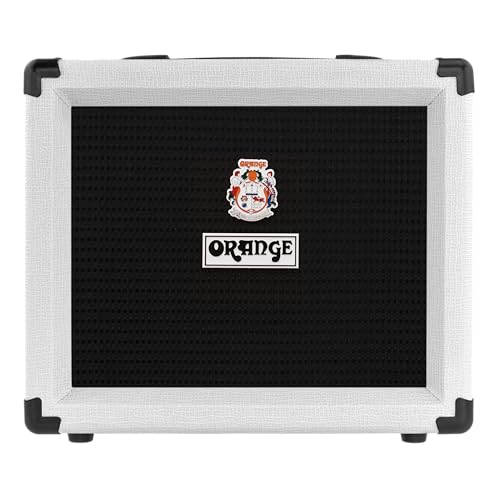
- Orianthi and Orange Signature Collaboration Combo Amp
- Covered in White Tolex and features a Twin Channel Design
The Orange Crush 20RT Orianthi edition is a stunning, boutique-looking amplifier that excels at pure, analog-style guitar tones. It’s simple, rugged, and has a great built-in reverb. However, when compared to the BOSS Katana-110 Bass Amplifier, its limitations become obvious. It lacks any of the digital modeling, extensive effects, or bass-specific EQ frequencies found on the BOSS. The Orange is for the player who wants a “plug-and-play” experience for guitar and doesn’t care about software integration. If you are a bassist, the Orange Crush 20RT will feel thin and lacks the DI-out capabilities that make the Katana a professional-grade tool.
3. Orange Crush 35RT 2-Channel Guitar Amplifier Combo
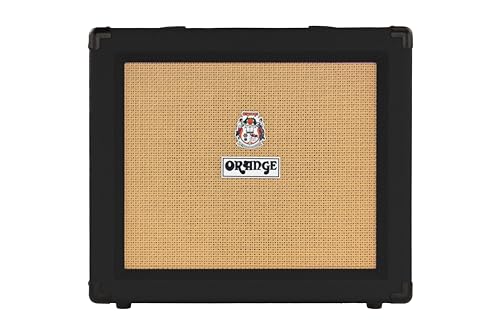
- Footswitchable channels and an analogue signal path
- Cab Sim loaded headphone output
The Orange Crush 35RT is a more formidable opponent in terms of build quality and sheer “vibe.” It’s an analog powerhouse with 35 watts and a 10-inch speaker. It offers a beautiful high-gain channel and a very responsive EQ. However, it remains a guitar amplifier at heart. While it can handle bass at low volumes, it doesn’t have the tuned bass porting or the three bass-specific amp characters found in the BOSS Katana-110 Bass Amplifier. The BOSS wins on versatility every time, offering a suite of bass effects and the BOSS Tone Studio which the Orange simply doesn’t have. The 35RT is a fantastic amp for a rock guitarist, but it lacks the “Swiss-army knife” utility that makes the Katana the better choice for the modern bassist.
Final Verdict: Is the BOSS Katana-110 Bass Amplifier Right for You?
After weeks of testing, it’s clear that the BOSS Katana-110 Bass Amplifier is one of the most intelligent designs in the world of bass amplification today. It successfully merges the “feel” of an analog amp with the infinite possibilities of digital modeling. Its 60-watt Class AB power section provides more than enough volume for practice and small gigs, while its direct-out features make it a powerhouse in the home studio. Whether you are a beginner looking for your first “serious” amp or a pro needing a portable rig that doesn’t sacrifice tone, this amp delivers on every front.
In summary, if you value versatility, professional connectivity, and a “big amp” sound in a small package, you will not be disappointed. While the 60-watt limit means it might not be the choice for a heavy metal stadium tour, for almost every other scenario, it is the gold standard of modern combo amps. We highly recommend you head over and grab the BOSS Katana-110 Bass Amplifier to experience this new level of bass performance for yourself. Your back—and your ears—will thank you.
Last update on 2026-09-15 / Affiliate links / Images from Amazon Product Advertising API