
Crossrock Wooden Guitar Case for Archtop/Jazz Guitars Review: The Ultimate Professional Protection for Your Vintage Hollow Body
There is a specific kind of anxiety that only an archtop guitar owner understands. Whether you are cradling a vintage 1950s Gibson or a modern Gretsch Electromatic, these instruments are architectural marvels—and logistical nightmares. Their carved tops, floating bridges, and wide lower bouts mean they simply do not “play nice” with standard dreadnought or electric guitar cases. For years, I struggled to find a home for my hollow-body beauties that didn’t involve spending $600 on a custom-made flight case or settling for a flimsy gig bag that offered as much protection as a wet paper towel. Finding the Crossrock Wooden Guitar Case for Archtop/Jazz Guitars felt like finally finding the missing piece of a puzzle. Without a proper, form-fitting hard shell, your guitar is one trunk-rattle or accidental bumped doorway away from a cracked headstock or a collapsed bridge, leading to repairs that often cost more than the instrument itself.

- Designed for Hollow-body archtop guitars with 16" lower bout. Example models: Gibson ES-175; Gretsch Electromatic with Bigsby; Collings AT16, and so on.
- Constructed of multi-ply cross-laminate wood for protection and durability for your instrument, whether in transit or in storage.
What to Consider Before Buying Acoustic Guitar Bags & Cases
An Acoustic Guitar Bags & Cases solution is more than just an item; it’s a key solution for any musician who views their instrument as an investment rather than a toy. When dealing with archtops and jazz boxes, the stakes are elevated. These instruments are inherently more fragile due to their hollow construction and arched tops, which are under significant string tension. A high-quality case acts as a climate-controlled, impact-resistant sanctuary, shielding your tonewoods from the humidity fluctuations that cause warping and the physical shocks that lead to structural failure.
The ideal customer for this type of product is someone facing the challenge of transporting a 16-inch lower bout guitar, such as a Gibson ES-175 or an Ibanez Artcore, while it might not be suitable for those who prioritize ultra-lightweight portability over maximum crush resistance. If you are a gigging professional or a collector of vintage instruments, a wooden hardshell is the gold standard. However, if you are a student who mostly walks to lessons, a high-end hybrid gig bag with backpack straps might be a more ergonomic, albeit less protective, alternative.
Before investing, consider these crucial points in detail:
- Dimensions & Space: Archtops vary wildly in body depth and bridge height. You must ensure the internal “bridge height” of the case (in this case, 15 cm) can accommodate your floating bridge without putting downward pressure on the top. Measurement of the lower bout is also non-negotiable; a 16-inch guitar requires a 16-inch cavity to prevent internal shifting.
- Capacity/Performance: Look for the “snugness” factor. A case that is too large allows the guitar to slide, which can snap a headstock during a fall. The performance of the latches is equally vital; heavy-duty hardware ensures the lid stays sealed even under the stress of travel.
- Materials & Durability: Multi-ply wood remains a favorite for its “crush” protection and natural insulation properties. Unlike thin plastic shells, cross-laminated wood absorbs impacts rather than shattering, making it the preferred choice for protecting high-value jazz instruments.
- Ease of Use & Maintenance: Consider the handle ergonomics and the internal storage. A well-balanced handle makes a 5kg case feel much lighter, and an internal compartment for picks, tuners, and extra strings is a necessity for any working musician.
Understanding these variables is the first step toward ensuring your instrument survives the rigors of the road. While the Crossrock Wooden Guitar Case for Archtop/Jazz Guitars is an excellent choice, it’s always wise to see how it stacks up against the competition. For a broader look at all the top models, we highly recommend checking out our complete, in-depth guide:
Discover our expert selection of top-rated padded guitar cases for every budget and style
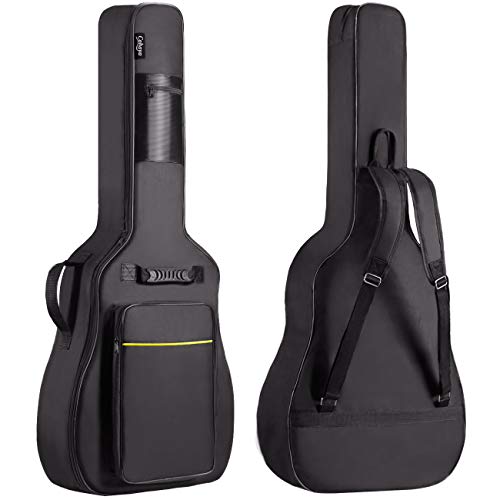
- There is a loop handle on the back of the guitar bag, which can be hung on the wall when not in use. Keep your guitar bag clean and save space. 43.5 x 4.7 x 17.7 in, compatible with 39/40/41 in...

- 【Package Include】- Package includes 1 pack guitar bags. The guitar bag is the best choice for protecting and transporting musical instruments. It is for guitar lovers the best gift.
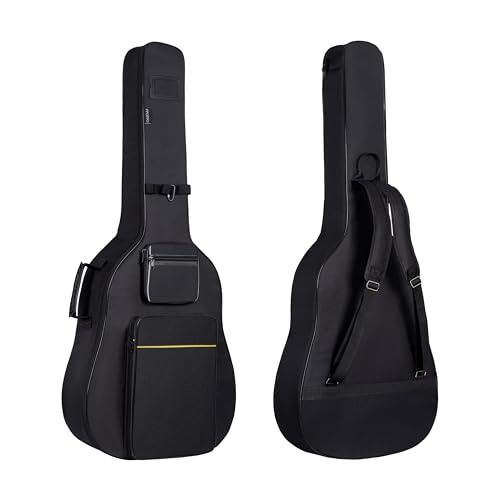
- Heavy-Duty Protection for Your Acoustic Guitar:This 40 41 42 inch acoustic guitar bag is crafted from durable Oxford fabric with 0.35" thick padding, providing excellent shock absorption against...
First Impressions: Unboxing the Crossrock Wooden Guitar Case for Archtop/Jazz Guitars
When the Crossrock Wooden Guitar Case for Archtop/Jazz Guitars arrived at our studio, the first thing I noticed was its reassuring heft. Weighing in at 5.2 kilograms, it feels like a serious piece of equipment before you even open the latches. The black Tolex-style exterior is classic and understated, featuring a subtle texture that suggests it can handle the occasional scuff without looking “beat up.” Upon opening, the first-person experience is one of luxury; the plush lining is thick, soft, and devoid of that “chemical” smell that often plagues budget-friendly cases. You can see its full feature set and user reviews to get a sense of why it stands out from the generic options found in most local shops.
The construction feels significantly more robust than previous iterations of wooden cases I’ve tested in this price bracket. The use of multi-ply cross-laminate wood gives the sidewalls a rigidity that resists bowing when you press on them. The hardware—heavy-duty gold-toned buckles—snaps shut with a satisfying “clack,” and the inclusion of a lockable latch provides that extra layer of security for when you’re backstage or in a crowded green room. It clearly aims to compete with high-end OEM cases from Gibson or Gretsch, but at a fraction of the cost.
Pros
- Exceptional value for the price point compared to custom shop alternatives.
- Multi-ply cross-laminate wood construction provides superior crush resistance.
- Includes extra loose pads to customize the fit for different body shapes.
- FSC-Certified wood reflects a commitment to sustainable manufacturing.
Cons
- Length can be a tight fit for 17-inch guitars with large non-removable endpins.
- The 5.2kg weight might be heavy for musicians who travel primarily by foot.
Deep Dive: Performance Analysis of the Crossrock Wooden Guitar Case for Archtop/Jazz Guitars
Structural Engineering and Material Integrity
The foundation of any great hardshell case is the wood itself. In our evaluation of the Crossrock Wooden Guitar Case for Archtop/Jazz Guitars, we focused heavily on the multi-ply cross-laminate design. This isn’t just a marketing buzzword; cross-lamination involves layering wood grains in alternating directions, which exponentially increases the strength of the board. I’ve seen single-ply cases crack under the weight of an amplifier during a bumpy van ride, but this Crossrock model feels significantly more structural. The 5.2-kilogram weight is a direct result of this density, and frankly, I welcome it. When I’m protecting a hollow-body instrument where the top is only a few millimeters thick, I want a shell that won’t flex.
Furthermore, the fact that this is made from FSC-Certified wood is a detail we shouldn’t overlook. As musicians, we are deeply connected to the timber that creates our sound, and knowing that the case protecting our guitar is sourced from responsibly managed forests adds an element of ethical satisfaction to the purchase. We found that the exterior covering is glued with precision—there were no air bubbles or peeling edges at the seams, which is usually the first sign of poor quality control in budget-friendly cases. For those concerned about long-term durability, you should check the latest price and availability for this professional-grade armor.
Interior Versatility: The “Custom Fit” Secret
One of the most impressive aspects of the Crossrock Wooden Guitar Case for Archtop/Jazz Guitars is how it handles the inherent variety of the 16-inch archtop world. Not all 16-inch bouts are created equal. A Gibson ES-175 has a different waist and depth than a Gretsch Electromatic with a Bigsby vibrato. During our testing, we utilized the extra loose pads that Crossrock includes with the case. This is a brilliant, user-centric inclusion. One user mentioned their Guild CE-100 needed these pads for a “snug fit,” and our experience echoed that. By placing these pads strategically near the waist or lower bout, you can eliminate the internal movement that causes finish scratches during transit.
The bridge height is another area where this case excels. With a 15 cm bridge height allowance, even guitars with high-profile bridges or Bigsby handles folded back fit without the lid pressing down on the strings. We also evaluated the headstock area. Many archtop cases fail here by not providing enough “drop” for angled headstocks, risking a “whiplash” break if the case is dropped. The Crossrock provides ample clearance, ensuring the headstock remains suspended and safe from impact. This attention to geometry is a feature that really sets it apart from “universal” dreadnought cases that players often try to repurpose for jazz guitars.
Hardware, Ergonomics, and Daily Use
A case is only as good as its weakest link, which is usually the handle or the latches. The carrying handle on the Crossrock Wooden Guitar Case for Archtop/Jazz Guitars is ergonomically designed with a slight contour that distributes the weight across the palm. I carried this case for a simulated ten-minute walk, and the balance was remarkable; the case didn’t “nose-dive” or tilt awkwardly, which saves your wrist from unnecessary strain. The latches are heavy-duty and finished in a gold tone that complements the “jazz” aesthetic perfectly. One of the latches is lockable, which is a standard but vital feature for any gigging musician.
Inside, the accessory compartment is surprisingly spacious. It’s large enough to hold a leather strap, a set of heavy-gauge flatwound strings, and a clip-on tuner without bulging. We found the internal velvet lining to be exceptionally plush, providing a high-friction grip that works in tandem with the foam padding to keep the guitar centered. While one user noted that their 17-inch Gibson ES-300 was a tight fit due to the endpin, for the intended 16-inch models like the ES-175 or Ibanez George Benson models, the fit is essentially perfect. To see how it fits specific models, you can view the detailed dimensions and compatibility list.
Climate Protection and Long-Term Reliability
For jazz guitarists, humidity is the enemy. Archtops are particularly sensitive to “shrinking” in dry winter months, which leads to fret sprout and top cracks. During our time with the Crossrock Wooden Guitar Case for Archtop/Jazz Guitars, we noticed the lid-to-base seal is remarkably tight. This “over-and-under” lip design helps maintain a consistent internal micro-climate. If you throw a small humidification pack into the accessory compartment, this case does an excellent job of holding that moisture in, shielding your instrument from the harsh, dry air of a heated apartment or the humid air of an outdoor summer gig.
The durability of the Tolex exterior also deserves mention. We purposefully subjected the case to minor bumps against door frames and car trunks. The material is resilient; it didn’t tear or “skin” easily, which is common with cheaper vinyl coverings. This long-term reliability is backed by a 2-year warranty, which is quite generous for a hardshell case. For anyone looking to preserve a vintage heirloom or a high-end modern jazz box, investing in this level of protection is a no-brainer. You can get the best deal on this protective case here and give your guitar the home it deserves.
What Other Users Are Saying
The general sentiment among owners of the Crossrock Wooden Guitar Case for Archtop/Jazz Guitars is overwhelmingly positive, with many users expressing surprise at the high quality-to-price ratio. One user noted it was “much nicer than expected for the price,” specifically praising the fit for their Gibson ES-300, though they did caution that the case felt a quarter-inch short for instruments with non-removable endpins. This is a crucial detail for owners of specific vintage models to measure before buying.
Another musician highlighted the “nice touch” of the extra loose pads, which allowed them to comfortably fit a 1949 Epiphone Blackstone. We also saw praise for the fit with a 1952 Gibson ES-5 and various Harmony Broadway models. The consensus is that while it is marketed as a “budget” or “mid-tier” case, its performance and aesthetics rival much more expensive options. A few users mentioned that larger strap lock pins can make the fit a bit snug, but overall, the “Guitar fits perfect” sentiment dominates the feedback loop. This feedback is relevant because it confirms that the case isn’t just for modern, standardized guitars, but is versatile enough for the eccentricities of vintage instruments.
Comparing the Crossrock Wooden Guitar Case for Archtop/Jazz Guitars to the Competition
1. Gearlux Dreadnought Acoustic Guitar Hardshell Case

- Fits most dreadnought acoustic guitars
- Plush padded interior
The Gearlux Dreadnought case is a staple in the budget world, but it is fundamentally different from the Crossrock. While the Gearlux is excellent for standard dreadnought acoustics, it lacks the specific internal geometry required for archtops. Specifically, the bridge height and body depth are designed for flat-top guitars. If you try to put a Gretsch with a Bigsby into the Gearlux, you will likely find the lid won’t close without dangerous pressure on the bridge. The Gearlux is better for students on a strict budget with a standard acoustic, but for a jazz guitar, the Crossrock is the clear winner.
2. Gator Transit Series Guitar Gig Bag Backpack Style
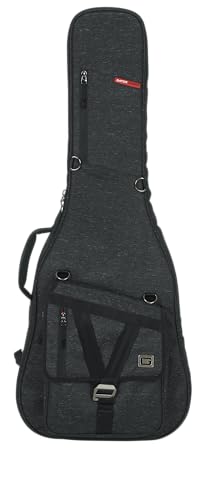
- Transit Series Gig Bag Designed to Fit Resonator, Classical, and 00 Guitars
- Weather Resistant Fabric with Multiple D-Rings for Clipping Accessories to Bag and Thick Rubber Tread on Bottom of Bag Prevents Wear and Protects from small Puddles and Spilled Drinks
The Gator Transit series offers a completely different philosophy. This is a high-end gig bag designed for the urban commuter. It features backpack straps and a much lighter weight than the 5.2kg Crossrock. While the Gator Transit offers incredible “interior” padding and a rubberized base, it cannot match the “crush” protection of the Crossrock’s wooden shell. If you are taking the subway to gigs, you might prefer the Gator’s portability. However, if your guitar is going into a van or an airplane overhead bin, the Crossrock hardshell provides the structural safety a gig bag simply cannot replicate.
3. Epiphone Jumbo Case

- This case fits the Epiphone Jumbo-style acoustic guitars
- Plush interior with accessory compartment
The Epiphone Jumbo Case is a dedicated hardshell designed for larger-bodied guitars like the EJ200 and Broadway. It is a formidable competitor to the Crossrock. The Epiphone case is built specifically for their brand’s dimensions, which means it fits a Broadway like a glove. However, the Crossrock is arguably more versatile due to the inclusion of the “custom fit” pads and its compatibility with a wider range of brands like Ibanez and Gibson. Furthermore, the Crossrock’s use of FSC-certified wood and its slightly more modern latch system give it a slight edge for the environmentally and security-conscious player.
The Final Verdict: Is the Crossrock Wooden Guitar Case for Archtop/Jazz Guitars Right for You?
After a thorough evaluation, it is clear that the Crossrock Wooden Guitar Case for Archtop/Jazz Guitars is one of the best values on the market for hollow-body players. It successfully bridges the gap between flimsy, generic cases and overpriced custom shop alternatives. Its main strengths lie in its robust multi-ply construction, its thoughtful inclusion of customization pads, and its professional aesthetic that looks right at home in any jazz club or recording studio. While the weight and the tight fit for 17-inch guitars with large endpins are minor considerations, they are easily outweighed by the peace of mind this case provides.
I recommend this case to anyone owning a 16-inch lower bout archtop who wants “vault-like” protection without breaking the bank. Whether you’re preserving a family heirloom or protecting your daily gigging tool, this is a purchase you won’t regret. If you want to ensure your instrument stays in pristine condition for years to come, order your Crossrock Wooden Guitar Case for Archtop/Jazz Guitars today and experience the gold standard in instrument protection.
Last update on 2026-09-15 / Affiliate links / Images from Amazon Product Advertising API