
Radial Engineering HotShot DM1 Microphone Mute Switch Review: The Ultimate Stage Communication Solution?
Have you ever been in the middle of a high-energy set, needing to tell your sound engineer that your monitors are feeding back, or perhaps you needed to remind your drummer that you’re skipping the bridge, but the only way to do it was to scream over the monitors or wait for a break between songs? We have been there more times than we care to admit. In a live environment, communication is everything. Without a clear line to the monitor desk or your bandmates’ in-ear mixes, small issues can quickly snowball into a disastrous performance. The problem is that your main vocal microphone is usually routed directly to the Front of House (FOH) speakers, meaning every “private” word you say is broadcast to the entire audience. This is exactly where a tool like the Radial Engineering HotShot DM1 Microphone Mute Switch becomes an absolute lifesaver. Failing to solve this communication gap often leads to missed cues, technical frustrations, and a general lack of professional polish on stage. We decided to put this rugged little box to the test to see if it truly is the “set it and forget it” solution that professional touring acts claim it to be.
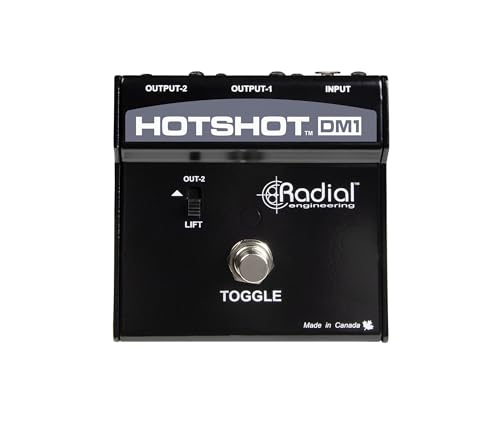
- Onstage Stage Mic Toggle Pedal with Microphone Signal Splitter/Mute Footswitch
Essential Considerations for Your Live Signal Path and Utility Pedals
Investing in your signal path is more than just buying a new instrument; it’s about ensuring that every ounce of your performance reaches the audience—and your team—with clarity and intent. A dedicated signal switcher or muting device is a key solution for vocalists and multi-instrumentalists who need to maintain control over where their voice goes at any given second. In the chaotic environment of a live stage, having a foot-controllable “cough drop” or “comm switch” ensures that you can handle technical business without breaking the fourth wall for the listeners in the front row.
The ideal customer for this type of product is a professional or semi-professional musician who uses In-Ear Monitors (IEMs) or works with a dedicated monitor engineer. It is an essential tool for bandleaders who need to call out changes on the fly. However, it might not be suitable for those who perform solo with a simple “mic-to-PA” setup where there is no secondary channel or monitor desk to route a signal to. In those cases, a simple latching mute might suffice, though the Radial Engineering HotShot DM1 Microphone Mute Switch offers much more specialized utility. If you are looking to see its full feature set and user reviews, you will notice it is built specifically for the rigors of the road.
Before investing, consider these crucial points in detail:
- Dimensions & Space: When you are building a pedalboard or arranging your stage floor, every inch matters. You want a device that is compact enough to fit between your existing pedals but heavy enough that it won’t slide around when you go to stomp on it in the dark. The Radial Engineering HotShot DM1 Microphone Mute Switch strikes a great balance here with its 2 x 5 x 5-inch footprint.
- Capacity/Performance: In the world of microphone signals, transparency is king. You need to ensure the device doesn’t introduce “pops” or “clicks” when switched, and that it doesn’t degrade the audio quality of your expensive condenser or dynamic microphones. Passive designs are generally preferred for their lack of electronic interference.
- Materials & Durability: Stage gear gets abused. It gets stepped on, spilled on, and tossed into equipment trunks. Look for heavy-gauge steel construction rather than plastic. A 14-gauge steel enclosure is the industry standard for “tank-like” durability, ensuring the internal connections remain secure after years of touring.
- Ease of Use & Maintenance: On a dark stage, you don’t want to be fiddling with menus or small buttons. A large, robust footswitch is mandatory. Additionally, since this is a passive device, the lack of a power requirement means one less cable to worry about and zero maintenance regarding batteries or power supplies.
While the Radial Engineering HotShot DM1 Microphone Mute Switch is an excellent choice for vocal routing and stage communication, it’s always wise to see how it stacks up against other utility items in your signal chain. For a broader look at all the top models that help keep your performance in tune and under control, we highly recommend checking out our complete, in-depth guide:

- [High Brightness Screen] The tuner pedal features a color LCD display that allows you to check your intonation intuitively. Colorful display is clearly visible in bright or dim conditions, such as...
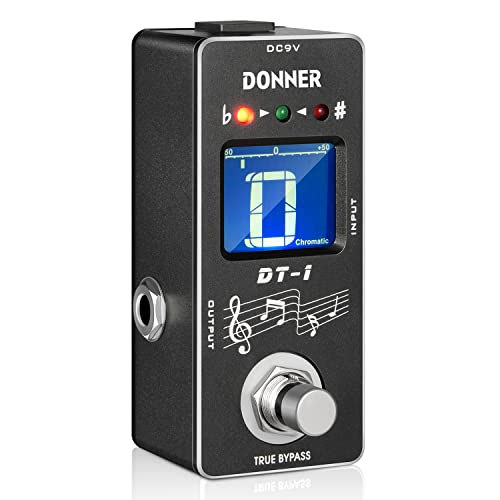
- 【Wide Range Tuner】Tuning range is A0(27.5 Hz) ~ C8(4186 Hz). New fast precise strobe mode with +/- 1 cent accuracy
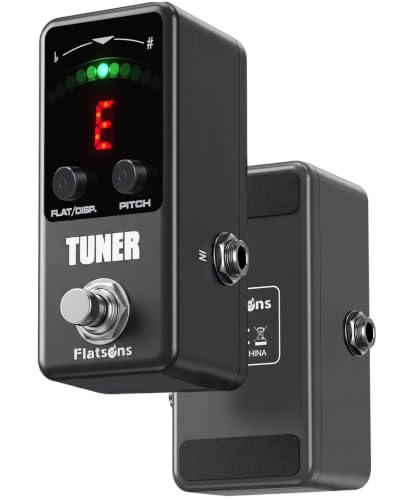
- Bright Color Display – Easy to Read Anywhere.The built‑in color LCD screen shows your tuning status clearly, even on dark stages, outdoor daylight, or cramped pedalboards. The intuitive interface...

First Hands-On: Rock Solid and Built Like a Tank
When we first pulled the Radial Engineering HotShot DM1 Microphone Mute Switch out of its packaging, the first thing we noticed was the weight. At 1.2 pounds, it feels incredibly dense for its size. This isn’t your typical lightweight consumer electronic; it feels like a piece of industrial equipment. The 14-gauge steel chassis is finished in a tough baked enamel that looks like it can withstand decades of being stomped on. Before you even plug it in, you can check the latest price and availability and see that it is positioned as a pro-grade tool.
The setup is remarkably straightforward. It features one XLR input for your microphone and two XLR outputs. Output 1 is your default (usually FOH), and Output 2 is your “toggle” (usually your monitor desk or talkback channel). There are no knobs to mess with, just a single, heavy-duty footswitch. It is a momentary switch, meaning it only redirects the signal as long as your foot is holding the button down. This is a critical design choice for stage communication, preventing you from accidentally leaving your “private” mic channel open for the whole show. Compared to older, plastic-housed muting switches we’ve used in the past, the Radial Engineering HotShot DM1 Microphone Mute Switch feels significantly more professional and reliable.
Key Benefits
- Ultra-rugged 14-gauge steel construction for maximum durability.
- Completely passive design—requires no power or batteries.
- Silent switching with no audible “pops” or “clicks” in the audio path.
- Momentary action ensures you never accidentally stay on the talkback channel.
Drawbacks
- Momentary switch only; no option to “latch” the switch for long speeches.
- Requires a second channel on the mixer or a separate monitor rig to be effective.
Putting the HotShot DM1 Through the Rigors of Live Performance
Silent Switching and Audio Integrity
In our testing, the most critical factor was whether the Radial Engineering HotShot DM1 Microphone Mute Switch would introduce any noise into the signal chain. Many lower-quality switches produce a noticeable “thump” or “click” when the circuit is engaged or disengaged. This is unacceptable when you are plugged into a 50,000-watt PA system. We were delighted to find that the DM1 is exceptionally quiet. Because it uses high-quality internal components to handle the ground and signal lifting, the transition between Output 1 and Output 2 is virtually seamless.
We tested this with both high-end dynamic microphones and phantom-powered condensers. It’s worth noting that since this is a passive switcher, it does not interrupt phantom power, allowing your condenser mics to stay “hot” and ready to go. One user we spoke with noted that they were “very impressed on how this little guy works! No pops no clicks nothing.” We found this to be 100% accurate. Whether we were whispering a quick cue to the drummer or shouting over a loud stage, the audio remained clean, and the switch remained silent, which is a feature that really sets it apart in the world of signal management.
The Power of Momentary Routing
The “momentary” aspect of the Radial Engineering HotShot DM1 Microphone Mute Switch is its greatest asset for live performers. During our trial runs at a local club, we found that having to keep your foot on the pedal actually enforced better communication discipline. In the past, we’ve used latching switches where we would talk to the band, forget the switch was on, and then perform half a song into the talkback channel while the audience heard nothing. With the DM1, that is impossible. As soon as you lift your foot, your voice is back at the Front of House.
This functionality is particularly useful for horn players or backing vocalists who might need to mute their mic quickly to cough or clear their throat without the audience hearing. As one user mentioned in their evaluation, “you have to maintain pressure so it goes out through Output 2… when you release it returns to its normal state.” This mechanical simplicity is exactly what you want when your brain is focused on a complex performance. You can see how this fits your workflow by considering how often you need to communicate during a set.
Bulletproof Construction for the Touring Professional
We didn’t just step on this pedal; we stomped on it. We dropped it on concrete and let it rattle around in a gig bag with heavy cables. The 14-gauge steel didn’t even dent. Radial Engineering is famous for their “Book-end” design, which protects the XLR connectors and switches from being sheared off by a misplaced foot or a falling equipment rack. This design philosophy is fully present in the Radial Engineering HotShot DM1 Microphone Mute Switch.
The bottom of the unit features a full-surface non-slip rubber pad. This is a small but vital detail. Many utility pedals tend to skate across a stage floor, especially on polished wood or smooth concrete. The DM1 stays exactly where you put it. We found that even during frantic transitions, the pedal remained firmly planted. For a device that weighs only 1.2 pounds, its “grip” on the stage is impressive. This level of build quality is why we consider it a standard for any touring vocal professional who needs a reliable signal mute.
A Passive Solution to Complex Routing
One of the biggest headaches for any musician is managing power. Between pedalboards, amplifiers, and active DI boxes, the last thing you want is another wall-wart taking up space on your power strip. The Radial Engineering HotShot DM1 Microphone Mute Switch is entirely passive, meaning it requires no external power source to function. It uses the physical mechanical action of the switch to route the existing microphone signal.
This “plug and play” nature makes it an ideal addition to any gig bag. You can show up at a venue, plug your mic into the DM1, run two lines out, and you are ready to go in seconds. During our evaluation, we appreciated that there were no LEDs to worry about (though some might prefer an indicator, the mechanical feel of the switch is enough of a tactile “indicator”). The simplicity of the design means there are fewer points of failure. In the high-stakes environment of a live show, simplicity often equals reliability. If you want to simplify your stage setup, we suggest you look into adding this to your kit.
What Other Users Are Saying
The general consensus among professional users is that the Radial Engineering HotShot DM1 Microphone Mute Switch is the gold standard for stage communication. One user noted that after testing it at multiple events, it was “just what I wanted,” highlighting that the signal default to Output 1 and the momentary switch to Output 2 worked exactly as advertised. Another user was particularly impressed by the audio quality, mentioning that “Output 2 is louder than Output 1” when using in-ear monitoring, which actually helps the talkback signal cut through a loud mix more effectively.
While the feedback is overwhelmingly positive, a few users did mention that it took a moment to get used to the momentary-only function if they were coming from a latching-style switch. However, most quickly realized this was a safety feature rather than a limitation. The lack of an LED indicator was also mentioned by one reviewer, but they conceded that since the unit is passive and requires no power, this was a necessary trade-off for the ultimate reliability the pedal offers. Overall, the sentiment is that if you need a mute switch that will never fail you, this is the one to buy.
Comparing the HotShot DM1 to Essential Signal Path Alternatives
While the Radial Engineering HotShot DM1 Microphone Mute Switch is a specialized tool for vocalists, it lives within a broader ecosystem of signal path utilities. Depending on your specific needs on stage—whether it’s boosting your signal, powering your board, or controlling effects—you might be looking at other high-quality pedals to round out your setup.
1. Xotic EP Booster Mini EQ Pedal

- Internal Switches for Bass Boost and Bright
- Discrete FET Preamp
The Xotic EP Booster is a very different animal than the DM1, but it’s an equally essential signal path tool. While the DM1 focuses on routing and muting, the EP Booster is designed to provide up to 20dB of unadulterated gain to your signal. We find that many musicians who care about their vocal routing also care deeply about their instrument’s “presence.” The EP Booster is perfect for the player who needs their solos to jump out of the mix with a rich, vintage character. If your problem isn’t communication but rather “getting heard” during a performance, this mini-pedal is a fantastic alternative or companion to your utility board.
2. Truetone 1 SPOT Pro CS7 Isolated Pedal Power Supply
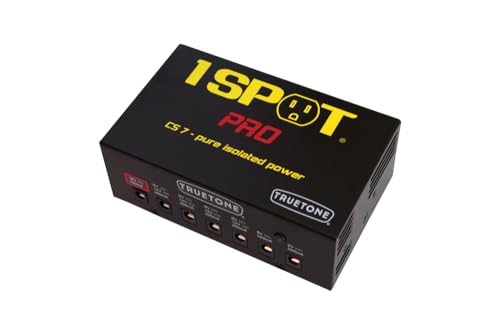
- Pedalboard Power Supply with 7 Outlets: 1 x 18V
- 4 x Switchable 9V/12V
If you find that your stage setup is getting cluttered with various utility pedals, you’re going to need a way to power them cleanly. While the Radial Engineering HotShot DM1 Microphone Mute Switch is passive, other tools in your chain won’t be. The Truetone 1 SPOT Pro CS7 is a world-class isolated power supply. In our experience, using high-quality isolated power is the only way to ensure that your signal path remains free of digital hum and interference. For the professional who is building a complex routing board that includes the DM1 along with active tuners or boosters, the CS7 is the “engine room” that keeps everything running smoothly.
3. BOSS EV-30 Dual Expression Pedal

- Isolated dual expression outputs for controlling two devices with one pedal
- Silky feel and smooth pivot for precise parameter control
For those who want even more control over their signal than a simple mute switch provides, the BOSS EV-30 offers a different kind of utility. While the DM1 is a “binary” switch (either Output 1 or Output 2), an expression pedal allows for variable control over parameters. We’ve seen some advanced setups where an expression pedal is used to blend vocal effects in and out. Like the Radial unit, the BOSS EV-30 is built with a heavy-duty chassis designed for professional use. If you are more of a “creative” signal router rather than a “utility” communicator, the EV-30 might be the direction you want to take your stage floor setup.
Final Verdict: Is the Radial Engineering HotShot DM1 Worth It?
After weeks of testing and integrating it into various live setups, our verdict is clear: the Radial Engineering HotShot DM1 Microphone Mute Switch is a virtually indestructible, mission-critical tool for any performer using in-ear monitors or a dedicated monitor engineer. Its greatest strengths lie in its simplicity, its silent operation, and its heavy-duty construction. While it is a specialized tool that requires a two-channel setup to truly shine, for those who need it, there is no better option on the market today.
If you’re tired of shouting cues to your bandmates or having your “off-camera” comments broadcast to the whole room, this is the solution you’ve been looking for. It eliminates the “pop” of cheap switches and the worry of batteries dying mid-show. We highly recommend this pedal to touring vocalists, bandleaders, and anyone who values professional-grade communication on stage. To take your stage presence to the next level of professionalism, we suggest you click here to secure your own Radial Engineering HotShot DM1 and experience the peace of mind that comes with total signal control.
Last update on 2026-09-15 / Affiliate links / Images from Amazon Product Advertising API