
Behringer RHYTHM DESIGNER RD-6-SR Analog Drum Machine Review: The Most Affordable Path to Classic Analog Soul?
In the modern studio environment, we are often overwhelmed by endless gigabytes of samples and high-definition plugins that promise to replicate the “vintage” feel. However, as any seasoned producer will tell you, there is an unmistakable magic in true analog circuitry that software often fails to capture—the slight instabilities, the punchy transients, and the raw grit of electricity moving through components. For years, if you wanted the iconic sound of the silver-boxed 80s drum machines, you had two choices: spend a fortune on a fragile vintage unit or settle for a digital imitation. This is the exact dilemma that leads many of us to search for a solution like the Behringer RHYTHM DESIGNER RD-6-SR Analog Drum Machine. Solving this problem is crucial because the rhythm section is the heartbeat of any track; if your drums feel thin or “too perfect,” the whole production can lose its soul. We decided to see if this budget-friendly powerhouse could truly replace the legends of the past.
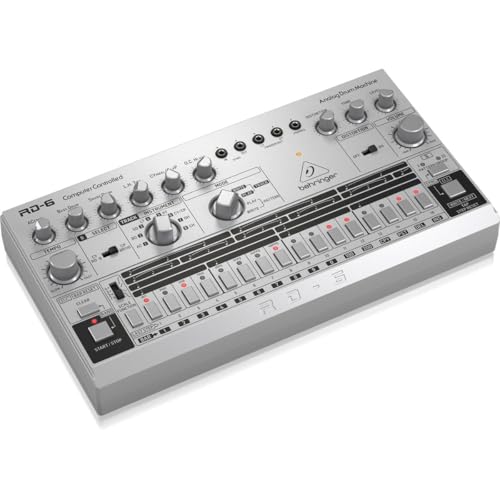
- Amazing Drum Machine with true analog circuitry for classic sound performance
- Authentic reproduction of original circuitry with matched transistors
What to Consider Before Buying a Drum Machine
A Drum Machine is more than just an item; it’s a key solution for producers, live performers, and synth enthusiasts who need a tactile, hardware-based approach to rhythm. Unlike a software sequencer, a hardware drum machine allows for “happy accidents” and hands-on manipulation that can spark immediate creativity. It serves as the foundation of your studio’s timing and the primary source of percussive texture.
The ideal customer for this type of product is someone facing the “screen fatigue” of modern DAW-based production, or a live performer who needs reliable, hardware-only beats that won’t crash during a set. It is perfect for those who crave the specific, chirpy, and punchy character of early acid house and techno. However, it might not be suitable for those who require realistic acoustic drum sounds or massive sample libraries; if you need a “real” drummer sound for a jazz ballad, an analog synth-based machine is likely not your best bet. In those cases, a high-end sampler or a digital workstation would be a better alternative.
Before investing, consider these crucial points in detail:
- Dimensions & Space: Consider your desk “real estate.” You want a machine that is large enough to play comfortably with your fingers but small enough to fit into a backpack for a gig. The Behringer RHYTHM DESIGNER RD-6-SR Analog Drum Machine strikes a great balance here, offering a compact footprint without feeling cramped.
- Capacity/Performance: Look at the sequencer depth. Does it offer 16 steps, or can it go up to 64? Can you chain patterns together to create a full song? Performance features like “accent” and “swing” are also vital for making electronic beats feel “human” or “funky.”
- Materials & Durability: While plastic is common in entry-level gear, look for high-quality switches and pots. Since you will be hitting these buttons thousands of times, the tactile response needs to be firm and consistent. A polished finish and sturdy chassis are signs of a machine built for the long haul.
- Ease of Use & Maintenance: Some drum machines require a PhD to program. The best ones are intuitive—you should be able to start a beat within seconds of turning it on. Also, consider connectivity; having individual outputs for each sound is a massive advantage for professional mixing and recording.
Understanding these factors will help you determine if a specific model fits your workflow. While the Behringer RHYTHM DESIGNER RD-6-SR Analog Drum Machine is an excellent choice, it’s always wise to see how it stacks up against the competition. For a broader look at all the top models, we highly recommend checking out our complete, in-depth guide:
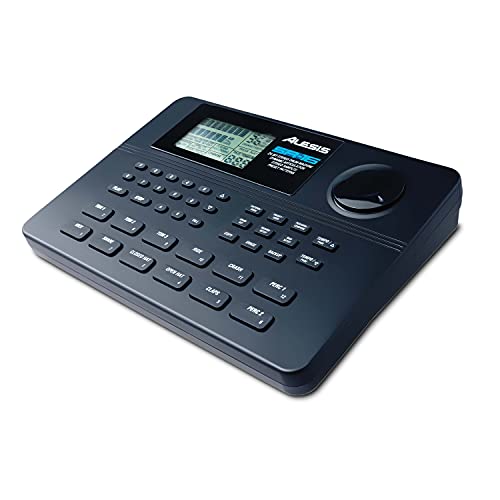
- A Studio Icon - Legendary classic drum machine for songwriters, live performers and remix engineers


- Compact stylus drum machine - 4 drum kits, 4 bass sounds

- Compact and portable design with a built-in speaker for on-the-go music creation
First Impressions and Key Features of the Behringer RHYTHM DESIGNER RD-6-SR Analog Drum Machine
Upon unboxing the Behringer RHYTHM DESIGNER RD-6-SR Analog Drum Machine, the first thing that strikes you is the nostalgic silver finish. It is a direct homage to the classic TR-606, and it feels remarkably solid for its weight. Weighing in at 1200 grams, it’s portable enough for a gig bag but heavy enough to stay put on your studio desk during an intense session. When we first powered it up, the LEDs were bright and the buttons had a satisfying “click” that immediately encouraged us to start tapping out a rhythm. You can check the latest price and availability to see just how accessible this entry point into analog synthesis really is.
The layout is refreshingly simple. You have your eight drum sounds—Bass Drum, Snare Drum, Low Tom, High Tom, Cymbal, Open Hi-hat, Closed Hi-hat, and the added bonus of the legendary DR-110 Clap. The inclusion of individual volume knobs for most sounds and a global distortion circuit shows that Behringer didn’t just want to clone a classic; they wanted to improve it for modern producers. Compared to the original 1980s units, the RD-6 feels more robust and offers significantly more connectivity, including USB and MIDI, which were non-existent on the vintage machines.
Key Benefits
- True analog circuitry provides that authentic, punchy, and warm vintage character.
- Six independent analog outputs allow for professional multi-track recording and external processing.
- The built-in distortion circuit adds incredible grit and harmonic richness to the drums.
- Includes the highly sought-after Clap sound from the DR-110, which was missing from the original 606.
Limitations
- The internal sounds are fixed and cannot be changed or swapped like a sampler.
- The 1/8-inch (3.5mm) outputs for individual voices may require adapter cables for some studio setups.
A Deep Dive into the Behringer RHYTHM DESIGNER RD-6-SR Analog Drum Machine’s Performance
The Heart of the Beast: Authentic Analog Sound Engine
When we sat down to really push the Behringer RHYTHM DESIGNER RD-6-SR Analog Drum Machine to its limits, the first thing we evaluated was the “purity” of the analog signal. Behringer has used matched transistors to reproduce the original circuitry, and the difference is audible from the first kick drum. The Bass Drum has that specific “tock” and resonant thud that defined early hip-hop and house music. It’s not the sub-heavy boom of an 808, but rather a tight, mid-range punch that cuts through a mix effortlessly.
The Snare Drum and Toms have a lovely organic decay, but the real stars of the show are the Hi-hats and the Cymbal. In the analog world, hi-hats are notoriously difficult to get right, but the RD-6 captures that metallic, sizzly character perfectly. We found that by adjusting the mix parameters, we could create a driving rhythm that felt alive, rather than static. The addition of the DR-110 Clap is a masterstroke; it’s thick, snappy, and adds a modern “pop” to the otherwise vintage soundscape. To truly appreciate the nuances of these circuits, you should see its full feature set and user reviews, as many users highlight the surprising depth of these “simple” sounds.
Sequencing and Workflow: 64 Steps of Creativity
The sequencer is where the Behringer RHYTHM DESIGNER RD-6-SR Analog Drum Machine really shines for live performers. While the original unit was notoriously difficult to program, this modern iteration is intuitive. We were able to program a 16-step pattern in seconds using the step-write mode, but the ability to go up to 64 steps allows for much more complex patterns and variations. This prevents your drum loops from sounding repetitive over a 5-minute track.
We spent a lot of time experimenting with the “Pattern Chaining” feature. You can chain up to 16 patterns together, which effectively allows you to build a complete song structure within the machine itself. The “Live” feel is further enhanced by the ability to switch between patterns on the fly without the machine stopping. For someone performing Acid Techno or IDM, this fluidity is essential. We also found the global “Accent” knob to be incredibly powerful; by adding accents to specific steps, you can change the entire “swing” and “groove” of the beat, making it feel less like a machine and more like a drummer. This is a feature that really sets it apart from basic software step sequencers.
Distortion and Connectivity: Professional Versatility
One of our favorite features during testing was the integrated distortion circuit. This isn’t just a simple gain boost; it’s a high-quality effect modeled after a legendary stompbox. By turning the “Distortion” knob, we were able to transform the clean, chirpy drums into a wall of aggressive, industrial noise. What’s impressive is that the distortion doesn’t just “muddy” the sound; it adds harmonics that make the drums sound much “larger” than they actually are. This is a huge benefit for modern electronic music styles like Hardstyle or Industrial Techno.
Connectivity is another area where we found the Behringer RHYTHM DESIGNER RD-6-SR Analog Drum Machine punching well above its weight class. Most budget drum machines only offer a single stereo output. The RD-6, however, features six independent analog outputs. This means we could send the Kick to one channel on our mixer, the Snare to another, and the Hi-hats to a third. This allows for individual EQing, compression, and reverb in a professional studio setting. If you’re serious about your production, you might want to check the current price for this multi-output capability, as it’s usually a feature reserved for machines costing three times as much.
Integration: MIDI, USB, and Sync
In a modern studio, gear needs to talk to other gear. We tested the RD-6 with both a standard DAW via USB and with other analog synthesizers using the MIDI and Sync ports. The synchronization was rock solid. We were able to slave the RD-6 to our computer’s clock, and it stayed perfectly in time over a two-hour session. Furthermore, the MIDI In/Out ports mean you can use the RD-6’s excellent sequencer to trigger other sound modules, or conversely, play the RD-6’s analog sounds from an external keyboard or pad controller.
We also appreciated the “Trigger Out” options. This allows the RD-6 to send a pulse to older vintage gear or modular synths, making it a perfect “brain” for a larger hardware setup. Whether you are a beginner or a seasoned pro with a room full of gear, the Behringer RHYTHM DESIGNER RD-6-SR Analog Drum Machine integrates seamlessly into any workflow. We highly recommend you take a closer look at the connectivity options to see if it fits your specific setup needs.
What Other Users Are Saying
The general consensus among the community is overwhelmingly positive, with a recurring theme: value for money. Most users are shocked that such an authentic analog experience can be had at this price point. One user noted, “Does everything you need it to do plus a little extra. Great sounding drum machine. Simple to use. Would buy again.” This sentiment is shared by many who were looking for a simple, reliable way to add analog grit to their music without the headache of vintage maintenance.
We found that users particularly praise the “hands-on” nature of the machine. While some purists argue about the exact frequency response compared to the original 606, the majority of producers agree that in a mix, the RD-6 is indistinguishable from its inspiration. On the negative side, a few users mentioned that the 3.5mm individual outputs feel a bit delicate compared to 1/4-inch jacks, but they also acknowledged that this was a necessary compromise to keep the unit compact. Overall, the feedback suggests that the Behringer RHYTHM DESIGNER RD-6-SR Analog Drum Machine is a reliable workhorse that delivers exactly what it promises.
Comparing the Behringer RHYTHM DESIGNER RD-6-SR Analog Drum Machine to its Top Alternatives
1. Akai Professional MPC Live II Drum Machine & Sampler

- Beat Maker Essential – Standalone MPC, sampler, drum machine, and MIDI controller (for the included MPC Software – Mac/PC) with the powerful multicore system from the MPC One and MPC X
- Welcome MPC3 - Designed for fast intuitive operation, MPC3 accelerates the legendary MPC workflow with new features: Enhanced Main Mode, Linear Song Arranger, Studio Mixer, Native Instruments...
The Akai MPC Live II is a completely different beast compared to the Behringer RHYTHM DESIGNER RD-6-SR Analog Drum Machine. While the RD-6 is a focused, analog-only machine, the MPC Live II is a full-fledged standalone production center. It features a touch screen, built-in speakers, and a massive library of digital samples. If you need to produce entire tracks from scratch—including melodies, vocals, and complex arrangements—the MPC is the superior choice. However, it is significantly more expensive and has a much steeper learning curve. For the producer who wants “that one specific analog sound” without the complexity of a computer-in-a-box, the Behringer remains the more focused and affordable tool.
2. KORG electribe Sampler ESX Red

- Pattern chaining: string patterns together to create full songs. Users can chain with nearly no limitation, which means that you can also create entire sets of music!
- One-level undo: don't like what you just recorded? You now have an undo available with the press of a couple of buttons
The Korg Electribe Sampler offers a middle ground between the simple analog nature of the RD-6 and the complexity of an MPC. It uses digital modeling and sampling, allowing you to load your own sounds. The workflow is very pattern-based and excellent for live performance. However, it lacks the raw, “electrically alive” feel of the RD-6’s true analog circuits. While the Electribe is more versatile in terms of the *types* of sounds it can produce, it doesn’t quite match the specific “punch” and “grit” of the RD-6’s dedicated analog kick and snare. If versatility is your priority, go Korg; if sonic character is your goal, stick with the Behringer.
3. Teenage Engineering PO-133 Street Fighter

- Sequencer: 16 steps
- Patterns: 16 available
The Teenage Engineering PO-133 is a “Pocket Operator”—a tiny, calculator-sized sampler. It is incredibly fun, battery-powered, and surprisingly powerful for its size. However, it is more of a “musical toy” or a sketchpad than a professional studio piece. It lacks the individual outputs, the sturdy chassis, and the detailed analog circuitry of the Behringer RHYTHM DESIGNER RD-6-SR Analog Drum Machine. While the PO-133 is great for making beats on a bus or a plane, the RD-6 is what you want when you are sitting down in the studio to record a serious track or performing a professional live set.
Final Verdict: Is the Behringer RHYTHM DESIGNER RD-6-SR Analog Drum Machine Right for You?
After extensive testing and comparison, we can confidently say that the Behringer RHYTHM DESIGNER RD-6-SR Analog Drum Machine is an absolute triumph of value and sound design. It manages to capture the elusive “soul” of 80s analog percussion while providing modern conveniences like USB, MIDI, and a devastatingly good distortion circuit. Its main strengths lie in its punchy, authentic sounds and its incredibly intuitive sequencer. While it isn’t a “do-it-all” sampler like an MPC, it doesn’t try to be. It is a specialized tool that does one thing exceptionally well: it provides high-quality analog rhythm at a price that was previously unthinkable.
We recommend this drum machine to anyone from the home hobbyist looking to start their hardware journey to the professional producer needing authentic 606-style hats and snares for their next techno hit. It’s robust, fun to play, and sounds fantastic in a mix. If you’re ready to add that classic analog warmth to your studio, we highly encourage you to check out the Behringer RHYTHM DESIGNER RD-6-SR today and start building your next rhythm masterpiece.
Last update on 2026-09-15 / Affiliate links / Images from Amazon Product Advertising API