
Behringer RHYTHM DESIGNER RD-6-TG Analog Drum Machine Review: The Ultimate Budget Analog Beat Maker?
There is a specific kind of frustration that comes with staring at a DAW screen, clicking mouse buttons to draw MIDI notes into a grid. We have all been there—the “sterile” feeling of digital percussion that lacks that certain organic grit and unpredictable warmth. For years, if you wanted the authentic sizzle of a true analog drum machine, you were forced to scour auction sites for overpriced, decades-old hardware that might stop working the moment you turned it on. I remember the days of trying to emulate the classic 606 “silver box” sound with samples, only to find they lacked the dynamic interaction that happens when analog circuits breathe together. This quest for tactile, affordable, and genuine analog sound is what leads many of us to search for a solution like the Behringer RHYTHM DESIGNER RD-6-TG Analog Drum Machine. Solving this lack of “vibe” is crucial because, without that rhythmic soul, your tracks can often feel flat and uninspired. Skipping out on hardware often means missing out on the happy accidents that occur when you physically turn a knob or punch in a sequence in real-time.
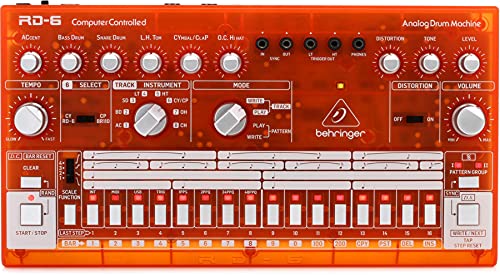
- Amazing Drum Machine with true analog circuitry for classic sound performance
- Authentic reproduction of original circuitry with matched transistors
What to Consider Before Buying a Drum Machine
A Drum Machine is more than just an item; it’s a key solution for producers who want to break away from the computer screen and inject a hands-on, performative element into their music production. These devices provide a dedicated environment for rhythm construction, offering unique sonic characteristics—like the warm saturation of analog transistors—that are difficult to perfectly replicate in software. Whether you are producing techno, hip-hop, or synth-wave, a dedicated drum machine acts as the heartbeat of your studio, allowing you to jam, iterate, and discover patterns through physical interaction rather than clinical programming.
The ideal customer for this type of product is someone facing a creative block with software or a live performer who needs reliable, tweakable hardware for the stage. It is perfect for the “DAW-less” enthusiast or the hybrid producer looking for authentic vintage tones on a budget. However, it might not be suitable for those who require massive polyphony, deep menu-diving for complex sound design, or those who need a machine that can play back high-fidelity acoustic samples. If you need a workstation that does everything, you might consider a high-end sampler instead.
Before investing, consider these crucial points in detail:
- Dimensions & Space: Consider where this unit will sit in your setup. A compact footprint is essential for crowded desks, but the controls shouldn’t feel so cramped that they hinder your performance. Look for a balance between portability and “playable” knob spacing.
- Capacity & Performance: Evaluate the sequencer depth and the number of onboard sounds. Some machines offer 16 steps, while others provide 64, which is vital for creating evolving patterns that don’t sound repetitive. Also, check for individual outputs, which allow you to process each drum sound separately in your mixer.
- Materials & Durability: Since drum machines are often “played” like instruments—hit, tapped, and tweaked—the build quality is paramount. Metal enclosures and sturdy switches are preferable over flimsy plastic if you plan on taking the unit to live gigs.
- Ease of Use & Maintenance: An intuitive interface is the difference between making music and reading a manual for three hours. Analog machines generally require less digital maintenance, but you should ensure the connectivity (MIDI/USB) is modern enough to play nice with your current gear.
Once you understand these requirements, you can better appreciate how a specific piece of gear fits into your workflow. While the Behringer RHYTHM DESIGNER RD-6-TG Analog Drum Machine is an excellent choice, it’s always wise to see how it stacks up against the competition. For a broader look at all the top models, we highly recommend checking out our complete, in-depth guide:
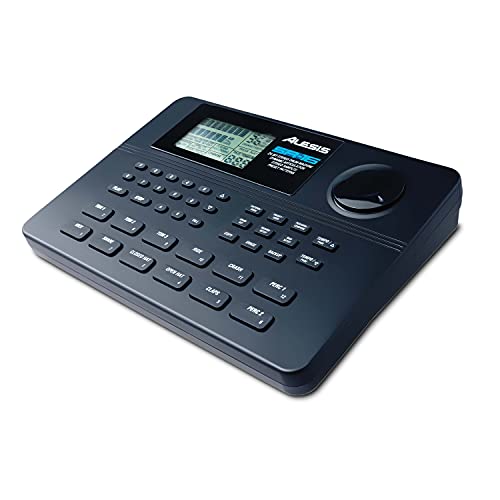
- A Studio Icon - Legendary classic drum machine for songwriters, live performers and remix engineers


- Compact stylus drum machine - 4 drum kits, 4 bass sounds

- Compact and portable design with a built-in speaker for on-the-go music creation
Unboxing the Beast: First Impressions of the Behringer RHYTHM DESIGNER RD-6-TG Analog Drum Machine
When we first pulled the Behringer RHYTHM DESIGNER RD-6-TG Analog Drum Machine out of its packaging, the first thing that struck us was the bold aesthetic. This specific “TG” (Translucent Green) version is a clear nod to the boutique aesthetic, giving it a look that stands out in a sea of grey and black studio gear. It feels surprisingly dense for its size, weighing in at 2.8 pounds, which gives it a sense of durability that we didn’t expect at this price point. Before you even plug it in, you can see its full feature set and user reviews to understand the pedigree it’s built upon.
The layout is a faithful recreation of the classic TR-606, but with several modern enhancements that address the original’s limitations. The buttons have a satisfying “click” to them, and the potentiometers offer enough resistance to feel precise during live filter sweeps or distortion adjustments. Comparing it to previous budget drum machines we’ve tested, the inclusion of a dedicated distortion circuit—inspired by the famous DS-1 pedal—immediately signals that this isn’t just a clone; it’s an evolution. It feels like a professional tool rather than a toy, which is a rare feat for hardware in this category.
Key Benefits
- True analog circuitry provides authentic, warm drum tones that digital samples can’t match.
- 11 individual outputs allow for professional multi-track recording and external processing.
- The 64-step sequencer is incredibly flexible for creating complex, long-form patterns.
- Integrated distortion effect adds grit and character directly to the master output.
Limitations
- Sound parameters are somewhat limited compared to more expensive “designer” drum machines.
- The translucent green casing looks great but can make reading some labels difficult in low light.
A Deep Dive into the Performance of the Behringer RHYTHM DESIGNER RD-6-TG Analog Drum Machine
The Analog Sound Engine: Pure Transistor Magic
The heart of the Behringer RHYTHM DESIGNER RD-6-TG Analog Drum Machine is its authentic reproduction of original circuitry. We spent hours testing the eight voices—Kick, Snare, Low Tom, Hi Tom, Cymbal, Open Hi-Hat, and Closed Hi-Hat—and the result is undeniably “analog.” The kick drum has that tight, mid-range punch that sits perfectly in a mix without overwhelming the sub-frequencies, while the hi-hats possess a metallic shimmer that sounds organic and “alive.” One of the standout features we found during our testing was the inclusion of the BR-110 clap sound. This isn’t just a generic clap; it’s a reproduction of the circuit from the DR-110, and it adds a much-needed layer of versatility to the classic 606 palette. When you check the latest price and availability, it becomes even more impressive that Behringer managed to fit matched transistors into such an affordable unit. The way the cymbal decays naturally and the snare “snaps” indicates a high level of attention to the original component behavior.
The 64-Step Sequencer: Beyond the 16-Step Limitation
One of the biggest gripes with vintage gear is the restrictive sequencing. We found that the 64-step sequencer on the Behringer RHYTHM DESIGNER RD-6-TG Analog Drum Machine completely changes the game. It allows you to create patterns that span four bars, which is a feature that really sets it apart from other budget clones that lock you into a repetitive 16-step loop. During our sessions, we were able to chain up to 256 steps together, making it possible to compose entire songs within the machine itself. The workflow is very tactile; you can switch between “Pattern Write” and “Pattern Play” modes seamlessly, allowing for live improvisation. We particularly enjoyed the global accent capability, which lets you add emphasis to specific steps across all instruments, giving your beats a human-like swing and “push-pull” feel. It’s an intuitive system that rewards experimentation, especially when you start playing with the “Auto Fill” function to add spice to your transitions.
Modern Connectivity and the Individual Outs
In a modern studio, connectivity is king. We were thrilled to find that the Behringer RHYTHM DESIGNER RD-6-TG Analog Drum Machine features 11 independent analog outputs. In our testing, we ran the kick into a compressor, the snare through a reverb unit, and the hats through a phaser—all simultaneously. This level of control is usually reserved for machines three times the price. Furthermore, the inclusion of USB MIDI and traditional 5-pin MIDI DIN means this unit integrates flawlessly with any DAW. We synced it up with Ableton Live, and the clock stability was rock solid. For those into modular gear, the 3.5mm Sync In/Out and Trigger Outs for the LT and HT are a massive bonus. We used the trigger outs to clock an external sequencer, making the Behringer RHYTHM DESIGNER RD-6-TG Analog Drum Machine the central “brain” of a larger hardware setup. You can see more technical details here to understand how it fits into your specific connectivity needs.
The Distortion Circuit: Adding the “Grit”
Perhaps the most fun we had during this review was playing with the integrated distortion circuit. Based on a classic pedal design, this effect allows you to take the polite, clean analog tones and turn them into aggressive, industrial textures. We found that by slowly increasing the “Drive” and “Tone” knobs, we could make the kick drum growl and the hi-hats sizzle with harmonic distortion. This is a feature that really sets it apart from the original 606, which required external pedals to achieve this sound. The distortion is global, meaning it affects the entire mix, which helps glue the various drum sounds together into a cohesive, powerful whole. It’s perfect for genres like hard techno or acid house, where a bit of “dirt” is not just welcomed but required. If you’re looking for an instrument that can go from “pretty” to “nasty” at the turn of a knob, this distortion circuit is your best friend.
What Other Users Are Saying
The general consensus among the community is overwhelmingly positive, especially regarding the value proposition. We analyzed numerous reports, and one user summed it up perfectly, noting it is a “drum machine to have fun making music” and praising the “excellent price/quality ratio.” Many users have pointed out that it is “perfect if you use DAW databases,” referring to how well it syncs and integrates with modern recording software. The feedback confirms our findings that while it’s a budget-friendly unit, it doesn’t sacrifice the “soul” of the analog sound.
On the flip side, some users have mentioned that they wished there were more onboard sound manipulation knobs (like decay or tune for every voice), but they also acknowledge that this would deviate from the authentic 606 design. Overall, the community views the Behringer RHYTHM DESIGNER RD-6-TG Analog Drum Machine as a “must-have” for anyone wanting to dip their toes into the world of analog hardware without breaking the bank. It’s a sentiments we share, as it bridges the gap between professional features and entry-level pricing brilliantly. You can read more user testimonials and see their setups here.
Comparing the Alternatives
1. Akai Professional MPC Live II Drum Machine & Sampler

- Beat Maker Essential – Standalone MPC, sampler, drum machine, and MIDI controller (for the included MPC Software – Mac/PC) with the powerful multicore system from the MPC One and MPC X
- Welcome MPC3 - Designed for fast intuitive operation, MPC3 accelerates the legendary MPC workflow with new features: Enhanced Main Mode, Linear Song Arranger, Studio Mixer, Native Instruments...
The Akai MPC Live II is a vastly different beast compared to the Behringer RHYTHM DESIGNER RD-6-TG Analog Drum Machine. While the Behringer is a focused, pure analog drum machine, the MPC is a full-scale production workstation. It features a battery-powered design, built-in speakers, and a massive touch display. Those who need to chop samples, record vocals, and finish entire tracks without a computer will prefer the MPC. However, it lacks the specific “analog circuit” charm of the RD-6 and comes at a significantly higher price point. It’s for the producer who wants an all-in-one “studio in a box” rather than a dedicated vintage drum voice.
2. KORG electribe Sampler ESX Red

- Pattern chaining: string patterns together to create full songs. Users can chain with nearly no limitation, which means that you can also create entire sets of music!
- One-level undo: don't like what you just recorded? You now have an undo available with the press of a couple of buttons
The KORG electribe Sampler offers a middle ground. It is a digital sampler that allows you to load your own sounds, which gives it a level of sonic flexibility the Behringer can’t match. It also features a great “hands-on” sequencer and excellent built-in effects. We recommend the electribe for performers who want to play with various genres in a single set. However, for those seeking the specific, raw warmth of analog transistors and the classic 606 workflow, the Behringer RHYTHM DESIGNER RD-6-TG Analog Drum Machine remains the superior choice for pure tone and simplicity.
3. Teenage Engineering PO-133 Street Fighter

- Sequencer: 16 steps
- Patterns: 16 available
For those on an extreme budget or who need something pocket-sized, the Teenage Engineering PO-133 is a fantastic little sampler. It’s fun, quirky, and surprisingly powerful for its size. However, it is essentially a toy when compared to the Behringer RHYTHM DESIGNER RD-6-TG Analog Drum Machine in terms of build quality, connectivity, and professional studio integration. The PO-133 is great for making beats on the bus, but the RD-6 is what you want when you sit down in the studio to record a serious track. The Behringer offers the “real” hardware experience with proper knobs and individual outputs that the Pocket Operators simply cannot provide.
Final Verdict: Is the Behringer RD-6-TG Worth It?
After putting the Behringer RHYTHM DESIGNER RD-6-TG Analog Drum Machine through its paces, our verdict is clear: this is an essential tool for any producer looking for authentic analog flavor without the vintage price tag. Its strengths lie in its true-to-life sound engine, the vastly improved 64-step sequencer, and the inclusion of individual outputs which make it a dream for multi-track recording. While the sound design is inherently limited by its 606-inspired architecture, the addition of the distortion circuit and the DR-110 clap more than make up for it. It feels sturdy, looks fantastic in its translucent green shell, and integrates perfectly into both modern DAW setups and vintage hardware jams. Whether you are a beginner or a seasoned pro, the “fun factor” of this machine is incredibly high. If you are ready to stop clicking and start playing, we highly recommend you check the latest price and add this analog powerhouse to your collection today.
Last update on 2026-09-15 / Affiliate links / Images from Amazon Product Advertising API