
Behringer RHYTHM DESIGNER RD-6-AM Analog Drum Machine Review: The Retro Powerhouse for Modern Studios
In the modern home studio, we are often overwhelmed by choice. We have thousands of drum samples and sophisticated plugins that can replicate almost any sound imaginable. Yet, there is a common frustration I’ve felt—and I know many of you share—where the “soul” of the rhythm feels missing. Clicking notes into a piano roll with a mouse often leads to clinical, uninspired loops. For years, the solution was to hunt down vintage hardware like the classic TR-606, but the skyrocketing prices and maintenance headaches of 40-year-old gear made that a dream for most. This is exactly where the Behringer RHYTHM DESIGNER RD-6-AM Analog Drum Machine enters the frame. It aims to solve the dilemma of wanting authentic, tactile analog grit without the four-figure price tag. Failing to find a hardware solution often means staying stuck in a “digital box,” where your music lacks the physical presence and happy accidents that only true analog circuitry can provide.
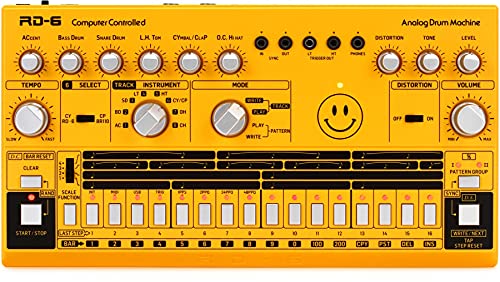
- Amazing Drum Machine with true analog circuitry for classic sound performance
- Authentic reproduction of original circuitry with matched transistors
What to Consider Before Adding a Drum Machine to Your Rig
A Drum Machine is more than just an item; it’s a key solution for rhythm programming, live performance, and sonic exploration. Unlike a MIDI controller, an analog drum machine like the Behringer RHYTHM DESIGNER RD-6-AM Analog Drum Machine generates sound internally through physical components. This means the sound is “alive”—it has slight fluctuations and a warmth that digital recreations often struggle to mimic. It serves as the heartbeat of a studio, providing a dedicated interface that encourages you to step away from the computer screen and actually play your instruments.
The ideal customer for this type of product is someone facing creative ruts in their DAW, electronic music producers looking for that specific “acid” or “techno” vibe, and live performers who need a reliable, hands-on sequencer. It’s also a perfect entry point for those new to hardware synthesis. However, it might not be suitable for those who require high-fidelity acoustic drum sounds or deep sound-shaping capabilities (like pitch envelopes or long decays), as this unit is dedicated to a very specific, iconic analog palette. If you need a workstation that does everything, you might see its full feature set and user reviews to determine if its focused nature fits your workflow.
Before investing, consider these crucial points in detail:
- Dimensions & Space: Consider your desk real estate. The Behringer RHYTHM DESIGNER RD-6-AM Analog Drum Machine is relatively compact, making it ideal for crowded setups. We found that its footprint allows it to sit comfortably alongside a synthesizer or laptop without requiring a massive studio overhaul.
- Capacity/Performance: Look at the sequencer depth. A 64-step sequencer is the gold standard for creating evolving loops. You want a machine that allows for pattern chaining and real-time manipulation, ensuring your beats don’t sound repetitive over a five-minute track.
- Materials & Durability: While many modern units use plastic to keep costs down, look for internal build quality. The RD-6 uses a metal chassis for the body, providing a weight and stability that feels more professional than all-plastic alternatives. This is vital for gear that will be subjected to heavy button-mashing during live sets.
- Ease of Use & Maintenance: Pure analog gear is wonderful, but it needs to be intuitive. Check if the layout follows a logical “TR-style” workflow. Maintenance on a new unit like this is minimal compared to vintage gear, which is a massive plus for those who want to spend more time making music and less time cleaning potentiometers.
Ultimately, choosing the right machine is about balancing vintage charm with modern reliability. Before you make your final choice, check the latest price and availability to see how it fits your current budget.
While the Behringer RHYTHM DESIGNER RD-6-AM Analog Drum Machine is an excellent choice, it’s always wise to see how it stacks up against the competition. For a broader look at all the top models, we highly recommend checking out our complete, in-depth guide:
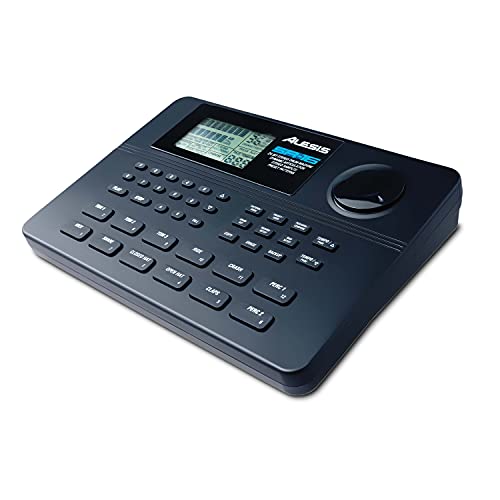
- A Studio Icon - Legendary classic drum machine for songwriters, live performers and remix engineers


- Compact stylus drum machine - 4 drum kits, 4 bass sounds

- Compact and portable design with a built-in speaker for on-the-go music creation
Unboxing and First Impressions: A Tangerine Dream
When we first pulled the Behringer RHYTHM DESIGNER RD-6-AM Analog Drum Machine out of its packaging, the first thing that struck us was the color. The “AM” stands for Apricot/Amber, and in person, it has a vibrant, retro-futuristic aesthetic that demands attention. It feels solid—much more substantial than we expected given the price point. The knobs have a pleasant resistance, and the buttons have that classic “click” that takes you straight back to the 1980s. While some might find the lightweight nature (900 grams) surprising, it’s actually a boon for those of us who take our gear to gigs or jam sessions.
Comparing it to the market leaders, it clearly takes inspiration from the original Roland TR-606. However, Behringer didn’t just copy the original; they added features that musicians have been demanding for decades. The inclusion of a dedicated “Clap” sound (sourced from the Boss DR-110) and an integrated analog distortion circuit makes this feel like a “best-of” collection of classic analog percussion. To see how these features look in action, you can view more detailed product photos and specifications here.
What We Like
- Authentic analog signal path with matched transistors for a warm, punchy sound.
- 8 individual analog outputs, allowing for professional multi-track recording and external processing.
- The addition of the DR-110 clap and a switchable distortion circuit for modern grit.
- Seamless integration with MIDI and USB, making it a breeze to sync with DAWs or other hardware.
What We Didn’t Like
- No internal parameter editing; the drum sounds are fixed (just like the original).
- The buttons, while responsive, feel a bit “plasticky” compared to high-end boutique machines.
Deep Dive: Putting the Behringer RHYTHM DESIGNER RD-6-AM Analog Drum Machine to the Test
The Pure Analog Signal Path: Recreating the 606 Magic
We spent dozens of hours running the Behringer RHYTHM DESIGNER RD-6-AM Analog Drum Machine through our studio monitors, and the verdict is clear: the sound is unmistakably analog. Because Behringer used matched transistors and true analog circuitry, the kick drum has that soft, rounded “thump” that sits perfectly in a mix without overwhelming it. The hi-hats are metallic and “fizzy” in the best way possible—a signature of the 606 sound that digital samples often fail to capture accurately.
What truly impressed us, however, was the clap. As one user noted in their feedback, the addition of the DR-110 clap is a game-changer. It’s tight, snappy, and provides the perfect rhythmic counterpoint to the hi-hats. In our testing, we found that even though you can’t “tune” the drums, the fixed settings are curated so well that they almost always sound “right” for techno, acid house, and synth-pop. This machine doesn’t try to be a jack-of-all-trades; it focuses on doing one thing exceptionally well: providing the foundation for electronic music.
Sequencing and the “Random” Element: Finding New Inspiration
The 64-step sequencer is the heart of the Behringer RHYTHM DESIGNER RD-6-AM Analog Drum Machine. If you’ve ever used a classic step sequencer, you’ll feel right at home. You can program beats in real-time or step-by-step. But what we found to be a feature that really sets it apart is the “Random” pattern generator. By holding down a few buttons, the machine will generate a new pattern for you.
In our sessions, this became an incredible tool for breaking through “producer’s block.” We would generate a random pattern, find a small rhythmic hook we liked, and then tweak it manually. It adds a layer of unpredictability that feels very “human” and organic. Furthermore, the global accent knob allows you to add dynamic movement to your patterns, making certain steps pop and giving the loop a “swing” that feels alive. We confirmed through user reviews that this random feature is a favorite among those who use the RD-6 alongside its sibling, the TD-3 synthesizer, for creating complex acid patterns on the fly.
Modern Routing: Individual Outputs and Studio Integration
One of the biggest frustrations with vintage drum machines was the lack of individual outputs. You were often stuck with a mono or stereo mix, meaning you couldn’t process the kick drum differently from the snare. The Behringer RHYTHM DESIGNER RD-6-AM Analog Drum Machine solves this brilliantly by including 8 independent analog outputs. In our studio, we ran the kick drum through a hardware compressor, the clap through a lush reverb, and the hi-hats through a phaser—all at the same time.
This level of control is typically reserved for machines costing five times as much. For a modern producer, this means you can record each drum sound to its own track in your DAW (like Ableton or Logic) for professional mixing. When we paired it with the USB and MIDI capabilities, the machine stayed perfectly in sync with our project tempo. It bridges the gap between the 1980s sound and 2024 workflow effortlessly. If you’re looking for a professional-grade integration, you should check the current availability of this unit.
Adding the Grit: The Onboard Distortion Circuit
Analog drums can sometimes sound a bit too “clean” for modern underground styles. To address this, Behringer included an analog distortion circuit modeled after a famous stompbox. We found that a small amount of distortion adds a lovely saturation that helps the drums “glue” together. When you crank the distortion and the tone knobs, the machine transforms from a polite rhythm box into an aggressive, growling beast.
We tested this specifically on the kick and snare, and the results were phenomenal for industrial and hard techno. The fact that this distortion is built-in means you don’t need to clutter your desk with extra pedals. It’s a global effect, so it affects the main mix output, which is perfect for live performances where you want to build tension and energy. This inclusion shows that the designers really understood how these machines are used in the real world today.
What Other Users Are Saying
The general sentiment surrounding the Behringer RHYTHM DESIGNER RD-6-AM Analog Drum Machine is overwhelmingly positive, particularly regarding its value-to-performance ratio. Many users have noted that while the unit feels lightweight, its sonic performance is indistinguishable from the vintage hardware it clones. One user emphasized that it is the “ideal companion” for the Behringer TD-3, noting that the two units look and sound “cute” together but pack a serious punch when synced.
Specific praise has been heaped on the “Random” pattern generator, with owners mentioning how it has rejuvenated their creative process. On the flip side, some users have mentioned a learning curve regarding the sequencing workflow, which is traditional and can be confusing for those used to modern “click-and-drag” software. As one user aptly put it, “Once I figure it all out, I’ll have tons of fun—there are so many YouTube videos on how it works.” This feedback highlights that while it is an accessible machine, it rewards those who take the time to master its classic interface. To read more about what fellow musicians think, take a look at the latest user testimonials.
Comparing the RD-6-AM to the Competition
While we love the RD-6-AM, it’s important to understand where it sits in the wider market. Depending on your needs, one of these three alternatives might be a better fit.
1. Akai Professional MPC Live II Drum Machine & Sampler

- Beat Maker Essential – Standalone MPC, sampler, drum machine, and MIDI controller (for the included MPC Software – Mac/PC) with the powerful multicore system from the MPC One and MPC X
- Welcome MPC3 - Designed for fast intuitive operation, MPC3 accelerates the legendary MPC workflow with new features: Enhanced Main Mode, Linear Song Arranger, Studio Mixer, Native Instruments...
The Akai MPC Live II is a completely different beast compared to the Behringer RHYTHM DESIGNER RD-6-AM Analog Drum Machine. While the RD-6 is a focused analog machine, the MPC is a full-blown production center. It uses samples rather than analog circuitry, meaning you can have any sound in the world, from realistic pianos to heavy industrial drums. It features a battery, built-in speakers, and a large touchscreen. We recommend this for producers who want to make entire tracks without a computer. However, if you specifically want the “analog soul” and simple, knob-per-function workflow, the RD-6 is much more affordable and focused.
2. KORG electribe Sampler ESX Red

- Pattern chaining: string patterns together to create full songs. Users can chain with nearly no limitation, which means that you can also create entire sets of music!
- One-level undo: don't like what you just recorded? You now have an undo available with the press of a couple of buttons
The KORG electribe Sampler is a great middle-ground option. It offers a hybrid approach, allowing you to use both samples and built-in synth engines. It has a much more robust effects engine than the RD-6 and more complex sequencing options, such as motion sequencing (recording knob movements). However, it lacks the true analog signal path of the RD-6. We found that the electribe is better for “all-in-one” live performances where you need variety, whereas the RD-6 is superior for those who want a specific, high-quality analog drum foundation for their studio.
3. Teenage Engineering PO-133 Street Fighter

- Sequencer: 16 steps
- Patterns: 16 available
The PO-133 is a tiny, pocket-sized sampler that is perfect for musicians on the go. It’s incredibly fun and surprisingly powerful for its size, featuring a built-in microphone for sampling and a quirky “Street Fighter” theme. While it’s a great “toy” that can actually produce professional results, it cannot compete with the Behringer RHYTHM DESIGNER RD-6-AM Analog Drum Machine in terms of studio connectivity, build quality, or the purity of the analog sound. The PO-133 is a fantastic gift or travel companion, but the RD-6 is a “proper” instrument meant to be the heart of a recording setup.
Final Verdict: Is the RD-6-AM Worth It?
After weeks of testing, our conclusion is that the Behringer RHYTHM DESIGNER RD-6-AM Analog Drum Machine is an absolute triumph for electronic musicians. It successfully captures the elusive magic of the 1980s analog sound while adding modern necessities like individual outputs, USB sync, and an aggressive distortion circuit. While its construction is lightweight and it lacks deep sound-editing parameters, these are minor trade-offs considering its incredibly accessible price point. It’s an instrument that encourages play, experimentation, and most importantly, it gets you out of the “DAW slump.”
Whether you are a techno veteran or a hobbyist looking for your first piece of hardware, this machine offers an authentic experience that software simply cannot match. It’s fun, it sounds massive, and it looks great on a desk. We highly recommend it for anyone wanting to add that classic analog character to their music. If you’re ready to take your rhythm section to the next level, click here to secure your Behringer RD-6-AM today and start building your analog dream studio.
Last update on 2026-09-14 / Affiliate links / Images from Amazon Product Advertising API