
BetterSax Classic Tenor Saxophone Professional Kit Review: A Masterclass in Modern Instrument Design
For many of us, the journey into the world of the tenor saxophone begins with a mixture of excitement and a peculiar kind of dread. You know the sound you want—that smoky, rich, Ben Webster-esque warmth or perhaps the searing, modern edge of a Michael Brecker solo. But the bridge between “wanting” that sound and “having” the equipment to produce it is often paved with instruments that either feel like toys or cost as much as a mid-sized sedan. We have spent years navigating the “intermediate trap,” where you outgrow your student horn but can’t quite justify the $6,000 price tag of a vintage Mark VI or a top-tier Japanese professional model. This frustration is real; a sub-par instrument doesn’t just sound bad—it fights you. It leaks, the intonation is a nightmare, and the ergonomics leave your hands cramping after a twenty-minute session. We needed something that bridged this gap with authority, which is exactly why the BetterSax Classic Tenor Saxophone Professional Kit caught our attention. Solving this equipment hurdle isn’t just about luxury; it’s about removing the technical barriers that keep you from actually making music.

- Superior craftsmanship is evident in the Classic series, Featuring exquisite hand-engraving that showcases the intricate details and personalized craftsmanship that goes into each Saxophone.
- Easy to play: Designed with lightweight construction and post-to-body design, this sax is free-blowing and comfortable, making it ideal for beginners and professionals.
Choosing Your Voice: What to Consider Before Investing in a Saxophone
A saxophone is more than just an item; it’s a key solution for any musician looking to express their unique voice through air and brass. Whether you are a student transitioning to your first “serious” horn or a pro looking for a reliable “gigging” instrument that doesn’t require a security detail, the saxophone you choose dictates your growth. A poorly constructed horn will force you to develop “compensating habits”—biting the reed to stay in tune or using awkward hand positions to reach poorly placed keys—that can take years to unlearn. Choosing a quality instrument like the BetterSax Classic Tenor Saxophone Professional Kit is an investment in your technical foundation.
The ideal customer for this type of product is someone facing the limitations of a beginner horn or a professional who needs a “workhorse” instrument that delivers consistent results without the finicky nature of vintage gear. It is perfect for those who value modern intonation and ergonomic efficiency. On the other hand, it might not be suitable for those who are strictly “vintage purists” and only find satisfaction in the specific resistance of horns made fifty years ago, or for absolute beginners who aren’t yet sure if they want to commit to the larger size and air requirements of a tenor versus an alto.
Before investing, consider these crucial points in detail:
- Dimensions & Ergonomics: The physical layout of the keys—often referred to as the “action”—is paramount. You want a horn where the keys feel like a natural extension of your fingers. Look for modern “post-to-body” construction which provides a solid, tactile response and ensures the mechanism doesn’t feel “mushy” during fast passages.
- Tonal Consistency and Bore Design: The internal dimensions of the saxophone (the bore) determine how the air moves. A professional-grade bore design ensures that the tone is homogenous across all registers, meaning your low Bb sounds just as rich and centered as your high F#, without sudden jumps in volume or “thinning” of the sound.
- Materials & Finish: While the “lacquer vs. unlacquered” debate rages on, the quality of the brass and the durability of the finish are objective metrics. A high-quality lacquer not only protects the metal from corrosion but can also subtly influence the resonance. Darker lacquers, like the cognac finish on the BetterSax Classic Tenor Saxophone Professional Kit, are often favored for their aesthetic warmth and perceived “vintage” vibe.
- Ease of Maintenance & Included Kit: A saxophone is a complex machine with hundreds of moving parts. Consider how easy it is for a technician to repair and whether the initial kit includes a high-quality mouthpiece and case. A “complete kit” saves you the immediate headache of spending another $200-$300 on essential accessories right after the main purchase.
Understanding these variables allows you to see why certain instruments stand out in a crowded market. While the BetterSax Classic Tenor Saxophone Professional Kit is an excellent choice, it’s always wise to see how it stacks up against the competition. For a broader look at all the top models, we highly recommend checking out our complete, in-depth guide:

- Ideal for beginners: Unlock your musical potential with its full bounding stick gasket and blue copper needle spring, for easy playability and quick response. Ergonomic design with faux mother pearl...

- Whether you want to buy a saxophone for yourself or for your friends or others, this saxophone is a product of choice as a result of its high quality and cost effective price

- Complete with Case
First Impressions: Unboxing the BetterSax Classic Tenor Saxophone Professional Kit
When we first opened the protective softshell case of the BetterSax Classic Tenor Saxophone Professional Kit, the visual impact was immediate. The “dark gold” or cognac lacquer is stunning; it possesses a depth and richness that you typically only see on custom-ordered boutique horns. This isn’t the bright, “yellow” lacquer of a standard student instrument. Instead, it looks like a piece of history that has been perfectly preserved. Before you even play a note, you should see its full feature set and user reviews to understand the pedigree behind this design.
The assembly was seamless. The neck fit into the tenon with just the right amount of resistance—neither loose nor requiring excessive force. Holding the horn, the first thing we noticed was the weight. It feels substantial and “expensive,” yet the lightweight construction and post-to-body design ensure it doesn’t become a burden during a long rehearsal. The underslung octave key is a particularly stylish touch that mirrors the design language of legendary professional saxophones, immediately signaling that this isn’t your average “budget” horn. It feels like a tool designed by someone who actually plays the instrument, which makes sense given the brand’s origins.
What We Like
- Exquisite dark cognac lacquer finish that provides a high-end, vintage aesthetic.
- Professional-grade bore design resulting in an exceptionally even and homogenous tone across all registers.
- Ready-to-play right out of the box with the included BetterSax Classic mouthpiece.
- Remarkable ergonomics featuring a stylish and functional underslung octave key.
What We Didn’t Like
- The softshell case, while protective and lightweight, may not offer enough impact resistance for heavy international touring compared to a flight case.
- Initial setup may require a minor “leak check” by a professional if the instrument experiences rough handling during shipping.
A Deep Dive into the BetterSax Classic Tenor Saxophone Professional Kit’s Performance
Acoustic Engineering: The Power of the Professional Bore
The heart of any saxophone is its bore, and this is where the BetterSax Classic Tenor Saxophone Professional Kit truly shines. In our testing, we found that the internal geometry of this horn allows for a level of tonal consistency that is frankly rare at this price point. When we play a low D and then jump to a high A, the transition is seamless. There is no “thinning out” of the sound as you move into the upper register, a common flaw in lesser instruments. The “homogenous tone” mentioned in the specs isn’t just marketing speak; it’s a tangible quality of the air column.
We pushed the horn through various dynamic ranges. At a pianissimo, the response remained crisp—the low Bb spoke without the dreaded “burble” that plagues many tenors. When pushed to a fortissimo, the brass resonated with a vibrant, punchy character that didn’t break up or become harsh. This versatility is why many choose this professional-grade instrument for both classical and jazz applications. It provides a “blank canvas” of sound that allows the player to shape their own tone through reed and mouthpiece selection.
Ergonomic Mastery and the Underslung Octave Key
The physical interaction with a saxophone can make or break a performance. We evaluated the action of the BetterSax Classic Tenor Saxophone Professional Kit over several hours of rigorous practice. The keys are positioned in a way that feels natural for both small and large hands. The “post-to-body” design is a critical feature here; by soldering the posts directly to the body, the manufacturer has reduced the overall weight while maintaining a rigid, responsive feel. This results in a “snappy” action that allows for fluid technical passages without the keys feeling sluggish.
Special mention must go to the underslung octave key. Beyond its beautiful “vintage” look, this design choice often leads to a more reliable octave mechanism that is less prone to bending or getting caught on clothing. We found the transition between the middle and upper registers to be exceptionally smooth. For a player who is used to the clunky, “high-profile” octave keys of student models, switching to this horn feels like upgrading from a heavy sedan to a finely-tuned sports car. You can check the latest price and availability to see how this ergonomic upgrade fits into your budget.
The “Total Package”: Accessories that Actually Matter
Most saxophones come with a “placeholder” mouthpiece that is essentially useless for anyone past their first week of lessons. We were pleasantly surprised to find that the BetterSax Classic Tenor Saxophone Professional Kit includes the BetterSax Classic mouthpiece. This isn’t a generic piece of plastic; it is a thoughtfully designed mouthpiece that complements the horn’s bore perfectly. In our play-test, it provided a balanced resistance and a warm, clear tone that would satisfy most intermediate players and even some pros as a reliable backup.
The protective softshell case is another highlight. While we mentioned it might not be a “flight case,” for 99% of players, it is the ideal solution. It is incredibly lightweight, making it a joy to carry to rehearsals, and it includes backpack straps that are actually comfortable. The storage pockets are large enough for your reeds, neck strap, and swabs. It’s clear that the designers considered the “lifestyle” of the modern saxophonist. You can find the complete kit details here to see everything that comes in the box.
Long-Term Durability and Craftsmanship
A saxophone is a long-term investment, and the build quality of this instrument suggests it is built to last. We inspected the soldering points, the pad seating, and the hand-engraving. The engraving on the bell is “exquisite” as described—it adds a touch of class that elevates the instrument’s status on stage. The metal feels high-grade, and the 2-year warranty provided by the manufacturer gives us a level of confidence that is often missing with “online” instrument brands.
We also analyzed the pad quality. The pads appear to be high-quality leather with metal resonators, which contribute to the horn’s “pop” and projection. Over time, these resonators help the pads maintain their shape and provide a firmer “seal,” which is essential for low-note response. This attention to detail is a feature that really sets it apart from the sea of generic instruments currently on the market. Whether you are playing in a humid club in New Jersey or a dry concert hall, this horn is designed to remain stable.
What Other Users Are Saying
The general sentiment surrounding the BetterSax Classic Tenor Saxophone Professional Kit is overwhelmingly positive, especially among those who have “been around the block” with multiple instruments. One professional musician from New Jersey noted that they were “exceptionally impressed” by the durability and the fact that it arrived “truly ready to go straight out of the case.” This matches our own experience; finding a horn that doesn’t need $200 worth of tech work immediately is a huge win. This reliability is one of the reasons it’s so highly rated online.
However, no product is without its critics. One user with over 65 years of playing experience mentioned that the unit they received was damaged during transit. While they couldn’t comment on the playability, they were disappointed by the visual/tactile state of that specific unit. This highlights the importance of the 2-year warranty and purchasing through reputable channels that handle returns well. Most users, however, confirm our findings that the dark cognac finish and the “effortless” intonation make this horn a standout in its category. It seems that when the instrument arrives in top condition, it consistently exceeds expectations for players of all levels.
Comparing the BetterSax Classic Tenor Saxophone Professional Kit to Its Rivals
While we believe this tenor is a top-tier choice, it is helpful to look at how it compares to other popular options in the market to ensure you are making the right choice for your specific needs.
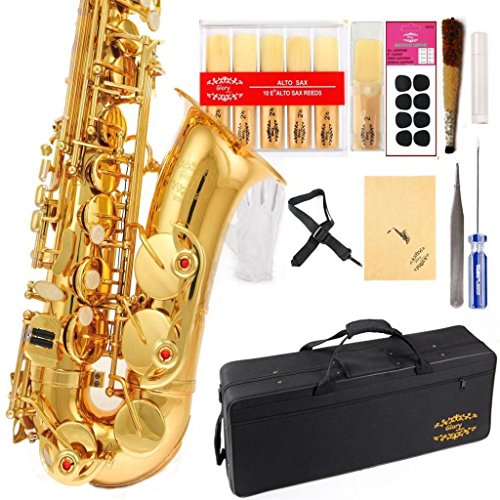
1. GLORY Laquer E Flat Alto Saxophone with Case & Kit
- Whether you want to buy a saxophone for yourself or for your friends or others, this saxophone is a product of choice as a result of its high quality and cost effective price
- Eb E-Flat Alto Saxophone has High F# .
The Glory Alto is a very different beast. First and foremost, it is an alto saxophone (E Flat), whereas our main product is a tenor (B Flat). The Glory is strictly a “budget” or student instrument. It is significantly cheaper but lacks the professional bore design and the high-end dark cognac lacquer of the BetterSax. We would recommend this for a young child starting their very first year of band who isn’t sure they will stick with it. However, for anyone serious about tone and long-term playability, the BetterSax is a massive step up in quality, materials, and sound.
2. Eastar Student Alto Saxophone Beginner Kit
- Ideal for beginners: Unlock your musical potential with its full bounding stick gasket and blue copper needle spring, for easy playability and quick response. Ergonomic design with faux mother pearl...
- Exceptional Sound Quality: Enjoy a wide range and rich tone with smooth low-to-high transitions, perfect for jazz, swing, or solo performances. This saxophone delivers excellent sound, making it a...
Similar to the Glory, the Eastar is a student-level alto. While Eastar makes decent beginner gear, this kit is focused on “quantity” (giving you a stand, reeds, and straps) rather than the “quality” of the instrument itself. The Eastar’s golden lacquer is standard and lacks the hand-engraved beauty of the BetterSax. If you are an adult or an advancing student looking for a tenor, the Eastar alto will feel like a toy in comparison. The BetterSax is designed to grow with you through professional stages, whereas the Eastar is something you will likely look to replace within 18 months.
3. Mendini by Cecilio Tenor Saxophone Beginner Kit
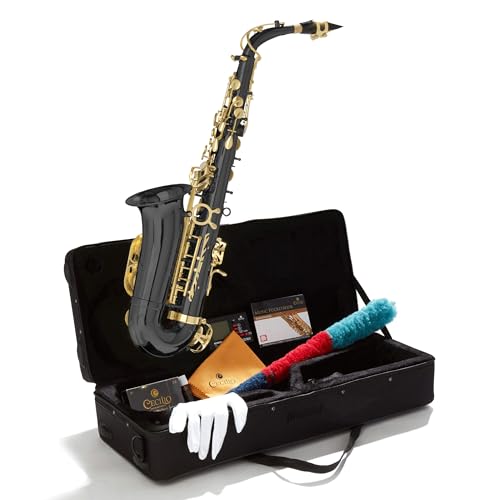
- All Levels, All Ages: Thinking of picking up a tenor sax? Or maybe you're a professional in need of a replacement? Either way, our saxophones are the answer! They're great for players of all ages and...
- Quality Sound: Whether you're a pro, a beginner, or just a hobbyist, you won't be disappointed with the top tier quality of this horn's sound! Plus, you can make sure you're playing at your best with...
This is a direct competitor in the tenor category, but at a lower price point. The Mendini by Cecilio is a popular choice for budget-conscious parents. However, in our experience, the Mendini lacks the “homogenous tone” and ergonomic refinement of the BetterSax Classic Tenor Saxophone Professional Kit. The BetterSax’s underslung octave key and superior metal quality make it a much more “pro” feeling horn. While the Mendini includes more “swag” (gloves, tuner, etc.), the BetterSax focuses its value on the instrument’s performance and the quality of the mouthpiece. We recommend the Mendini only for those on a very strict budget who cannot reach the price point of a semi-pro horn.
Final Verdict: Is the BetterSax Classic Tenor Saxophone Professional Kit Worth It?
After our extensive evaluation, the answer is a resounding yes. The BetterSax Classic Tenor Saxophone Professional Kit manages to do something very difficult: it offers a professional-grade playing experience at a price that doesn’t feel like a predatory loan. Its strengths lie in its exceptional bore design, which provides a level of intonation and tonal consistency that we usually only find in instruments costing twice as much. The dark gold lacquer and underslung octave key give it a “boutique” soul that makes you want to pick it up and play every single day.
We recommend this horn to the intermediate player who feels “held back” by their student instrument, the professional who needs a reliable backup that actually sounds good, and the dedicated adult beginner who wants to start their journey on a horn that won’t fight them. While no instrument is immune to shipping mishaps, the overall craftsmanship here is top-notch. If you are ready to take your sound to the next level, don’t hesitate to secure your own BetterSax Classic Tenor Saxophone Professional Kit today. This is an instrument that doesn’t just play well—it inspires you to play better.
Last update on 2026-09-14 / Affiliate links / Images from Amazon Product Advertising API