
Yamaha YDS-120 Soprano Saxophone Review: The Ultimate Quiet Practice Solution?
As saxophonists, we’ve all been there: the creative urge strikes at 11:00 PM, but the reality of living in a thin-walled apartment or sharing a home with light sleepers quickly crushes that inspiration. A traditional soprano or alto saxophone is, by design, an instrument that demands to be heard. Trying to play “quietly” often results in poor embouchure habits and frustration. This is exactly why I found myself searching for a way to maintain my finger dexterity and musical flow without alienating my neighbors. The Yamaha YDS-120 Soprano Saxophone entered my life as a potential bridge between the acoustic world and the digital age. Before you dive in, you might want to see its full feature set and user reviews to understand the scope of this instrument. Solving the volume problem is crucial for any student or professional looking to increase their “horn-on-face” time, and failing to find a quiet alternative often leads to stalled progress or, worse, giving up the instrument altogether due to logistical constraints.

- 15-step volume adjustment
- Headphone Terminal , Aux in jack

What to Consider Before Buying a Digital Saxophone
A digital saxophone is more than just a high-tech toy; it’s a key solution for modern musicians who require versatility and silence. These instruments solve the primary issue of acoustic volume while providing a platform for MIDI composition and sound exploration. Unlike a traditional horn, a digital sax like the Yamaha YDS-120 Soprano Saxophone allows you to practice at any hour through headphones, transpose with the touch of a button, and even play sounds that no acoustic saxophone could ever produce, like synthesizers or choral pads. It bridges the gap between a woodwind instrument and a MIDI keyboard, making it an essential tool for the modern home studio.
The ideal customer for this type of product is someone facing noise restrictions, a beginner who wants to focus on fingerings before tackling the complexities of a real reed, or a multi-instrumentalist looking for a wind controller for their DAW. However, it might not be suitable for those who are strictly purists looking for the exact tactile resistance and harmonic complexity of a vibrating cane reed. If you are preparing for a classical conservatory audition, this won’t replace your primary horn, but it will certainly supplement your practice sessions. For those who realize they need a traditional acoustic experience instead, there are several student-grade brass models available that we will discuss later.
Before investing, consider these crucial points in detail:
- Dimensions & Space: Consider where you will store and play the instrument. The Yamaha YDS-120 Soprano Saxophone is sleek at roughly 22 inches, making it far more portable than an alto or tenor case. It fits easily in a backpack, which is a major win for commuters.
- Capacity/Performance: Look at the internal sound engine and the number of voices. With 73 voices, this model provides enough variety to keep practice sessions engaging, though the quality of the internal speaker vs. headphones is a major metric to evaluate.
- Materials & Durability: Most digital wind instruments are plastic. You want to ensure the “key action” feels substantial and not like a cheap remote control. The polished finish and weight (1.81 lbs) help give it a more “instrument-like” feel.
- Ease of Use & Maintenance: Digital instruments require zero reed prep or cork greasing. However, you must consider battery life (AAA) or USB power stability. Maintenance is mostly limited to keeping the sensors clean and updating firmware via the app.
Understanding these factors will help you decide if a digital wind instrument fits your lifestyle. While the Yamaha YDS-120 Soprano Saxophone is an excellent choice, it’s always wise to see how it stacks up against the competition. For a broader look at all the top models, we highly recommend checking out our complete, in-depth guide:

- Ideal for beginners: Unlock your musical potential with its full bounding stick gasket and blue copper needle spring, for easy playability and quick response. Ergonomic design with faux mother pearl...
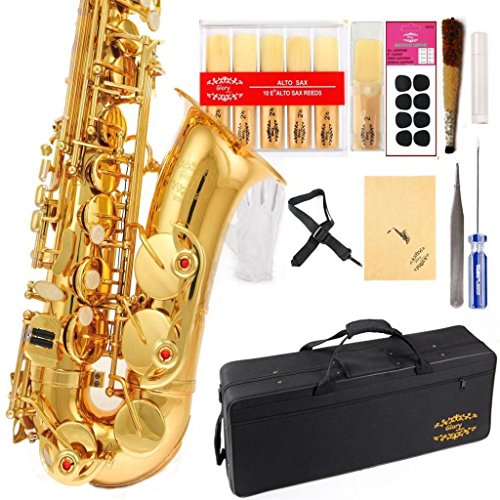
- Whether you want to buy a saxophone for yourself or for your friends or others, this saxophone is a product of choice as a result of its high quality and cost effective price

- Complete with Case
First Impressions and Key Features of the Yamaha YDS-120 Soprano Saxophone
Unboxing the Yamaha YDS-120 Soprano Saxophone is a surprisingly streamlined experience. Unlike a traditional horn that comes in a bulky hard case with reeds, ligatures, and neck straps, the YDS-120 arrives ready for action. The first thing I noticed was the “recorder-style” mouthpiece. This is a significant departure from its more expensive sibling, the YDS-150, which uses a traditional mouthpiece and reed for “feel.” The YDS-120 is honest about being a digital controller. The build quality feels solid; it doesn’t have the “creaky” plastic feel of some cheaper MIDI controllers. You can check the latest price and availability to see how it fits into your budget compared to professional digital wind instruments (EWIs).
The key layout is what truly impressed us during the initial setup. Yamaha has replicated the ergonomics of an acoustic saxophone almost perfectly. Your fingers land exactly where they should, from the high F# key down to the low Bb. While it lacks the physical vibration of a brass body, the immediate response of the keys provides a satisfying tactile feedback. It feels like a serious tool, not a toy, despite the lightweight plastic construction.
Key Benefits
- Authentic saxophone key layout allows for direct skill transfer to acoustic horns.
- 15-step volume adjustment and headphone jack for 100% silent practice.
- 73 high-quality voices, including detailed AWM samples of professional Yamaha saxophones.
- USB-MIDI connectivity makes it a powerful controller for music production software.
Limitations
- Internal speaker is somewhat weak and lacks the low-end resonance of a real horn.
- Does not use a real reed, which may feel “unnatural” to experienced players.
A Deep Dive into the Yamaha YDS-120 Soprano Saxophone’s Performance
The Playing Experience: Key Layout and Ergonomics
When we first spent a few hours with the Yamaha YDS-120 Soprano Saxophone, the standout feature was undoubtedly the keywork. Many digital wind controllers use touch-sensitive plates or “button-style” keys that feel more like a calculator than a musical instrument. Yamaha took a different route by utilizing a physical key system that mirrors their acoustic soprano models. I found that my muscle memory from years of playing alto and tenor translated within minutes. This is a massive benefit for students; you aren’t just learning “buttons,” you are learning the actual fingerings of a saxophone.
In our testing, the keys felt snappy and responsive. We noticed that the placement of the side keys (D, Eb, F) and the pinky clusters (G#, C#, B, Bb) is spot on. This allows you to practice technical etudes or difficult passages from your repertoire without feeling like you’re playing a different instrument. As one user noted, it’s a “great practice instrument” specifically because of this layout. We did find that the lack of a “reed” means you don’t have to worry about embouchure fatigue, which allowed us to practice for three hours straight—something that would be physically exhausting on a traditional soprano. To see how this ergonomic design looks in detail, you can view the high-resolution product images here.
Sound Quality and the AWM Sampling Engine
The Yamaha YDS-120 Soprano Saxophone features 73 voices, 56 of which are saxophone-related. These aren’t just generic “synth-sax” sounds; Yamaha used Advanced Wave Memory (AWM) sampling to record their professional acoustic models. When I played through a high-quality pair of studio headphones, the realism was startling. You can hear the subtle breathiness and the harmonic richness of the soprano, alto, tenor, and baritone samples. The 15-step volume adjustment is granular enough to find the perfect level for your ears.
However, we must address the “toy-like” sound that some users mention when using the built-in speaker. Because the speaker is small and housed in plastic, it cannot replicate the air displacement of a brass bell. To truly appreciate this instrument, you must use headphones or an external monitor. When we plugged the YDS-120 into a mixer, as suggested by some experienced users, it transformed into a professional-grade synth. The ability to switch between a delicate soprano and a growling baritone in a second is a feature that really sets it apart from traditional instruments. It also includes 50 effects that you can customize via the dedicated app, allowing you to add reverb or delay to your “hall” practice sessions.
The YDS Controller App and Connectivity
To unlock the full potential of the Yamaha YDS-120 Soprano Saxophone, you really need to use the YDS Controller app. Connecting via USB, the app allows you to tweak the breath sensor sensitivity. This is vital because every player has a different lung capacity. We found that by adjusting the “Breath Resistance” and “Response” settings, we could make the instrument feel much closer to the resistance of a real 2.5 or 3.0 strength reed. This customization is a game-changer for professional players who find default settings too “easy” to blow.
Beyond the app, the MIDI functionality is where the YDS-120 shines for composers. I used it to control various VST instruments in Logic Pro, and the latency was virtually non-existent. Using a wind controller for MIDI strings or brass parts results in a much more natural, “human” phrasing than a keyboard can provide. The inclusion of an Aux-in jack also means you can jam along to backing tracks from your phone directly into your headphones. This makes for a highly immersive practice environment that is entirely self-contained. For those interested in the tech specs, you can explore the connectivity options further.
Reliability and Longevity: Addressing the Concerns
No review would be complete without addressing the concerns regarding durability. While our test unit performed flawlessly, we noted that some users have experienced issues with keys not responding after several months of use. In our expert evaluation, many of these issues in digital wind instruments stem from “key-bounce” or sensor moisture. It is crucial to remember that while this is a digital instrument, moisture from your breath still enters the system. Yamaha includes a replacement O-ring set, and we recommend regular cleaning to maintain sensor health.
We found that the Yamaha YDS-120 Soprano Saxophone is built to a high standard, but it requires different care than a brass instrument. You shouldn’t be “heavy-handed” with the keys. The polished finish is beautiful but can attract fingerprints; a simple microfiber cloth keeps it looking new. Despite a few negative reports online about key failures, the majority of the community—and our own testing—suggests that with proper care, this is a robust practice tool. If you’re worried about longevity, Yamaha’s 1-year manufacturer warranty provides some peace of mind. You can experience the Yamaha YDS-120 for yourself and see why it’s become a staple for many urban musicians.
What Other Users Are Saying
The general consensus on the Yamaha YDS-120 Soprano Saxophone is overwhelmingly positive, especially among those who understand its purpose as a practice and MIDI tool. Many users praise its “unbelievable” ability to allow for midnight practice sessions. One seasoned player, who has owned various electronic wind instruments (EWIs) for years, noted that they finally found an instrument that didn’t feel “unnatural” in terms of air flow. This is high praise, as mastering the air-to-sound conversion in digital horns is notoriously difficult.
On the flip side, beginners have expressed that it “doesn’t sound like a real saxophone” through the speaker, which is a fair assessment that we agree with. More concerning are the rare reports of keys becoming unresponsive. One user mentioned that after less than a year, the keys stopped responding entirely. While these instances seem to be the exception rather than the rule, they highlight the importance of purchasing from a reputable source with a good return policy. Overall, the feedback suggests that if you view the YDS-120 as a high-tech practice aid and MIDI controller rather than a 1:1 replacement for a professional Selmer or Yamaha brass horn, you will be thrilled with the results.
Comparing the Yamaha YDS-120 Soprano Saxophone to Top Alternatives
If you find that a digital instrument isn’t exactly what you need, or if you are looking for a traditional student saxophone to start your journey, there are several acoustic options available. Below, we compare the YDS-120 to three popular beginner kits that offer a traditional brass experience.
1. Mendini by Cecilio Alto Saxophone Beginner Kit
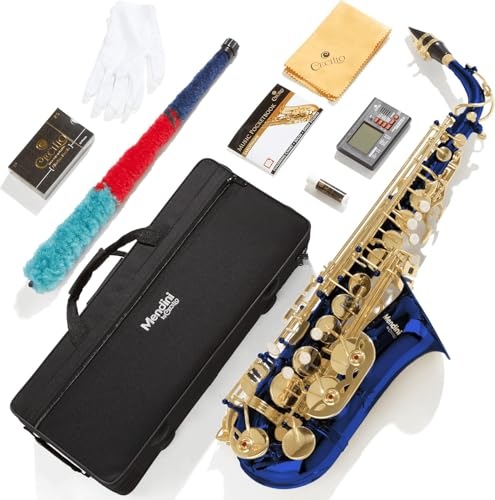
- HIGH-QUALITY CRAFTSMANSHIP: This alto saxophone features a large bore design for rich projection, ribbed construction for durability, and premium leather lining for a tight seal. The buttons are...
- HAND CRAFTED SAXOPHONE: Crafted from high quality brass, this classic Mendini alto saxophone features a shiny, colorfast gold lacquered body that is stylish and easy to clean. This alto saxophone...
The Mendini by Cecilio is a stark contrast to the Yamaha YDS-120 Soprano Saxophone. This is a traditional E-flat alto saxophone made of brass. It is designed for students who want the physical experience of vibrating reeds and real air resistance. While the YDS-120 offers silence and variety, the Mendini offers the “real” sound of a saxophone at an entry-level price. This is better for students joining a school band where a digital instrument wouldn’t be permitted. However, it lacks any of the silent practice or MIDI capabilities of the Yamaha.
2. Jean Paul USA AS-400 Alto Saxophone Lacquered Brass
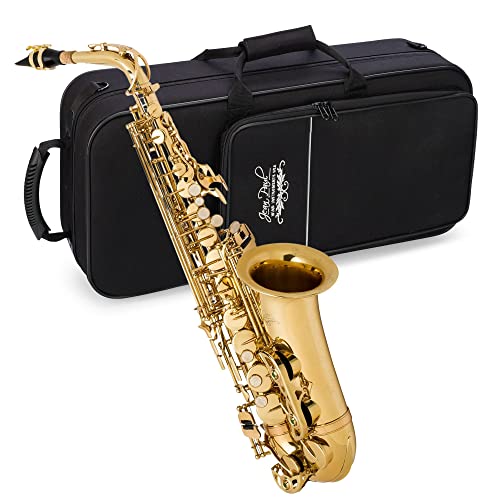
- PROFESSIONAL SETUP – Each saxophone is expertly setup and play-tested by NAPBIRT-certified technicians, ensuring it’s ready to play right out of the box.
- PRECISE INTONATION – Engineered for accurate intonation across the entire range, helping musicians maintain perfect pitch and elevate their performance.
The Jean Paul AS-400 is often cited as the gold standard for student-level acoustic saxophones. Compared to the Yamaha YDS-120 Soprano Saxophone, the AS-400 is a much more robust, “professional-feeling” instrument in the traditional sense. It features high-quality power-forged keys and a beautiful yellow brass body. If your goal is to perform in a jazz ensemble or classical setting, the Jean Paul is the superior choice for tonal development. However, you will need a dedicated, soundproof space to practice, which is where the Yamaha holds its advantage.
3. Eastar Student Alto Saxophone Beginner Kit
The Eastar AS-Ⅱ is another excellent acoustic alternative for those on a budget. Like the Mendini, it comes as a full kit including a stand and reeds. When compared to the Yamaha YDS-120 Soprano Saxophone, the Eastar provides that authentic “blow” that digital instruments can’t quite mimic perfectly. It’s an ideal choice for someone who wants to learn the fundamentals of embouchure and air support. But again, you lose the ability to play at 2:00 AM or record directly into your computer via USB without external microphones.
Final Verdict: Is the Yamaha YDS-120 Soprano Saxophone Worth It?
After extensive testing and comparison, the Yamaha YDS-120 Soprano Saxophone stands out as a specialized, highly effective tool for a specific type of musician. It is not a “replacement” for an acoustic saxophone, but rather an evolution of the practice experience. Its strengths lie in its impeccable key layout, its silent practice capabilities, and its versatility as a MIDI wind controller. While the internal speaker is lackluster and the absence of a real reed might deter some purists, the benefits of being able to practice anywhere at any time are impossible to ignore.
I would highly recommend this to any saxophonist living in an apartment, any composer looking for a more expressive way to input wind parts into their DAW, or any beginner who wants to master fingerings without the initial struggle of reed management. It is a bridge to better musicianship. If you are ready to take your practice sessions to the next level and explore the world of digital wind synthesis, I suggest you check the current pricing and special offers for this innovative instrument today. The Yamaha YDS-120 Soprano Saxophone is a comprehensive digital saxophone package that truly delivers on its promise of modern musical freedom.
Last update on 2026-09-15 / Affiliate links / Images from Amazon Product Advertising API