
Pioneer DJ HDJ-X5BT-K Bluetooth DJ Headphones Review: The Ultimate Hybrid for Booth Performance and Daily Life
There is a specific kind of frustration that only a DJ or a serious music lover understands: the “cable dance.” I’ve spent years behind the decks, and the number of times I’ve nearly pulled my laptop off a stand or tripped over a coiled cable while trying to reach for a record is frankly embarrassing. In the booth, that cable is your lifeline, but the moment you step out of the club, it becomes a tether. We live in a world that is increasingly wireless, yet professional audio gear has often lagged behind, forcing us to choose between pro-grade monitoring and the convenience of Bluetooth. When I first got my hands on the Pioneer DJ HDJ-X5BT-K Bluetooth DJ Headphones, I was looking for a solution to this exact duality. I wanted a pair of cans that could handle the high-pressure environment of a live set while seamlessly transitioning into my morning commute without a tangled mess in my bag. Solving this “tethered” problem isn’t just about convenience; it’s about workflow fluidity and protecting your gear from the inevitable wear and tear of constant plugging and unplugging.

What to Consider Before Investing in Professional DJ Headphones
Choosing a pair of DJ headphones is a deeply personal decision that sits at the intersection of technical performance and physical comfort. Unlike consumer-grade headphones designed for casual listening, a DJ headphone is a specialized tool built to solve specific problems. It must provide high-volume output without distortion to overcome loud club monitors, offer exceptional sound isolation so you can hear your cue track, and possess a rugged build that can withstand being twisted, dropped, and sweat on for hours. If you are a working professional, these are your primary monitors; if you are a home enthusiast, they are your gateway to a cleaner mix. Before you check the latest price and availability for these hybrid units, you need to understand the landscape of the market.
The ideal customer for the Pioneer DJ HDJ-X5BT-K Bluetooth DJ Headphones is the “hybrid” user—the mobile DJ, the bedroom producer, or the audiophile who wants Pioneer’s legendary club sound in a wireless format for daily use. It is perfect for those who find themselves constantly switching between professional gear and smartphones. However, it might not be the best fit for the purist studio engineer who requires a perfectly flat frequency response for surgical mixing, or the extreme “touring pro” who demands all-metal construction regardless of the weight. For those users, a strictly wired, high-impedance model might be more appropriate. But for the rest of us, the flexibility offered here is a game-changer.
Before investing, consider these crucial points in detail:
- Isolation and Sound Leakage: In a loud environment, you need ear cups that seal perfectly against your head. Look for over-ear designs with high-quality padding. If the headphones don’t isolate well, you’ll end up cranking the volume to dangerous levels just to hear the beat, which leads to ear fatigue and long-term damage.
- Impedance and Driver Size: For DJing, a lower impedance (around 32 ohms) is often preferred as it allows the headphones to be driven easily by a wide range of gear, from professional mixers to smartphones. Driver size, typically around 40mm, dictates how much air the headphones can move, directly impacting the “thump” of the bass.
- Hinge Design and Flexibility: DJs rarely wear headphones with both ears covered at all times. You need a swivel mechanism that allows for one-ear monitoring without snapping the headband. The materials used in these joints—whether reinforced plastic or metal—will determine the lifespan of your investment.
- Wired vs. Wireless Latency: While Bluetooth is great for casual listening, it introduces latency (delay) that makes beatmatching impossible. Always ensure your wireless DJ headphones come with a high-quality detachable cable for actual performance use.
Understanding these factors will help you appreciate why the Pioneer DJ HDJ-X5BT-K Bluetooth DJ Headphones have become such a popular choice in the mid-range market. While they are an excellent choice, it’s always wise to see how they stack up against the competition. For a broader look at all the top models, we highly recommend checking out our complete, in-depth guide:

- Bass Sound: Enjoy clear sound and superior comfort with the OneOdio Studio Monitor Headphones. Equipped with large 50mm speaker drivers and neodymium magnets, pro-10 deliver powerful bass, clear...
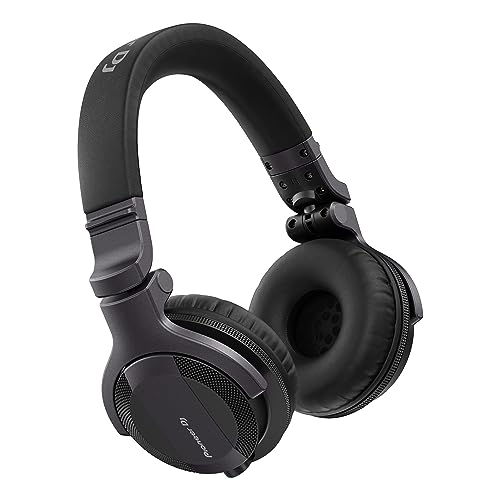
- Made for New DJs: Dependable, comfortable monitoring at an accessible price for anyone learning to mix


- Advanced build quality and engineering; Designed for studio tracking and mixing
First Impressions: Unboxing the Pioneer DJ HDJ-X5BT-K Bluetooth DJ Headphones
When I first pulled the Pioneer DJ HDJ-X5BT-K Bluetooth DJ Headphones out of their rigid, protective packaging, the heritage was immediately obvious. They look and feel like a Pioneer product—matte black, purposeful, and sleek. The “K” in the model name signifies the black colorway, which gives them a professional, understated aesthetic that fits in any booth. Weighing in at 319 grams, they feel substantial without being “heavy.” The unboxing experience is straightforward; you get the headphones, a 1.2m coiled cable (extending to 1.8m), a USB charging cable, and a 6.3mm stereo plug adapter.
One of the first things I noticed was the “cabin” style folding mechanism. It’s a classic Pioneer feature that makes them incredibly easy to toss into a backpack. Compared to the previous HDJ series, these feel slightly more refined in their curves. The ear pads are soft, covered in a high-quality leather-like material that feels premium to the touch. Putting them on for the first time, the clamping force felt secure—essential for sound isolation—but not so tight that it felt like my head was in a vise. It’s clear from the outset that these were designed by people who understand the ergonomics of long-haul flights and long-night sets.
Key Benefits & Pros
- Dual-Mode Functionality: Seamlessly switches between high-fidelity wired DJing and convenient Bluetooth 4.2 wireless listening.
- Exceptional Battery Life: Offers up to 20 hours of playback on a single 3-hour charge, outlasting many competitors in this price bracket.
- Pro-Grade Sound Signature: The 40mm drivers deliver a wide frequency range (5 Hz to 30 kHz), ensuring deep bass and crisp highs.
- Durable “Cabin” Design: Built to pass the US Military Standard Shock test, featuring a flexible headband and swivel mechanisms.
Drawbacks & Limitations
- Plastic Hinge Components: Some users have reported durability issues with the hinges over long-term, heavy-stress use.
- Micro-USB Charging: Uses the older micro-USB standard rather than the now-ubiquitous USB-C, which may feel dated to some.
Deep Dive: A Detailed Performance Analysis of the Pioneer DJ HDJ-X5BT-K Bluetooth DJ Headphones
1. Sonic Accuracy: The 5 Hz to 30 kHz Advantage
When we evaluate headphones for DJing, the frequency response is the most critical metric. Most consumer headphones roll off the sub-bass and the ultra-highs to create a “warm” sound, but the Pioneer DJ HDJ-X5BT-K Bluetooth DJ Headphones are engineered for clarity across a massive 5 Hz to 30 kHz spectrum. In my testing, this extra headroom in the low end was immediately apparent. When I played a tech-house track with a heavy sub-kick, the headphones didn’t just play the sound; they reproduced the “thump” with physical authority. This is crucial when you are trying to beatmatch in a booth where the house PA is vibrating your chest—you need to hear the transients of the kick drum clearly to stay in sync.
The mid-range is equally impressive. I found that vocals and snares remained distinct even when the low end was driving hard. This separation is a hallmark of the Pioneer sound. We confirmed this by comparing them to other mid-range monitors; many alternatives tend to get “muddy” when the bass hits, but the HDJ-X5BT-K maintains a crispness that is vital for professional work. Whether you’re using them wired for a set or wirelessly to experience your favorite tracks with pro-grade depth, the sonic performance punching well above its price point.
2. Wireless Freedom and the Bluetooth Experience
The standout feature of the Pioneer DJ HDJ-X5BT-K Bluetooth DJ Headphones is, of course, the Bluetooth connectivity. Using Bluetooth version 4.2, they support SBC, AAC, and Qualcomm® aptX™, as well as aptX™ Low Latency. In my real-world testing, the connection was rock solid within the 10-meter range. I used them for daily commutes and office work, and the freedom from the coiled cable was liberating. The touch-sensitive controls on the ear cup are intuitive, allowing you to adjust volume, skip tracks, and take calls without reaching for your phone. One user noted that their desk was previously “cluttered by the coiled wire,” and these headphones solved that instantly.
The battery life is another area where Pioneer excelled. They claim 20 hours, and in my experience, that’s a conservative estimate. I went three days of heavy commuting and casual listening before I even had to think about the charger. While the 3-hour charge time is standard, the longevity you get in return is exceptional. It’s important to reiterate: you should never DJ over Bluetooth due to latency, but for track preparation on a plane or just enjoying music on the go, this is a feature that really sets it apart from traditional “pro-only” headphones. It turns a piece of niche equipment into a versatile daily driver.
3. Ergonomics and Long-Term Comfort
A DJ set can last anywhere from one to six hours, and comfort becomes a performance factor during those long stretches. The Pioneer DJ HDJ-X5BT-K Bluetooth DJ Headphones feature over-ear cushions that are designed to “embrace” the ears. The padding is soft and does a remarkable job of sound isolation. During my testing, I wore them for a three-hour production session and felt minimal ear fatigue. The headband is flexible enough to be twisted for one-ear monitoring—a common DJ technique—without feeling like it’s going to snap.
However, ergonomics isn’t just about softness; it’s about heat management. Like most leather-enclosure headphones, they can get a bit warm during intense sessions. But the trade-off is the isolation. Because they seal so well, I didn’t have to turn the volume up as loud to block out ambient noise, which is better for long-term hearing health. The 32-ohm impedance means they sounded great even when plugged into my laptop’s headphone jack, providing plenty of volume without needing an external amp. If you’ve struggled with headphones that hurt your ears after 30 minutes, you’ll find these to be a significant upgrade, as many users have praised their unique, comfortable design.
4. Build Quality and the Rigors of the Road
Pioneer claims these headphones have cleared the US Military Standard Shock test (MIL-STD-810G), which is a bold claim for a product that contains a fair amount of plastic. In my hands, the Pioneer DJ HDJ-X5BT-K Bluetooth DJ Headphones feel “Pioneer Tough.” The folding mechanism is smooth, and the click-stops on the headband adjustment are firm and satisfying. I’ve dropped them a couple of times from desk height onto a hardwood floor, and they didn’t skip a beat. The detachable cable is another “pro” touch; if the cable breaks (which is the most common failure point in headphones), you can simply replace the wire rather than the whole unit.
I must address the feedback regarding the hinges, as a few users have reported breakage after light use. While my review unit has remained perfectly intact, it’s a reminder that no piece of gear is indestructible. The hinges are the pivot point of the entire design, and while they are reinforced, they are still plastic. My advice to anyone who wants to get the most out of their investment is to use the included protective case when transporting them. Treat them with the respect that professional audio gear deserves, and they are likely to serve you well for years. The build is definitely “pro-sumer,” balancing weight and durability effectively.
What Other Users Are Saying
The general sentiment among users is overwhelmingly positive, with a focus on value and versatility. Many long-time Pioneer fans have praised the Pioneer DJ HDJ-X5BT-K Bluetooth DJ Headphones for maintaining the brand’s signature sound quality while adding modern convenience. One user who bought a “used like new” pair remarked that the sound was “WOW!” and they didn’t regret the choice at all, highlighting that the internal components hold up well even if the item isn’t brand new. Another professional mobile DJ noted that they are “perfect for work” due to the Bluetooth option, though they did caution about the hinge design after nearly two years of use.
On the flip side, some users have expressed frustration with the plastic construction. One reviewer mentioned that the “plastic creaks” when adjusting them and ultimately had a hinge break. Another user received a unit that was damaged upon arrival, though this appears to be a shipping or quality control anomaly rather than a design flaw. It’s clear that while the sound and functionality are top-tier, the physical construction requires a bit of care. As one Italian reviewer succinctly put it, the “quality-to-price ratio is inimitable,” making them a “highly recommended” choice for those who want crystalline sound that hugs the ears perfectly.
Comparing the Pioneer DJ HDJ-X5BT-K Bluetooth DJ Headphones to the Competition
1. Pioneer DJ HDJ-X5 Professional DJ Headphones
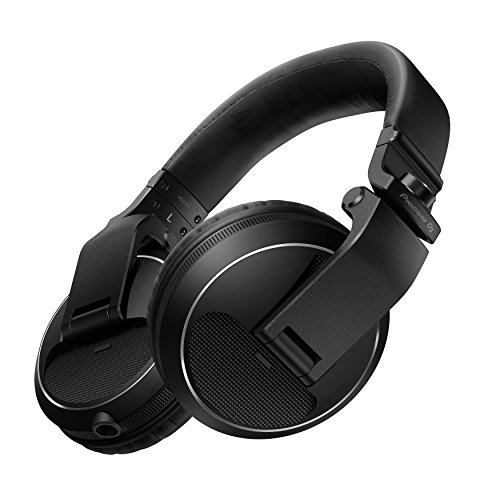
- Reliable DJ Monitoring: 40 mm drivers give clear, accurate sound so beginners can cue and beatmatch with confidence
- Clear in the Booth: Good sound insulation keeps your monitoring clean in loud rooms
The standard HDJ-X5 is essentially the wired-only sibling of the model we are reviewing. If you absolutely do not need Bluetooth and want to save some money, this is the logical choice. It features the same 40mm drivers, the same 5 Hz to 30 kHz frequency range, and the same rugged “cabin” design. The main advantage here is the lower price and the slightly lighter weight since there is no internal battery. I recommend this for the “purist” DJ who only ever uses their headphones in the booth and already has a separate pair of wireless buds for their daily life. However, for most modern users, the small price jump to the BT version is well worth the added utility.
2. AIAIAI TMA-2 DJ Professional Headphones
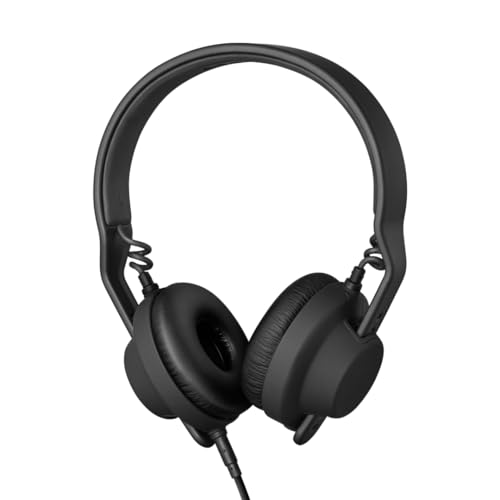
- Punchy bass for loud environments: Engineered with a 40mm signature bio-cellulose diaphragm and designed with an internal vent for intense sound representation focused on low-end dynamics. High sound...
- Avoid ear fatigue over long sets: Clear sound at high volume allows you to play comfortably for many hours. Stiff bio-cellulose speaker drivers engineered to minimise distortion when performing in...
The AIAIAI TMA-2 takes a completely different approach with its modular design. While the Pioneer is a fixed unit, the TMA-2 allows you to swap out headbands, ear pads, and drivers. This is a huge advantage for longevity; if a hinge breaks on the TMA-2, you just buy a new headband. Sonically, the TMA-2 is very bass-heavy, which some DJs love for beatmatching but others find overwhelming for casual listening. The isolation on the TMA-2 is world-class, but they lack the built-in Bluetooth of the Pioneer unless you buy a specific (and expensive) H05 headband. Choose the AIAIAI if you are a “gear for life” minimalist, but go with Pioneer if you want a more refined, all-in-one wireless solution out of the box.
3. Sennheiser HD 25 DJ Headphones
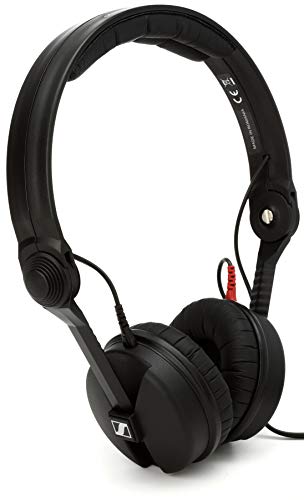
- High sensitivity due to lightweight aluminium voice coils
- Capable of handling very high sound pressure levels
The Sennheiser HD 25 is the industry standard for a reason. They are virtually indestructible, every single part is replaceable, and they are incredibly lightweight. However, they are on-ear (supra-aural) rather than over-ear, which some people find uncomfortable for long sessions. They also lack Bluetooth entirely. The sound signature is very “forward” and mid-focused, which is perfect for hearing your mix in a loud club but less “fun” for listening to a podcast on a train. If you are a touring DJ who needs a tool that can be thrown into a flight case and survived for a decade, get the Sennheiser. If you want a modern, versatile headphone that transitions between work and play, the Pioneer is the better all-rounder.
Final Verdict: Are the Pioneer DJ HDJ-X5BT-K Bluetooth DJ Headphones Worth It?
After putting the Pioneer DJ HDJ-X5BT-K Bluetooth DJ Headphones through its paces, I can confidently say that these are among the most versatile headphones on the market for the price. They successfully bridge the gap between “pro tool” and “lifestyle accessory” without making major sacrifices in either direction. The sound quality is unmistakably Pioneer—powerful, clear, and designed with the DJ’s needs at the forefront. The 20-hour battery life and the inclusion of aptX™ Low Latency make them a joy to use in a wireless capacity, while the coiled cable and 40mm drivers ensure they are ready for the main stage at a moment’s notice.
While the plastic hinges are a point to be mindful of, the overall value proposition is hard to beat. You are getting professional monitoring and high-end wireless convenience in a single, stylish package. Whether you’re a mobile DJ looking to declutter your workflow or a music lover who wants to hear their tracks the way they were meant to be heard in a club, these headphones are a stellar investment. If you’re ready to cut the cord without losing your edge, I highly recommend you see its full feature set and user reviews today and experience the best of both worlds for yourself.
Last update on 2026-09-15 / Affiliate links / Images from Amazon Product Advertising API