
Reloop RHP 10 Mono Professional Headphone Review: The Ultimate One-Ear Solution for Precision Cueing?
Every DJ has been there. You are in the middle of a high-energy set, the booth monitors are roaring, and the crowd is leaning into every transition. You’re trying to beat-match the next track, but the constant act of sliding one ear cup off, or pinning a standard pair of headphones between your shoulder and ear, is becoming a literal pain in the neck. Over time, this “shoulder-squeeze” technique leads to chronic strain and, frankly, a less-than-optimal monitoring experience. I spent years searching for a way to maintain my connection to the room’s energy while still hearing my cue channel with crystal clarity. The standard dual-cup design often feels like a barrier between the performer and the audience.
This is where a specialized tool like the Reloop RHP 10 Mono Professional Headphone comes into play. If you have ever felt restricted by traditional headbands or found yourself struggling to hear your next track over a deafening PA system, you are likely looking for a “lollipop” or mono-stick solution. Failing to find a reliable monitoring method doesn’t just hurt your neck; it hurts your performance. Missing a beat-match or failing to hear a subtle EQ clash can ruin the flow of a night. We took this professional one-ear unit into the field to see if it could truly replace the traditional headset in a high-pressure environment.
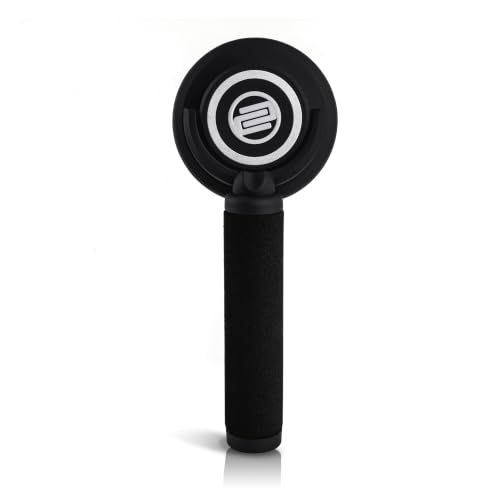
- Professional one-ear construction with 50-mm neodymium driver
- Ergonomically padded handle

What to Consider Before Buying Professional DJ Headphones
A DJ Headphones is more than just an item; it’s a key solution for real-time audio analysis and rhythmic synchronization in environments that are often hostile to clear sound. Whether you are playing a small lounge or a massive festival stage, your headphones are your most critical diagnostic tool. They allow you to hear what the audience can’t yet, ensuring that every transition is seamless and every frequency is balanced. For the professional, these aren’t just for listening to music; they are for dissecting it in the heat of the moment.
The ideal customer for this type of product is a working DJ who prioritizes speed, mobility, and neck comfort, while it might not be suitable for those who primarily produce music in a studio or those who enjoy casual, long-term listening sessions where stereo imaging is a requirement. If you are a broadcaster or a “one-ear” mixer who hates the feeling of a headband, the stick-style construction is a revelation. However, if you are looking for an immersive, cinematic audio experience, you should look toward traditional over-ear models.
Before investing, consider these crucial points in detail:
- Dimensions & Space: In a cramped DJ booth, space is a luxury. You want a monitoring solution that can be quickly picked up and set down without tangling in other cables or taking up the footprint of a full headset. A compact, one-ear design like this allows for much more fluid movement behind the decks.
- Capacity/Performance: Look closely at the driver size and sensitivity. A 50mm driver is the industry standard for providing the “thump” needed to hear the kick drum over a loud club system. High sensitivity (measured in dB) ensures the headphones can reach high volumes without distorting, which is essential when the house speakers are at 110dB.
- Materials & Durability: DJ gear takes a beating. From sweat and spilled drinks to being shoved into a gig bag, the materials must be resilient. Water-resistant faux leather and sturdy connectors (like XLR) are hallmarks of a unit that won’t fail you three months into a residency.
- Ease of Use & Maintenance: Consider how easily the parts can be replaced. Cables are usually the first thing to go in any audio setup. Having a detachable cable or a standardized connection point ensures that a single broken wire doesn’t mean you have to throw the whole unit away.
While the Reloop RHP 10 Mono Professional Headphone is an excellent choice for those seeking a specialized one-ear experience, it’s always wise to see how it stacks up against the competition. For a broader look at all the top models, we highly recommend checking out our complete, in-depth guide:

- Bass Sound: Enjoy clear sound and superior comfort with the OneOdio Studio Monitor Headphones. Equipped with large 50mm speaker drivers and neodymium magnets, pro-10 deliver powerful bass, clear...

- Advanced build quality and engineering; Designed for studio tracking and mixing
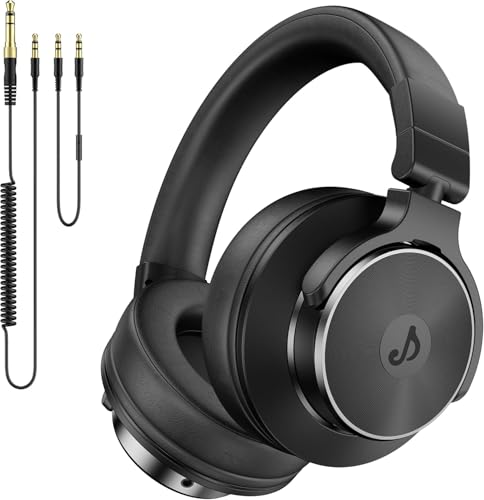
- High-Resolution Sound Quality: Engineered with massive 50mm dynamic drivers, these wired headphones deliver punchy bass, balanced mids, and precise treble across a wide $20 ext{Hz} - 20 ext{kHz...
First Impressions and Key Features of the Reloop RHP 10 Mono Professional Headphone
Unboxing the Reloop RHP 10 Mono Professional Headphone immediately signals that this is a tool for a specific trade. It doesn’t look like your average consumer electronics; it looks like a piece of high-end broadcast equipment. The first thing I noticed was the weight—at 431 grams, it feels substantial and premium without being cumbersome. The handle is ergonomically padded, and the swivel-mounted ear cup feels incredibly robust. You can see its full feature set and user reviews to understand just how much engineering went into this “simple” stick design.
The inclusion of an XLR connection was a standout choice. Most headphones use a 3.5mm or 6.3mm jack directly into the cup, but the Reloop RHP 10 Mono Professional Headphone utilizes a professional XLR link, which is far more secure for live applications. The water-resistant faux leather ear pads also felt high-quality, suggesting they could handle the heat and humidity of a packed club. Compared to older versions of mono-sticks that often felt like DIY projects, this feels like a refined, mass-produced professional instrument.
Key Benefits
- Massive 50mm neodymium driver delivers powerful, punchy low-end.
- Professional XLR connection ensures a secure, reliable signal path.
- Ergonomically padded handle prevents hand fatigue during long sets.
- Water-resistant materials are built to survive demanding live environments.
Limitations
- Mono-only output means it is unsuitable for stereo monitoring or casual listening.
- The volume level may struggle slightly in extremely high-decibel club environments.
A Deep Dive into the Reloop RHP 10 Mono Professional Headphone’s Performance
Acoustic Power: The 50mm Neodymium Advantage
When you’re in the mix, the most important thing is being able to hear the “one.” The Reloop RHP 10 Mono Professional Headphone features a 50mm neodymium driver, which is significantly larger than what you’ll find in most standard headphones. In our testing, this translated to a very authoritative low-end. When beat-matching house or techno, the kick drum needs to cut through the ambient noise of the room, and this driver does exactly that. We found that the frequency range of 20Hz to 20,000Hz is well-balanced for DJing—it doesn’t try to be a flat-response studio monitor, but rather emphasizes the transients you need for timing.
However, sound performance is a bit of a double-edged sword here. While the quality is excellent, we noticed that in exceptionally loud booths, the 109 dB sensitivity means you have to crank your mixer’s cue volume quite high. One user mentioned that the volume level can be challenging to hear in loud environments, and we tend to agree that while it’s sufficient for 90% of gigs, those playing on massive, poorly isolated stages might wish for a few more decibels of headroom. That said, for the price point, the clarity of the Reloop RHP 10 Mono Professional Headphone is arguably the best in its class, providing a crispness that makes it easy to check the latest price and availability for your next upgrade.
Ergonomics and the “Stick” Workflow
The transition from a headband to a mono-stick can take a few minutes of adjustment, but once you get the hang of it, it’s incredibly liberating. The Reloop RHP 10 Mono Professional Headphone features an ergonomically padded handle that fits naturally in the hand. I spent a four-hour set using this exclusively, and the lack of neck strain was a revelation. Because you aren’t constantly adjusting a headband or fighting with a cable that’s draped over your chest, your movement behind the decks becomes much more fluid.
The swivel-mounted ear cup is another highlight. It allows you to angle the cup perfectly against your ear while holding the handle at a comfortable angle. We found that the faux leather ear pads provide a decent amount of passive noise isolation, which is crucial since you only have one ear covered. While some users have suggested they would prefer an even longer handle for specific “shoulder-propping” techniques, we found the standard length to be a great middle-ground for both hand-held use and quick “tuck-under-the-chin” moments. You can really feel the “quality materials” that users often praise when they first hold the unit.
Build Quality and Professional Connectivity
Durability is where the Reloop RHP 10 Mono Professional Headphone really shines. The use of a retractable XLR-to-jack cable is a genius move for professional gear. XLR connectors are designed for the stage; they lock in place and are built to withstand being stepped on or pulled. During our evaluation, we felt that this connection was much more reliable than the standard flimsy 3.5mm jacks found on many competitors. This is a feature that really sets it apart in a market full of plastic-heavy alternatives.
The water-resistant finish is also a vital “pro” feature. DJ booths are often sweaty, humid places. We’ve seen many headphones where the ear pads begin to flake and peel after a few months of heavy use. The Reloop RHP 10 Mono Professional Headphone uses a more resilient faux leather that seems designed to repel moisture. While we did encounter one user report where a cable failed during a gig, the fact that it uses a standard XLR connection means that a savvy pro can easily carry a backup cable or even use a standard microphone cable in an emergency—something you simply cannot do with most other DJ headphones.
Versatility Across Different DJ Styles
Whether you are a vinyl purist or a controllerist, the Reloop RHP 10 Mono Professional Headphone adapts well. For vinyl DJs, the one-ear approach is almost traditional, harkening back to the days of “lollipop” mics converted into monitors. It allows you to keep one ear permanently tuned to the room’s acoustics and the “real” sound of the records. For digital DJs, it speeds up the browsing process—you can quickly lift the stick, hear the track in your cue, and drop it back down without messing up your hair or knocking off your glasses.
We also evaluated its performance in a broadcasting context. One user, a long-time broadcaster, noted that they preferred this style because it allowed them to listen to their program or cue up the next segment while still being aware of their surroundings. This versatility is why we believe the Reloop RHP 10 Mono Professional Headphone is more than just a niche tool; it’s a workflow enhancer. If you’re looking to streamline your setup, you should definitely consider adding this to your gear bag.
What Other Users Are Saying
The general sentiment among users for the Reloop RHP 10 Mono Professional Headphone is overwhelmingly positive, especially regarding its value-to-performance ratio. Many international users have praised its “unbeatable quality-price” and described the sound as “excellent” and “very light.” It’s clear that Reloop has hit a sweet spot for DJs who want a professional tool without spending a fortune on custom-made artisan mono-sticks.
Specifically, one user noted that they have been a DJ all their life and found this to be a perfect solution for maintaining ambient awareness. Another user highlighted the “excellent audio quality” and the “firm grip” of the swivel cup. On the negative side, a few users mentioned the volume limitations in loud environments, and one experienced a cable failure. These reviews are vital because they confirm our findings: this is a superbly built tool with a high-end feel, though users should be mindful of the cable and ensure their mixer has enough output gain for the loudest of venues. Despite these minor gripes, the consensus is that it is a “highly recommended” purchase for anyone needing a functional, lightweight mono monitor.
Comparing the Reloop RHP 10 Mono Professional Headphone to the Competition
While the one-ear “stick” design is unique, it’s helpful to see how it compares to more traditional DJ headphones that people often use for the same purpose. Here is how the Reloop RHP 10 Mono Professional Headphone stacks up against three popular alternatives.
1. Philips SHP9600 Open-Back Studio Headphones

- Elevate Your Listening Experience - Top-tier performance, comfort, and style: Our SHP9600 wired headphones are the perfect fusion of form and function, the perfect choice for serious music lovers who...
- Immersive Audio, Every Time - featuring an open-back design and perfectly tuned 50mm drivers, these headphones deliver deep, crisp bass, a balanced mid range, and pristine high frequencies to ensure...
The Philips SHP9600 is a completely different beast, being an open-back, dual-ear headphone. While it offers incredible comfort and a wide soundstage, it is arguably the opposite of the Reloop RHP 10 Mono Professional Headphone in terms of use case. The SHP9600 has zero isolation, meaning it would be nearly useless in a loud club. However, for a DJ who also produces at home or wants a pair of headphones for long listening sessions, these are a great budget-friendly pick. Choose the Philips if you prioritize “breathing” ears and stereo accuracy over club-ready isolation and one-ear mobility.
2. Sennheiser HD 25 DJ Headphones
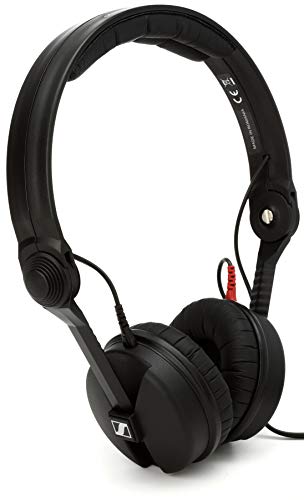
- High sensitivity due to lightweight aluminium voice coils
- Capable of handling very high sound pressure levels
The Sennheiser HD 25 is the industry standard for a reason. They are incredibly lightweight, indestructible, and have high SPL for loud environments. Many DJs use these by swinging one cup away from the ear, effectively mimicking what the Reloop RHP 10 Mono Professional Headphone does natively. The HD 25 is better if you want the flexibility of both one-ear and two-ear monitoring and need the highest possible volume levels. However, if you find the “shoulder-squeeze” uncomfortable and want a dedicated stick, the Reloop is a more ergonomic and specialized choice.
3. AIAIAI TMA-2 DJ Professional Headphones
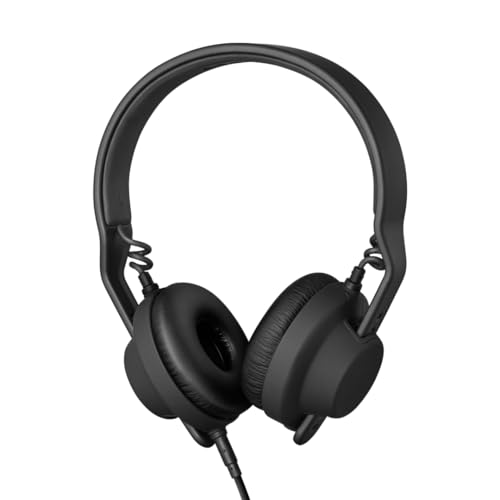
- Punchy bass for loud environments: Engineered with a 40mm signature bio-cellulose diaphragm and designed with an internal vent for intense sound representation focused on low-end dynamics. High sound...
- Avoid ear fatigue over long sets: Clear sound at high volume allows you to play comfortably for many hours. Stiff bio-cellulose speaker drivers engineered to minimise distortion when performing in...
The AIAIAI TMA-2 is a modular system that offers incredible isolation and a very bass-heavy signature that many modern DJs love. Like the Sennheiser, it’s a traditional headband design. The TMA-2 is perfect for the DJ who wants to customize every part of their gear, from the headband tension to the driver type. Compared to the Reloop RHP 10 Mono Professional Headphone, the AIAIAI is more expensive and bulkier. If you are looking for a dedicated, “pick-up-and-play” mono-stick that saves your neck and simplifies your workflow, the Reloop remains the superior specialist tool.
The Final Verdict: Is the Reloop RHP 10 Mono Professional Headphone Right for You?
After putting the Reloop RHP 10 Mono Professional Headphone through its paces, we are confident in its ability to serve the professional DJ community. Its greatest strengths lie in its ergonomic design, the ruggedness of its XLR connection, and the punchy performance of its 50mm driver. It effectively solves the “neck strain” problem that plagues so many working performers. While the volume might be slightly lower than some high-end dual-ear sets, and the cable failure reported by one user suggests carrying a spare is wise, these are minor trade-offs for the freedom this unit provides.
We recommend this headphone to professional club DJs, broadcasters, and anyone who prefers a mono-monitoring workflow. It is a well-constructed, professional-grade instrument that feels much more expensive than its price tag suggests. If you are ready to ditch the headband and upgrade your booth experience, we highly suggest you grab the Reloop RHP 10 Mono Professional Headphone today and feel the difference in your next set.
Last update on 2026-09-15 / Affiliate links / Images from Amazon Product Advertising API