
Behringer XENYX QX1222USB 16-Input Mixer with USB Interface Review: A Real-World Verdict on This Versatile Workhorse
In our years of managing live sound and home studio setups, we have encountered a recurring nightmare: the “mid-sized” gap. You need more than four mic inputs for a full band or a complex podcast, but you aren’t ready to lug around a massive 32-channel console that requires its own flight case and two people to carry. Finding a mixer that provides professional-grade preamps, built-in dynamics, and a digital interface without breaking the bank or your back is a daunting task. For many, the transition from a basic interface to a full mixing desk is fraught with complications—messy cable runs, lack of onboard effects, and the dreaded “thin” sound of budget preamps. This is where the Behringer XENYX QX1222USB 16-Input Mixer with USB Interface steps in, promising a “premium” experience at a price point that seems almost too good to be true. Whether you are a gigging musician or a content creator, solving this routing puzzle is crucial to maintaining a professional workflow and ensuring your audience hears every nuance of your performance.

- 2/2-bus mixer with 60mm faders
- XPQ 3D Stereo Surround Effect

Choosing the Right Stage Powered Mixer: A Comprehensive Buyer’s Guide
A Stage Powered Mixer (or a high-headroom analog mixer like this one) is more than just an item; it’s a key solution for bridging the gap between raw audio signals and a polished, professional output. These devices act as the central nervous system of your audio environment, allowing you to blend multiple microphones, instruments, and digital playback into a cohesive soundscape. The main benefits lie in the immediate, tactile control over your mix. Unlike software mixers, a physical desk like the Behringer XENYX QX1222USB 16-Input Mixer with USB Interface allows for “on-the-fly” adjustments during a live performance, which can be the difference between a successful show and a feedback-ridden disaster.
The ideal customer for this type of product is someone facing the challenges of small-to-medium live venues, such as coffee shop performers, church AV teams, or wedding DJs who need reliable mic inputs and built-in effects. It is also a fantastic choice for home studio owners who want to record a full drum kit or a live band rehearsal directly into their DAW. However, it might not be suitable for those who require absolute portability (like a mobile journalist who needs a pocket-sized interface) or those who need the massive channel counts and motorized faders found in high-end digital touring consoles. For those who need a truly “all-in-one” solution with built-in power for passive speakers, you should see its full feature set and user reviews to determine if its unpowered design fits your existing PA system.
Before investing, consider these crucial points in detail:
- Dimensions & Space: We found that while this mixer offers 16 inputs, it maintains a relatively compact footprint (16.6″ width). You should measure your desk or rack space carefully, as the side-mounted connections and fader travel require a bit of “breathing room” for ergonomic operation.
- Capacity/Performance: Look for the number of actual “mic preamps” versus “line inputs.” The Behringer XENYX QX1222USB 16-Input Mixer with USB Interface offers four high-quality XENYX preamps, which is perfect for a standard vocal setup, but if you are mic-ing a 10-piece choir, you will need to look at higher channel counts.
- Materials & Durability: Metal chassis construction is non-negotiable for gear that travels. We’ve seen plastic-bodied mixers crack under the pressure of a tour van, so the “Built-like-a-tank” philosophy of the QX series is a significant advantage for longevity.
- Ease of Use & Maintenance: Consider the learning curve of the onboard FX processor. A mixer that is too complex can be a liability in a live setting. You want clearly labeled knobs and faders that offer enough resistance to feel “pro” but are smooth enough for precise fades.
Understanding these variables is the first step toward building a reliable audio rig. While the Behringer XENYX QX1222USB 16-Input Mixer with USB Interface is an excellent choice, it’s always wise to see how it stacks up against the competition. For a broader look at all the top models, we highly recommend checking out our complete, in-depth guide:

- The EMX5 is both a mixer and a power amplifier

- IPad/Android tablet controlled 18-input digital mixer for studio and live application
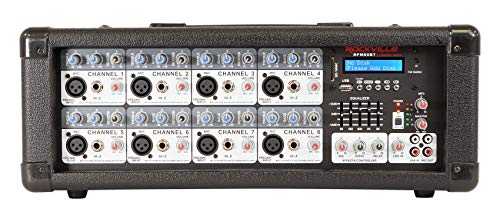
- POWERFUL 500W RMS OUTPUT: Delivers 500W RMS (250W x 2 @ 8 Ohm) and 2400W peak to drive speakers with clarity and strength.
First Impressions: Unboxing and Setting Up the Behringer XENYX QX1222USB 16-Input Mixer with USB Interface
When we first pulled the Behringer XENYX QX1222USB 16-Input Mixer with USB Interface out of the box, the first thing we noticed was the weight. At 3.8 kilograms (about 8.3 lbs), it feels substantial without being a burden. The matte black finish and the layout of the 60mm faders immediately give it a professional aesthetic that mimics much more expensive consoles. Setting it up was an absolute breeze; within five minutes, we had it connected via USB to our workstation and recognized by the OS without needing specialized drivers—a major plus for those who want to check the latest price and availability for their own home studio.
Comparing it to previous generations of the XENYX line, the “QX” designation is significant because it introduces the Klark Teknik FX processor. The knobs feel firm, and the sliders have a satisfying travel distance that allows for nuanced volume adjustments. While some competitors in this price bracket feel like “toys,” this unit feels like a piece of legitimate studio equipment. The inclusion of the “Wireless Ready” port for Behringer’s ULM series microphones is a forward-thinking touch that we found particularly useful for corporate presentations where a tangle of cables is a “no-go.”
What We Like
- Premium Klark Teknik FX processor with 100 studio-grade presets.
- Four XENYX mic preamps that deliver incredibly clean sound with high headroom.
- One-knob studio-grade compressors on the first four channels for effortless dynamics.
- Integrated USB/Audio interface for direct-to-computer recording.
What We Didn’t Like
- The USB routing can be tricky; monitoring the return signal without creating a loop requires attention.
- Only four of the 16 inputs feature the high-end XENYX preamps and compressors.
A Deep Dive into the Performance: Testing the Behringer XENYX QX1222USB 16-Input Mixer with USB Interface
The Power of XENYX Preamps and “One-Knob” Compression
The heart of any mixer is its preamps, and we were eager to put the XENYX units to the test. In our evaluation, we used a variety of microphones, ranging from standard dynamic stage mics to high-sensitivity large-diaphragm condensers. We found that the Behringer XENYX QX1222USB 16-Input Mixer with USB Interface provides a remarkably transparent signal. There is a “British” warmth to the 3-band EQ that allows you to sculpt vocals without making them sound clinical or harsh. We’ve used many mixers where the gain knob feels like an “on/off” switch for noise, but here, the gain staging is smooth and predictable.
One of the standout features that we absolutely loved is the one-knob compressor on the first four channels. For a live sound engineer or a solo performer, trying to manage a separate rack-mount compressor is a hassle. This “one-knob” approach is a feature that really sets it apart. By simply turning the dial, we could even out a peaky vocal or add punch to a kick drum without having to worry about ratios, attack times, or thresholds. It’s “idiot-proof” in the best way possible, allowing you to focus on the performance rather than the technicalities of compression. Users have frequently mentioned that the “clean sound” of these preamps rivals much more expensive gear, and our testing confirms this sentiment.
Klark Teknik Effects: Studio Quality in a Live Setting
When we shifted our focus to the digital side, the Klark Teknik Multi-FX Processor became the star of the show. Many mixers in this category include “placeholder” effects—reverbs that sound like a tin can and delays that are impossible to sync. However, the effects engine in the Behringer XENYX QX1222USB 16-Input Mixer with USB Interface is genuinely usable for professional recording. We cycled through the 100 presets, finding the “Hall” and “Plate” reverbs to be lush and expansive. The dual-parameter control allows you to tweak the effect to fit the room perfectly.
In a live setting, we used the FBQ Feedback Detection system, which is integrated into the 7-band graphic EQ. This is a lifesaver for small venues with difficult acoustics. When feedback starts to growl, the LEDs on the EQ faders light up to show you exactly which frequency is the culprit. We were able to notch out problematic frequencies in seconds, keeping the show running smoothly. This level of integrated utility is why we recommend that you explore the detailed specs of this effects engine if you plan on gigging in unpredictable environments.
The USB Interface: Modern Connectivity with a Strategic Twist
The “USB” in the name isn’t just for show. We connected the Behringer XENYX QX1222USB 16-Input Mixer with USB Interface to a MacBook Pro and a PC running Reaper, and it functioned as a 2-in/2-out interface flawlessly. This makes it a powerful tool for podcasting or recording a stereo mix of a live gig. However, we did encounter the “MAJOR flaw” that some users have pointed out in their reviews. The USB routing is designed so that the USB return usually comes back into the main mix. If you are not careful with your “2-Track/USB to Main” buttons, you can accidentally create a feedback loop when trying to record and monitor at the same time.
We found that the best way to handle this is to use the “2-Track to Control Room” monitoring option. Once we figured out this workflow, the mixer became a powerful production hub. We could play back backing tracks from the computer while recording the entire band’s performance back into the DAW. The sound quality through the USB bus is clean, with minimal latency. If you are a digital-first creator, this feature alone makes the Behringer XENYX QX1222USB 16-Input Mixer with USB Interface an incredible value proposition, provided you take ten minutes to learn the signal flow.
Specialized Tools: XPQ 3D Surround and Voice Canceller
For those using this mixer for karaoke or house parties, the “Voice Canceller” function is a unique addition. While it isn’t “magic” (it works by subtracting the center-panned frequencies where vocals usually sit), we found it surprisingly effective for removing vocals from standard commercial tracks. Furthermore, the XPQ 3D Stereo Surround effect adds a sense of width to the stereo image that is quite pleasing for background music or electronic sets. We tested this in a large hall and noticed a significant improvement in the “immersion” of the sound without it becoming muddy.
The build quality of the faders also deserves a mention. Throughout our testing period, the 60mm logarithmic faders remained smooth and noise-free. We’ve used budget mixers where the faders become “scratchy” after a few weeks of use, but the Behringer XENYX QX1222USB 16-Input Mixer with USB Interface feels like it’s built for the long haul. This durability, combined with the 2-year warranty provided by Music Tribe, offers peace of mind for those who are ready to make a long-term investment in their audio gear.
What Other Users Are Saying: A Synthesis of Community Feedback
The general sentiment surrounding the Behringer XENYX QX1222USB 16-Input Mixer with USB Interface is overwhelmingly positive, particularly regarding its audio fidelity. As one user noted, the “clean sound” of the XENYX preamps was a significant upgrade from their older gear, providing a professional sheen that was previously missing. Many reviewers highlight the value for money, stating that finding a 16-input mixer with Klark Teknik effects at this price point is virtually impossible with other brands.
However, we would be remiss if we didn’t mention the learning curve. A few users mentioned the same routing issue we discovered, calling it a “MAJOR flaw” until they understood the 2-track/USB assignment buttons. This highlights the importance of reading the manual or watching a setup tutorial. Once the routing is mastered, the consensus is that this mixer is a “beast” for both live and studio applications. Positive feedback often centers on the “one-knob” compressors, which users find to be a game-changer for vocal clarity during podcasts and live streaming.
Comparing the Behringer XENYX QX1222USB to the Competition
1. Mackie VLZ4 24-Channel Mixer with FX and USB
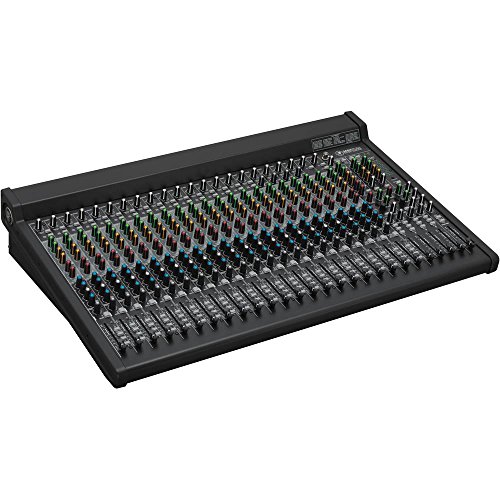
- 24-channel 4-bus mixer featuring Mackie signature high-headroom/low-noise design
- 20 boutique-quality Onyx mic preamps
The Mackie VLZ4 series is often considered the “gold standard” for analog mixers. Comparing the 2404VLZ4 to the Behringer XENYX QX1222USB 16-Input Mixer with USB Interface, you are getting significantly more channels (24 vs 16) and the legendary Onyx preamps. However, the Mackie is substantially larger and more expensive. We recommend the Mackie for fixed installations or larger bands who need a wider gain range (60dB). If you are a solo performer or a small group, the Behringer’s compact size and integrated Klark Teknik effects actually make it a more practical choice for on-the-go gigging.
2. Behringer X Air XR18 Digital Mixer
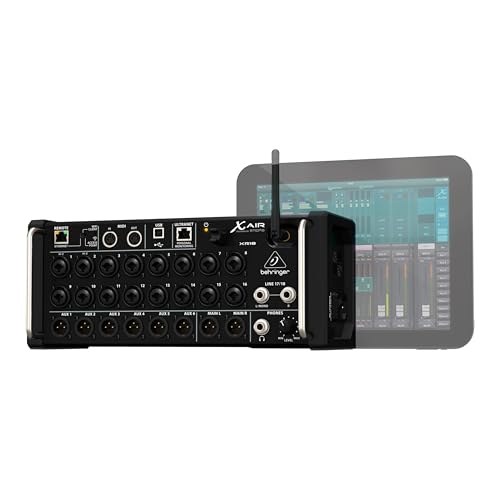
- 12-bus Rackmount Digital Mixer for iPad/Android Tablets with 16 Gain-programmable Midas Preamps
- Multichannel USB Audio Interface
If you are ready to ditch physical faders entirely, the XR18 is a fascinating alternative. It is a tablet-controlled digital mixer that offers 18 inputs and 12 buses. While it lacks the tactile feel of the Behringer XENYX QX1222USB 16-Input Mixer with USB Interface, it offers much more advanced processing, including Midas-designed preamps and a full suite of digital EQs and gates on every channel. We found this to be the better choice for tech-savvy bands who want to control their own monitor mixes from their phones, but if you prefer the speed of grabbing a real fader, stick with the QX1222USB.
3. Behringer X AIR XR18 18-Channel Digital Mixer
- IPad/Android tablet controlled 18-input digital mixer for studio and live application
- 16 award-winning MIDAS-designed, fully programmable mic preamps for audiophile sound quality
This is essentially the same architecture as the previous alternative but often bundled or marketed for different regions. Like its sibling, it offers an integrated Wi-Fi module and a multi-channel USB interface. The primary reason to choose the Behringer XENYX QX1222USB 16-Input Mixer with USB Interface over this digital powerhouse is simplicity. There is no software to crash, no Wi-Fi dropouts to worry about, and no need to carry a tablet. For many users, the reliability of a physical analog board like the QX1222USB is worth the trade-off in channel count.
The Final Verdict: Is the Behringer XENYX QX1222USB 16-Input Mixer with USB Interface Right for You?
After putting the Behringer XENYX QX1222USB 16-Input Mixer with USB Interface through its paces, our conclusion is clear: it is one of the best values in the audio world today. It successfully combines the warmth of analog mixing with the convenience of modern digital effects and USB connectivity. While the USB routing requires a bit of an initial “brain-sync,” the actual audio quality—driven by the XENYX preamps and Klark Teknik FX—is nothing short of impressive for a mixer at this price range. We recommend it unreservedly for home studio owners, small churches, and gigging bands who need a reliable, high-headroom mixer that won’t let them down.
If you are looking for a way to professionalize your sound without the complexity of a full digital transition, this is the solution you’ve been searching for. The combination of the one-knob compressors and the FBQ feedback detection makes it a “secret weapon” for anyone managing their own live sound. We suggest you take the next step and check the latest availability to see how this mixer can transform your audio workflow today.
Last update on 2026-09-15 / Affiliate links / Images from Amazon Product Advertising API