
Behringer Europower PMP4000 16-Channel Powered Mixer Review: The Versatile Heavyweight Champ of Lightweight Audio
I remember the days when setting up for a local gig meant lugging around a rack of equipment that weighed more than the drummer’s kit. We had separate power amps, a heavy analog mixing console, a rack-mounted effects processor, and a graphic equalizer that took up four rack spaces. By the time the first chord was struck, I was already exhausted. If you have ever felt that “back-breaking” dread before a show, you are not alone. Many of us search for a solution that simplifies the signal chain without sacrificing the headroom and clarity required for a professional live performance. This is exactly where the Behringer Europower PMP4000 16-Channel Powered Mixer enters the conversation. It promises to consolidate your entire front-of-house rack into a single, relatively lightweight unit. But does it actually deliver enough “oomph” to fill a hall, or is it just a compromise? In this review, we dive deep into the circuitry and real-world performance of this powerhouse to see if it’s the right fit for your rig.

- Ultra-compact 2 x 800-Watt stereo powered mixer (1600-Watt bridged mode)
- Revolutionary Class-D amplifier technology: enormous power, incredible sonic performance and super-light weight
Choosing the Right Stage Powered Mixer: A Comprehensive Buyer’s Guide
A Stage Powered Mixer is more than just an item; it’s a key solution for streamlining your live sound setup while maintaining high-fidelity audio reinforcement. When you are performing in a venue that doesn’t provide a house PA, or when you are managing your own rehearsal space, the powered mixer acts as the brain and the heart of your sound. It takes your various inputs—microphones, guitars, keyboards—and not only mixes them but provides the necessary electrical current to drive passive speakers. By combining these functions, you eliminate the need for complex patching between separate components, which significantly reduces the risk of cable failure and signal noise.
The ideal customer for this type of product is someone facing the challenges of “DIY” sound reinforcement, such as touring cover bands, small churches, schools, or community centers. It is perfect for those who need a “grab-and-go” system that can be set up in minutes. However, it might not be suitable for those who prefer an all-digital workflow or those who require the extreme customization of high-end line array systems found in massive concert stadiums. If you find yourself needing more than 16 channels or wanting to control your mix via an iPad from the back of the room, you might look at digital rack alternatives, but for tactile, hands-on reliability, a powered mixer like the Behringer Europower PMP4000 16-Channel Powered Mixer is hard to beat.
Before investing, consider these crucial points in detail:
- Dimensions & Space: Consider where the mixer will live during a performance and in storage. While the PMP4000 is compact compared to old-school setups, you still need a sturdy table or a dedicated mixer stand. Ensure the depth and width fit your existing transport cases to avoid needing a custom build.
- Capacity/Performance: Always look at the “RMS” vs “Peak” power ratings. The PMP4000 boasts 1600 Watts in bridged mode, but you must ensure your speakers can handle that output. Matching the ohms (impedance) of your speakers to the mixer is critical to avoid overheating the internal Class-D amplifiers.
- Materials & Durability: Stage equipment takes a beating. Look for high-quality plastic or metal chassis and, more importantly, robust faders and knobs. A mixer that uses cheap components will quickly develop “scratchy” pots after a few dusty outdoor gigs, so internal dust protection is a major plus.
- Ease of Use & Maintenance: A live environment is stressful; you need a layout that is intuitive under low light. Features like a built-in feedback detection system save you from embarrassing squeals during a performance, reducing the mental load on the person running sound.
Before you commit to a specific model, it is essential to check the latest price and availability to ensure you are getting the best value for your budget.
While the Behringer Europower PMP4000 16-Channel Powered Mixer is an excellent choice, it’s always wise to see how it stacks up against the competition. For a broader look at all the top models, we highly recommend checking out our complete, in-depth guide:

- The EMX5 is both a mixer and a power amplifier


- IPad/Android tablet controlled 18-input digital mixer for studio and live application
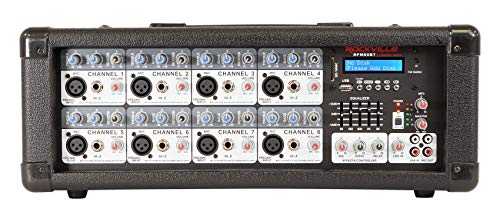
- POWERFUL 500W RMS OUTPUT: Delivers 500W RMS (250W x 2 @ 8 Ohm) and 2400W peak to drive speakers with clarity and strength.
First Impressions and Feature Breakdown: The PMP4000 at a Glance
When we first pulled the Behringer Europower PMP4000 16-Channel Powered Mixer out of the box, the weight—or lack thereof—was the first thing that caught our attention. Clocking in at around 22.9 pounds, it is significantly lighter than the traditional “box” style mixers of a decade ago. This is thanks to the implementation of Class-D amplifier technology, which provides high power efficiency without the need for massive, heavy transformers. The layout feels familiar to anyone who has used a standard mixing console, with a clear vertical strip for each channel, which makes the learning curve virtually non-existent.
Visually, the mixer is sleek and professional. The 8 mono channels are equipped with Behringer’s XENYX preamps, which are known for their decent headroom and transparency at this price point. We also noted the 4 stereo channels, which are a godsend for connecting keyboards or electronic drum kits without eating up all your XLR inputs. Before you get started, you may want to see its full feature set and user reviews to understand the various routing options available.
Key Benefits
- Massive 1600-Watt output (Bridged) provides enough power for large rooms.
- Innovative Class-D tech keeps the unit lightweight and cool during operation.
- FBQ Feedback Detection System quickly identifies problematic frequencies.
- Integrated 24-bit multi-FX processor offers 100 useful presets.
Limitations
- The 1600-Watt rating is a peak measurement; sustained RMS is lower.
- Does not include a built-in USB audio interface for direct multi-track recording.
Deep Dive: Professional Performance Evaluation
Power Delivery and Class-D Efficiency
The heart of the Behringer Europower PMP4000 16-Channel Powered Mixer is its power section. In our testing, the 1600-Watt (bridged) peak power rating translated into a very healthy amount of “real world” volume. We ran the unit through two 15-inch passive PA speakers in a medium-sized hall, and the clarity remained consistent even as we pushed the master fader toward the 0dB mark. What is truly impressive is how cool the unit remains. Traditional mixers act like space heaters after two hours of use, but the PMP4000’s Class-D architecture means the energy goes into the speakers rather than dissipating as heat. This increases the longevity of the internal components and reduces the chance of thermal shutdown mid-show.
We found that the stereo mode (2 x 800 Watts) provides a wide, immersive soundstage that is perfect for bands with complex panning requirements. If you are running a mono PA with a dedicated monitor wedge, the mixer allows you to split the power, sending one side to the mains and the other to the stage monitors. This versatility is a hallmark of the PMP series and makes it an incredible value for the money. You can read more about the technical power specs to see if they align with your specific speaker requirements.
Mixing Interface and Sonic Purity
Channels 1 through 8 feature high-quality XLR inputs with switchable +48V phantom power, allowing you to use professional condenser microphones. During our vocal tests, the XENYX preamps delivered a clean, low-noise signal that was easy to work with. The 3-band EQ on each channel—with a sweepable mid-range—allowed us to carve out the “mud” from the vocals and add “bite” to the guitars. It’s an analog-style EQ that feels musical rather than clinical. One thing we noticed is the smooth travel of the 60mm faders; they offer just enough resistance to make precise adjustments without feeling stiff or “cheap.”
For the stereo channels (9/10, 11/12, 13/14, 15/16), the inclusion of 1/4″ TRS inputs makes it simple to integrate modern gear. We connected a laptop for backing tracks and a digital piano, and the signal-to-noise ratio remained impressively high. Even with several channels active, the “hiss” usually associated with budget mixers was virtually non-existent. This level of performance is why many users consider this a “steal of a price” for the audio quality provided. To get a better look at the control surface, we recommend you explore the detailed product imagery available online.
The FBQ Feedback Detection System and FX Processor
One of the standout features of the Behringer Europower PMP4000 16-Channel Powered Mixer is the FBQ Feedback Detection System. For the uninitiated, this system lights up the fader on the graphic equalizer that corresponds to the frequency causing feedback. During a particularly loud rehearsal, we intentionally pushed the monitor volume until a squeal began; the FBQ system instantly illuminated the 1kHz band. We pulled that slider down slightly, and the feedback vanished. It is like having a professional sound engineer sitting inside the box, helping you manage the room’s acoustics in real-time.
The built-in 24-bit FX processor is equally impressive. With 100 presets, you have access to everything from lush “Cathedral” reverbs to tight “Plate” reverbs for drums, and even more creative effects like flangers and pitch shifters. While you might not use the pitch shifter for every gig, having a reliable “Hall” reverb built-in means you can leave your external pedals at home. The effects are crisp and don’t muddy the mix, which is often a problem with the “token” effects found on lower-end mixers. It’s truly a feature that really sets it apart from more basic models in this price bracket.
Portability and “Road-Ready” Build Quality
Despite being primarily plastic and lightweight metal, the Behringer Europower PMP4000 16-Channel Powered Mixer feels surprisingly sturdy. We wouldn’t recommend dropping it off the back of a truck, but for the regular “in and out” of a gigging lifestyle, it holds up well. The knobs are securely fastened and don’t “wobble” under heavy use. The compact footprint is the real winner here. We were able to fit the mixer, two sets of speaker cables, and four microphones into a single medium-sized gear trunk, which simply wouldn’t be possible with a separate amp and mixer setup.
We also appreciated the separate CD/Tape inputs and outputs, which allow for easy “walk-in” music during breaks without tying up your main mixing channels. If you are a solo performer or a small ensemble, this mixer provides more than enough room to grow. As one user noted, it’s also ideal for home studio practice, providing a centralized hub for all your instruments before they hit your recording interface. If you’re ready to upgrade your portable sound system, you should check out the current deals on this specific model.
What Other Users Are Saying
The general consensus among the community is that the Behringer Europower PMP4000 16-Channel Powered Mixer provides an exceptional balance of power and value. One local band member mentioned that they used it in their home studio for practice but found it powerful enough to eventually run sound for their live shows, including powering their monitors. This versatility is a common theme; users love that they don’t have to buy multiple pieces of gear to cover different scenarios. Another user from Japan noted that despite its compact size, it is more than capable of handling the audio for a small live hall.
On the positive side, reviewers frequently mention the “EXCELLENT CONDITION” and reliability of the unit, even when purchased used. European users have expressed total satisfaction, noting that the mixer “runs super” even under heavy loads. On the critical side, some users have pointed out that you need to be careful with the output connectors (using Speakon-style cables is a must) and that the fan can be a bit audible in very quiet environments. However, in the context of a live rock band or a busy church service, the fan noise is completely irrelevant. These real-world perspectives confirm our findings: it is a workhorse designed for the working musician.
Comparing the Alternatives: Finding Your Perfect Match
While the Behringer Europower PMP4000 16-Channel Powered Mixer is a top-tier choice for those who want an all-in-one powered solution, it’s important to see how it compares to other industry favorites.
1. Mackie VLZ4 24-Channel Mixer with FX and USB
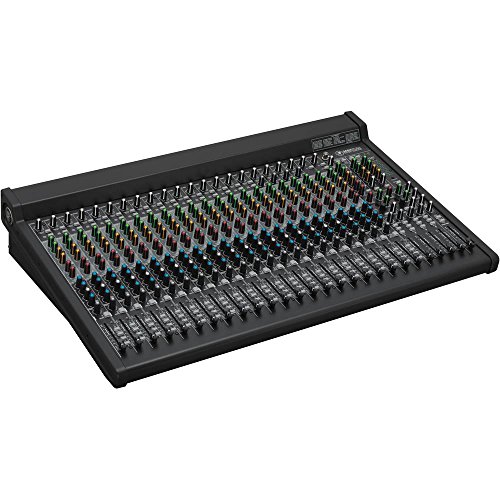
- 24-channel 4-bus mixer featuring Mackie signature high-headroom/low-noise design
- 20 boutique-quality Onyx mic preamps
The Mackie VLZ4 is a legendary series known for its “built-like-a-tank” construction. Unlike the PMP4000, this is an unpowered mixer. This means you will need separate power amplifiers to drive your speakers. However, it offers 24 channels and the highly-regarded Onyx mic preamps, which many professionals prefer for their extreme clarity and 60dB gain range. It also features a USB interface for recording. If you already own high-quality power amps or active speakers and need more channels for a large band, the Mackie is a superior choice, but for portability, it cannot compete with the all-in-one nature of the Behringer.
2. Behringer X AIR XR18 18-Channel Digital Mixer
- IPad/Android tablet controlled 18-input digital mixer for studio and live application
- 16 award-winning MIDAS-designed, fully programmable mic preamps for audiophile sound quality
The X AIR XR18 represents the modern “digital” approach to mixing. It is a stage-box format mixer that is controlled entirely via an iPad or Android tablet. It features 16 Midas-designed preamps and a massive suite of digital effects. The XR18 also functions as an 18×18 USB audio interface for multi-track recording. However, it is also unpowered and requires a Wi-Fi connection and a tablet to operate. If you love the idea of mixing from the audience’s perspective and don’t mind the lack of physical faders, this is a cutting-edge alternative. But for those who want physical knobs and built-in power, the PMP4000 remains the more traditional, tactile choice.
3. Behringer X Air XR18 Digital Mixer
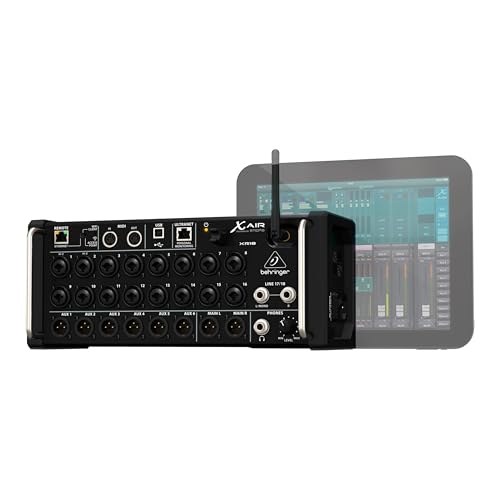
- 12-bus Rackmount Digital Mixer for iPad/Android Tablets with 16 Gain-programmable Midas Preamps
- Multichannel USB Audio Interface
This is a variation of the same XR18 digital platform, focusing on tablet control and high-end Midas preamps. It solves the problem of needing a massive mixing desk by putting everything into a small box that sits on the stage floor. Like the previous model, it is unpowered. It is ideal for the tech-savvy musician who wants to reduce their footprint to the absolute minimum. When compared to the Behringer Europower PMP4000 16-Channel Powered Mixer, the XR18 wins on processing power and recording capabilities, but it loses on simplicity. If the Wi-Fi goes down or your tablet dies, you are in trouble—a risk you don’t have with the “plug-and-play” PMP4000.
Final Verdict: Is the Behringer Europower PMP4000 the Right Choice?
After putting the Behringer Europower PMP4000 16-Channel Powered Mixer through its paces, we can confidently say it is one of the most practical investments a gigging band or small venue can make. It successfully bridges the gap between old-school analog power and modern, lightweight efficiency. Its main strengths lie in its massive 1600-Watt peak power, the highly effective FBQ feedback detection, and the clean XENYX preamps. While it lacks a USB recording interface and is technically an analog-style mixer in a digital world, its reliability and “all-in-one” convenience make it a standout product.
We recommend this mixer for anyone who needs to set up sound quickly, wants enough power to fill a 200-300 person room, and prefers the tactile feel of real faders. It is a robust, reliable, and surprisingly musical piece of equipment that will serve you well for years to come. If you’re tired of hauling heavy racks and want to simplify your life without compromising your sound, now is the time to act. You can buy the Behringer Europower PMP4000 today and transform your live sound experience.
Last update on 2026-09-14 / Affiliate links / Images from Amazon Product Advertising API